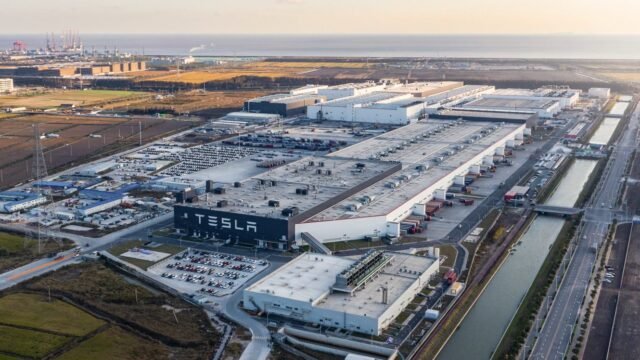
Tesla sold 381,088 cars to Chinese buyers through the first nine months of 2026, down 11.9% from last year, according to CPCA data. Over the same period, Giga Shanghai’s exports more than doubled to 361,972 vehicles. Nearly half of what Tesla builds in China now leaves China. And Beijing just announced it will cut the tax rebate on EV exports next year. more…
#fwtv_Jgyou2KFig .fwtv-panel{border:1px solid #d0d0d0;padding:18px;border-radius:6px;line-height:1.6}#fwtv_Jgyou2KFig .fwtv-panel p{margin:0 0 12px}#fwtv_Jgyou2KFig .fwtv-note{font-style:italic;color:#666;margin-top:16px;padding-top:12px;border-top:1px solid #e0e0e0}Craig Fuller dives deep into the latest SONAR data, revealing how contract rates are climbing past recession highs, spot rates are trending up towards peak, and why demand isn’t the primary driver of current market volume. Get the essential insights on diesel prices and tender rejections affecting your supply chain.Contract rates have climbed to their highest levels since the freight recession ended, reaching an index reading of 274 on a seasonally adjusted basis — well above where they stood over the prior two years — signaling that shippers are locking in higher committed rates even as the broader market searches for a peak-season catalyst. The development matters to carriers and brokers because contract rates catching up to spot rates suggests tightening supply-demand conditions, though the market has yet to deliver the sustained surge that would confirm a true peak-season breakout. Spot rates accelerated to all-time highs earlier in 2025 but have since cooled, and have only recently begun trending upward again heading into November. Diesel prices are providing little relief. Prices topped $6.50 per gallon — an all-time record — before pulling back modestly. Craig Fuller cited uncertainty around a reported Russia supply deal and ongoing drone strikes on Russian refineries as factors muddying the outlook, along with discussions of a potential U.S. export ban that has also weighed on diesel prices. “We’re seeing it drop a little bit, but not much,” Fuller said. “Not a whole lot of relief.” “As Arrive Logistics pointed out in their market update, their summary update, they don’t believe that demand is driving the overall freight market. It is really related to capacity and really relative supply and demand.” — Craig Fuller Freight volumes tell a more cautious story. After strong year-over-year momentum in the first half of 2025 — when volumes ran above both 2024 and 2023 levels — the market has since slipped below those comparable periods. Fuller attributed the softening partly to AI data center-related freight shifts, but also to unusual drag in food and beverage, driven by higher inflation, reduced SNAP benefits, and GLP-1 medications curbing consumption. The tender rejection index sits at 1,373, elevated compared to freight-recession lows and above year-ago levels, but not at the robust readings the market would need to confirm peak season has arrived. Fuller noted the index heated up meaningfully in June before cooling, and said the industry is watching for another leg higher. “Everyone is looking for this number to heat up, and that’s when we know we’re at peak season,” he said. With November approaching, the freight market remains in a wait-and-see posture — contract rates are firming, diesel is still historically elevated, and capacity utilization is tighter than a year ago, but no single data point yet confirms that peak-season volumes have materialized.Contract rates hit a seasonally adjusted index of 274, breaking above freight-recession highs and closing the gap with spot rates.Diesel prices pulled back from an all-time high above $6.50 per gallon, but meaningful relief remains elusive amid supply uncertainty.The tender rejection index stands at 1,373 — above year-ago levels but still short of the readings needed to signal peak season has arrived.This Summary is generated thanks to a transcription of the interview, for the full interview please enjoy the video above. The post Diesel Prices & Freight Trends: What’s Driving the Market in Q4? appeared first on FreightWaves.
#fwtv_iMyxbERwpJw .fwtv-panel{border:1px solid #d0d0d0;padding:18px;border-radius:6px;line-height:1.6}#fwtv_iMyxbERwpJw .fwtv-panel p{margin:0 0 12px}#fwtv_iMyxbERwpJw .fwtv-note{font-style:italic;color:#666;margin-top:16px;padding-top:12px;border-top:1px solid #e0e0e0}AI has officially taken over e-commerce as the main driver of air freight out of Asia. This massive shift is fueled by semiconductor and data center equipment demands. Learn how this boom is reshaping logistics networks and international trade, with surprising implications for economies like Taiwan.Artificial intelligence-related goods have overtaken e-commerce as the primary engine of trans-Pacific air freight, with semiconductors and data center equipment now commanding a dominant share of cargo value on routes out of Asia — a structural shift that is reshaping network strategies at major airlines, integrators, and forwarders. The numbers underscore the scale of the transition. A DHL study conducted in partnership with NYU Business School found that AI-related goods — semiconductors, data center equipment and related materials — accounted for 42% of trade growth by value in 2024 and 76% in the first quarter of this year. The Federal Reserve Bank of Minneapolis calculated that without AI-related imports, total U.S. imports would have fallen 10%. The International Air Transport Association reported that roughly 53% of the value of cargo carried by its member airlines in the first half of the year came from AI-related goods. “AI’s basically replaced e-commerce as the big driver, especially in the US, on the Trans-Pacific market, and even in Europe,” said the reporter who covers international freight, noting that the prior cycle — dominated by Chinese marketplace parcels moving business-to-consumer — “fell off a cliff” after regulators ended the de minimis tariff exemption that had allowed low-value shipments to enter duty-free. “Taiwan is a larger trading partner than China, like mainland China, People’s Republic. And it’s all value related. It’s not volume. It’s all value. It’s because of semiconductors,” said Eric Kulisch, adding that container flows from Taiwan remain anemic while the dollar value of imports clearing U.S. customs has grown to the point that Taiwan has eclipsed mainland China in total import value to the United States. Airlines and integrators across the board are repositioning to capture the freight. EVA Air, Korean Air, and Japan Airlines have added freighter capacity primarily aimed at AI-related customers, while FedEx and UPS are reorienting portions of their Asia-Pacific and intra-Asian networks toward the cargo type. Amazon recently struck a deal with Kuehne+Nagel, one of the world’s two largest freight forwarders, to manage the bulk of its AI logistics needs supporting AWS server farm construction. Cargo security has emerged as a parallel concern. A truckload of semiconductors stolen in the United States, discussed on the program, illustrated the challenge of liquidating high-value chips domestically. Kulisch noted that sanctioned nations including China, Russia, Iran, and North Korea provide ready black-market buyers, making export theft an attractive criminal model. A separate incident in which F-35 parts were routed through Hong Kong — reported by Bloomberg as a UPS-managed shipment — has intensified congressional scrutiny of the forwarders that handle Defense Department logistics and their use of foreign-flag carriers. One caveat tempers the AI freight euphoria for domestic trucking and construction-related freight: data center construction, despite reaching roughly $50 billion in 2024, still represents less than 2.5% of total U.S. construction activity. Weakness in residential building, weighed down by elevated interest rates, and persistent softness in commercial office space largely offsets the data center surge, leaving overall construction freight demand closer to flat than to a broad-based boom.AI-related goods made up 42% of trade growth by value in 2024 and 76% in Q1 2025, per a DHL/NYU Business School study.IATA reported ~53% of air cargo value in the first half of the year was from AI-related goods, displacing e-commerce as the top trans-Pacific driver.Data center construction hit ~$50B in 2024 but remains under 2.5% of total U.S. construction, limiting the broader freight upside for domestic carriers.This Summary is generated thanks to a transcription of the interview, for the full interview please enjoy the video above. The post The AI Boom: Why It’s Replacing E-commerce in Global Freight appeared first on FreightWaves.
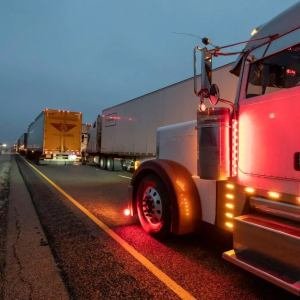
A 74-year-old truck driver from Reno, Nevada, died after his tractor-trailer left Interstate 84 and overturned east of Boise, Idaho, early Monday. The single-vehicle crash occurred at approximately 3:08 a.m. Oct. 12 near milepost 62 in Ada County, along the eastbound lanes of I-84, according to Idaho State Police. Authorities said the driver was operating a 2024 International semi-truck pulling a trailer when the vehicle left the roadway, traveled along an embankment for a short distance and overturned. The driver was transported by ground ambulance to a local hospital, where he later died from his injuries. Authorities said the driver was not wearing a seat belt at the time of the crash. The driver’s identity had not been released in the initial police report. The crash blocked the right eastbound lane of I-84 for approximately three hours while emergency crews responded and investigators examined the scene. Authorities have not disclosed what caused the truck to leave the roadway. The incident remains under investigation. Interstate 84 is a major east-west freight corridor connecting Idaho with Oregon and Utah, serving commercial trucking operations throughout the Pacific Northwest and Intermountain West. Fatal truck crashes remain a national safety concern Federal crash data show thousands of fatal crashes involving large commercial trucks each year, although complete figures for January through September 2026 are not yet available. The Federal Motor Carrier Safety Administration’s preliminary Motor Carrier Management Information System data, updated Aug. 28, recorded 1,607 fatal crashes involving large trucks nationwide in 2026, resulting in 1,768 deaths. The figures represent crashes reported through the agency’s available data snapshot, not a complete January-through-September tally. For comparison, FMCSA’s database lists 3,784 fatal large-truck crashes and 4,209 fatalities for calendar year 2025. Those figures also remain provisional and subject to revision. The National Highway Traffic Safety Administration reported that 5,340 people died in crashes involving large trucks in 2024, down 2.5% from 2023. About 70% of those killed were occupants of other vehicles. In Idaho, preliminary figures released Sept. 11 by the Idaho Transportation Department showed 150 traffic deaths statewide in 2026, compared with 174 during the corresponding period in 2025. Those totals include all vehicle types, not just commercial trucks. The department identified failure to wear a seat belt, failure to maintain a lane, impairment, inattention and speeding among the leading contributing circumstances in fatal crashes statewide. Investigators in Idaho have not determined whether any of those factors, other than the driver’s reported lack of a seat belt, played a role in Monday’s crash. Why it matters: The fatal rollover highlights the risks commercial drivers face in single-vehicle crashes and the importance of seat belt use. More FreightWaves articles by Noi Mahoney: Mexico trucker shortages, visa restrictions squeeze cross-border capacity Texas trucking firm sued over age limits on drivers New Jersey CDL school lawsuit questions evidence behind FMCSA shutdown The post Truck driver, 74, killed in Interstate 84 rollover in Idaho appeared first on FreightWaves.
#fwtv_bBe3VOf7ynY .fwtv-panel{border:1px solid #d0d0d0;padding:18px;border-radius:6px;line-height:1.6}#fwtv_bBe3VOf7ynY .fwtv-panel p{margin:0 0 12px}#fwtv_bBe3VOf7ynY .fwtv-note{font-style:italic;color:#666;margin-top:16px;padding-top:12px;border-top:1px solid #e0e0e0}Electric trucks are here, but what’s the real-world experience like? Hight Logistics CEO Rudy Diaz, who operates 2,500 electric trucks including Tesla Semis and Volvo EVs, breaks down the challenges and successes of transitioning to an electric fleet. From charging infrastructure and battery range to financing and regulations, get a frank assessment of where electric trucking stands today.The single biggest obstacle to electrifying a trucking fleet is not the trucks themselves — it is securing reliable charging infrastructure before a single vehicle arrives. That is the blunt assessment of the founder and CEO of Hight Logistics, a port drayage company operating BYD and Volvo VNRE electric trucks in and out of the ports of Los Angeles and Long Beach, who shared four years of hard-won experience in a FreightWaves Today interview. The stakes are rising fast. Roughly 850 EV trucks are currently operating at the LA and Long Beach port complex, and a second round of HVIP vouchers has already generated 1,000 new orders — doubling, in a single year, the total orders placed since the program launched. Tesla is expected to capture the majority of those new orders, a development the Hight Logistics CEO called encouraging given that Tesla engineered its Semi from the ground up rather than converting an existing diesel platform. “If you’re going to go this route, you have to secure your charging. You got to make sure that you understand that it’s not — you’re not plugging in a blender, you’re not plugging in a toaster. Like, you got to have it figured out because if you don’t have this figured out and you have trucks and you have an order of 50 trucks, and you have 2 chargers, then you’re gonna run into a lot of issues.” Current-generation BYD and Volvo VNRE trucks share similar limitations, the CEO said: a realistic range of 200 to 220 miles per charge, a full recharge time of 2 to 3 hours, and a weight penalty of 6,000 to 8,000 pounds compared to equivalent diesel units — excess mass that accelerates tire wear and constrains payload. Price is an additional friction point; electric trucks run roughly $400,000 apiece, a figure the CEO said his own company could not absorb without grant funding and incentives. California’s Advanced Clean Fleets rule was the regulatory forcing function that pushed Hight Logistics into EVs roughly four years ago, the CEO acknowledged. Without that mandate, and without incentive money, he said he would have stayed with diesel. “Diesel works,” he said. “It’s not that it’s broken.” But for short-haul drayage — repeated runs of roughly 60 miles between the ports and the Inland Empire — he now views EV as the superior technology, pointing to California diesel prices that have reached nearly $8.50 a gallon as a decisive cost argument. Route and charge management, not driver training, proved to be the steepest learning curve. Drivers adapted quickly to the quieter, automatic, regenerative-braking trucks, but dispatchers had to rethink every deployment. Early on, Hight Logistics pushed trucks past their usable range to establish real-world limits — and had to tow a few back. That trial-and-error discipline is now embedded in its operations. The CEO said the ecosystem has matured considerably since Hight Logistics entered the space. Financing, insurance, and truck availability have all improved — hurdles that were nearly prohibitive at the outset. His long-term target is a 100% EV fleet. “At Hight Logistics, we’ve demonstrated that it works,” he said. “I would say that if you fast forward from 4 years ago, it’s a lot easier for a carrier to get into an electric truck.”1,000 new EV truck orders submitted in the latest HVIP voucher round — double the roughly 850 units already operating at the LA and Long Beach ports.BYD and Volvo VNRE trucks deliver 200–220 miles of range, take 2–3 hours to fully charge, and weigh 6,000–8,000 lbs more than comparable diesel trucks.At ~$400,000 per truck, Hight Logistics says EV adoption would be unviable without grant funding and California mandates, but diesel near $8.50/gallon strengthens the operating cost case for short-haul drayage.This Summary is generated thanks to a transcription of the interview, for the full interview please enjoy the video above. The post Electric Trucks: The REALITY for Tesla Semi & Volvo Fleets appeared first on FreightWaves.
#fwtv_7TwrX35Bv2o .fwtv-panel{border:1px solid #d0d0d0;padding:18px;border-radius:6px;line-height:1.6}#fwtv_7TwrX35Bv2o .fwtv-panel p{margin:0 0 12px}#fwtv_7TwrX35Bv2o .fwtv-note{font-style:italic;color:#666;margin-top:16px;padding-top:12px;border-top:1px solid #e0e0e0}Felipe Capella, CEO of Loadsmart, shares his unique journey from lawyer to freight tech innovator and discusses how his company navigated the ‘Freight Apocalypse’ by pivoting to a blended service and SaaS model. He also sheds light on the growing problem of crime and fraud in freight, emphasizing the need for federal coordination and AI solutions. Watch to learn how Loadsmart is leveraging technology to capture high-margin revenue and ensure resilience in a volatile market.Loadsmart has shifted so dramatically toward software that SaaS now accounts for half of the company’s gross profit, co-founder and CEO Felipe Capella said in an interview with FreightWaves. The disclosure underscores how the New York-founded, Chicago-based firm has repositioned itself since its 2014 launch as a pure digital freight broker — a model that claimed Convoy, Transfix’s brokerage operations, TruckerPath, Cargomatic, TruckSmarter, NextTrucking, and FreightAI along the way.Capella said the pivot, which began around 2021, was driven by a deliberate look at unit economics rather than a bet on continued venture funding. With a large research-and-development budget, Loadsmart faced a binary choice: cut costs sharply or create a high-margin revenue line to justify the spend. The company chose the latter, launching ShipperGuide, a transportation management system for midsize and enterprise shippers, and OpenDock, a dock-scheduling platform now deployed in more than 4,500 distribution centers and warehouses across North America.“We cannot afford to be that fragile,” Capella said, explaining why the firm refused to rely on the assumption that scale alone would eventually validate its cost structure — a logic he said led some competitors to collapse when freight markets turned. “It just takes one bad cycle to destroy your company.”“A few of these companies that you mentioned did neither — they didn’t adjust their cost structure and they didn’t create a new revenue line that was more high margin that again justifies R&D,” Capella said.Loadsmart still ranks as a top-70 U.S. freight broker, Capella noted, and the brokerage business has become “quite exciting for the first time in many, many years” as capacity-side constraints tighten the spot market. Even during the prolonged freight downturn of 2023 and 2024, when many brokers saw gross profit shrink, Capella said Loadsmart was “growing pretty healthily.”The company is now adding a third revenue leg: AI agentic products aimed at enterprise shippers. Capella described a near-term future in which software agents handle the routine clicks and workflow steps that human operators currently perform inside TMS, WMS, and YMS platforms, with workers shifting toward recruiting, deploying, and monitoring those agents — and stepping in only when human judgment is required. Loadsmart is also expanding OpenDock into a full yard management system offering.On the broader investment climate, Capella said the market has become “definitely a more rational market” after years of zero-interest-rate-fueled valuations stretched venture-backed logistics startups well above public-market comparables such as Descartes, Manhattan Associates, and Trimble. He added that SaaS valuations have been hit hard enough that some companies’ current worth may not cover their preferred equity stack — a dynamic he said makes cash-flow-positive business models essential for survival going forward.SaaS now represents half of Loadsmart’s gross profit, driven by its ShipperGuide TMS and OpenDock dock-scheduling platform, which is live in more than 4,500 facilities.CEO Felipe Capella says the 2021 decision to add high-margin software revenue — rather than cut R&D — was what separated Loadsmart from digital brokers that went bankrupt during the 2023–2024 freight downturn.Loadsmart is launching AI agentic products for enterprise shippers and expanding OpenDock into a full yard management system as its third major revenue line.This Summary is generated thanks to a transcription of the interview, for the full interview please enjoy the video above. The post Why Freight Tech Will BOOM After The ‘Apocalypse’ appeared first on FreightWaves.
Tesla has stopped taking orders for the Model 3 Premium in Canada, the Shanghai-built trim that brought the electric sedan down to $39,490 CAD. The automaker says it has used up its import quota for Chinese-made EVs and doesn’t expect to reopen orders until March 2027. But the Canadian government’s own tracker tells a different story: 33,069 of the 49,000 permits for China-made EVs in the current quota year are still available. more…
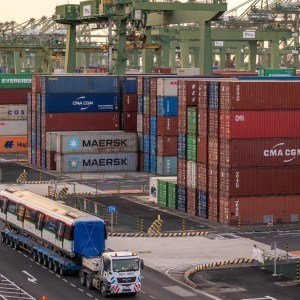
Global ocean container schedule reliability fell for a fourth consecutive month in September, dropping 2 percentage points to 27% on-time, according to Xeneta’s September Schedule Reliability Scorecard. Average vessel delay rose to 6 days across all arrivals, up 2.4 days since the start of the second quarter. The analyst said the deterioration reflects the cumulative effects of powerful typhoons that struck Asia from July through early September, combined with bunker-cost pressure and strong peak-season demand. It does not expect a firm floor in October as Asian trade disruption continues. Asia trades deteriorate window.googletag = window.googletag || {cmd: []}; googletag.cmd.push(function() { var gptSlot = googletag.defineSlot('/21776187881/FW-Responsive-Main_Content-Slot1', [[300, 100], [320, 50], [728, 90], [468, 60]], 'div-gpt-ad-1709668545404-0').defineSizeMapping(gptSizeMaps.banner1).addService(googletag.pubads()); googletag.pubads().enableSingleRequest(); googletag.pubads().collapseEmptyDivs(); googletag.enableServices(); setInterval(function() { if (!document.hidden) { googletag.pubads().refresh([gptSlot]); } }, 30000); }); googletag.cmd.push(function() { googletag.display('div-gpt-ad-1709668545404-0'); }); Asia-linked services recorded some of the worst performance, with the Far East-to-Europe trade collapsing to 4% on-time and an average delay of 9.9 days. That was the lane’s worst monthly result since September 2021, when on-time performance reached 3% during the Covid pandemic. Asia-to-North America reliability was unchanged at a dismal 20%, but average delay increased 0.8 days month over month to 6.9 days. Xeneta said Chinese port congestion is increasingly translating into berth-arrival delays for shippers in Europe and North America. The rate environment compounded the operational pressure. Xeneta’s spot-market average for China to the U.S. West Coast reached $7,717 per FEU in early October, more than four times the $1,778 recorded in September 2025 and 8% above the start of September 2026. Long-term rates rose 26% month over month to $3,649 per FEU on Oct. 1. Carriers post delay highs Every carrier tracked by Xeneta posted its highest average delay of the past 12 months in September. Four carriers also reached 12-month lows in on-time arrivals: CMA CGM at 30%, Cosco (1919.HK) at 18%, Hapag-Lloyd at 45% and Yang Ming (2609.TW) at 4%. The performance spread between carriers narrowed to 43 percentage points, from 45 points in August. Maersk (OTC: AMKBY), the month’s most reliable carrier, fell from 51% to 47%, while Yang Ming marked the low end at 4%. Xeneta said the Gemini network of Maersk and Hapag-Lloyd — launched on a premise of on-time performance — declined more sharply than other alliances, falling from 70% on-time in June to 40% in September. Its weekly on-time rate dropped from 62% in the first week of August to 34% in the week ended Sept. 28, and partial data for the week of Oct. 5 showed 28%. window.googletag = window.googletag || {cmd: []}; googletag.cmd.push(function() { var gptSlot = googletag.defineSlot('/21776187881/fw-responsive-main_content-slot3', [[728, 90], [468, 60], [320, 50], [300, 100]], 'div-gpt-ad-1665767553440-0').defineSizeMapping(gptSizeMaps.banner1).addService(googletag.pubads()); googletag.pubads().enableSingleRequest(); googletag.pubads().collapseEmptyDivs(); googletag.enableServices(); setInterval(function() { if (!document.hidden) { googletag.pubads().refresh([gptSlot]); } }, 30000); }); googletag.cmd.push(function() { googletag.display('div-gpt-ad-1665767553440-0'); }); Singapore congestion doubles Port congestion spread downstream from China into Southeast Asia. Singapore’s average daily vessel queue nearly doubled to 22 ships, while average wait time rose from 1.9 to 3.1 days, as the transshipment hub absorbed effects of congestion at Chinese gateways. Southeast Asia recorded a 2.0-day average vessel wait, with 23% of vessels waiting. Africa remained the most congested region despite improvement, with a 2.5-day average wait and 32% of vessels waiting. In Northeast Asia, 30% of vessels at port were waiting, and average wait rose 0.3 days to 1.6 days. Shanghai’s anchorage queue shortened from 101 to 86 vessels per day, although average wait lengthened from 1.9 to 2.7 days. Capacity cuts may increase window.googletag = window.googletag || {cmd: []}; googletag.cmd.push(function() { var gptSlot = googletag.defineSlot('/21776187881/fw-responsive-main_content-slot4', [[300, 100], [320, 50], [728, 90], [468, 60]], 'div-gpt-ad-1709668086344-0').defineSizeMapping(gptSizeMaps.banner1).addService(googletag.pubads()); googletag.pubads().enableSingleRequest(); googletag.pubads().collapseEmptyDivs(); googletag.enableServices(); setInterval(function() { if (!document.hidden) { googletag.pubads().refresh([gptSlot]); } }, 30000); }); googletag.cmd.push(function() { googletag.display('div-gpt-ad-1709668086344-0'); }); Carriers blanked — cancelled or delayed — only 6% of planned capacity on Far East-to-Europe and 8% on Far East-to-North America in September, their third-lowest blanking levels in 21 months, as delays and pre-Golden Week demand absorbed available capacity. However, announced blank sailings are set to rise in October to at least 17% of planned capacity on Far East-to-Europe and 13% on Far East-to-North America. Planned Far East-to-Europe capacity in October is the highest of any month in a 22-month window, leaving limited slack to offset delays through cancellations. Xeneta advised shippers to allow more lead time for October bookings and to ask carriers which services will be protected from capacity cuts. It also warned that reliability, port rotations, unscheduled calls and capacity management should be central to carrier accountability discussions ahead of 2027 contract tenders. Read more articles by Stuart Chirls here. window.googletag = window.googletag || {cmd: []}; googletag.cmd.push(function() { var gptSlot = googletag.defineSlot('/21776187881/fw-responsive-main_content-slot5', [[728, 90], [468, 60], [320, 50], [300, 100]], 'div-gpt-ad-1665767778941-0').defineSizeMapping(gptSizeMaps.banner1).addService(googletag.pubads()); googletag.pubads().enableSingleRequest(); googletag.pubads().collapseEmptyDivs(); googletag.enableServices(); setInterval(function() { if (!document.hidden) { googletag.pubads().refresh([gptSlot]); } }, 30000); }); googletag.cmd.push(function() { googletag.display('div-gpt-ad-1665767778941-0'); }); Read more: 1 million boxes set new Los Angeles port record Retailers say extended peak shipping season winding down US West Coast container rates edge lower window.googletag = window.googletag || {cmd: []}; googletag.cmd.push(function() { var gptSlot = googletag.defineSlot('/21776187881/fw-responsive-main_content-slot6', [[728, 90], [468, 60], [320, 50], [300, 100]], 'div-gpt-ad-1665767872042-0').defineSizeMapping(gptSizeMaps.banner1).addService(googletag.pubads()); googletag.pubads().enableSingleRequest(); googletag.pubads().collapseEmptyDivs(); googletag.enableServices(); setInterval(function() { if (!document.hidden) { googletag.pubads().refresh([gptSlot]); } }, 30000); }); googletag.cmd.push(function() { googletag.display('div-gpt-ad-1665767872042-0'); }); Global container volumes hit record 17.46 million TEUs Samsung seeks $186M from CMA CGM in container charges dispute The post Shippers waiting an extra week for US-bound containers appeared first on FreightWaves.
INDIA: Prime Minister Narendra Modi and Chief Minister of Tamil Nadu Joseph Vijay opened Chennai Metro’s 15 km Yellow Line on October 11. The elevated route between Poonamallee Bypass and Vadapalani forms the first operational stretch of Phase II Corridor 4, serving 11 stations. Inaugural passenger services on the Yellow Line commenced on October 11, and a full service ran the day after. No fewer than 25 474 passenger journeys were recorded during the first five hours of operation. The route connects western suburbs with the city centre to reduce commuting times. The stations served include Porur Junction, Porur Bypass, Iyappanthangal and Vadapalani. Services operated by Chennai Metro Rail Ltd run between 07.00 and 21.00 each day. On weekdays peak-hour services run every 10 min, whilst off-peak trains operate at 15 min intervals. Sunday services run every 15 min. Double-decker viaduct traverses congested corridor The Yellow Line project cost approximately Rs49bn (€490m). Infrastructure consulting and engineering firm AECOM served as General Consultant and contributed to the detailed design work. Regional Director Sunil Kumar Reddy Kasa says the alignment includes ‘a unique 3.7 km double-decker viaduct traversing one of Chennai’s busiest traffic corridors’. The line is served by 36 Alstom Metropolis three-car trainsets. The trains were ordered under a €124m contract awarded in 2023 and are designed in Bengaluru and manufactured at Alstom’s plant in Sri City, Andhra Pradesh. In March 2023, Chennai Metro Rail Ltd awarded a contract covering signalling, train control and video management for all three Phase II corridors to a consortium of Hitachi Rail STS and Hitachi Rail STS India. The signalling systems will support driverless train operation, with ATO expected to be activated in mid-2027, subject to further testing and safety certification. Phase II network expansion targets 2028 Chennai’s existing metro network comprises two operational corridors with a combined route length of 54 km built as Phase I, which opened progressively in 2015-22. The new Yellow Line connects with the existing metro network at Vadapalani. The wider Phase II project covers 118.9 km across three corridors, adding 128 stations in total. The expansion includes Corridor 3 from Madhavaram to SIPCOT, Corridor 4 to Lighthouse and Corridor 5 to Sholinganallur. India’s Ministry of Housing & Urban Affairs approved the project at an estimated cost of Rs630bn (€5.9 bn). CMRL plans to complete the entire Phase II network by the end of 2028. Chennai metro trains to be fitted with anti-drag system to detect trapped saris and bags See also Infographic: Indian metros – route-km open, under construction or planned (as at August 2025) Delhi Metro International Ltd formed to target global markets
CSX Executive Vice President and Chief Operating Officer Mike Cory is retiring, ending a tenure that began when he came out of retirement to join the railroad in September 2023. Cory will work with the leadership team to ensure a smooth transition, the company said, and will provide transition services through May 8, 2027. Rather than immediately naming a successor, CSX (NASDAQ: CSX) said two senior operations executives will now report directly to President and Chief Executive Steve Angel: Doug Ryhorchuk, senior vice president of Operations, who oversees transportation, engineering, and mechanical functions. He spent nearly four decades at CN before joining CSX in 2024. Casey Albright, senior vice president of Network Operations and Service Design, who has nearly 30 years at CSX. Angel credited Cory with helping drive safety and productivity to record levels while developing a strong bench of operations leaders. “Mike has dedicated his career to the railroad industry and has made significant contributions to CSX, our customers, and our employees,” Angel said in the company’s announcement. Cory previously served as executive vice president and COO at CN (NYSE: CNI), retiring from that railroad in 2019 before joining CSX four years later. Subscribe to FreightWaves’ Rail e-newsletter and get the latest insights on rail freight right in your inbox. Read more articles by Stuart Chirls here. Read more:State loan to aid Louisiana port’s new rail connection Climbing intermodal rail volumes more than treble commodities traffic gains Union Pacific CEO ‘99.99%’ confident rail merger will win approval Major chemical producer backs UP-NS merger Another strong week for industrial rail freight The post CSX operations chief to retire appeared first on FreightWaves.