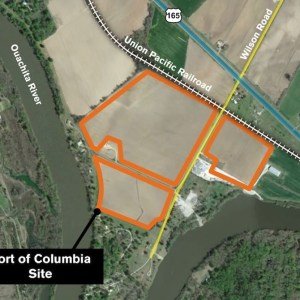
A state agency is providing a $1 million loan to add a rail spur connecting the Port of Columbia to Union Pacific’s main line. Louisiana Economic Development awarded the loan under its FastSites program, helping close a funding gap on the $7 million project. The port, on a 400-acre site, has direct access to the Ouachita River and U.S. Route 165, and is adjacent to UP’s (NYSE: UNP)Monroe Subdivision. Columbia is about 30 miles south of Monroe, La. “For a rural port like Columbia, FastSites provides critical gap financing that allows us to turn committed infrastructure funding into a project under construction,” Columbia Port Commission President Darron McGuffee said in a release. He pointed out that the project already has funding from the Louisiana Department of Transportation and Development, as well as federal funding through the Delta Regional Authority’s Community Infrastructure Fund. “The FastSites investment gives the port the financial flexibility needed to keep the project moving and maintain our construction schedule,” McGuffee said. “More importantly, this rail spur will provide public access to Union Pacific’s main line for our region, creating new transportation opportunities for existing businesses while strengthening our ability to attract future industrial investment like Louisiana Green Fuels.” “Adding rail access at the Port of Columbia opens another path for businesses across Northeast Louisiana to move goods and reach markets,” state Sen. Glen Womack said. “That kind of connectivity strengthens our ability to support the industries already operating here while creating more possibilities for companies looking to invest in the region.” The port expects to open the project for bids in November. Construction is expected to begin in the first quarter of 2027 and be completed by 2028. Subscribe to FreightWaves’ Rail e-newsletter and get the latest insights on rail freight right in your inbox. Read more: Climbing intermodal rail volumes more than treble commodities traffic gains Union Pacific CEO ‘99.99%’ confident rail merger will win approval Major chemical producer backs UP-NS merger Another strong week for industrial rail freight ‘Higher rates, less reliable service’: Family farmers oppose rail merger The post State loan to aid Louisiana port’s new rail connection appeared first on FreightWaves.
We’re kicking off this week’s Green Deals with a bunch of ongoing savings from last week’s big event alongside some newer deals. Leading the group is Segway’s GT3 Electric SuperScooter down at its $1,400 low for the rest of the week, not to mention the other models in the sale. We also have an exclusive bundle for Anker’s expanded 6,144Wh SOLIX F3000 Portable Power Station with an expansion battery and FREE home integration kit ($100 value) down at $2,118, as well as the Autel MaxiCharger AC Pro 80A Level 2 EV Charger back at its $909 low, the Greenworks 80V 20-inch Cordless Pole Hedge Trimmer kit at a new $243 2026 low, and GoTrax’s MK2 Electric Mini Motorbike for kids at a new $280 low – plus, several ongoing sales/deals from last week’s Prime Day event. You can also find the hangover deals from last week collected together in our latest Electrified Weekly roundup edition here. Head below for other New Green Deals we’ve found today and, of course, Electrek’s best EV buying and leasing deals. Also, check out the new Electrek Tesla Shop for the best deals on Tesla accessories. more…
Tesla CEO Elon Musk has spent over half a billion dollars on anti-EV political campaigns so far, with $276 million spent in just the last 3 months. Even Tesla acknowledges that these campaigns have harmed its business, costing it billions, and has taken the extraordinary measure of asking its CEO to stop – yet he’s only accelerated his anti-EV influence in response. more…
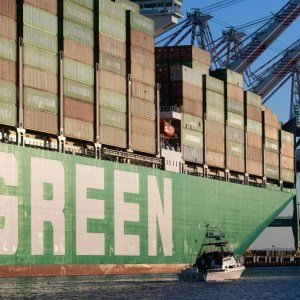
The Port of Los Angeles handled a record 1,042,652 twenty-foot equivalent units in September, marking the busiest month in its 118-year history as rising imports helped cap unprecedented quarterly and four-month cargo totals. Throughput exceeded the previous monthly record, set in July 2025, by more than 20,000 TEUs. The port handled nearly 3 million TEUs from July through September, its busiest quarter, and nearly 4 million TEUs from June through September, its strongest four-month stretch. Volumes that reflected an extended peak season on reliable demand defied economic uncertainty, rising interest rates, chaotic tariff policy, and assorted geopolitics. Loaded imports reached 545,696 TEUs in September, up 19% from a year earlier. Loaded exports increased 10% to 125,751 TEUs, while empty-container volume totaled approximately 371,206 TEUs, the highest monthly total in port history. window.googletag = window.googletag || {cmd: []}; googletag.cmd.push(function() { var gptSlot = googletag.defineSlot('/21776187881/FW-Responsive-Main_Content-Slot1', [[300, 100], [320, 50], [728, 90], [468, 60]], 'div-gpt-ad-1709668545404-0').defineSizeMapping(gptSizeMaps.banner1).addService(googletag.pubads()); googletag.pubads().enableSingleRequest(); googletag.pubads().collapseEmptyDivs(); googletag.enableServices(); setInterval(function() { if (!document.hidden) { googletag.pubads().refresh([gptSlot]); } }, 30000); }); googletag.cmd.push(function() { googletag.display('div-gpt-ad-1709668545404-0'); }); Through the first nine months of 2026, Los Angeles handled nearly 8.1 million TEUs, more than 3% ahead of the same period a year ago. Port Executive Director Gene Seroka in a media briefing attributed the cargo surge to resilient consumer demand, inventory replenishment and shippers allocating more freight to Los Angeles amid challenges along other global trade routes. “September was a month for the record books, and it was part of an extraordinary run for the Port of Los Angeles,” Seroka said. Seroka said tariffs had fallen from levels seen earlier this year, providing importers with greater cost certainty and allowing them to replenish inventories. He also cited continued consumer spending and challenges along the Suez and Panama Canal routes as contributors to the record cargo run. Los Angeles Mayor Karen Bass said the port’s performance reinforced its role as a local and national economic engine. She praised Seroka’s leadership and members of the International Longshore and Warehouse Union for their work handling the cargo. “Los Angeles is strong because our Port is strong, and none of this would be possible without our talented, dedicated, and skilled workforce,” Bass said. window.googletag = window.googletag || {cmd: []}; googletag.cmd.push(function() { var gptSlot = googletag.defineSlot('/21776187881/fw-responsive-main_content-slot3', [[728, 90], [468, 60], [320, 50], [300, 100]], 'div-gpt-ad-1665767553440-0').defineSizeMapping(gptSizeMaps.banner1).addService(googletag.pubads()); googletag.pubads().enableSingleRequest(); googletag.pubads().collapseEmptyDivs(); googletag.enableServices(); setInterval(function() { if (!document.hidden) { googletag.pubads().refresh([gptSlot]); } }, 30000); }); googletag.cmd.push(function() { googletag.display('div-gpt-ad-1665767553440-0'); }); Read more articles by Stuart Chirls here. Read more: Retailers say extended peak shipping season winding down US West Coast container rates edge lower window.googletag = window.googletag || {cmd: []}; googletag.cmd.push(function() { var gptSlot = googletag.defineSlot('/21776187881/fw-responsive-main_content-slot4', [[300, 100], [320, 50], [728, 90], [468, 60]], 'div-gpt-ad-1709668086344-0').defineSizeMapping(gptSizeMaps.banner1).addService(googletag.pubads()); googletag.pubads().enableSingleRequest(); googletag.pubads().collapseEmptyDivs(); googletag.enableServices(); setInterval(function() { if (!document.hidden) { googletag.pubads().refresh([gptSlot]); } }, 30000); }); googletag.cmd.push(function() { googletag.display('div-gpt-ad-1709668086344-0'); }); Global container volumes hit record 17.46 million TEUs Samsung seeks $186M from CMA CGM in container charges dispute Zim lifts profit forecast 72% on strong demand The post 1 million boxes set new Los Angeles port record appeared first on FreightWaves.
Smart is back in the two-seater business. The Mercedes-Benz and Geely joint venture unveiled the all-electric Smart #2 at the Paris Motor Show today, with a 35.8 kWh LFP battery, up to 290 km (180 miles) of WLTP range, and a starting price of €19,990. That’s more than double the range of the last Smart EQ Fortwo, which never got DC fast charging. Early orders open in Europe tomorrow, and deliveries start in 2027. more…
AITO will start selling cars in Europe in the fall of 2027. The Chinese luxury SUV brand, built by Seres with Huawei’s technology, confirmed the timing at the Paris Motor Show today, where it showed the AITO 9, 8, 7, and 6. AITO sold 426,000 vehicles in 2025, more than any other Chinese luxury brand. Now it has a date for Europe. But you won’t find the word “Huawei” anywhere in its Paris press kit. more…
Freight fraud can leave victims wondering whether anyone else has faced the same attack. Stolen identities, deceptive pickups and double brokering can strike businesses across transportation. Many companies never publicly discuss what happened afterward. Freight Fraud Awareness Day wants to change that. Freight Fraud Awareness Day returns Oct. 14 with advocates across transportation and insurance. This year’s campaign focuses on education, awareness and advocacy. Organizers encourage open dialogue about criminal schemes, industry impacts and available prevention resources. Verified Carrier, Truckstop, Northland Insurance, Travelers, GenLogs, FreightValidate and Freight Bites support the effort. Andrey Drotenko, president of strategic relations at Verified Carrier, discussed the campaign in a September interview with FreightWaves. “It’s a moment to slow down, compare notes, and just act together,” Drotenko explained. Participants can discuss incidents without revealing safeguards criminals might exploit. That approach allows useful intelligence to circulate while protecting sensitive procedures. This marks the third annual Freight Fraud Awareness Day. FreightWaves covered the inaugural campaign in October 2024. Early efforts focused on building awareness around transportation scams. Organizers plan new opportunities for professionals to share expertise in coming years. ‘It’s not just me’ Drotenko compared fraud victims with friends discovering they share similar struggles. Another person might reveal an experience that suddenly feels familiar. “Oh, it’s not just me,” he recalled. That realization reflects the campaign’s push for more open dialogue across transportation. Gary Thomas, manager of risk and mitigation at SPG Cargo & Logistics, has watched criminal tactics evolve. Traditional offenders once needed physical proximity to targeted freight. Digital tools now allow identity manipulation from almost anywhere. Modern security providers must counter methods that barely existed a decade ago. “We went from a traditional bad guy waiting at the truck stop,” Thomas explained. Criminals can now “digitally manipulate somebody’s identity and the supply chain.” Technology has changed the threat facing commercial transportation. “By working together we hope to bridge that gap.” Criminal methods keep changing Retired Los Angeles County Sheriff’s Detective Gerardo Pachuca has watched offenders exploit transportation knowledge. “Cargo theft has been exploding,” Pachuca explained. Some criminals understand legitimate operations before turning that experience against businesses. “They know how to exploit and misuse those loopholes on the dark side of the industry.” Federal investigators are seeing similar threats. The FBI’s Memphis Cargo Theft Task Force has warned that cyber-enabled schemes allow criminals to identify valuable shipments before arriving for pickup. Those tactics demonstrate how deception can turn legitimate freight movements into theft opportunities. Chuck Forsaith, vice president of the Pharmaceutical Cargo Security Coalition, has witnessed another shift. Earlier cases often involved thieves physically taking merchandise. Modern schemes increasingly rely on deception instead. Pharmaceutical losses create additional risks when stolen products return to legitimate commerce. “Back then it was almost exclusively what we would call straight theft,” Forsaith explained. Today’s methods depend more heavily on some form of fraud. Criminals may ignore required quality controls after taking pharmaceutical products. “That can significantly impact the integrity of the products once they are reintroduced into a supply chain.” Freight Fraud Awareness Day gives transportation professionals an opportunity to bring those experiences into the open. Companies can discuss what happened without exposing every security measure protecting their operations. Those accounts may reveal threats another business has never encountered. They can also remind victims of something much simpler. It’s not just me. Why It Matters Criminals benefit when fraud stays hidden. Sharing real incidents can expose patterns, close information gaps and help stop the same scheme from hitting someone else. CFCO In my opinion, awareness matters most when professionals know what to do next. The FreightWaves Certified Fraud Compliance Officer course turns fraud prevention into a repeatable verification process. Training helps teams question inconsistencies, recognize warning signs and make stronger decisions before freight moves. A consistent approach can stop one overlooked detail from becoming an expensive loss. Click here for more articles on cargo theft and freight fraud by Phil Brink. Man gets 2 years for $3.5M Amazon fraud using 23 trucking accounts – FreightWaves LAPD uncovers $1M in stolen BNSF and Union Pacific rail cargo at Los Angeles–area shoe retailer – FreightWaves Thieves clone $60K shipment, redirect 41,000 pounds of glycerin in Illinois – FreightWaves The post Freight Fraud Awareness Day returns as strategic cargo theft reshapes trucking appeared first on FreightWaves.
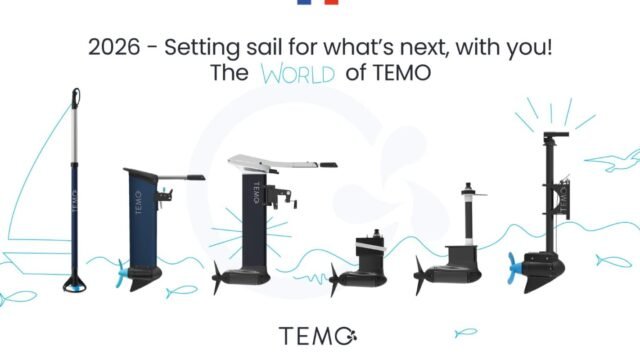
French electric marine motor manufacturer TEMO is bringing its latest electric propulsion system to North America, offering sailboat owners an interesting middle ground between a conventional outboard and a permanently installed pod drive. more…
Many transportation executives seem to place vehicle compliance in the same mental category as expense reports and badge renewals. It’s necessary, but it’s largely forgettable and delegated to the back office. That might have made sense when fleets were smaller and simpler, but it breaks down as soon as a fleet crosses state lines, adds vehicles faster than it adds people, or absorbs another company’s assets through acquisition. Registrations, titles, taxes, permits, credentials, filings, and renewals aren’t paperwork about the fleet. They’re the legal condition the fleet operates under. A truck that’s fueled, inspected, and road-ready but sitting on an expired registration isn’t a viable fleet asset for a customer waiting on a load. It’s unavailable for an inexcusable reason. Scale and geography multiply the complexity of vehicle compliance in ways that are easy to underestimate. Every additional state brings its own agency, its own deadlines, its own exceptions, and its own system quirks. A fleet that operates in five states is managing five sets of rules that rarely line up; a fleet that operates in thirty is managing a level of administrative complexity that requires a lot more than simple back-office delegation. “Leading fleets are not focused on compliance alone; they are focused on operational continuity,” said Stephanie Schmidt, Vice President of Client Service at J. J. Keller & Associates, Inc. “Expert-led vehicle compliance can reduce administrative burden, improve visibility into fleet assets, and help ensure critical compliance activities are executed consistently. As an example, outsourcing vehicle compliance allows internal teams to stay focused on customers, growth, and day-to-day operations rather than managing complex regulatory processes.” Executives often underestimate how directly administrative compliance affects asset availability. A vehicle that is mechanically ready but administratively unable to operate is still an unavailable asset, turning what appears to be a paperwork issue into an operational and financial one. Compliance work absorbs more than clerical hours. It requires staff who understand deadline cadences across jurisdictions, who can validate data against agency requirements, who know how to chase down an agency that’s slow to respond, and who can handle the exceptions that don’t fit the standard process. That expertise takes years to build, and once it’s built, it’s rarely replaceable on short notice. The real cost shows up as opportunity cost. Every hour an experienced operations or safety employee spends untangling a title problem or a registration exception is an hour not spent on customers, growth initiatives, or operational priorities. Executives are left with a narrower set of choices than they’d like: add headcount, pull people off higher-value work, accept slower turnaround on renewals and filings, or absorb more risk. “Vehicle compliance extends well beyond renewals and registrations,” Schmidt said. “Each jurisdiction has its own requirements, timelines, processes, and regulatory nuances, making experienced professionals and established agency relationships difficult to replace. As organizations face turnover or staffing changes, having consistent access to dedicated specialists helps preserve consistency, reduce risk, and keep fleets operating legally and efficiently.” For growing fleets, the question is less whether compliance work gets done and more whether the organization has a sustainable model for executing it at scale. The fleets most exposed to compliance risk are often the ones that are otherwise performing well. They’re growing quickly, adding lanes, or expanding into new states. An inefficient process that worked cleanly when the fleet had a few hundred units and operated in a handful of states can show weak points at a few thousand units across dozens of jurisdictions. More vehicles mean more transactions, more renewal cycles, more exceptions, and more agency systems to navigate, each with its own quirks and requirements. Growth by acquisition compounds the problem. Research from the J. J. Keller Center for Market Insights found that 94% of transportation organizations encountered unexpected risks or complexities during a merger or acquisition, with documentation and recordkeeping among the most common challenges. An additional 93% reported significant concerns during the transaction process, including operational disruption and delays. Vehicle compliance often sits at the center of those risks because acquired assets must be integrated into existing compliance processes without interrupting operations. “One of the less visible challenges of an acquisition is ensuring every acquired asset can continue operating legally and without interruption,” Schmidt said. “Vehicle compliance becomes a business continuity issue when fleets inherit different registration practices, title-management processes, and state requirements. Experienced partners and proven processes can help protect operational continuity during periods of rapid growth and change.” Institutional knowledge is one of the hardest things to scale. The person who knows why a particular state handles a filing differently, or which agency contact to call when a renewal stalls, is difficult to replace, and nearly impossible to replicate quickly when a fleet doubles in size or absorbs a new set of jurisdictions overnight. The consequences of a compliance breakdown rarely stay contained to the back office. A missed renewal can delay dispatch on a load that’s already been sold. An incomplete filing can turn into an urgent, all-hands correction. An expired credential can create exposure at a roadside inspection that costs far more in downtime and driver disruption than the filing itself would have. None of these show up on a compliance dashboard until they’ve already become an operations problem like downtime, rework, lost productivity, customer complaints, and lost time and revenue associated with each. The cost of noncompliance includes the cost of interruption, and those costs can compound in unpredictable ways. A delayed load, for instance, can cost a customer relationship or reputation. Disaster preparedness is a subset of this same risk, especially as it pertains to proper storage and handling of documentation. “Vehicle titles are among the most critical documents tied to a fleet, yet many organizations store them across multiple offices, filing systems, or locations,” Schmidt said. “Secure offsite title management helps protect these assets from loss, damage, theft, or natural disaster while keeping records accessible when needed. As part of a broader risk-management strategy, it gives leaders confidence that ownership documentation remains protected during unforeseen events.” None of this means every fleet should outsource compliance. It means every fleet should evaluate whether its current approach can reliably support growth, turnover, and increasing regulatory complexity. An internal model works when an organization can sustain the specialization, staffing depth, and backup coverage that multi-jurisdiction compliance demands. A hybrid model keeps core ownership in-house while routing high-volume, specialized, or exception-heavy work to outside support. A fully externally supported model makes sense when predictable execution, geographic reach, or scalable capacity are difficult to maintain internally, especially through growth or turnover. The goal in any of these arrangements should be to strengthen execution wherever the organization’s internal model is stretched thin. Executives should be asking these questions: Does current staffing have the capacity to absorb deadlines, exceptions, and growth? Is the team’s jurisdictional expertise deep enough to survive turnover? What level of risk is acceptable when work is delayed or done incorrectly? How exposed is asset availability to an administrative failure? Can the current model scale as the fleet’s footprint changes? And where should internal expertise be concentrated for the greatest return to the business? Vehicle compliance is no longer a back-office function for complex, multi-state fleets. It is a business capability that directly influences fleet readiness, growth, and risk. The strongest operating model is the one that gives leaders confidence that vehicles can remain legally available to serve customers as the business evolves. Click here to learn more about J.J. Keller & Associates, Inc. The post The Hidden Business Risk Inside Fleet Compliance appeared first on FreightWaves.
TURKEY: Ministers formally inaugurated the 153 km Çerkezköy – Kapıkule section of the Halkalı – Kapıkule railway on October 9, representing the latest step in the creation of a double-track electrified main line from Istanbul to the Bulgarian border. The inauguration was attended by President Recep Tayyip Erdoğan, Transport & Infrastructure Minister Abdulkadir Uraloğlu and Marta Kos, European Commissioner for Enlargement. The remaining section between Çerkezköy and Istanbul is still under construction. Once completed, the project will deliver a 200 km/h mixed traffic railway between Istanbul and the border at Kapıkule, mostly running on a new alignment, to strengthen passenger and freight connections between Turkey and the European Union. Construction The construction contract for the newly-opened section connecting the industrial centre of Çerkezköy with the border station at Kapıkule was signed on June 11 2019 by a joint venture of Salini Impregilo (now Webuild) and Kolin. The European Union provided €275m to support the project. Programme supervision was undertaken by TPF, Eptisa Servicios de Ingeniería and Eptisa Mühendislik ve Müşavirlik. The infrastructure includes 31 bridges, eight cut-and-cover tunnels, two viaducts, 114 overpasses and underpasses and 175 culverts. Edirne station has been modernised and three 400 m platforms added. Kapıkule and Çerkezköy stations have been upgraded, and new stations have been built at Lüleburgaz, Babaeski and Büyükkarıştıran. Inauguration Uraloğlu visited the newly completed Edirne station and its railway museum before the inauguration ceremony, which was held at Babaeski station at 13.30. Revenue-earning services began on October 10, including three pairs of non-stop trains between Çerkezköy and Edirne. The night trains between Halkalı and Sofia have been retimed to run over the new line. The opening brings Tekirdağ, Kırklareli and Edirne provinces into Turkey’s high speed network, increasing the number of provinces served by national operator TCDD Taşımacılık’s YHT-branded inter-city services from 11 to 14, according to Uraloğlu. During the opening ceremony, Erdoğan said ‘transport will speed up, logistics will be strengthened and the travel process will become faster. Trade and tourism will become even more vibrant. This will make a very significant contribution not only to the cities but also to the economy of Thrace and Turkey as a whole. I thank the wonderful people of Kırklareli for welcoming us so warmly. We are here to inaugurate a very important project. I also thank Marta Kos, the European Union Commissioner for Enlargement, for sharing our excitement.’ Freight capacity is a central objective The project is expected to improve access to European markets for manufacturers in northwestern Turkey. According to Uraloğlu, 86% of Turkey’s rail freight exports in 2024 passed along the Halkalı – Kapıkule corridor, underlining the importance of the route as the country’s principal rail gateway to the EU. Once all sections are operational, the ministry expects passenger journey times between Halkalı and Kapıkule to fall from around 4 h to just 90 min. Freight transit time is projected to decrease from approximately 8 h 30 min to around 3 h 30 min. Annual freight capacity is expected to increase from 1.5 million tonnes to 9.5 million tonnes, while passenger throughput is predicted to grow from 600 000 to approximately 3 million journeys a year. These are projections for the completed corridor, rather than the immediate effect of opening the Çerkezköy–Kapıkule section. Two unfinished sections The new and rebuilt Halkalı – Kapıkule corridor is 228.4 km long in total, with the construction work having been split into three sections. The Çerkezköy – Kapıkule section is 153 km long, while the remaining sections where work is ongoing cover the 67 km between Ispartakule and Çerkezköy, and the 8.4 km long Halkalı – Ispartakule link. The Halkalı – Ispartakule section includes 6.4 km of twin-bore tunnels constructed using tunnel-boring machines, 634 m of cut-and-cover tunnels and 1.38 km of open railway. The two main tunnel drives have been completed, with the remaining works intended to enable testing and commissioning. Completion has been targeted for the end of 2026, with the opening expected to follow in 2027. The Ispartakule – Çerkezköy section is being delivered separately by the Gülermak-YSE joint venture. The project has an estimated total cost of approximately €640m and is being supported by financing from the European Bank for Reconstruction & Development and the Asian Infrastructure Investment Bank. However, construction has been affected by land acquisition and other implementation issues,. The opening does not mean that all existing railway infrastructure in European Turkey will become redundant. The 31 km Muratlı – Tekirdağ railway, linking the port area with the existing main line, is expected to remain in use, providing a link to Çerkezköy and Çorlu via the legacy route. Turkey: Freight won’t wait Turkey – Bulgaria reconstruction contract halted