A three-month field experiment with 133 patent attorneys shows that AI boosts immediate performance, with junior lawyers gaining the most. But when the AI is taken away, only senior attorneys retain the benefits, suggesting that baseline expertise is a prerequisite for turning AI-assisted practice into lasting skill. The article AI makes junior patent attorneys instantly better but may quietly stunt their professional growth appeared first on The Decoder.
During a lengthy news conference on Friday, NASA provided a detailed overview of how it plans to return astronauts to the lunar surface as soon as 2028 as part of its Artemis Program. Although much of the information behind these plans has been previously reported at Ars Technica and elsewhere, this marked the first time NASA has laid them out in detail and acknowledged some substantial changes in the architecture. Most notably, for SpaceX's Starship vehicle, the revised plan calls for the Orion spacecraft to dock with the Starship lunar lander in high-Earth orbit before transiting to the Moon. And for Blue Origin, the mission architecture includes four launches of the New Glenn rocket, but no spacecraft-to-spacecraft refuelings. Additionally, the Blue Origin plans allows for the possibility of its Blue Moon lander rendezvousing with Orion in low-Lunar orbit.Read full article Comments
Defense Secretary Pete Hegseth issued a memo warning military personnel against using nonpublic information to make bets on prediction markets, saying the wagers could give important clues to enemy countries. "Do Not Compromise Military Operations for Personal Financial Gain," said the subject line of an October 20 memo published yesterday by CBS News. Hegseth's memo was sent to senior Pentagon leadership, Combatant Command leaders, and Defense Department field activity directors. Hegseth wrote:Read full article Comments
Using Google's products and services has always been fundamentally precarious—doing so gives the world's largest advertising company a lot of juicy personal data. Google has long said it won't use the sensitive data from products like Gmail, Drive, and Photos for ad personalization, but a change to the company's privacy policy appears to dismantle that firewall. On October 16, Google issued an update to its privacy policy, spotted by Android Authority. The ad personalization section used to include a clear limit on data from certain apps. "We don’t show you personalized ads based on your content from Drive, Gmail, or Photos," the document said. Now, Google has updated it with the following language. Updated language on when your sensitive data might inform ads. Credit: Google This equivocation opens the door to using data from apps like Gmail and Photos in ads when it's shared with other Google services, and it just so happens Google has a mechanism for doing that, with Personal Intelligence. The company released Personal Intelligence in early 2026, allowing users to hand data from multiple apps to Google AI products. The idea is that the added context from your existing data will lead to better AI answers, but it's also proving to be a privacy minefield.Read full article Comments
TechCrunch Founder Summit 2026 is coming to SoWa Power Station in Boston on November 4, bringing founders, investors, and operators together for a full day of candid conversations, practical sessions, live pitching, networking, and smaller roundtables built for deeper discussion.
GM has partnered with Peak Energy to develop next-generation sodium-ion battery cells, but they’re not going into EVs – they’re for grid-scale energy storage projects. GM Ventures is making a strategic investment in Peak Energy. more…
In the Electrek Podcast, we discuss the most popular news in the world of sustainable transport and energy. In this week’s episode, we’ll discuss Tesla’s earnings, new BYD Seagull, Mustang Mach-E update, and more. more…
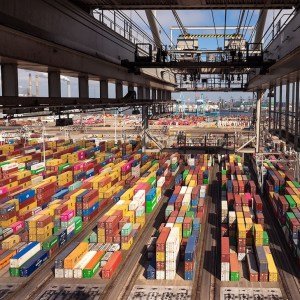
Drewry’s World Container Index rose 2% to $4,585 per 40-foot container, supported by higher rates on trans-Pacific and Asia-Europe routes as strong U.S. import demand and carrier capacity cuts bolstered pricing. Shanghai-to-Los Angeles rates increased 2% to $8,007 per 40-foot container, while Shanghai-to-New York rates edged up 1% to $10,166. Drewry expects trans-Pacific rates to remain stable next week, with U.S. import demand continuing to support the market despite an increase in available capacity. Carriers have announced only two blank sailings on the trans-Pacific for next week, down from six this week, according to figures from Drewry’s Container Capacity Insight. The service tracks scheduled and canceled sailings, effective capacity and port congestion across major trade lanes. Rates from Shanghai to Rotterdam rose 3% to $3,632 per 40-foot container, while Shanghai-to-Genoa rates increased 5% to $4,152. Unlike the trans-Pacific, the Asia-Europe trade faces more sailing cancellations next week. Carriers have announced eight blank sailings, up from two this week, tightening available capacity as they seek to put upward pressure on freight rates. Drewry expects Asia-Europe rates to increase slightly next week as capacity reductions support pricing. The cuts come as congestion at key Asian ports eases. Vessel waiting times at Shanghai fell from 97 hours in Week 38 to 38 hours in Week 42, signaling a substantial improvement in port operations. Security risks and attacks on ships continue to affect vessel movements through the Persian Gulf. Only two containerships sailed into the Gulf in Week 42, down from five the previous week. Meanwhile, sailings through the Suez Canal increased slightly, from 54 in Week 41 to 55 in Week 42. Why it matters: The increase signals continued cost pressure on importers, even as congestion at major Asian ports eases. Strong U.S. demand is supporting trans-Pacific rates, while Asia–Europe carriers are canceling more sailings to tighten available space and bolster pricing, leaving shippers’ costs dependent on both cargo demand and carrier capacity decisions. Read more articles by Stuart Chirls here. Read more:Russian diesel tanker heads for U.S. following Trump-Putin deal Time-definite ocean delivery? Container ship completes new Arctic route trial How new capacity is raising rates in chaotic ocean market No. 2 container line studying US-UK route for nuclear ships Trans-Pacific facing new booking risks as reliability sinks The post New Drewry data shows import demand boosting trans-Pacific rates appeared first on FreightWaves.
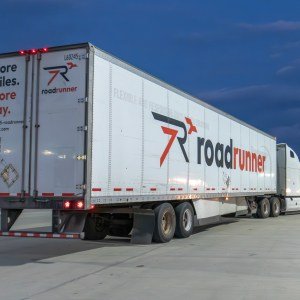
Less-than-truckload carrier Roadrunner announced a new outbound Canada-to-U.S. service on Friday. It also announced a 5.9% general rate increase, which will be effective on Nov. 2. Roadrunner’s (OTC: RRTS) new service connects shippers across Canada to approximately 40 major metro markets in the U.S. The direct linehaul service is executed entirely by truck, with no shipments touching the railroads. “We built a proprietary Smart Network for direct, long-haul, metro-to-metro service, delivering fewer handling points, faster transit, real-time visibility, and greater accountability with no unnecessary transfer points to delay shipments or compromise visibility,” said Dave Black, vice president of strategic sales at Roadrunner. “We have focused primarily on strengthening our U.S. network, and we are pleased to announce our next phase of expansion.” Roadrunner was already serving U.S.-outbound lanes into Canada. Its metro-to-metro, long-haul network utilizes independent drivers and over 40 terminals to provide LTL service to shippers. window.googletag = window.googletag || {cmd: []}; googletag.cmd.push(function() { var gptSlot = googletag.defineSlot('/21776187881/FW-Responsive-Main_Content-Slot1', [[300, 100], [320, 50], [728, 90], [468, 60]], 'div-gpt-ad-1709668545404-0').defineSizeMapping(gptSizeMaps.banner1).addService(googletag.pubads()); googletag.pubads().enableSingleRequest(); googletag.pubads().collapseEmptyDivs(); googletag.enableServices(); setInterval(function() { if (!document.hidden) { googletag.pubads().refresh([gptSlot]); } }, 60000); }); googletag.cmd.push(function() { googletag.display('div-gpt-ad-1709668545404-0'); }); The GRI is expected to average 5.9% across general tariff codes and lanes. The announcement follows other recent rate implementations from carriers. “To support expansion and further investment in better offerings, we’re introducing the GRI to sustain investment in our leading network,” said Nathalie de Champlain, chief transformational officer. “The adjustment addresses increased costs driven by market conditions and supports continued investment in network efficiency and service quality.” Why it matters? Roadrunner’s new direct, truck-only Canada-to-U.S. service provides LTL shippers with faster transit, fewer handling points and improved visibility across roughly 40 major U.S. metro markets. Additionally, its 5.9% GRI highlights how carriers are adjusting prices to combat rising operating costs and invest in their networks. More FreightWaves articles by Todd Maiden: Knight-Swift again eyes big rate increases as new bid season nears Heartland Express sees earnings turnaround in Q3 Werner Enterprises issues Q3 profit warning The post Roadrunner announces Canada-outbound service appeared first on FreightWaves.
The Malik Lab thrives on competition. But for HHMI investigator Harmit Malik and his team at the Fred Hutchinson Cancer Center, it's the genomes—not the people—that are in conflict. The lab studies rapid evolution—the genetic changes that happen in a species over a few generations rather than thousands of years. These fast changes are often fueled by genetic conflicts—competitions between different entities trying to maximize their success at the expense of another.
Pollution from human-generated waste in marine ecosystems has reached critical levels, with cigarette butts (CBs) among the most persistent and harmful pollutants. Globally, an estimated 4.5 trillion cigarette butts are discarded annually, making them the most common type of litter on beaches over the past three decades.
Researchers at the University of Helsinki wanted to understand which is the dominant factor for species occurrence and abundance: the climate or habitat-related variables, such as their natural state and the share of land shaped by human activity. Solutions to mitigate biodiversity loss depend on the answer to this question.
South Africa endured its worst year of load shedding (scheduled power cuts by the country's utility, Eskom) in 2023. The power went off on 335 of the year's 365 days, often several times a day. Since then, the country has gone more than a year and a half without these planned power cuts.
Australia Face Selection Headaches After 'Shambolic' South Africa Defeat NDTV Sports'Playing for their careers' - Australia reeling after extraordinary day BBCSouth Africa’s slow, sudden victory over Australia reminded us why Test cricket is special - The Athletic The New York Times
Sri Lanka make 430 to beat England after Brook's 202 BBCEngland vs Sri Lanka, ODI tri-series: Cricket score, reaction, video and analysis as Harry Brook's side lose astonishing match in Rawalpindi Sky SportsSri Lanka pull off a monumental ODI chase against England ICC
'Playing for their careers' - Australia reeling after extraordinary day BBCAustralia bowled out for 99 and trail by 170 runs at 156-4 having been forced to follow on by South Africa in men’s second Test – as it happened The GuardianSouth Africa vs Australia: Baggy Greens skittled for 99 after sensational Proteas bowling performance on day four of second Test Sky Sports
South Africa v Australia: second men’s cricket Test, day four – live The GuardianAustralia limp to 3-1 after South Africa post 425-9 on day three of men’s second Test – as it happened The GuardianTemba Bavuma's Historic Century Shatters Rohit Sharma's Huge WTC Record NDTV Sports
Enterprise Mobility is rapidly expanding opportunities for companies to enhance clients’ engagement levels and simplify and improve their interactions. Unfortunately,…