Smart #2 revives the electric Fortwo with 290 km of range for €19,990
Transportationvia Electrek
Quick Read
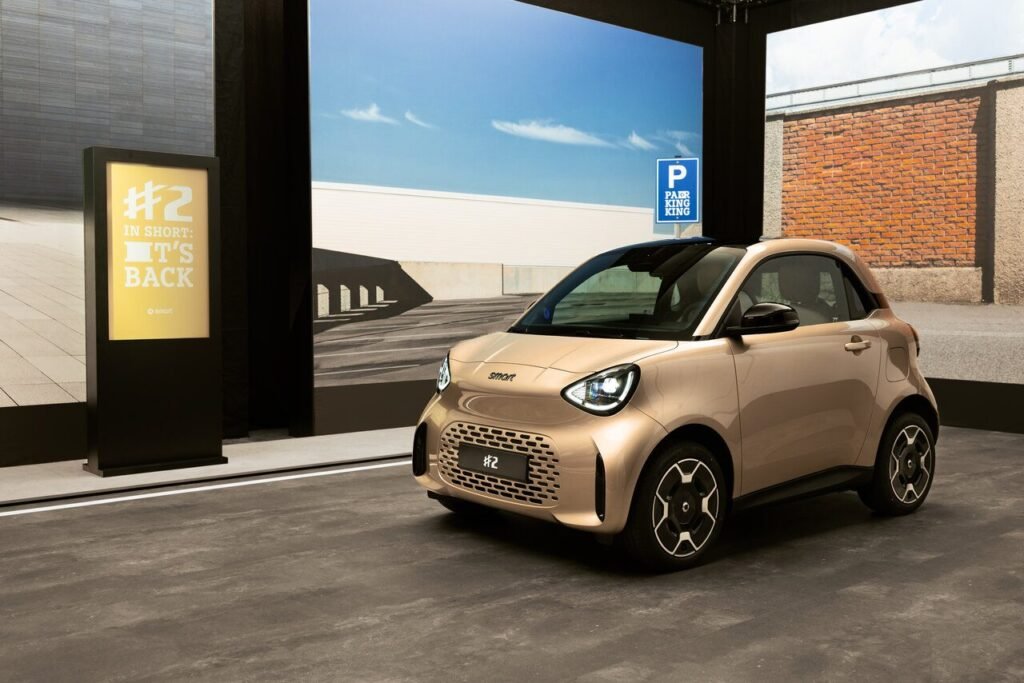
Smart is back in the two-seater business. The Mercedes-Benz and Geely joint venture unveiled the all-electric Smart #2 at the Paris Motor Show today, with a 35.8 kWh LFP battery, up to 290 km (180 miles) of WLTP range, and a starting price of €19,990. That’s more than double the range of the last Smart EQ Fortwo, which never got DC fast charging. Early orders open in Europe tomorrow, and deliveries start in 2027. more…
Smart is back in the two-seater business. The Mercedes-Benz and Geely joint venture unveiled the all-electric Smart #2 at the Paris Motor Show today, with a 35.8 kWh LFP battery, up to 290 km (180 miles) of WLTP range, and a starting price of €19,990.
That’s more than double the range of the last Smart EQ Fortwo, which never got DC fast charging. Early orders open in Europe tomorrow, and deliveries start in 2027.
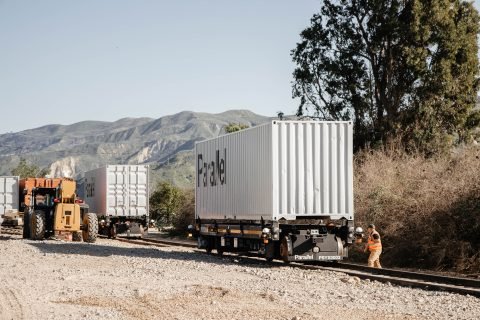
USA: Autonomous battery-electric wagon technology company Parallel Systems has raised $100m in new capital. This will support commercialisation and at-scale manufacturing of its third-generation Panther vehicle, which aims to combine the flexibility of a lorry with the cost and environmental efficiencies of rail. The company has so far raised more than $200m. Since closing its Series B round in 2025, Parallel has successfully transitioned from initial prototyping to live commercial deployment under regulatory test approval. ‘Closing our Series C round is a major inflection point for Parallel and as well as the short-haul logistics industry, and is the strongest market signal to-date that autonomous freight rail is ready for its moment’, said CEO Matt Soule, a former SpaceX engineer who co-founded the company in 2020. ‘With the FRA-approved pilot proving our platform in real-world corridors, this capital will directly fund the production scale-up of our Panther vehicles and accelerate our entry into international markets hungry for lower cost, more resilient supply chains.’ New investors include AVP which led the round, Hillspire, Agility Global and Cobalt Capital, with participation from existing investors including Anthos Capital, Congruent Ventures, Riot Capital and Collaborative Fund. From ‘if’ to ‘how soon?’ A pilot project is underway with Genesee & Wyoming in Georgia, operating under Federal Railroad Administration supervision, and Parallel says ‘a number of major railroads’ are now under contract to deploy the technology to transport commercial freight. Parallel has ‘built a proven, viable and scalable autonomous freight rail platform that has generated significant commercial interest among the major rail companies in the US and globally’, said Executive Chairman Arun Gupta on October 7. ‘We are now past the question of “if” and fully onto “how soon?”’ Parallel Systems and Abu Dhabi listed logistics investor Agility have announced a strategic collaboration to develop, commercialise, finance and deploy autonomous rail freight technology across the Europe, the Middle East and Africa. The collaboration aims to combine Parallel’s technology with Agility’s market access, logistics expertise, infrastructure development capabilities, relationships with regional stakeholders and reach across the freight and supply chain ecosystem. ‘With major rail and port projects advancing across the GCC, now is the time to build technology into the region’s infrastructure and resilience plans’, said Tarek Sultan, Agility Chairman. ‘Autonomous rail could help unlock additional port capacity and improve container flows.’ Read Railway Gazette International’s interview with Parallel Systems co-founder and CEO Matt Soule.
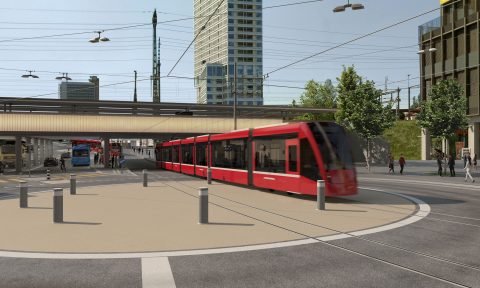
SWITZERLAND: Federal transport office BAV has granted planning approval for the proposed Bern – Ostermundigen tram line, which will replace the heavily used eastern branch of Bernmobil bus Route 10 to increase capacity on a corridor which currently carries more than 8.5 million passengers/year. The project had received the backing of voters in the city of Bern, Ostermundigen municipality and the canton of Bern ahead of the granting of planning approval in September. A project company, Tram Bern Ostermundigen, has been established by Bernmobil, the city of Bern and Ostermundigen to oversee implementation. The cost is estimated at SFr264m, to be shared by the federal government, canton, city of Bern, Ostermundigen and local utility companies. The 4.5 km line will connect Viktoriaplatz in Bern with Oberfeld in Ostermundigen, running partly on dedicated infrastructure and partly in mixed traffic. There will be 12 stops, all with 456 m long platforms with step-free access. Eight stops will offer interchanges with other public transport services. An interchange at Ostermundigen station will bring together tram, bus and rail services to create a transport hub where ridership is expected to increase by two-thirds by 2040. The project also includes extensive reconstruction of the streetscape, with pedestrian crossings to be provided at roundabouts and stops and almost continuous cycle lanes provided in both directions. Preparatory utility works began in 2024. The main construction programme had originally been expected to start in early 2026, but this timetable could not be maintained because of organisational and logistical issues and delays in the approval process. The construction period is expected to be four to five years once the main works get underway.
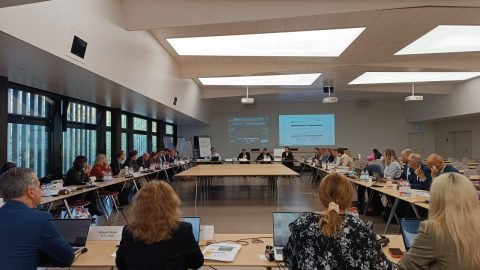
EUROPE: More than 40 representatives of rail freight organisations including train operators, wagon keepers and policymakers came together in Bern on October 7 to discuss a potential overhaul of the General Contract of Use for Wagons. The GCU is a multilateral contract which sets out the mutual rights and obligations of Wagon Keepers and Railway Undertakings with regard to the use of wagons in Europe and beyond, based on the COTIF 1999 convention and its Annex D. Since it came into force in July 2006 the GCU has grown to an network of around 840 signatories across 20 countries, with around 600 000 wagons currently declared in the GCU database. However, the European Rail Freight Association says the GCU is now overdue for reform to ‘reflect the business model and needs’ of operators and wagon keepers today. ERFA says operators, wagon keepers and entities in charge of maintenance need clearly defined roles to ensure that they understand pre-departure checks the same way. ERFA is also concerned about liability: it says operators too often have to prove that a wagon defect was not their fault, and latent defects make this worse. It also says too little data is flowing between operators, ECMs and keepers, or it is ‘lost in translation’. Wagon keepers’ association UIP has told RailFreight.com that a slightly increase in the €300 annual contribution paid by signatories could ‘improve the functioning of GCU immensely’, enabling the establishment of a dispute resolution system, improving standardisation and increasing efficiency. A larger meeting is planned for later this year to discuss what any changes to GCU could look like in practice. A version of this article was first published by Railway Gazette International’s sister title RailFreight.com.