The executive order (EO) from President Donald Trump on implementing the red dye diesel tax break has been formally published, but it is thin on fixing a fundamental problem with the policy: state and federal rules are not in sync. The executive order was published in the Federal Register Friday. It is just four pages in length. After citing unspecified “historic efforts to ensure fuel affordability for our citizens,” the executive order says “it is clear that further temporary relief is necessary.” The EO directs Secretary of the Treasury Scott Bessent to “use his authority to defer certain diesel fuel tax payment obligations.” Bessent also is to look at waiving penalties that might other be incurred for the use of red dye diesel in over the road applications. Red dye diesel gets its name through the fact that it is red in appearance because a dye has been blended into it. The dye has no impact on its performance. The dye is blended so that certain end uses, primarily agricultural, can consume red dye diesel and avoid paying the federal excise taxes of 24.3 cts/g. Federal excise taxes on diesel also include a 0.1 cts/g fee for the Leaking Underground Storage Tank Trust Fund Fee. Break goes through December 31 The deferral period, if it is declared following a five-day review period, would be for October 5 through the end of the year. But the goal is that the deferral be made permanent, so that the tax break for the remainder of the year ultimately would not need to be paid. “The Secretary shall explore avenues, including legislation, to eliminate the obligation to pay the amounts deferred pursuant to the Secretary’s exercise of authority described in section 2 of this order,” the EO said. But states have laws that prevent the consumption of red dye diesel on their respective roads. Wholesale and retail outlets are set up to provide a supply chain for non-dyed diesel which remains liable for the federal excise taxes, and that means they in only rare cases would have segregated tanks and pipelines that are targeted at red dye diesel. The EO calls on the Treasury Secretary to “engage with State governments, relevant industry leadership as determined by the Administrator, and relevant labor organizations as determined by the Administrator to encourage safe and expedient coordination between the Federal Government and these various stakeholders in furtherance of the policies of this order.” Some states already have acted A wide range of states have changed their policies in recent weeks to allow red dye diesel on their roads. Texas, Indiana, Illinois, Nebraska, North Dakota, Ohio, Oklahoma, North Carolina, Arkansas and Alabama are all states that have made some sort of concession in their state rules to promote the use of red dye diesel and its lower cost. But as has been noted by several critics of the red dye diesel policy, crossing from a state with a waiver into one that doesn’t have it is going to create a tax-paying nightmare for trucking companies. The extra bookkeeping effort may not be worth the tax break. As Breakthrough Fuel said in a summary of the proposed change, after rating the impact from the tax shifts to be “low” at the retail level, it noted that “Highway lanes rarely carry dyed fuel, interstate routes cross non-relief states, and clear diesel pricing is unchanged by the order.” The order also targets greater distribution by ordering the Treasury Secretary to “(coordinate) with agricultural cooperatives, rural fuel distributors, farm supply organizations, and other agricultural stakeholders, as determined by the Secretary of Agriculture, to ensure adequate distribution of dyed diesel for their use in high-demand areas.” More articles by John Kingston FMCSA’s Elison: ‘weeks’ away from fixing Motus user experience Wall Street analysts positive on C.H. Robinson deal; S&P more cautious FMCSA split sleeper berth pilot program moves closer to launch The post Formal EO order on red dye diesel short on specifics appeared first on FreightWaves.
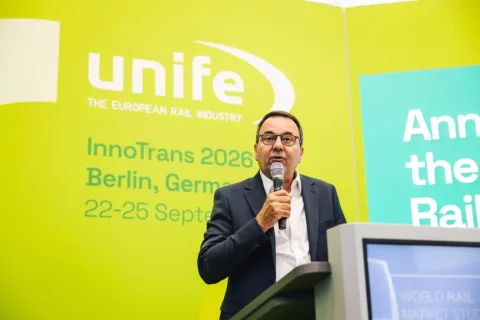
INTERNATIONAL: The demand for railway products and services is expected to continue growing steadily over the next five years, according to the 11th World Rail Market Study commissioned by European suppliers’ association UNIFE. Launched at InnoTrans 2026, the study undertaken for UNIFE by Bain & Co looks at developments in market size across 66 countries accounting for 99% of global demand. The overall market is projected to expand at an average of 3.2% per year from around €221bn in 2023-25 to €266.8bn in 2029-31. The study confirms that the market has recovered fully from the downturn caused by the Covid-19 pandemic, recording an average growth rate of 4.6% in recent years. Growth in the European market has slowed with the ending of various post-Covid recovery schemes, but other markets are still growing strongly. Regional variations The study forecasts that the markets in Western and Eastern Europe will grow by an average of 3.7% and 3.6% per year until 2031, driven in part by further liberalisation. Asia Pacific is expected to remain the largest region, with a predicted growth of around 3.5% per year. Increased demand from India and other countries in the region is expected to offset any slowing of the Chinese rail market. North America is set to grow by 3.0% per year in the years ahead, while Latin America will increase strongly at a projected 5.5% per year thanks to a pipeline of urban, freight and passenger projects. Africa and the Middle East will see slower growth for the period, at just 1.2% per year, and the Commonwealth of Independent States will grow at just 0.7% per year. Accessibility concerns remain While the overall market is growing, UNIFE expressed concern that market access for European suppliers continues to decline. The latest study suggests that European companies can only access 56% of the global rail market, down from 59% in 2024 and a historic high of 70% in the 2008. This is partly down to stronger growth rates in less-accessible regions but also to increased protectionism in countries such as China, the USA and India. The association estimated that this means reduced business opportunities amounting to around €97bn per year. ‘Strong global growth and full order books for the industry are very positive, however seeing global access for the European Rail Supply Industry decline for the third study in a row is concerning’, said UNIFE Director-General Enno Wiebe. ‘While we have sought a more level-playing field and adherence to trade norms, we must stress how important European Commission initiatives like Global Gateway have become to keep developing new markets.’
The peak shipping season for U.S. container imports is winding down after an unusually long stretch of elevated volumes through the summer and early fall, the National Retail Federation said. The latest Global Port Tracker report, produced by NRF and Hackett Associates, indicates August was likely the busiest month of 2026, replacing September as the anticipated peak. Imports are expected to ease through the remainder of the year as retailers shift from stocking holiday merchandise to replenishing inventories and preparing for early 2027. “Even with any fluctuations in final data, we’re likely past the busiest part of the year,” said Jonathan Gold, NRF’s vice president for supply chain and customs policy. “The truth is that the peak season started early and was stretched out through the summer and early fall, with the difference from month to month often amounting to little more than a rounding error.” Ports covered by Global Port Tracker handled 2.3 million twenty-foot equivalent units in August, the latest month with finalized figures. That was up 0.4% from July but down 0.7% from August 2025. The trade group lowered its September forecast to 2.28 million TEUs from the previously projected 2.31 million. The revised estimate would still represent an 8.2% increase from a year earlier. October imports are forecast at 2.25 million TEUs, up 8.5% year over year, before declining to 2 million TEUs in November. Hackett Associates founder Ben Hackett said imports have been bolstered by robust consumer spending despite weakening economic indicators, declining consumer confidence and increasing inflation. The projections point to a gradual retreat from summer highs rather than an abrupt drop in cargo demand. Despite the expected month-to-month slowdown, September and October volumes would remain above their year-earlier levels. Gold said most holiday merchandise has already arrived, with “last-minute replenishment and preparation for early 2027” driving shipments for the balance of the year. The retailers forecast full-year imports at the ports covered by the report at 25.8 million TEUs, up 1.4% from 2025. Read more articles by Stuart Chirls here. Read more: US West Coast container rates edge lower Global container volumes hit record 17.46 million TEUs Samsung seeks $186M from CMA CGM in container charges dispute Zim lifts profit forecast 72% on strong demand New submarine plant planned at Baltimore multimodal hub The post Retailers say extended peak shipping season winding down appeared first on FreightWaves.
Tesla’s driver-assistance package is now called “Tesla Assisted Driving” in Europe. The company’s German website no longer mentions “Full Self-Driving,” and the old address now redirects to a new “Tesla Assisted Driving” page. The rename follows Germany’s Transport Ministry calling the FSD name misleading, and it’s part of a deal that has Berlin backing Tesla’s push for EU-wide approval. more…
Volkswagen unveiled the ID. Tiguan, an all-electric version of its best-selling vehicle. The ID. Tiguan will go on sale in early 2027, replacing the ID.4 and ID.5 with up to 372 miles of range and plenty of other upgrades. more…
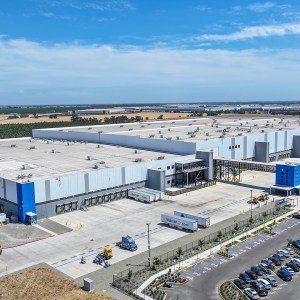
Walmart has officially opened its fifth high-tech fulfillment center. The 900,000 square foot facility, located in Stockton, California, expands capacity for processing online orders and the ability to provide faster shipping and delivery for customers across the West Coast, the retailer announced on Thursday. Walmart Fulfillment Services, the company’s end-to-end third-party fulfillment service, will also leverage the space to fulfill items sold by merchants on Marketplace. The next-generation e-commerce center features advanced automation, technology and AI-powered systems to move products more efficiently. A high-density storage and retrieval system reduces the traditional 12-step fulfillment process to five steps, reducing repetitive, manual tasks while allowing Walmart (NASDAQ: WMT) to move products throughout the building more efficiently, resulting in increased storage and order capacity compared to a traditional fulfillment center. Walmart said the facility’s location in California’s Central Valley adds significant fulfillment capacity closer to West Coast customers, helping the company offer faster shipping options on millions of items and taking pressure off other fulfillment centers in its network. Walmart operates four other next-gen fulfillment centers in Joliet, Illinois; McCordsville, Indiana; Greencastle, Pennsylvania; and Lancaster, Texas. They are located in strategic markets to enable next-day or two-day shipping to 95% of the U.S. population, according to the company. E-commerce sales now represent 23% of total sales at Walmart. The company says faster delivery helps motivate customers to place orders. In August, it announced plans to build a sixth ultra-modern e-commerce logistics hub, covering 1.5 million square feet, in Carnesville, Georgia. Construction is expected to begin towards the end of the year. Walmart said its total investment in the project, which includes hiring, will be $1.3 billion. Both the Stockton and Carnesville location will employ more than 1,000 workers at full operation. Why It Matters: Walmart is competing with Amazon, Target and other retailers for online sales and fast fulfillment capability helps motivate customers to complete digital checkouts. Click here for more FreightWaves/American Shipper stories by Eric Kulisch. Write to Eric Kulisch at ekulisch@freightwaves.com. RELATED STORIES: Walmart fast delivery helps fuel 24% growth in e-commerce sales Walmart expands LTL truck consolidation program for suppliers Target moves to elevate supply chain operations, inventory reliability Target debuts $367M food distribution center in Colorado The post Walmart activates automated e-commerce logistics center in California appeared first on FreightWaves.
A truck driver followed instructions from someone impersonating a freight broker, placing more than $273,000 in frozen seafood at risk. The unauthorized diversion brought approximately 29,000 pounds of cargo to North Arlington, New Jersey, on October 3. Two individuals began moving pallets from a refrigerated tractor-trailer into a smaller box truck. Police arrived before the suspects could remove the shipment from the area. North Arlington officers responded to Porete Avenue following a report of suspicious activity involving commercial freight. They discovered an active transfer between two vehicles at the location. The merchandise included frozen shrimp, salmon, conch meat and branzino. The cargo remained at the scene while investigators examined the circumstances surrounding the attempted theft. Fraudulent calls and texts redirect the driver According to the North Arlington Police Department, the truck driver received telephone calls and text messages before arriving. The sender falsely claimed an association with the legitimate freight broker responsible for the shipment. Those communications instructed the driver to divert part of the load for a supposed transfer. Following those directions brought the refrigerated trailer to an unauthorized location. Jonathan Pollaguari, 18, of the Bronx, New York, arrived alongside a juvenile in a 26-foot box truck. Both individuals began transferring pallets of seafood into their vehicle. Questions about the transaction’s legitimacy emerged while the activity continued. A subsequent investigation established that the person directing the diversion had no affiliation with the actual brokerage. Authorities determined that the unidentified individual impersonated a company representative to fraudulently obtain the merchandise. Officers secured the scene and stopped further movement of the products. Their intervention prevented the suspects from leaving with the cargo. Police recover shipment and arrest two suspects North Arlington officers took Pollaguari and the juvenile into custody without incident. Investigators recovered the entire seafood shipment before either suspect could leave the scene. Frozen shrimp accounted for the primary commodity, alongside several other varieties. Police documented the attempted theft and announced criminal charges following their investigation. Authorities charged Pollaguari with second-degree theft by deception, false representation and conspiracy. He also faces a first-degree charge involving the employment of a juvenile in committing a crime. Officers issued additional motor vehicle summonses for driving without a license and operating an uninsured vehicle. Another citation involved failure to possess an insurance card. Investigators have not disclosed how the suspects obtained shipment information or who coordinated the fraudulent communications. Authorities also have not identified the legitimate broker, carrier or shipper involved. Questions remain about what initially raised suspicion and prompted police intervention. The investigation remains active, with officials declining to release further details. Why It Matters Criminals impersonating trusted freight brokers can redirect high-value shipments without ever taking control of the truck. This case highlights why carriers must independently verify unexpected delivery changes before following instructions. CFCO In my opinion, this case demonstrates why verification cannot stop once a carrier accepts a load. The Certified Fraud Compliance Officer (CFCO) course teaches transportation professionals to recognize suspicious activity and challenge unexpected instructions. A legitimate driver can unknowingly participate in cargo theft when criminals impersonate trusted contacts. Training helps establish consistent procedures for confirming shipment changes before freight reaches the wrong hands. Click here for more articles on cargo theft and freight fraud by Phil Brink. Man gets 2 years for $3.5M Amazon fraud using 23 trucking accounts – FreightWaves LAPD uncovers $1M in stolen BNSF and Union Pacific rail cargo at Los Angeles–area shoe retailer – FreightWaves CBP finds $6M in cocaine hidden under floor of empty semi-trailer bound for Canada – FreightWaves The post Fake freight broker redirects $273K seafood shipment in New Jersey cargo theft attempt appeared first on FreightWaves.
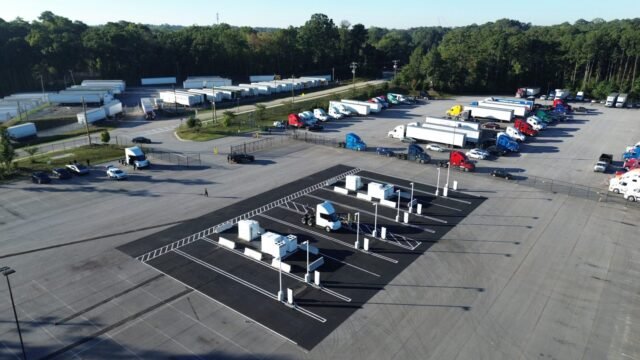
Tesla has opened its first Semi Megacharger sites in the Southeast: an 8-stall station just south of Atlanta and a 6-stall station outside Savannah, each rated for up to 1.2 MW per stall. The Savannah site is also the first Megacharger at a Pilot truck stop, a rollout that was supposed to start this summer. Together, the two stations give the Tesla Semi its first public charging corridor outside California. more…
Ask carriers what’s changed about trucking compliance lately, and you’ll likely hear about the accumulation of new rules that change faster than most back offices can absorb them. David Vincent has had a front-row seat to that accumulation. He’s co-founder of Visionary Ventures, the technology company that built and operates Dotra Compliance, a platform designed to serve as what Vincent calls a virtual compliance department. FreightWaves sat down with Vincent to talk through where carriers are losing ground and where a software layer can realistically help. He laid out a picture of an industry squeezed from multiple directions at once, including a faster enforcement, a Supreme Court ruling that rewrote how brokers vet carriers, and a volume of paperwork that outpaces small compliance departments. The current compliance environment, Vincent says, feels more difficult than it used to because it is. Carriers have been dealt a stretch of regulatory change that would challenge any safety department. “In the last 18 months alone, carriers have absorbed English proficiency becoming an out-of-service violation, revoked ELDs, a non-domiciled CDL crackdown, a new FMCSA registration system and a Supreme Court ruling that changed how brokers choose carriers,” Vincent said. None of that replaces the baseline workload that never stops, including medical cards, MVRs, testing, inspections, and filings. The disparity in who can absorb that load, according to Vincent, comes down to headcount rather than intent. “A large carrier has a safety department, while a 10-truck fleet has the owner,” Vincent said. “The volume of change is the same for both, and that’s the gap we built Dotra to close.” The data backs up the sense that enforcement has intensified. Roadside inspections, Vincent says, fell to about 2.6 million in 2020 and passed 3.1 million in 2025, with more than 23.5 percent of trucks inspected placed out of service. Part of that climb is a pandemic-era rebound, but Vincent pointed to something more deliberate behind the numbers: “The bigger driver is policy, with enforcement focused on things that stop a truck on the spot, like English proficiency, revoked ELDs and driver qualification,” he said. What makes a violation expensive is rarely the citation itself. “An out-of-service order parks a truck and a load,” Vincent said. “Violations feed safety scores, which brokers, shippers and insurers all screen on. And most carriers who get hurt aren’t cutting corners. They missed a date nobody was watching.” That last point has taken on new weight since May, when the U.S. Supreme Court ruled 9-0 in Montgomery v. Caribe Transport II that freight brokers can be sued under state law for negligently selecting an unsafe carrier. Vincent says the ruling has changed what compliance is actually for: “It means compliance is now how you get loads, not just how you avoid fines.” The carrier at the center of that case carried a conditional safety rating along with problems in driver qualification, hours of service, and maintenance, all things a broker could have checked. With the legal shield brokers used to lean on gone, Vincent says that buying behavior has already shifted. “Brokers are checking,” Vincent said. “They’re asking for safety records and compliance documents before tendering freight, and they’ll pass on carriers who can’t produce them.” There’s no uniform definition yet of what “safe enough” means from a broker’s perspective, which Vincent says is part of the problem. “The broker association has even asked FMCSA to write a federal standard for what a safe carrier looks like,” he said. “Until that exists, every broker sets their own bar, and a clean, documented compliance record is the surest way to clear it.” If brokers are screening harder, the next question is where carriers are most likely to come up short. According to Vincent, it’s rarely a single document causing trouble. “Most carriers are struggling with the volume [of documents],” Vincent said. “Between driver files, medical cards, MVRs, testing records, inspections, registrations and filings, it’s hard to keep everything in order. And even a carrier who does still has to remember to check what needs updating.” The items most likely to slip, Vincent says, are the ones without a built-in reminder, such as the annual MVR review, the annual Clearinghouse query, random testing rates, the biennial MCS-150 update, and annual inspections. Hiring is the single riskiest moment in a driver’s file, according to Vincent, and fleet size tracks closely with exposure. “The riskiest moment is hiring, when a driver file gets built in a rush and a pre-employment test or previous-employer check gets missed,” Vincent said. “By size, it’s fleets of roughly 1 to 50 trucks, where compliance is one person’s side job.” That “side job” dynamic is exactly where legacy tracking methods fall apart. Filed information doesn’t do anything for you unprompted. “A spreadsheet only works if someone remembers to open it,” Vincent said. “It doesn’t warn you, it doesn’t know a rule changed, and when the person who keeps it is out or leaves, the system leaves with them.” When something does slip, the fallout tends to land all at once rather than trickle in. “The cost shows up all at once: a driver placed out of service, a late load, a broker asking questions, or two days of digging through binders for an auditor,” Vincent said. “And after Montgomery, a carrier who can’t produce clean records quickly may not get the load at all.” A Virtual Compliance Department Dotra’s answer to that fragility is a platform Vincent describes as a “virtual compliance department,” meant to do the thinking, not just the filing. “It means Dotra does the work a compliance person does, not just the filing,” Vincent said. “A reminder app only reminds you about what you already knew to enter. A document locker stores files but doesn’t read them. Both assume you already know every rule that applies to you.” The platform starts by mapping an operation (whether that’s a for-hire or private fleet, CDL or non-CDL, which states it runs in) and builds a requirement list from there, tracking every deadline, reading incoming documents and watching a carrier’s FMCSA safety data for changes. “It’s what a full-time safety manager does, at a price a 5-truck fleet can afford,” Vincent said. Day to day, the mechanics are built to remove friction rather than hand a carrier a new system to babysit. “A document comes in, either uploaded by the office or photographed by a driver who scans a QR code, with no app or login,” Vincent said. Dotra reads the file, pulls the relevant dates, and files it under the right driver or vehicle, turning every date into a tracked deadline with escalating email and text alerts as it approaches—replacing, as Vincent put it, the work of “keying dates into spreadsheets, checking SAFER by hand, tracking annual reviews from memory, digging through binders when a broker asks, and reading FMCSA notices to see whether they apply.” Document-reading capability pays off most during onboarding, when a new customer is migrating years of paper records into the system. “A new carrier might have a few hundred documents across drivers and trucks, and typing every date from each one is where most people give up,” Vincent said. Once a fleet is running, the priority shifts from speed to precision, since a platform is only as useful as the data it holds. “After setup, it’s about accuracy: a mistyped expiration date is worse than none, because it gives you false confidence,” he said. Proof in Practice: The Motus Transition Vincent points to FMCSA’s rollout of Motus, the agency’s new registration system, as a concrete example of what regulatory intelligence is supposed to catch before it becomes a crisis. Motus replaced the previous patchwork of portals for USDOT numbers, authority, and biennial updates with a single system that required carriers to confirm a handful of account details to move over cleanly. Miss any of it, Vincent says, “and you could be locked out of managing your own USDOT number.” Most small carriers heard about the transition secondhand, if at all. Dotra’s customers got something more specific. “Dotra customers got it as an alert with a step-by-step checklist,” Vincent said. “That’s the point of regulatory intelligence: the rule is the same for everyone, but it reaches you as a checklist instead of a surprise.” Audit-Ready, Not Audit-Scrambling Few moments expose a weak compliance program faster than an audit notice or a broker’s vetting request, and Vincent says that’s exactly the scenario Dotra is built to defuse. “It turns audit prep from a project into a download,” he said. Without a system in place, an audit notice typically kicks off a scramble. “In Dotra, the gaps show up on the dashboard every day, so most are fixed long before anyone asks,” Vincent said. When a broker or auditor does come calling, the platform generates a readiness packet directly from records the carrier has already been maintaining. According to Vincent, that capability matters more now than it used to. “Brokers now need to show they vetted the carriers they hire, and a carrier who can hand over a clean packet the same day makes that easy for them,” Vincent said. Non-CDL Fleets One misconception Vincent said Dotra runs into constantly involves operators who assume federal compliance is strictly a CDL problem. “A landscaper or contractor running pickups with trailers assumes no CDL means no DOT,” Vincent said. “But federal rules start at 10,001 pounds in interstate commerce, and a one-ton pickup towing an equipment trailer crosses that easily.” Once that threshold is crossed, Vincent says, most of the core requirements apply regardless of license class, including a USDOT number, driver files, DOT medical cards, hours-of-service rules, and annual inspections. Drug and alcohol testing generally remains tied to CDL drivers specifically. To serve that segment, Dotra built a separate onboarding path that generates a requirement list suited to a private, non-CDL fleet rather than a trucking company’s checklist. “It’s a big part of why we call Dotra transportation compliance, not just trucking compliance,” Vincent said. Whether it’s a 200-truck carrier bracing for a broker’s vetting request or a three-truck landscaping outfit, the rules aren’t written differently for small operations. Dotra is pairing AI-driven document reading with deadline tracking and regulatory monitoring to give any fleet, regardless of size, the kind of compliance posture that used to require a dedicated department. Increasingly, that dedication to compliance decides whether a broker picks up the phone at all. Click here to learn more about Dotra Compliance. The post A Virtual Compliance Department for Every Fleet appeared first on FreightWaves.
Geely is coming to Canada. The Chinese automaker’s mainstream brand announced today that it has started setting up Canadian operations and recruiting a dealer network, with its first vehicles going on sale in 2027. What Geely isn’t saying is which vehicles. There are no models, no prices and no dealer locations, just a new website at geely.ca and a promise of more details closer to launch. more…