EcoFlow is hoping to make a titanic splash with its new, smaller (but scalable!) residential energy storage lineup that the company is calling a more approachable entry point to its backup battery offerings. more…
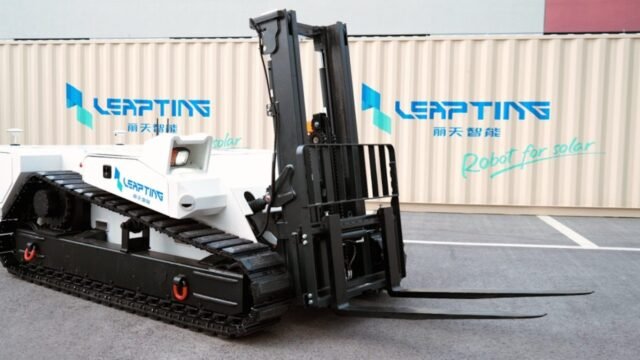
Chinese PV and solar equipment brand LEAPTING has taken the wraps off its new, battery-powered Auto-Navigation Forklift Robot (AFR) designed to speed up the installation of large, utility-scale solar power projects. more…
This is The Stepback, a weekly newsletter breaking down one essential story from the tech world. For more on autonomous vehicles, policy, and road rules, follow Andrew J. Hawkins. The Stepback arrives in our subscribers' inboxes at 8AM ET. Opt in for The Stepback here. How it started The first state to pass a law legalizing self-driving cars operating on public roads was Nevada in June 2011 - long before such vehicles were operating on public roads. This was three years before the introduction of Tesla's Autopilot, five years before Waymo spun out of the Google self-driving car project, and seven years before the first commercial robotaxi … Read the full story at The Verge.
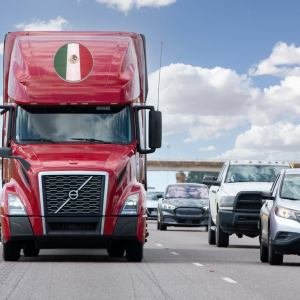
Borderlands Mexico is a weekly rundown of developments in the world of United States-Mexico cross-border trucking and trade. This week in Borderlands Mexico: US trucking crackdown raises concerns over freight disruptions; M2 Global Logistics launches in Houston; and Cutter & Buck opens new distribution center in Texas. US trucking crackdown raises concerns over freight disruptions Stricter enforcement of U.S. trucking regulations is raising concerns about potential disruptions to cross-border freight, as American and Mexican transportation leaders warn that efforts to crack down on illegal operations must not create new obstacles for legitimate carriers. The concerns emerged during two panel discussions at the International Road Transport Union’s (IRU) North American Transportation Forum, held during the 2026 National Convention of Mexico’s National Chamber of Freight Transportation (CANACAR) in Cancún. Representatives from the American Trucking Associations (ATA), U.S. Customs and Border Protection (CBP), Werner Enterprises and CANACAR discussed increased scrutiny of cabotage violations, B-1 visas, English-language proficiency requirements and commercial driver qualifications. While participants generally supported stronger enforcement, several cautioned that inconsistent application of the rules could create delays, restrict driver availability and complicate freight movement between the United States and Mexico. U.S. trucking executives back tougher enforcement Derek Leathers, chairman and CEO of Werner Enterprises, said stronger enforcement is necessary to prevent foreign drivers from illegally transporting domestic freight within the U.S. Under federal cabotage restrictions, foreign drivers may transport qualifying international shipments into and out of the United States but generally cannot haul domestic freight between two U.S. locations. Leathers supported federal efforts to address the misuse of B-1 business visitor visas by drivers performing unauthorized domestic trucking operations. He also welcomed increased enforcement by the Federal Motor Carrier Safety Administration (FMCSA) of English-language proficiency requirements, emphasizing the importance of drivers being able to communicate with law enforcement and other personnel while operating in the U.S. The Trump administration has intensified enforcement of English-language proficiency standards for commercial drivers, alongside efforts to tighten oversight of driver licensing and training. Leathers’ comments reflect growing support among U.S. trucking executives for stricter enforcement against carriers and drivers operating outside federal requirements. However, the discussions also highlighted concerns that increased scrutiny could affect compliant Mexican carriers engaged in legitimate international freight transportation. ATA economist calls for fair enforcement ATA Chief Economist Bob Costello emphasized the need for consistent and proportionate enforcement, particularly as cross-border freight activity continues to recover. Costello said North American cross-border trade rebounded in 2026 following a slight decline in 2025, underscoring the importance of maintaining efficient transportation links between the U.S., Mexico and Canada. According to Mexican transportation publication Revista Transportes y Turismo, Costello also raised concerns that some U.S. enforcement personnel may not fully understand the complexities of cabotage regulations. The potential for inconsistent interpretations could create uncertainty for Mexican carriers operating legally in the U.S. Costello called for continued cooperation among transportation associations, regulators and industry representatives to ensure that enforcement efforts target violations without unnecessarily disrupting legitimate freight movements. Mexican carriers warn of border delays CANACAR President Augusto Ramos Melo acknowledged the importance of combating illegal cabotage but warned that intensified border enforcement could create additional delays and operational challenges for Mexican trucking companies. Ramos called for closer coordination among transportation companies, customs officials and other supply chain participants to improve border efficiency. His concerns come as Mexican carriers navigate tighter scrutiny of driver documentation, visa eligibility and compliance with U.S. transportation regulations. For carriers operating across the southern border, additional inspections and documentation requirements can complicate driver scheduling, equipment positioning and delivery times. Martin Rojas, IRU’s senior adviser for the Americas, moderated the discussions and emphasized the importance of balancing regulatory enforcement with the need to maintain an adequate supply of qualified drivers. The discussions highlighted the challenge facing policymakers: strengthening compliance without undermining the transportation capacity needed to support North American trade. CBP outlines new border initiatives Liliana Flores, CBP’s port director at Del Rio, Texas, said the agency is working to improve how it processes trade information while expanding initiatives aimed at strengthening cargo security, according to Revista Transportes y Turismo. Flores discussed developments involving the Customs Trade Partnership Against Terrorism (CTPAT), a voluntary public-private partnership designed to strengthen international supply chain security. Flores encouraged Mexican trucking companies to participate in CTPAT and CBP’s Electronic Export Manifest pilot program. The pilot’s testing period is scheduled to conclude Oct. 23, with information collected during the program intended to help CBP refine its systems ahead of broader implementation. The initiatives are intended to improve security and the exchange of shipment information, although carriers continue to face increased scrutiny of cross-border operations. Visa requirements and driver shortages The second panel examined how regulatory changes are affecting drivers and transportation companies. Justen Thomas, a representative of the U.S. Consulate General, advised drivers applying for or renewing B-1 visas to prepare thoroughly for consular interviews. Thomas said English-language proficiency is among several factors that can influence visa decisions. B-1 visas are commonly used by eligible Mexican commercial drivers transporting international freight into the United States. However, those visas do not authorize drivers to perform domestic cabotage operations. IRU Goods Transport Council President Iro Doumani offered a European perspective, describing how coordinated regulatory systems and digitalization can help balance enforcement with efficient international freight transportation. Doumani also noted that driver shortages remain a challenge for transportation operators, even in regions with more integrated cross-border systems. The panelists agreed that closer cooperation among regulators, customs agencies and trucking companies would be necessary to maintain efficient freight movement while strengthening compliance. M2 Global Logistics launches in Houston with 830,000-square-foot facility Meiborg Companies and Morales Capital Group have partnered to launch M2 Global Logistics, a new third-party logistics provider anchored by an 830,000-square-foot industrial campus near downtown Houston. The companies announced the venture Thursday, saying the new logistics platform will combine Meiborg’s trucking and warehousing operations with Morales Capital Group’s international trade and investment capabilities. The 27-acre Houston campus will provide access to major freight corridors, intermodal hubs and port connections. The facility is expected to begin operations in the coming months, with additional market expansion planned. “This partnership evolves a proven regional operation into a truly global 3PL brand,” said Zach Meiborg, CEO of Meiborg Companies, in a statement. Founded in 1981 and headquartered in Rockford, Illinois, Meiborg operates more than 550 trucks and manages over 4 million square feet of warehouse space across Illinois and Texas. M2 Global Logistics plans to offer domestic trucking, international freight services, customs-related logistics, warehousing, fulfillment and distribution under one platform. The new company will be led by Zach Meiborg, Nick Gibbons and James Cooper, alongside executives from Morales Capital Group. Cutter & Buck opens new distribution center in Texas Apparel company Cutter & Buck has opened a new distribution center in Grand Prairie, Texas, expanding its fulfillment network to better serve customers across the central and southern U.S. The facility, which opened Oct. 7, is the company’s fourth distribution center in North America and will stock sportswear from Cutter & Buck, Clique and Craft, according to a company announcement. Located in the Dallas-Fort Worth metroplex, the distribution center will provide additional inventory capacity and support faster order fulfillment for customers nationwide. The facility offers weekday UPS and FedEx pickups, along with local customer pickup services and the company’s Share Ship order fulfillment program. Cutter & Buck also plans to introduce in-house embroidery and heat-transfer services at the facility during the first quarter of 2027. The company said the operation is currently undergoing testing, with capacity expected to increase over the coming months. Why it matters: Stricter trucking enforcement could complicate driver availability and border operations, adding uncertainty for carriers and shippers moving freight between the United States and Mexico. More FreightWaves articles by Noi Mahoney: Mexico trucker shortages, visa restrictions squeeze cross-border capacity Texas trucking firm sued over age limits on drivers New Jersey CDL school lawsuit questions evidence behind FMCSA shutdown R&R trucking CEO reports $12.7M in assets after company collapse The post Borderlands Mexico: US trucking crackdown raises concerns over freight disruptions appeared first on FreightWaves.
Knorr-Bremse’s Executive Board Member for Rail Dr Nicolas Lange explains to Nick Kingsley about globalisation, how the company has moved beyond a self-limiting portfolio and his hopes for a successor to the Europe’s Rail R&D initiative. ‘I do not believe that we are too costly’, insists Knorr-Bremse’s Board Member for Rail Dr Nicolas Lange as he surveys the challenges of innovation in the global rail market on the sidelines of the InnoTrans 2026 trade fair in Berlin. ‘We all invest a lot of our own money into R&D.’ However, he sees a pressing need to understand how and where innovation is most beneficial in the rail value chain, and which bodies are best equipped to deliver it. This is a pressing issue in Europe especially, given that the debate over the future incarnation of the Europe’s Rail Joint Undertaking is now in full swing ahead of planned reforms to the EU’s wider Horizon Europe research programme. ‘All the companies here [at InnoTrans] are investing a hell of money into innovation. But an EU fund is very valuable because the EU brings parties together under one umbrella and makes a bigger package out of that.’ To that end, he acknowledges that he and several of his peers in the UNIFE supply chain association have been talking to the European Commission to make the case for a successor to the ERJU programme. However, Lange sees a clear distinction between the role of multilateral initiatives like ERJU (and its Shift2Rail predecessor), with a focus on broad policy goals like getting more freight onto rail, and the innovation tasks of the suppliers themselves. ‘Companies like ours should be responsible for developing the next iteration of products or technologies’, he says, emphasising the need for the rail sector to get that balance of responsibilities correct. Cause for optimism on DAC ‘I think sometimes governments and the EU look at the rail sector and compare it to some other industries, and they think “well, it’s running well, so we don’t need to intervene”’, Lange asserts. ‘But that’s not true, because we need support to deliver the vast investment programmes we have.’ He cites the Digital Automatic Coupler roll-out as one example, suggesting that the contract agreed in mid-September between Knorr-Bremse and Rail Cargo Group should give rise to ‘a certain amount of hope’. Knorr-Bremse announced the contract on September 17, saying it would equip a train of RCG wagons with DAC, electronic control units and sensors to digitally monitor vehicle functions and condition. According to Knorr-Bremse, this was the first commercial equipment contract for the technology in Europe, with the train due to enter regular freight operations from 2028 under the EU-backed PioDAC programme. ‘If we talk about DAC, it’s not only about the coupler, it is the start point for true optimisation of rail freight operations’, he insists. ‘You have an electrical connection along the train, you have a data wire through, and then you can put in sensors on your wagons and locomotives’, which would start to create a vision for a ‘connected freight train’ that has long been an aspiration of the sector. While much work lies ahead to deliver a mass migration to DAC in European freight operations, Knorr-Bremse is keen to point out that digital innovation does not need to wait for mass fitment of the full DAC equipment; Lange points to its project in the UK where Knorr-Bremse uses its FreightControl Sentinel axle-mounted kinetic energy harvesting product to provide an energy source for wagons, enabling sensors and other equipment to be powered by the motion of the train, without the in-train feed envisaged under the DAC programme. A global player While in Europe, much of the rail debate focuses on ‘top down’ policy, process and regulation, the rail supply chain continues to coalesce around a handful of major players that are active globally, of which Knorr-Bremse is clearly one. Its global presence was emphasised in September when it signed a comprehensive memorandum of understanding with China Academy of Railway Sciences to develop digital technologies, driver assistance systems and advanced braking systems to enhance the safety, efficiency and performance of freight trains in China. ‘This is not about transferring European technology to China’, Lange points out. ‘Far from it. We are a global company’, he says, while adding that one of the pain points of being global is the challenge of adapting to differing standards, regulations and certification processes in each one. Nevertheless, China — partly because of its sheer size — remains a major opportunity for Knorr-Bremse, because of the single set of standards that apply across the whole country. However, Lange is keen to stress the similarities in the strategic challenges facing the Chinese rail freight sector to those facing Europe. These include a shortage of skilled personnel, outdated operating practices and constraints in network capacity that hinder China Railway’s ability to carry more freight. ‘The modal share of rail in Chinese freight is about 10%’, Lange says, pointing out that ‘across the western world, many of the challenges we see are the same’. He reflects that his company has been active in China ‘for years, since the very start of railway modernisation there’, and he rejects any suggestion that local suppliers could edge the firm out of its own local joint ventures. ‘We are seen as a key partner there’, he says. ‘They clearly respect our heritage, and our ability to invest 6 to 7% of our turnover into R&D. That is something they can benefit from.’ Asked if he feels any tension between leading a company with roots in Germany and a key player in associations like UNIFE while also having substantial investments outside Europe, Lange says ‘we do not take one customer more seriously than another. It doesn’t matter if the customer is in Europe, is in China, or somewhere else. We just want to play fair.’ This, he adds, means having a straight fight for business based on technological merit, while avoiding the ‘social dumping’ risks that come with unequal localisation practices. ‘If European companies have to localise somewhere in the globe, then it’s only fair that [European] politicians say, OK, but then you guys have to localise in Europe.’ A broader portfolio Amid significant industry consolidation, Knorr-Bremse has over the past couple of years pushed hard to expand its rail activities beyond its traditional remit as a supplier of components for rolling stock. In particular, it has sought to expand into the signalling market, reflecting a trend that has seen a number of other companies synonymous with rolling stock also seek to diversify into train control. ‘We limited ourselves to being a rolling stock subsupplier for decades’, Lange says. ‘But we have more in our DNA. We have safety in our DNA. We don’t only know about rail vehicles. We know the rail system.’ Key to launching this expansion was the US$690m acquisition in September 2024 of the conventional rail signalling business of Alstom Signaling North America, with 800 employees in six locations becoming employees of KB Signaling, a standalone business. ‘The idea is to become a tier one supplier for infrastructure’, Lange explains, although he caveats this by stating that Knorr-Bremse does ‘not want to move away from our DNA. So not take care of the track itself. But something which fits into our safety and technology DNA is automatically interesting. Why shouldn’t we offer the same advantages we are delivering on rolling stock to become a broad-scale subsupplier of tier one equipment in signalling?’ At the heart of KB Signaling is a strong presence in conventional signalling equipment supply in North America, and Lange explains that this is serving as a launchpad to grow a footprint in other markets too, initially those with similar operational characteristics to the USA and Canada. ‘It’s a small start point for now, as we don’t have everything we would like in our portfolio so far’, but further acquisitions are likely. In October 2025, Knorr-Bremse completed a deal to buy embedded electronics and software specialist Duagon, which Lange describes as a small but important step into digital control systems. ‘We are progressing with two approaches in parallel’, he says of the company’s strategy. ‘One is we are continuing to develop ourselves “bottom up” to better serve existing markets in Europe and elsewhere, such as India for example. But the second is continuing to look at mergers and acquisitions, because it’s logical. On your own, you need to create, invent, do the R&D work, then you need to have the certification time, then you need to get into the market. It’s possible, but it takes longer.’
Chart of the Week: Accepted SONAR Tender Volume Index, SONAR Tender Rejection Index SONAR: ASTVI.USA, STRI.USA The truckload market is heading into the holidays with almost no slack. The Accepted SONAR Truckload Volume Index (ASTVI), which measures only the loads carriers accept, has fallen more than 4% over the past four weeks to 9,518. That’s its lowest level outside a holiday week since January. Normally, a drop like that would give carriers room to breathe. Instead, the national rejection rate (STRI) has barely moved and is holding near 13.9%. A year ago, the market entered peak season with rejections under 6%, and the ASTVI was roughly 2% higher. That suggests the market has regained little, if any, efficiency over the past year. Fewer accepted loads after 11 months of elevated rates is not what many expected. In the early phase of COVID, carriers appeared to hit their limit with the ASTVI around 11,500 in the fall of 2020. Rejection rates were near 25%, a sign that demand was well beyond what carriers could handle. By the spring of 2021, carriers were accepting more than 10% more loads, even with rejection rates still elevated. That market was certainly tighter than today’s. Even so, most would expect accepted volumes to have improved by now after months of elevated rates. A supply-led cycle The two cycles differ in several ways. The biggest difference is that the COVID cycle was driven more by rising demand than by falling supply. Tender volumes rose nearly 50% year over year from September 2019 to September 2020, and accepted volumes rose 20%. That surge quickly used up all the slack in what had been an oversupplied market. The current cycle seemed to appear almost out of nowhere. It first showed up during the 2025 holiday season, when rejection rates and spot rates ran well above the previous three years. Many still questioned it, because trucking demand was actually weaker. Winter Storm Fern in late January was the second catalyst. It pushed tender rejections and spot rates higher, and neither has meaningfully retreated since. Again, demand wasn’t the driver; limited capacity was. Barriers to entry The other major difference from the last inflationary cycle is that barriers to entry are much higher now. English language proficiency enforcement, stricter rules on non-domiciled CDLs and tougher immigration policies are keeping a large pool of potential drivers out of the industry. The Montgomery v. Caribe ruling has an indirect effect on drivers, because brokers are now less likely to use carriers with poor safety records. As of this past summer, close to 2% of carriers with substandard safety scores had been removed from service, according to GenLogs. Rising costs Diesel prices have spiked at times, making it hard for smaller carriers to manage cash flow. Retail diesel prices are up 73% year over year. Dry van spot rates are up a still-impressive 43%, but they haven’t kept pace with fuel over the past few months. That gap squeezes carrier profitability, a pressure that was largely missing in the COVID era, when diesel prices actually fell in 2020. Carriers that made it through the difficult stretch from mid-2022 to late last year are hesitant to invest in growth. Borrowing costs are much higher, and the low-cost government lending that helped carriers during COVID isn’t available. Supply always moves more slowly than demand, and it now faces more headwinds than in any recent cycle. Even with economic concerns, transportation procurement teams should prepare for a market that stays tighter for longer, into 2027. About the Chart of the Week The FreightWaves Chart of the Week is a chart selection from SONAR that provides an interesting data point to describe the state of the freight markets. A chart is chosen from thousands of potential charts on SONAR to help participants visualize the freight market in real time. Each week a Market Expert will post a chart, along with commentary, live on the front page. After that, the Chart of the Week will be archived on FreightWaves.com for future reference. SONAR aggregates data from hundreds of sources, presenting the data in charts and maps and providing commentary on what freight market experts want to know about the industry in real time. The FreightWaves data science and product teams are releasing new datasets each week and enhancing the client experience. To request a SONAR demo, click here. The post No signs of truckload capacity recovering appeared first on FreightWaves.
Mercedes-AMG has unveiled the GT SUV, an all-electric performance SUV with up to 1,153 hp from three axial-flux motors and DC fast charging at up to 710 kW. It’s AMG’s answer to the Porsche Cayenne Electric, and on paper, it may be more impressive. The first units hit US dealerships in summer 2027. more…
On a rainy Saturday morning in Charlotte, inside the brand new North American headquarters of Daimler Truck Financial Services, four of the company’s senior leaders traded the usual press-conference script for something closer to a fireside chat, and over the better part of an hour they said more about where this industry is actually heading, from the engine under your hood to the driver who may one day not be in the seat to the rising cost of borrowing money against a truck, than most carriers will hear in a year of official announcements. The panel brought together a rare mix of global and local perspective. Eva Scherer, chief financial officer of Daimler Truck Holding AG, carried the worldwide view. Stephan Unger, chairman of Daimler Truck Financial Services, which operates across 21 countries, spoke to how the financing side of the business is changing. Kevin Bangston, president and CEO of Daimler Truck Financial Services USA LLC, handled the view from the United States, Canada, and Mexico. Goetz Johanning, head of strategy and realization for the North American financial services arm, moderated. The session was set up as a conversation rather than a presentation, and the candor showed. Here is what matters in it for carriers of every size, from the single-truck owner-operator to the mega fleet, pulled apart and put in plain terms. The EPA 2027 Engine Is Real, And The Pre-Buy Never Came Start with the question on every buyer’s mind, because the answer shapes equipment decisions for the next two years. Daimler is going to market with a fully EPA 2027 compliant Detroit engine, and Scherer was clear that the company is not playing games with emissions credits or non-conformance penalties as a way around the standard. The strategy is a compliant engine, full stop. window.googletag = window.googletag || {cmd: []}; googletag.cmd.push(function() { var gptSlot = googletag.defineSlot('/21776187881/FW-Responsive-Main_Content-Slot1', [[300, 100], [320, 50], [728, 90], [468, 60]], 'div-gpt-ad-1709668545404-0').defineSizeMapping(gptSizeMaps.banner1).addService(googletag.pubads()); googletag.pubads().enableSingleRequest(); googletag.pubads().collapseEmptyDivs(); googletag.enableServices(); setInterval(function() { if (!document.hidden) { googletag.pubads().refresh([gptSlot]); } }, 60000); }); googletag.cmd.push(function() { googletag.display('div-gpt-ad-1709668545404-0'); }); The reassurance she offered carriers is built on continuity. The new Detroit engine shares roughly two-thirds of its parts with the current generation, which the company is framing as a reliability story rather than a leap into the unknown, paired with what it describes as competitive pricing. On top of that, Scherer said the new engines deliver about three percent better fuel economy, which over a year of real miles is a number worth paying attention to. What has not happened is just as telling. Daimler released its 2027 price list in September, and there was no spike in orders. Normally a coming emissions change triggers a pre-buy, a rush to purchase trucks under the old standard before the new one lands. This time the industry is sitting on its hands, and the reason is uncertainty. With ambiguity still hanging over the final 2027 rules, the engine strategies, and the penalty structure, buyers are in wait-and-see mode. Scherer said all the major manufacturers are fully booked for the rest of this year and that customers are positioning for orders next year, but they are not committing yet. For a small carrier, the read is simple. There is no stampede to beat, which means less pressure to make a rushed, expensive decision in a fog of regulatory uncertainty. The Freight Recovery Is Real, And So Is The Diesel Risk The panel was refreshingly plain about the pain of the last few years. A multi-year freight recession hurt Daimler’s own credit portfolio, and the company did not pretend otherwise. Bangston described coming into this year cautiously optimistic, watching a recovery driven by capacity leaving the market rather than by a surge in demand, with pricing power returning as that capacity bled out. By the second quarter, he said, renegotiated rates started showing up in the financials of on-highway customers, and the portfolio moved from stabilizing to performing meaningfully better. That is the clearest signal yet from a lender’s seat that the small and mid-sized carriers who survived are starting to breathe again. The one threat still hanging over all of it is the price of diesel, and here the panel gave a data point every carrier should sit with. Bangston estimated that customers are able to pass on roughly 70 percent of diesel cost through fuel surcharges, which leaves about 30 percent that carriers absorb themselves. That gap is exactly where thin margins get thinner when diesel spikes, and with recent price pressure tied to a string of geopolitical events, the leadership was openly wary about where fuel goes from here. For an owner-operator without the surcharge leverage a large fleet commands, that uncovered slice of fuel cost is the number that can quietly decide a year. Financing Is Getting More Expensive, And That Changes The Math If there was one theme the finance leaders kept circling back to, it was that money itself has gotten more expensive, and that it is reshaping how carriers buy trucks. Unger laid it out bluntly. Interest rates are high around the world, spreads are widening, and sovereign debt is sitting at elevated levels that he expects to persist. As financing gets more expensive, he said, more customers are coming to Daimler’s captive finance arm specifically for help, because a captive lender that only finances trucks, and that understands trucking through its cycles, can structure around a downturn in ways a general bank will not. The company leans on an A credit rating and a balance sheet it calls rock solid to back that up. window.googletag = window.googletag || {cmd: []}; googletag.cmd.push(function() { var gptSlot = googletag.defineSlot('/21776187881/fw-responsive-main_content-slot3', [[728, 90], [468, 60], [320, 50], [300, 100]], 'div-gpt-ad-1665767553440-0').defineSizeMapping(gptSizeMaps.banner1).addService(googletag.pubads()); googletag.pubads().enableSingleRequest(); googletag.pubads().collapseEmptyDivs(); googletag.enableServices(); setInterval(function() { if (!document.hidden) { googletag.pubads().refresh([gptSlot]); } }, 60000); }); googletag.cmd.push(function() { googletag.display('div-gpt-ad-1665767553440-0'); }); The bigger shift underneath that is the move away from simply buying a truck and bolting on a loan at the end. Daimler is pushing hard toward bundling, wrapping financing, maintenance, repair contracts, insurance, telematics, extended warranty, and residual-value packaging into what increasingly looks like a single monthly rate. Unger pointed to Europe, where the company runs more than 6,000 trucks in short-term and long-term rental through a unit called Charterway, and where full-service leasing and rental are growing fast. In North America, Daimler delivers that full-service leasing through partnerships with Penske and Ryder rather than running the fleet itself. Bangston was careful not to oversell the trend. He said North America is seeing more interest in bundling but not a fundamental shift out of ownership and into leasing, and no dramatic change in the owning-versus-leasing mix at the moment. The takeaway for a small carrier weighing its next purchase is that the options are widening, from straight ownership with a plan to remarket in three years, to an operating lease with its own financial advantages, to bundled service packages, and the right answer depends on how much flexibility and predictability your operation actually needs. Driverless Trucks Are Closer Than The Timeline Suggests The most forward-looking part of the conversation was autonomy, and Daimler’s framing was concrete rather than hand-wavy. Scherer said the company expects to get the driver out on its first route by the end of this year, then build mileage from there, targeting commercialization at scale toward 2028. The platform is an autonomy-ready Freightliner Cascadia with full redundancy in braking and steering, paired with a virtual driver from Torc Robotics, the company’s autonomous subsidiary. Two points from that discussion matter for the rest of the industry. First, the system is being built to be modular rather than locked to a single autonomy provider, so the redundant chassis can in principle work with different virtual-driver companies. Second, and more important for how this hits the market, the business model splits into separate revenue streams. You buy or finance the truck and chassis as you always have, and the virtual driver comes as a per-mile software-as-a-service layer on top. That is a genuinely different way to pay for a truck, and Daimler says it will finance whatever shape the autonomous model ultimately takes. Scherer also noted how fast the underlying capability is moving, describing a shift from older imitation-based training to reinforcement learning that lets a truck handle routes it has never seen before. Autonomy will still roll out on defined lanes that expand gradually, with safety as the gating factor, but her message was that the pace of expansion is accelerating and the next two years will show real ground covered. window.googletag = window.googletag || {cmd: []}; googletag.cmd.push(function() { var gptSlot = googletag.defineSlot('/21776187881/fw-responsive-main_content-slot4', [[300, 100], [320, 50], [728, 90], [468, 60]], 'div-gpt-ad-1709668086344-0').defineSizeMapping(gptSizeMaps.banner1).addService(googletag.pubads()); googletag.pubads().enableSingleRequest(); googletag.pubads().collapseEmptyDivs(); googletag.enableServices(); setInterval(function() { if (!document.hidden) { googletag.pubads().refresh([gptSlot]); } }, 60000); }); googletag.cmd.push(function() { googletag.display('div-gpt-ad-1709668086344-0'); }); Electric, Hydrogen, And The Patience Behind The Strategy On powertrain, Daimler described what it calls a dual-track approach, and it was candid that North America and Europe are moving at different speeds. In North America the priority is squeezing more efficiency out of diesel, with the compliant 2027 engine now and further efficiency steps planned toward 2030 and beyond. In Europe, where regulation is forcing the pace, the company is pushing much harder on zero-emission trucks and is also investing in hydrogen for the 2030s. Scherer offered a striking figure to show the company is not standing still on electric, saying its flagship long-haul electric model in Europe holds a 38 percent market share there, well above its overall share, and that the newest battery technology it runs in Europe can be brought into North American products like the electric Cascadia relatively quickly once real demand materializes. The company’s stance, which it calls the speed of right, is that customers and markets will decide the pace, and it will be ready either way rather than forcing a transition the market is not asking for. On charging infrastructure, the position was equally disciplined. Daimler does not intend to pour large capital into building charging at scale, preferring to support customers with depot and warehouse charging and to kickstart activity through selective partnerships. Why It Matters Everything the panel laid out, the compliant 2027 engine with its roughly three percent fuel-economy gain, the recovery finally showing up in rate renegotiations, the rising cost of money, and the roughly 70 percent of diesel cost carriers can pass through, points to a single reality for anyone running trucks, which is that the uncovered edges of this market, the 30 percent of a fuel spike you eat and the higher payment you now carry, are exactly where a thin margin gets decided. For small carriers and owner-operators, the smart move is to read this as the honest lender’s-eye view it is, make equipment decisions on your own breakeven rather than on fear of a 2027 deadline that is not actually triggering a pre-buy, and watch the per-mile autonomous model closely, because it is an early signal of how the whole economics of owning a truck may one day be priced. This article is based on a panel discussion with Daimler Truck and Daimler Truck Financial Services leadership at the DTFS North American headquarters in Charlotte, North Carolina, featuring Eva Scherer, CFO of Daimler Truck Holding AG, Stephan Unger, chairman of Daimler Truck Financial Services, and Kevin Bangston, president and CEO of Daimler Truck Financial Services USA LLC, with Goetz Johanning of DTFS USA moderating. Figures and forward-looking statements are as presented by the executives. window.googletag = window.googletag || {cmd: []}; googletag.cmd.push(function() { var gptSlot = googletag.defineSlot('/21776187881/fw-responsive-main_content-slot5', [[728, 90], [468, 60], [320, 50], [300, 100]], 'div-gpt-ad-1665767778941-0').defineSizeMapping(gptSizeMaps.banner1).addService(googletag.pubads()); googletag.pubads().enableSingleRequest(); googletag.pubads().collapseEmptyDivs(); googletag.enableServices(); setInterval(function() { if (!document.hidden) { googletag.pubads().refresh([gptSlot]); } }, 60000); }); googletag.cmd.push(function() { googletag.display('div-gpt-ad-1665767778941-0'); }); The post What Daimler’s Finance And Global Chiefs Revealed About Diesel, Driverless Trucks, And The Future Of The Industry appeared first on FreightWaves.
Earlier this year, Mercedes' AMG performance brand grabbed our attention with the GT four-door coupe, a souped-up sports sedan with three axial flux motors delivering over 1,150 horsepower. Well, now meet its beefier cousin, the 2028 Mercedes-AMG GT SUV, an equally powerful, ultra-fast-charging electric people-hauler. The AMG GT SUV (say that five times fast) marks the first time in the performance brand's 59-year history that it has developed a full-size SUV entirely in-house from the ground up. Scheduled to hit the US next summer, the new EV is built on Merc's high-performance AMG.EA architecture to combine sports-car handling with full-s … Read the full story at The Verge.
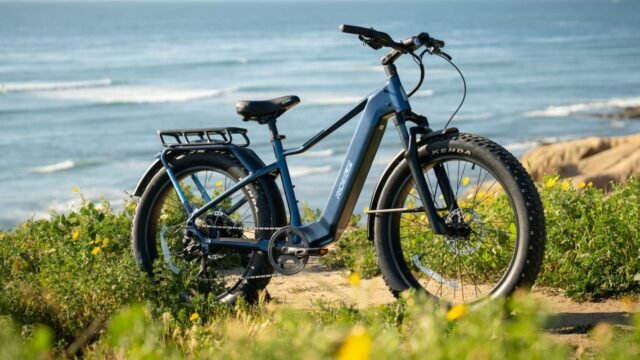
I’ve spent countless hours here at Electrek doing detailed hands-on testing of hundreds of electric bikes. Through thousands of miles of riding, I’ve been fortunate to learn these e-bikes inside and out, top to bottom and front to back. That long-term experience with real-world e-bike testing has helped me find the best electric bicycles on the market for just about any budget. Below are some of the top e-bikes I’ve hand-tested for every price range, current as of October 2026. Fall weather is upon us, bringing cooler temps and beautiful views, so it’s a great time to hop in the saddle and get out there riding! Check out the awesome e-bikes below, any one of which could become your next electric bike. more…