Breaking
Advertisement

Transportation

Category Added in a WPeMatico Campaign

Transportation

South Korea: Tram revival faces a bumpy ride

The Wirye Line tramway in Seoul is set to open this year as the first modern tram line in South Korea, followed by a 38.1 km line in Daejeon. However, the already-tendered Ulsan tramway is being challenged by a newly elected mayor, while Hwaseong is exploring how best to realise its two-line network following six unsuccessful calls for tenders. Benjámin Zelki investigates. Seoul is on course to bring trams back to South Korea. The start of passenger-carrying test operations on the 5.4 km Wirye Line is scheduled by the end of the year. The return of trams to Seoul comes almost 60 years after the last section of the city’s legacy network closed in 1968. Construction work on the Wirye Line started in 2023, and test runs with the first vehicle have been underway at Korea Railroad Research Institute’s Osong test track since September 2025. Seoul city map Click to explore The catenary-free tramway will serve 12 stops, improving access to the centre of the Wirye district which lies in the southeast of the urban area. The route runs south from the Macheon terminus of metro Line 5 before splitting; one branch serves Namwirye on metro Line 8, and the other runs west to Bokjeong on Line 8 and the Suin-Bundang Line, which was created in 2020 through the merger of the Suin and Bundang suburban lines. Daejeon in full swing The city of Daejeon started construction on its first light rail line in December 2024, and works are now underway across all the scheme’s 14 contractual packages. Named Line 2 to follow on from the city’s sole metro line, the 38.1 km route will run in a loop around the city centre, with a one-stop branch in the southwest and a four-stop branch in the northeast. There will be a total of 45 stops, including five interchanges with metro Line 1. Part of the alignment will be in tunnel, and the entire line will be catenary-free. An increased budget of 1.51tr won for the project was announced by Daejeon Mayor Lee Jang-woo in August 2024. The city council confirmed in June this year that the opening of Line 2 was expected in the second half of 2030, two years later than originally planned. Ulsan project review In contrast to the progress in the capital and Daejeon, the delivery of Ulsan’s 10.9 km tram Line 1 has encountered several roadblocks. Preliminary works began in April for the catenary-free tram line with 15 stops, which is intended to link Taehwagang railway station in the city centre with Sinbok to the west. The current timescale envisages that the main civil works would start in February 2027, with the total cost of the scheme originally estimated at 381bn won. However, Kim Sang-wook, who was elected as mayor of Ulsan in local elections at the start of June, initiated a review on June 25, issuing a ‘temporary suspension’ of the project. This was lifted on July 31, allowing the works to resume for now, but the city has reportedly been seeking legal ways to abort the project without incurring a significant loss. The local authority had until August 29 to terminate the main works contracts, citing unforeseen circumstances, although this would have left it facing some liabilities for compensation relating to the construction and rolling stock contracts. After that deadline, termination became more difficult. Local media reported on August 31 that that so far, the council has been unable to find a lawful way to terminate the project. BRT plan, depot relocation According to the mayor, the tram project, as it is being delivered under the existing plans, would result in a significant reduction in road space, causing traffic congestion both during construction and after opening. He is also concerned about the risk of cost overruns and future operating expenses. Kim believes that the development of a bus rapid transit corridor could deliver similar benefits with less expenditure and reduced road traffic disruption. Most recently, local media reported that the tram depot, which was originally planned for a site next to Taehwagang station, needs to be relocated to an as-yet unconfirmed location due to issues around ground stability and utilities. Hwaseong tendering troubles Elsewhere, the municipality of Hwaseong, a satellite town south of Seoul, is working to deliver a two-line tramway. It called tenders no less than six times from April 2025 to March 2026 for the final design and civil works for a 31.6 km network. According to local media, the repeated procurement procedures were unable to attract bids meeting the city council’s terms, as the industry found the construction budget to be too low, contractual risks too high, and the construction period too short. In a bid to address these concerns, Hwaseong municipality has decided to enter into a contract negotiation with a consortium led by local construction and engineering company DL E&C, which was the sole bidder for the last tendering round that concluded in April. As part of the negotiations, the city boosted the funding envelope for civil works by 8.9bn won to 693.2bn won, and extended the delivery timeframes for design and construction. This included better terms for utility relocation works. DL E&C holds a 50% stake in the construction consortium, along with Taeyoung Construction (20%), Shindongah General Construction (10%), C&C General Construction (10%), Jungju Construction (5%) and Daelim (5%). Dohwa Engineering and Seongu Engineering are the design partners. Hwaseong city hall approved the technical proposal submitted by DL E&C on October 9 and expects to sign the contract and start preliminary works by the end of this month. A two-line network The first phase of the Hwaseong network would consist of two routes. The 13.8 km Red Line would run from Mangpo station on the Suin-Bundang Line in Suwon to Banggyo-dong in Hwaseong, while the 17.8 km Blue Line would connect Byeongjeom station on Seoul metro Line 1 with a depot site in the south of Hwaseong. The two lines would meet at the Dongtan terminus of Great Train Express Line A. Seoul & Hwaseong map Click to explore The Red Line was originally intended to run to Osan station on Seoul metro Line 1, but the final 2.8 km section was deferred from the first phase to cut costs. Catenary-free operation is envisaged. The network would be worked by 34 light rail vehicles using either hydrogen or battery power. Services would run at every 9 min during peak hours and every 15 min off-peak. The total cost of the first phase is estimated at 1tr won, which includes rolling stock and railway systems. No wires needed All of the tramways approved or being built in South Korea will be catenary-free. The Daejeon and Ulsan lines will be operated with hydrogen fuel cell trams supplied by Hyundai Rotem, while the Wirye Line is to be worked by battery LRVs developed by Woojin Industrial Systems. Hyundai Rotem is building 34 hydrogen LRVs for Daejeon’s Line 2 under a 293.4bn won contract signed in July 2024. It is also supplying nine five-section trams to Ulsan under a 63.4bn won contract agreed in March 2026. The trams are expected to have a range of 200 km before refuelling. The design was developed as part of a national research and development project which began in 2021 and was undertaken by Hyundai Rotem, Korea Institute for the Advancement of Technology, Korea Railroad Research Institute, Korea Automobile Research Centre and Ulsan Tecno Park. The 10 five-section trams developed by Woojin Industrial Systems to operate the Wirye route are 100% low-floor vehicles, 33.9 m long and and 2 650 mm wide. They have high-capacity roof-mounted ­lithium-ion batteries, and both high and low-level headlights. They are being fitted with a collision warning system that combines radar and camera sensors to warn the driver when an obstacle is detected and activate the emergency brake if there is no response. The lavender livery was selected by residents through a local poll. Meanwhile, Hyundai Rotem announced on July 16 that it had completed the development of an obstacle-detection system for its light rail portfolio. Its Autonomous Driving Assistance System tool is able to detect objects on the track by considering track dimensions and the operating environment, and it alerts the driver if a high-risk situation is detected. The technology uses LiDAR sensors and cameras. This article first appeared in the September 2026 issue of Railway Gazette International Read the issue See also Seoul & Incheon – city map Wirye Line test runs aim to return trams to Seoul after 58 years Hyundai Rotem to supply 34 hydrogen trams to Daejeon Construction starts on hydrogen-powered tram line in Ulsan
Transportation

BREAKING: Texas judge upholds nuclear verdict against C.H. Robinson

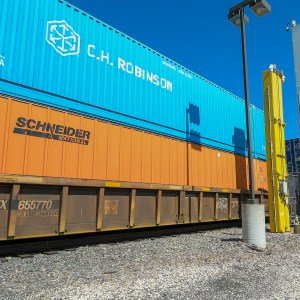
The more than $600 million judgment in a Texas court case against C.H. Robinson has been affirmed by the judge that heard the case. Judge Dianne Jones of Dallas County Court on Friday affirmed the July verdict of $604,025,000 handed down in July against C.H. Robinson (NASDAQ: CHRW) as a result of a fatal accident that killed three persons in March 2021. One of the three persons killed in the wreck was Gorgonio Gonzalez, an employee driver of carrier Lupus Superior that was hired by C.H. Robinson to move a load for Arizona Beverages. His death made finding the cause of the accident difficult to ascertain. window.googletag = window.googletag || {cmd: []}; googletag.cmd.push(function() { var gptSlot = googletag.defineSlot('/21776187881/FW-Responsive-Main_Content-Slot1', [[300, 100], [320, 50], [728, 90], [468, 60]], 'div-gpt-ad-1709668545404-0').defineSizeMapping(gptSizeMaps.banner1).addService(googletag.pubads()); googletag.pubads().enableSingleRequest(); googletag.pubads().collapseEmptyDivs(); googletag.enableServices(); setInterval(function() { if (!document.hidden) { googletag.pubads().refresh([gptSlot]); } }, 60000); }); googletag.cmd.push(function() { googletag.display('div-gpt-ad-1709668545404-0'); }); The lead named plaintiff in the case is the estate of Jennifer Lipe, represented by Peyton Lipe. Jennifer Lipe was one of the persons killed in the crash that occurred in Jackson, Mississippi, though the case was heard in Texas because that is the headquarters of Lupus Superior. The case of Lipe vs. Lupus Superior, the carrier hired by C.H. Robinson, is problematic for C.H. Robinson on two key fronts. One is the $600-million plus verdict. While there have been nuclear verdicts in trucking larger than that–though not many–there is no known precedent for a verdict of that size against a publicly-traded company with an investment-grade credit rating and an end-second quarter balance sheet of $5.8 billion. Some of the larger verdicts were handed down against companies that were effectively ghosts and didn’t participate in their defense. (It is notable that the second quarter balance sheet for C.H. Robinson listed cash and cash equivalents of $154.9 million, far below the Lipe award). Who’s in control? But the other major issue for C.H. Robinson, and by extension the brokerage community in general, is the jury’s finding, in response to a question in the jury’s charge, that driver Gonzalez was “operating the vehicle in the furtherance of a mission for the benefit of C.H. Robinson and subject to control by C.H. Robinson as to the details of the mission.” If that finding is upheld on appeal, it means the brokerage industry would have gone in just a few months from liability protection under the Federal Aviation Administration Authorization Act (F4A) being blown away in May by the Supreme Court’s Montgomery decision, to a precedent that may be set by Lipe vs. Lupus Superior that the driver at a carrier is effectively controlled by the brokerage that hired the trucking company. window.googletag = window.googletag || {cmd: []}; googletag.cmd.push(function() { var gptSlot = googletag.defineSlot('/21776187881/fw-responsive-main_content-slot3', [[728, 90], [468, 60], [320, 50], [300, 100]], 'div-gpt-ad-1665767553440-0').defineSizeMapping(gptSizeMaps.banner1).addService(googletag.pubads()); googletag.pubads().enableSingleRequest(); googletag.pubads().collapseEmptyDivs(); googletag.enableServices(); setInterval(function() { if (!document.hidden) { googletag.pubads().refresh([gptSlot]); } }, 60000); }); googletag.cmd.push(function() { googletag.display('div-gpt-ad-1665767553440-0'); }); In a prepared statement released late Friday following the affirmation, C.H. Robinson reiterated several of the same points that it made not only when the initial decision was handed down in July but also in various forums since then. The company expressed sympathy for the “profound loss suffered by the families in this case.” “But C.H. Robinson did not cause or contribute to the accident, and accountability must be grounded in the facts and the law,” Dorothy Capers, chief legal officer at C.H. Robinson, said in the prepared statement. Capers’ statement brought up a question facing brokers in the post-Montgomery landscape: what constitutes a hiring process that can protect them? Dorothy Capers of C.H. Robinson window.googletag = window.googletag || {cmd: []}; googletag.cmd.push(function() { var gptSlot = googletag.defineSlot('/21776187881/fw-responsive-main_content-slot4', [[300, 100], [320, 50], [728, 90], [468, 60]], 'div-gpt-ad-1709668086344-0').defineSizeMapping(gptSizeMaps.banner1).addService(googletag.pubads()); googletag.pubads().enableSingleRequest(); googletag.pubads().collapseEmptyDivs(); googletag.enableServices(); setInterval(function() { if (!document.hidden) { googletag.pubads().refresh([gptSlot]); } }, 60000); }); googletag.cmd.push(function() { googletag.display('div-gpt-ad-1709668086344-0'); }); She pointed out, as has been done before, that Lupus Superior had a Satisfactory rating from the Federal Motor Carrier Safety Administration (FMCSA) and had “safely delivered nearly 270 loads for our customers.” “The carrier is an independent company and the driver worked for them,” Capers said in the statement. “C.H. Robinson does not employ drivers.” “The extreme nature of this judgment underscores why a clear national standard for what constitutes a safe carrier is needed now,” Capers’ statement added. “America’s freight network should not be governed by safety standards determined after the fact, state by state and courtroom by courtroom.” It is an issue that has been raised publicly by the Transportation Intermediaries Association. In June, it called for federal action of some kind to determine what a broker can rely upon to protect itself when hiring brokers. The size of the payout does not end with the $604 million. As TD Cowen’s Jason Seidl noted in an analyst report released soon after news spread of the affirmation, there is also approximately $107 million in pre-judgement interest affirmed by Judge Jones. window.googletag = window.googletag || {cmd: []}; googletag.cmd.push(function() { var gptSlot = googletag.defineSlot('/21776187881/fw-responsive-main_content-slot5', [[728, 90], [468, 60], [320, 50], [300, 100]], 'div-gpt-ad-1665767778941-0').defineSizeMapping(gptSizeMaps.banner1).addService(googletag.pubads()); googletag.pubads().enableSingleRequest(); googletag.pubads().collapseEmptyDivs(); googletag.enableServices(); setInterval(function() { if (!document.hidden) { googletag.pubads().refresh([gptSlot]); } }, 60000); }); googletag.cmd.push(function() { googletag.display('div-gpt-ad-1665767778941-0'); }); “We believe the substantial interest charge was less appreciated by investors and drove weakness in trading immediately after the judgment was entered, though this was included in the plaintiff’s originally proposed judgment,” Seidl wrote. The interest rate being applied to the judgment is 6.75%. “Assuming CHRW moves to appeal and this results in a multi-year process, this would imply an even larger compounded charge if appeal is unsuccessful,” Seidl added. C.H. Robinson, Seidl wrote, has a “non-trivial incentive to settle this lawsuit eventually if appeal sees adverse developments, though overturning the vicarious liability ruling (where C.H. Robinson was found to control the driver) in appeal is likely to remain a first preference.” window.googletag = window.googletag || {cmd: []}; googletag.cmd.push(function() { var gptSlot = googletag.defineSlot('/21776187881/fw-responsive-main_content-slot6', [[728, 90], [468, 60], [320, 50], [300, 100]], 'div-gpt-ad-1665767872042-0').defineSizeMapping(gptSizeMaps.banner1).addService(googletag.pubads()); googletag.pubads().enableSingleRequest(); googletag.pubads().collapseEmptyDivs(); googletag.enableServices(); setInterval(function() { if (!document.hidden) { googletag.pubads().refresh([gptSlot]); } }, 60000); }); googletag.cmd.push(function() { googletag.display('div-gpt-ad-1665767872042-0'); }); More articles by John Kingston English language rule’s comments bring criticism from Sikh organization FMCSA split sleeper berth pilot program moves closer to launch Federal DOT grants will fund more than 2,400 parking spots The post BREAKING: Texas judge upholds nuclear verdict against C.H. Robinson appeared first on FreightWaves.

Transportation

Tesla driver says he was asleep and using FSD when he crashed into highway patrol cars

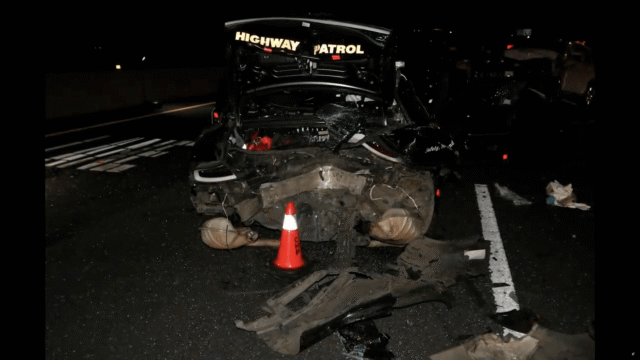
After this horrific crash involving a Tesla driver who said he was asleep and using the driver assist mode, the California Highway Patrol warns that "Despite its name, full self-driving is not fully autonomous. Technology does not relieve drivers of their responsibility to safely operate their vehicles." Video released by CHP shows the Tesla speeding past flares, cones, and emergency lights where officers were on the scene of an earlier accident, before ramming into the back of a parked patrol vehicle. CHP says two officers were seriously injured in the accident and taken to a hospital. Read the full story at The Verge.

Advertisement
Transportation

Evos raises $9M to build AI operators for industrial businesses

AI startup Evos raised $9 million in pre-seed funding to develop autonomous software operators for small and midsized industrial businesses, including freight brokerages, the company announced Wednesday. This comes as the company looks to automate routine work without requiring businesses to replace their existing software. The round was co-led by Uncork Capital and Field Ventures, with participation from Crosslink Capital, Utopia Capital Management, Sandwith Ventures and angel investors. Evos said it surpassed $1 million in annual recurring revenue four weeks after launching. The company did not disclose its valuation or the number of customers using its platform. How it works Evos is developing AI operators that learn how employees make decisions and carry out specific business functions within a company’s existing systems. Rather than requiring employees to prompt an AI tool for every task, the operators are designed to manage an assigned function independently once their decisions consistently match those of experienced workers. The approach targets smaller industrial businesses where operational knowledge often rests with experienced employees rather than documented procedures. Evos said its operators learn from employees’ behavior and decisions, with the goal of reproducing their work before taking on tasks autonomously. “The most capable system in many of these businesses is the person who has been there 20 years, and what they know has never been written down,” said Urav Shah, founder and CEO of Evos. According to the company’s announcement, 99.3% of U.S. motor carriers operate fewer than 100 trucks, while 93% of U.S. manufacturers have fewer than 100 employees. Evos argues that these businesses need automation that does not require extensive technical resources or lengthy implementation projects. “The platform is fully self-serve: work that would take a consultant or an implementation partner 9 to 18 months to deliver, an Evos operator takes on in 24 hours from discovery to deployment,” the company said. One freight brokerage, MyFreightWorld, is using an Evos operator to audit less-than-truckload (LTL) carrier invoices against its transportation management system. Evos said the operator made nearly 3,500 audit decisions over two months with 97% accuracy and identified billing discrepancies valued at more than $600,000 over the most recent five-week period. The $600,000 represents the value of discrepancies identified between invoices involving MyFreightWorld and its end customers, rather than money recovered or savings realized, Evos noted. The company did not explain how it calculated the 97% accuracy rate or specify the sample used to measure performance. Broader context LTL invoice audits can uncover billing errors involving accessorial fees, fuel surcharges and freight classifications. A 2024 analysis by AFS Logistics illustrates the volume of discrepancies that can arise in LTL billing. The company found 11,881 errors in a review of nearly 250,000 invoices. Inaccurate accessorial charges accounted for 42.8% of the errors, followed by fuel surcharges at 14.4% and freight misclassification at 12.3%. The findings reflect AFS’s review rather than the entire LTL market. The startup’s approach comes as logistics companies continue to seek measurable returns from AI investments. A Boston Consulting Group report published in August 2026 found that only 13% of executives surveyed at 30 leading global logistics companies said AI was delivering measurable financial results, despite two-thirds of respondents reporting a dedicated AI budget and strategy. The findings highlight the gap between investing in AI and translating that investment into measurable business results. For smaller operators, the cost and complexity of implementation can also determine whether automation is practical. Evos is betting that software capable of learning established workflows and executing tasks within existing systems can lower those barriers. Why this matters AI startups are increasingly targeting routine logistics work, but proving that automation delivers measurable financial results remains a challenge. Evos’ work with MyFreightWorld offers a specific example of how AI operators could be used in freight brokerage operations, though the startup has not disclosed how much money the technology has recovered or independently verified its reported accuracy rate. The post Evos raises $9M to build AI operators for industrial businesses appeared first on FreightWaves.

Transportation

Tesla staffs up Nevada Semi plant as fleet orders stack up

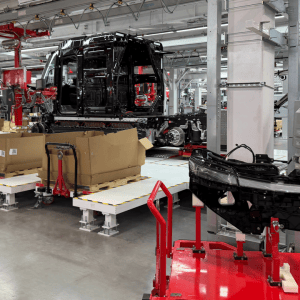
Tesla had 103 job openings with Semi in the title posted at its Sparks, Nevada, truck plant as of Oct. 16, according to Tesla’s careers site. The listings come three weeks after the plant started high-volume Semi production on Sept. 24. The hiring is for a 1.7-million-square-foot factory designed to build 50,000 trucks a year, as fleets line up orders for a truck Tesla first showed in 2017. Tesla has not said how many Semis the plant is building now. Before the dedicated line opened, the Semi fleet numbered just under 200 pilot trucks, delivered to customers including DHL, PepsiCo and US Foods. Drayage carrier IMC Logistics ordered 50 Semis this month, following WattEV’s 370-truck order in May. Tesla was also named lead manufacturer on a 2,500-truck order through the ZET SCALE alliance in September, though the alliance did not say how many of those trucks will be Semis. Tesla CEO Elon Musk told analysts in July, “We have started production with the Tesla semi-truck.” The company’s second-quarter shareholder update said production was expected to begin later in the year. Semi openings span assembly to dispatch The Semi listings include quality technicians for stamping, body-in-white and powertrain; equipment maintenance technicians for general assembly and the drivetrain; and a CDL driver, a dispatcher and an endurance fleet driver. Several are night-shift roles, including a battery production supervisor, associate production managers and stamping quality technicians. Tesla is also hiring construction staff for the Semi site, from a pipefitter to an electrical superintendent. The Semi roles are part of a larger list: Tesla’s site showed 490 openings in Sparks, 301 of them in manufacturing. The company’s Sparks listings on Indeed include production roles on battery, Powerwall, drive unit and LFP cell lines. Semi service and charging build out beyond Nevada Another 66 Semi postings sit outside Sparks. In the U.S., Tesla is hiring Semi service managers, supervisors and technical instructors in 11 cities, including Laredo, Texas; Elizabeth, New Jersey; and Chicago. On the charging side, Pilot and Tesla opened their first Megacharger site in Ellabell, Georgia, Oct. 8, with 12 more under construction. Tesla is also hiring for the Semi in Germany, France, the Netherlands, Belgium and the U.K., where it is targeting customer deliveries by the end of 2027. Postings there include service technicians in Berlin, Düsseldorf and Lyon, France. The first European trucks will come from Nevada. “We’ve got ample capacity to support our initial wave,” Dan Priestley, who leads the Semi program, said in a September keynote at IAA Transportation in Hannover, Germany. Output figures remain undisclosed Tesla’s third-quarter delivery report on Oct. 2 did not mention the Semi, and the company has not disclosed pricing. It reports quarterly results after the market closes Oct. 21. Semi postings are down from the spring even as Tesla’s overall Nevada postings rose. Stocktwits counted 146 Semi roles among nearly 471 full-time Nevada jobs on Tesla’s site in April, though it did not say how it identified Semi roles. On Oct. 16, the site listed 103 Semi-titled roles and 537 full-time Nevada openings. Priestley has also said “Tesla is not a heavy truck company yet,” FreightWaves reported in its coverage of the Sept. 24 inauguration. Why it matters: Tesla is staffing a Nevada plant built for 50,000 trucks a year as IMC, WattEV and ZET SCALE orders arrive. It has not said how many Semis the plant builds today, and its Oct. 21 results are the next chance to find out. The post Tesla staffs up Nevada Semi plant as fleet orders stack up appeared first on FreightWaves.

Transportation

Podcast: The Tesla Roadster episode

In the Electrek Podcast, we discuss the most popular news in the world of sustainable transport and energy. In this week’s episode, we’ll focus on the Tesla Roadster unveiling, but we may also cover a few other topics. more…

Advertisement
Transportation

Veteran trucker launches free parking, fuel-price platform for drivers

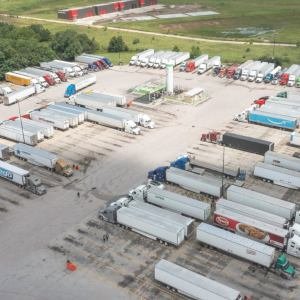
A veteran truck driver in Georgia has launched a free online platform designed to help truckers find parking, locate roadside repairs, compare diesel prices and access other resources without paying subscription fees. Shawn Gresham, a 17-year commercial driver and founder of Trucking Life Academy in Dalton, Georgia, said his Trucking Life With Shawn platform currently lists 2,031 truck parking locations across 45 states. The directory includes 1,882 truck stops, 78 dedicated truck parking lots and 71 hotels that accommodate commercial trucks. It also features 259 listings for truck repair, tire services, roadside assistance and heavy-duty towing, according to Gresham. “Truckers get nickeled and dimed to death across a hundred different apps: one for parking, one for fuel prices, one for HOS math, one to study for the CDL,” Gresham told FreightWaves. “I built one place, by a trucker, with all of it, free.” Gresham said the directory has been under development since July and is now being made available to the public. He said 80 listings were added over the past 30 days. The platform does not display real-time parking availability. Instead, it identifies locations where drivers may park, with listings marked to indicate whether overnight parking has been confirmed or remains unverified. Drivers can search by state, interstate and exit number, rather than downloading an app or creating an account. “The directory itself comes from something personal,” Gresham said. “I ran 17 years with a paper truck stop guide on the dash and wrote my own notes all through it.” He said the online version is designed to recreate that experience on a smartphone, allowing drivers to quickly identify parking locations and roadside services along their routes. During a demonstration with FreightWaves, Gresham showed how drivers can select a state, interstate and travel direction to find truck stops and parking locations along their route. A separate repair directory allows drivers to locate towing companies, tire services and other repair providers near interstate exits. Gresham said the feature was inspired by his own experiences trying to locate assistance after a breakdown. Instead of searching multiple websites and calling companies that might be dozens of miles away, drivers can identify services near their location and contact them directly through the directory. The platform also includes a diesel price board that Gresham said is updated daily. Drivers can compare estimated prices by state, region and city, along with using a calculator to evaluate potential fuel costs. Gresham, who also works in fuel operations at Rosedale Transport, said he uses diesel pricing information supplied by Love’s Travel Stops to help populate the platform. “It’s not perfectly average, but it gives you a good idea of what that state’s going for that day,” Gresham said. He said the information could help drivers and fleets make more informed decisions about where to purchase fuel along their routes. Gresham is also developing a truck navigation system and trip planner, which he expects to release publicly on New Year’s Eve. The GPS system is currently being tested by 87 working truck drivers, according to Gresham. He said the pilot program has allowed developers to identify and correct navigation problems before making the system widely available. One early issue involved delayed turn notifications, which Gresham said has since been addressed. The accompanying trip planner is designed to help drivers identify potential stopping locations based on their routes, weather, traffic conditions and remaining available driving hours. Drivers must manually enter their available hours of service, and Gresham emphasized that the tool is not an electronic logging device or a replacement for federally required hours-of-service records. The system is intended to identify potential parking locations before drivers exhaust their available driving time. Gresham said he has intentionally limited access to the GPS pilot while testing continues. “I didn’t want a brand new driver to use it, and then it did something wrong,” he said. Drivers interested in participating in the pilot can contact Gresham through the website. Although the platform’s driver tools are free, Gresham said the website generates revenue through several channels. Those include sales of his trucking books and guides, affiliate commissions from Truck Parking Club and paid featured listings for businesses such as repair shops. Gresham said Truck Parking Club is working to integrate its reservable parking locations into his directory, allowing drivers to access paid parking options through the platform. He receives affiliate compensation when users book qualifying parking through the referral arrangement. Gresham said drivers can continue using the free parking directory without purchasing a reservation. The platform also includes CDL practice tests, educational articles, study guides and a sleeper berth split calculator intended to help drivers understand hours-of-service calculations. He said the goal is to consolidate resources that truckers might otherwise access through multiple websites or subscription services. “Drivers never pay, and they never will,” Gresham said of the platform’s driver tools. The online platform follows Gresham’s efforts to establish Trucking Life Academy, a CDL training school in Dalton built with equipment and other contributions from drivers and businesses. The academy is scheduled to open this month, pending final state approval. Gresham previously told FreightWaves that he established the school in response to concerns about the quality of CDL training and the preparation of new commercial drivers. The school plans to limit classes to six students and initially offer training over eight weekends. The new online platform expands that effort beyond prospective CDL holders to drivers already working in the trucking industry. Gresham said the parking directory is now publicly accessible, although he does not yet have meaningful usage figures because the service is newly launched. He said working drivers can submit additional parking locations and corrections, which he reviews before publishing. “Parking is a huge problem,” he said. “I just want truckers using it.” Why it matters: The platform aims to give truckers easier access to parking and operational information without requiring multiple paid subscriptions, although its parking directory does not provide live space availability. More FreightWaves articles by Noi Mahoney: R&R trucking CEO reports $12.7M in assets after company collapse Mexico trucker shortages, visa restrictions squeeze cross-border capacity Texas trucking firm sued over age limits on drivers New Jersey CDL school lawsuit questions evidence behind FMCSA shutdown The post Veteran trucker launches free parking, fuel-price platform for drivers appeared first on FreightWaves.

Transportation

Louisiana attorney, staged accident scammer, finally sentenced

Danny Keating, an attorney who was one of the masterminds of the Louisiana staged accident scam, was sentenced Thursday to 32 months in federal prison. Keating’s sentence will be followed by three years of supervised release. He also must pay $657,405.34 in restitution. Keating was one of the most significant participants in what prosecutors in the office of the U.S. Attorney for Eastern Louisiana dubbed “Operation Sideswipe,” the intentional collisions in the New Orleans area between cars full of participants in the scheme and other vehicles that were usually tractor trailers. Keating pleaded guilty in June 2021. He is the only attorney involved in the case to cop a plea. He has been cooperating with prosecutors since then and was a key witness in the successful prosecution of fellow attorneys Vanessa Motta and Jason Giles, who were convicted in March for their roles in the scam. They await sentencing, as earlier sentencing dates were delayed with no new ones set as the two sides work through various motions. Keating did not testify in the recent mixed bag verdict of several people charged in the murder of Cornelius Garrison, who also had agreed to cooperate with federal prosecutors in 2020 after he pleaded guilty. Garrison was gunned down in his home soon after. The key murder charges in that case ended up in a hung jury with no new trial scheduled, though there were other convictions. During the interim between his guilty plea and this week, Keating’s sentencing was frequently scheduled and then delayed before finally occurring Thursday. According to reporting about the sentencing by NOLA.COM, the online successor to the New Orleans Times Picayune, Keating’s attorney Brian Capitelli had asked U.S. District Court Judge Nanette Brown to sentence Keating to probation, citing Keating’s cooperation with the investigation and the fact that he is in poor health. Keating not only didn’t get that; he also got more than the two years prosecutors had sought. But his sentence, according to NOLA.COM, is less than federal sentencing guidelines of 57 to 60 months. According to NOLA.COM, assistant U.S. Attorney Brian Klebba in making his argument to the judge to hold Keating’s sentence to two years said “when faced with a choice, Mr. Keating chose to admit to his misdeeds, forfeit his law license and tell the truth about the crimes that he and others committed.” Keating must report to prison by January 11, 2027, according to the NOLA.COM reporting. In its prepared statement announcing the sentencing, U.S. Attorney for the Eastern District of Louisiana David Courcelle said in the plea from 2021, Keating admitted to paying fellow ringleader Damian Lebeaud for 31 tractor trailer crashes. Concurrently, Keating represented 77 plaintiffs involved in the staged collisions. Lebeaud, like Keating, cooperated with prosecutors.His sentencing, like Keating’s, also has been delayed numerous times but is now set for December 3. Keating’s attorneys on Friday requested that the U.S. Bureau of Prisons send Keating to the minimum-security satellite camp at FCI Beaumont Low. Keating, according to the court filing, suffers from “Common Variable Immunodeficiency (“CVID”) and also has two spinal cord stimulators.” “Due to CVID and the spinal cord stimulators and his medication requirements, it is requested that he be designated to a Federal Medical Facility,” the filing said. The facility in Beaumont, Texas has the ability to treat those ailments, the attorneys said. According to the U.S. Attorney’s office, payouts in the staged collisions totaled about $1.5 million for plaintiffs represented by Keating. He kept about $358,000 of that. More articles by John Kingston English language rule’s comments bring criticism from Sikh organization FMCSA split sleeper berth pilot program moves closer to launch Federal DOT grants will fund more than 2,400 parking spots The post Louisiana attorney, staged accident scammer, finally sentenced appeared first on FreightWaves.

Advertisement
Transportation

Lectric treats riders with up to $762 e-bike savings in spooky sale, Worx snow blower, Jackery 1,024Wh V2 power station, more

Closing out this week’s Green Deals is Lectric’s freshly launched Spooky Sale with up to $762 e-bike bundle savings (that include two FREE mystery gifts) starting from $999. Right behind that group of treats is the Worx 40V 20-inch Cordless Electric Snow Thrower with 2x 6.0Ah batteries down at $395, as well as the Jackery HomePower 1000 V2 1,024Wh Portable Power Station for $549 that is part of the brand’s Power Outage Ready Sale lineup. We also rounded up a bunch of Greenworks chainsaw deals, like the 24V 6-inch Cordless Electric Mini Chainsaw at $95, and spotted the first Amazon deal on BougeRV’s Lightweight Foldable Electric Wagon with a 360-pound payload capacity. All these and more wait for you below, including the hangover deals from this week at the bottom of the page, like the yesterday’s $550 FREE extra battery Velotric Nomad 2 e-bike bundle, the kids-friendly Hiboy electric dirt bike deals, and more. Head below for other New Green Deals we’ve found today and, of course, Electrek’s best EV buying and leasing deals. Also, check out the new Electrek Tesla Shop for the best deals on Tesla accessories. more…