E-quipment highlight: LEAPTING launches electric autonomous forklift
Transportationvia Electrek
Quick Read
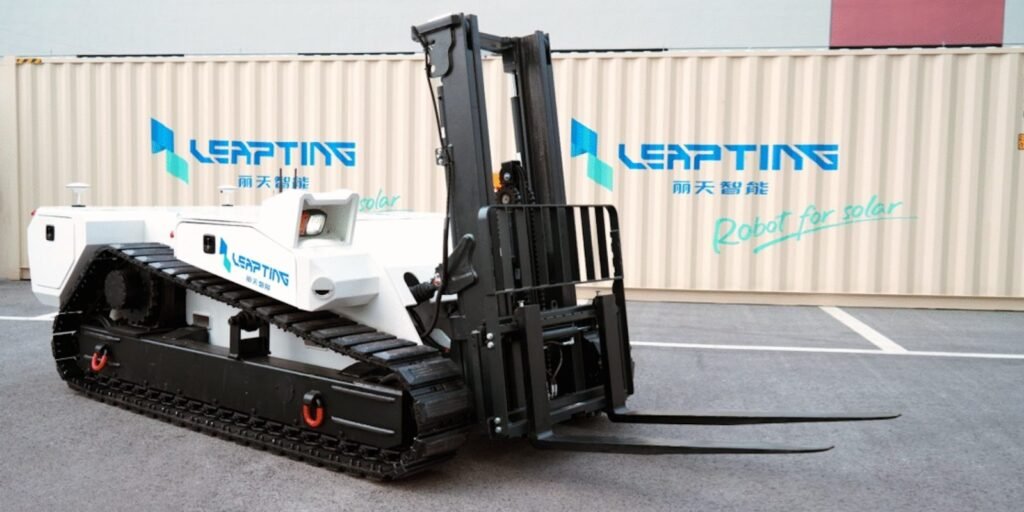
Chinese PV and solar equipment brand LEAPTING has taken the wraps off its new, battery-powered Auto-Navigation Forklift Robot (AFR) designed to speed up the installation of large, utility-scale solar power projects. more…
Chinese PV and solar equipment brand LEAPTING has taken the wraps off its new, battery-powered Auto-Navigation Forklift Robot (AFR) designed to speed up the installation of large, utility-scale solar power projects.
Larry Cothran did not set out to become what he now calls the number one trucking content creator in the world, he set out to post one video a day and then simply refused to stop, and that stubborn daily discipline, showing up on Facebook, Instagram, and YouTube every single day for more than three years without missing once, is what turned a truck driver with a phone into a media brand that by his own count pulled north of five billion views in a single year. His story is worth telling not because the numbers are enormous, though they are, but because of the quieter lesson running underneath it, which is that producing the work turned out to be the easy part and learning what that work is actually worth has been the hard one. The Barbecue Detour That Doubled As A Marketing Lab One of Cothran’s most telling ventures did not happen on the road at all but during a stretch when he had stepped off the truck. By his account it began around 2006 with a piece of small-town serendipity, a chance roadside encounter that ended with a pitmaster handing him an entire barbecue operation, grill and concept included, after a divorce pulled the man out of the business. Cothran did not have a building or a recipe, but he had Facebook, and that turned out to be enough. He built the whole thing on social posts, calling out his location in real time and pulling customers to a folding table. The early roadside version got shut down by the health department for operating without permits, a reminder that the hustle was ahead of the paperwork, and he went and took a driving job. But the barbecue kept pulling him back, and by 2015 he and a partner had opened a brick-and-mortar spot in Rome, Georgia that he says he took from ranked number 164 to the number one result on Google, Yelp, TripAdvisor, and Bing in under 90 days, all of it off Facebook. He eventually handed the restaurant to his partner and went back on the road for good, but the instinct that venture revealed, that perception packaged well sells every time, is the same one that would later define his trucking content. Into The Cab, And Then Onto The Screen Cothran has been driving since around 2007, starting out at the kind of entry-level carriers most owner-operators remember before settling into the lease arrangement he has held for close to five years. He still runs real miles, around 2,000 a week hauling transformers and oversize freight on lanes that keep him close enough to get back to the house in a day, which is its own quiet philosophy about what over-the-road life should cost a person. The driving never stopped. What changed was that in May 2021 he started talking to a camera. The first video that moved was a blunt one, a take on the gap between what the public thinks truckers earn and what drivers say they actually make. It landed around 13,000 views, FreightWaves reached out for an interview, and Cothran decided on the spot that trucking was his lane. From there he did the thing almost nobody sustains, posting one video every single day from May 2021 until September 2024 without missing once. He leaned into short, green-screen comedy, the trucker with the Bluetooth headset who takes a sudden phone call mid-conversation, bits built to be recognized and repeated, and several of them detonated. He points to a lion-statue clip that did 25 million views, a seven-second video that reached 164 million, and a news-style post about a highway incident that crossed 20 million views overnight and became, he says, his most lucrative post to date. Totaled up, he counts 5.11 billion views across a recent 365-day stretch, a figure he uses to plant his flag as the most-watched voice in the space. The follower numbers fill in the rest of the picture. By his own tally he is roughly 3,000 people shy of 1.5 million on Facebook, sits near 497,000 on Instagram across more than 5,000 posts, and carries another 161,000 on TikTok against 6.5 million lifetime likes, with smaller footprints on Threads and Snapchat on top of that. He is deliberate about where that attention lives. Facebook is his house, he says, because it pays the most and holds his largest audience, while Instagram functions more like a mixtape, a channel that may not pay directly but keeps him in front of people so they do not forget he exists. It is a creator thinking like a distributor, matching each platform to a job rather than chasing whichever one is fashionable. From Creator To Something Like Press Lately Cothran has drifted from pure comedy toward reporting. He goes to truck stops and asks drivers directly what they are hearing, whether a rumored shutdown is real, how rates feel on the ground, and he has sat down with veterans, including a driver with more than half a century behind the wheel who lived through the 1983 strike. What is notable is his restraint. He says he does not put definitive calls out into the world, he asks questions and lets drivers supply the answers, staying neutral on the hot topics because his role, as he sees it, is to provide the platform rather than to tell people what to think. For a creator whose incentives all push toward hotter takes, that is a discipline worth respecting, and it is part of why his reporting travels. The Cost Of Being Seen Visibility on that scale carries a dark side, and Cothran is candid about it. As his reach grew, so did the trolls, and the harassment escalated past insults into inbox threats on his life, with some of the ugliest of it aimed at his family. He traces the real turn to around Easter of 2023, and it spiked again after one of his posts about a highway incident went viral the following year, the same stretch in which he says he earned the most he ever had in a single week. His response was counterintuitive. He stopped reading comments altogether, refused to engage, and let the online anger turn into its own form of traction rather than letting it push him off course. More telling, he answered the hostility with volume. The very window the threats were escalating is the window his output climbed, from the single daily video he had posted for more than three years to five videos a day in September 2024 and then ten a day by January 2025. The man who once admits he cared deeply what people thought decided he no longer would, stopped looking at the comments that used to sting, and poured that energy back into the work. That is the perseverance sitting underneath the view counts, a creator who met death threats and trolls by posting more, not less, and never broke stride. The Part Nobody Teaches, Which Is What You Are Worth The thread that kept surfacing in our conversation was value, and specifically how badly people in this industry tend to price themselves. Cothran has lived both sides of it. He was the number one recruiter at a major carrier for three straight years on the strength of links buried in his videos, paid per driver he brought in, and he describes the familiar sting of people walking up to tell him they signed because of him on months when the payouts somehow did not reflect it. That experience taught him to stop leaving his income to someone else’s referral math. So he raised his prices, deliberately and repeatedly. He started out charging a modest rate for a single video and pushed it upward step by step over the years, climbing steadily into far higher territory, guided by a simple test he picked up along the way, that the right price is the one that makes you smile when you say it. The deeper shift was philosophical. He learned to stop accepting affiliate and link deals, the arrangements where a brand pays a small cut for every customer a creator funnels in while getting permanent access to that creator’s audience. The math, laid out plainly, is lopsided. A brand spending enormous sums on advertising will offer a creator a few dollars per converted customer, as if a direct line to millions of impressions were worth pocket change. The better model, the one he has moved toward, is to charge brands for the privilege of being present inside his community rather than renting out his credibility by the click. That is also where the unglamorous business infrastructure comes in. Two of the strongest pieces of advice to come out of the sit-down were to put a general counsel on retainer and to never sign a scope of work a real attorney has not read. A friend who happens to be a lawyer is not the same as paid counsel whose job is to protect your interest, and the fine print is where creators get taken, the clauses that quietly dictate how long a video must be, demand that a post stay pinned to your personal page, or otherwise hand a brand control over real estate you own. The same applies to events. A sponsorship is not a favor, it is an investment a brand expects a return on, which means a creator needs a real activation kit that can speak to brand impressions, recirculation, and measurable ROI, not just a price and a promise. Why He Is Building A Christmas Party The project Cothran is pouring himself into now is a Christmas party for truckers in the Cartersville, Georgia area, north of Atlanta, and the why behind it says as much about him as the view counts do. He has been to plenty of industry events that feel buttoned-up and built for executives, and he set out to make the opposite, a come-as-you-are night aimed squarely at the driver. The pitch is intentionally unpretentious. Leave the suit that no longer fits at home, show up in jeans with the headset on, and just be yourself. The point is for drivers to eat, dance, let loose, and spend a night in a room full of people who do what they do, without the cost of admission being a dress code or a title. Underneath the fun is a conviction about relationships that Cothran learned the hard way out on the road. He tells the story of a driver he once helped get on with a carrier who later returned the favor many times over, repeatedly putting Cothran’s name in for bigger oversize loads and, as he puts it, money in his pocket, all because of a single introduction. That, in his telling, is how doors actually open in this business, not through load boards or algorithms but through people who look out for each other, and he wants to build the room where those connections can happen. He is selling tickets now and still lining up sponsors, promoting the event with weekly videos in the run-up, and true to the lesson running through his whole story, it is the kind of event that should be heavily sponsored precisely because of the audience and the visibility he can put behind it. Why It Matters Cothran’s rise is a case study in two things the trucking world consistently undervalues, the compounding power of showing up every single day and the hard business discipline of pricing your own work correctly. For the driver, dispatcher, or small operator sitting on a good story and a phone, the takeaway is not that virality is luck but that it rewards relentless consistency, and the warning is that building the audience is only half the job, because the creators and small businesses who get taken advantage of are almost always the ones who never learned to put a real number, and a real contract, on what they bring to the table. This article is based on a sit-down conversation between FreightWaves Playbook and trucking content creator Larry Cothran. Audience figures, view counts, and earnings are as stated by Cothran. His Christmas party for drivers is planned for the Cartersville, Georgia area. The post How One Trucker Turned One Video A Day Into Billions Of Views, And What It Cost Him appeared first on FreightWaves.
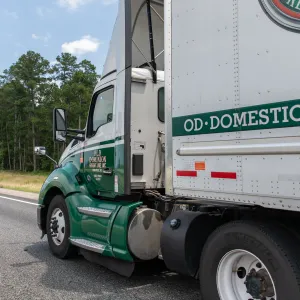
Less-than-truckload carrier Old Dominion Freight Line saw tonnage turn positive for the first time in over two years during September. Executives from the company cited favorable market share opportunities on Wednesday, with customers exploring multiyear contracts and 3PLs seeking long-term capacity commitments. However, the company acknowledged that a more material demand inflection—requiring a resolution to record energy prices—will be needed to drive upcycle-like results. Old Dominion (NASDAQ: ODFL) reported third-quarter earnings per share of $1.65 ahead of the market open on Wednesday. The result was 4 cents better than the consensus estimate and 37 cents higher year over year. Revenue of $1.59 billion was 13% higher y/y (up 5% y/y excluding fuel surcharges) and $20 million better than analysts’ expectations. (Diesel prices were 48% higher y/y during the quarter.) Tonnage per day was flat y/y, with a 13% increase in yield (revenue per hundredweight) driving the topline increase. Yield was up 5% y/y (ex-fuel), slightly better than management’s guidance (plus-4% to plus-4.5%). The tonnage result was driven by a 2% y/y decline in shipments, which was offset by a 2% increase in weight per shipment. Tonnage was down roughly 1% y/y in both July and August, but up 1.6% in September and into October. The carrier continues to face easy prior-year comps (tonnage was down 10.7% y/y in the 2025 fourth quarter). August updates from public carriers showed y/y tonnage growth has continued to accelerate cumulatively since first turning positive in March. September marked a ninth straight month of expansion for the manufacturing complex, and the LTL industry is seeing some freight return that was previously lost to a depressed truckload market. Old Dominion is carrying over 35% excess door space currently, but noted that it should meaningfully take market share as capacity-constrained carriers are experiencing service failures. Old Dominion normally outgrows the market by 9 to 10 percentage points in an upcycle. Higher shipment weights were a modest drag on the yield metric, partially offset by a slight increase in length of haul. Revenue per shipment (ex-fuel) increased 7% y/y. Old Dominion implemented a 4.9% general rate increase on Oct. 5. A 71.5% operating ratio (inverse of operating margin) was 280 basis points better y/y and 40 bps better than the midpoint of management’s guidance range (150 to 200 bps of sequential deterioration from the 70.1% second-quarter unadjusted OR). Shipments per employee (per day) were 2% higher y/y. Revenue per shipment (including fuel surcharges) was up 15.5% y/y, with cost per shipment up 11%—a 440-bp favorable spread. October trends, Q4 guidance October revenue per day is 22% higher y/y given a modest tonnage increase and a roughly 20% jump in yield (up 5.5% to 6% ex-fuel). Yields continue to accelerate, even with the added headwind of higher shipment weights (up 3% y/y in October). Management pegged fourth-quarter revenue to a range of $1.54 billion to $1.58 billion, implying better-than-normal seasonality and coming in ahead of the $1.51-billion consensus estimate. The carrier normally sees 200 to 250 bps of sequential OR degradation from the third to the fourth quarter. It expects to perform at the better-end of that range this year, implying a fourth-quarter OR of 73.5%, which would be 320 bps better y/y. It said an annual insurance true-up could swing the number 20 bps either way. It also flagged higher healthcare costs and fuel (operating supplies) as potential headwinds. However, demand is holding steady (third-quarter shipments and tonnage slightly outpaced seasonality), and yield is outperforming. The fourth-quarter OR outlook implies a 43% incremental margin versus 50% in the third quarter. Shares of ODFL were down 5.5% at noon on Wednesday compared to the S&P 500, which was up 0.2%. Investors are concerned that an inflationary diesel fuel environment is allowing LTL carriers to over-earn and that results will likely moderate when prices recede. There’s also some concern around industry growth prospects even after a positive inflection in manufacturing data. Why it matters? Old Dominion Freight Line’s third-quarter report serves as a key industry bellwether, signaling that LTL carriers are successfully prioritizing pricing discipline and profitability over volume despite only modest demand trends. More FreightWaves articles by Todd Maiden: Insurance claims adjustments tank Landstar’s otherwise strong Q3 Werner Enterprises sees cost headwinds lingering into Q1 Knight-Swift again eyes big rate increases as new bid season nears The post Old Dominion’s tonnage turns positive; recovery needs demand inflection appeared first on FreightWaves.
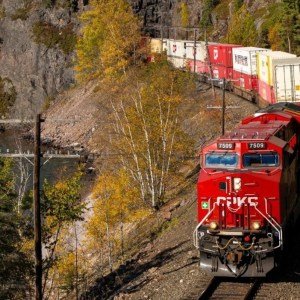
Canadian Pacific Kansas City reported a 16% increase in third-quarter core adjusted earnings per share Wednesday, as higher freight volumes and growth in grain and intermodal revenue helped offset rising fuel costs. Revenue rose to C$4.22 billion ($3.01 billion) in the three months ended Sept. 30 from $2.61 billion a year earlier, the Calgary-based company (NYSE: CP) said in earnings released after the close of markets. Core adjusted diluted earnings increased to 91 cents per share from 78 cents, while reported diluted earnings rose 3% to 74 cents from 72 cents. Freight volumes, measured in revenue ton-miles, increased 6%. “CPKC delivered solid results, powered by momentum across our unrivaled North American network, countering macroeconomic headwinds during the quarter,” President and Chief Executive Keith Creel said in the release. “The railroad is running very well, our service remains strong, and we continue to deliver growth across key markets, including grain, intermodal and merchandise.” Grain revenue climbed to $644 million from $500 million in the third quarter of 2025, while intermodal revenue increased to $581 million from $476 million. Revenue from energy, chemicals and plastics rose to $544 million from $499 million, and automotive revenue reached $266 million, up from $244 million. Coal revenue was nearly unchanged at $181 million. window.googletag = window.googletag || {cmd: []}; googletag.cmd.push(function() { var gptSlot = googletag.defineSlot('/21776187881/FW-Responsive-Main_Content-Slot1', [[300, 100], [320, 50], [728, 90], [468, 60]], 'div-gpt-ad-1709668545404-0').defineSizeMapping(gptSizeMaps.banner1).addService(googletag.pubads()); googletag.pubads().enableSingleRequest(); googletag.pubads().collapseEmptyDivs(); googletag.enableServices(); setInterval(function() { if (!document.hidden) { googletag.pubads().refresh([gptSlot]); } }, 60000); }); googletag.cmd.push(function() { googletag.display('div-gpt-ad-1709668545404-0'); }); The gains lifted operating income to $1.06 billion from $955 million, although expenses increased faster than revenue. Fuel expense rose to $475 million from $296 million, while compensation and benefits increased to $507 million from $441 million. CPKC’s operating ratio —operating expenses as a percentage of revenue and a key efficiency indicator— worsened to 64.8% from 63.5%. Its core adjusted operating ratio increased to 61.9% from 60.7%. The company said higher fuel prices added 1.7 percentage points to the reported ratio and 1.9 percentage points to the core adjusted figure. Despite higher operating income, net income attributable to controlling shareholders edged down to $653 million from $655 million. Reported earnings per share nevertheless increased as the weighted-average diluted share count fell to 877.6 million from 911.4 million. Income tax expense increased to $319 million from $211 million. The quarter included a $67 million tax charge related to Canadian tax reassessments associated with the Kansas City Southern acquisition in 2023, along with a $12 million expense from a Mexican tax settlement. The company also disclosed $12 million in advisory costs related to its analysis and advocacy concerning the U.S. Surface Transportation Board’s review of the proposed Union Pacific (NYSE: UNP)–Norfolk Southern (NYSE: NSC) merger. Cash generated by operating activities increased to $1.10 billion from $905 million a year earlier. Spending on additions to properties declined to $437 million from $613 million, while cash used to purchase common shares totaled $1.02 billion. Creel said disciplined execution and a “robust commercial pipeline” supported the company’s confidence in meeting its annual commitments. window.googletag = window.googletag || {cmd: []}; googletag.cmd.push(function() { var gptSlot = googletag.defineSlot('/21776187881/fw-responsive-main_content-slot3', [[728, 90], [468, 60], [320, 50], [300, 100]], 'div-gpt-ad-1665767553440-0').defineSizeMapping(gptSizeMaps.banner1).addService(googletag.pubads()); googletag.pubads().enableSingleRequest(); googletag.pubads().collapseEmptyDivs(); googletag.enableServices(); setInterval(function() { if (!document.hidden) { googletag.pubads().refresh([gptSlot]); } }, 60000); }); googletag.cmd.push(function() { googletag.display('div-gpt-ad-1665767553440-0'); }); Subscribe to FreightWaves’ Rail e-newsletter and get the latest insights on rail freight right in your inbox. Read more articles by Stuart Chirls here. window.googletag = window.googletag || {cmd: []}; googletag.cmd.push(function() { var gptSlot = googletag.defineSlot('/21776187881/fw-responsive-main_content-slot4', [[300, 100], [320, 50], [728, 90], [468, 60]], 'div-gpt-ad-1709668086344-0').defineSizeMapping(gptSizeMaps.banner1).addService(googletag.pubads()); googletag.pubads().enableSingleRequest(); googletag.pubads().collapseEmptyDivs(); googletag.enableServices(); setInterval(function() { if (!document.hidden) { googletag.pubads().refresh([gptSlot]); } }, 60000); }); googletag.cmd.push(function() { googletag.display('div-gpt-ad-1709668086344-0'); }); Read more: Backlog grows as 35,000 containers await rail service at LA–Long Beach Wabtec earnings rise on higher freight and transit sales Union Pacific posts record third-quarter revenue and profits Norfolk Southern profits rise on higher volume and revenue Commodity markets whip up railfreight gains window.googletag = window.googletag || {cmd: []}; googletag.cmd.push(function() { var gptSlot = googletag.defineSlot('/21776187881/fw-responsive-main_content-slot5', [[728, 90], [468, 60], [320, 50], [300, 100]], 'div-gpt-ad-1665767778941-0').defineSizeMapping(gptSizeMaps.banner1).addService(googletag.pubads()); googletag.pubads().enableSingleRequest(); googletag.pubads().collapseEmptyDivs(); googletag.enableServices(); setInterval(function() { if (!document.hidden) { googletag.pubads().refresh([gptSlot]); } }, 60000); }); googletag.cmd.push(function() { googletag.display('div-gpt-ad-1665767778941-0'); }); The post First look: CPKC earnings appeared first on FreightWaves.