Breaking
Advertisement

Technology

Technology

Google turns to Blue Origin for a rocket, but its long-term problem remains

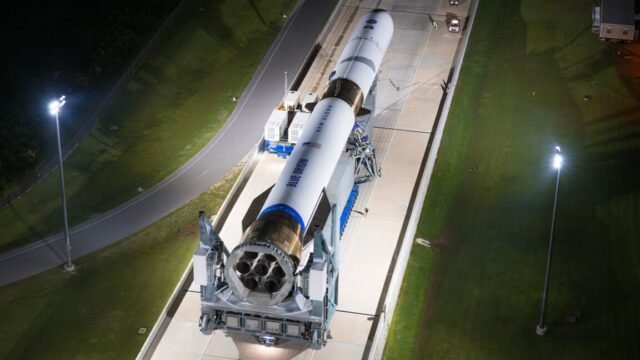
Blue Origin announced Thursday that its New Glenn rocket will launch data center satellites for Google in 2029 as part of that company's Project Suncatcher program. Google disclosed it was working on scalable orbiting data centers about a year ago and characterized the project as one of its research "moonshots." The mission on New Glenn is designed to deploy satellites, each with computing capacity at roughly the scale of a data center rack, into Sun-synchronous orbit where they can receive nearly continuous solar energy. "Project Suncatcher is a long-term moonshot to scale AI infrastructure in space by tapping into the abundant solar power in orbit," said Travis Beals, senior director of Project Suncatcher at Google, in the news release. "This dedicated launch with Blue Origin represents a crucial milestone on our roadmap as we expand the boundaries of what's possible for the future of compute."Read full article Comments
Technology

“You’re right”—LLMs will get climate info wrong if you ask

Many studies over the years have examined how people encounter climate science information. Some focused on the top results that Google surfaced (back when Google was still in the business of serving links), while others examined social media content or newspaper and TV news coverage. With large language models (LLMs) now forming a share of the public information diet, it's worth looking at how they handle climate change. But there’s no direct way for researchers to look at the information people have seen. It is served ephemerally to individual users, confined to their chat session. A study led by researchers from University College London and the United Nations Educational, Scientific, and Cultural Organization (UNESCO) tried to tackle this question from multiple angles, testing LLMs with different prompts and evaluating their output. They started with benchmarks of simple factual questions (benchmarks that might even be in models’ training data at this point) but also analyzed more complex interactions—including when users think they’re right to push back on an answer. CO2 Q&A LLM research often faces (no-true-Scotsman-tinged) criticism for focusing on a particular model rather than some other frontier model that may have been released after the experiment concluded. In this case, the study used 33 models, including multiple versions of the major frontier and open-weight models. The flagship frontier models used were Claude Fable 5, Claude Opus 5, Gemini 3.1 Pro Preview, Gemini 3.6 Flash, and GPT-5.6 Sol. (You can find the full list in the report.)Read full article Comments

Technology

Google will launch Android app verification requirement globally in January 2027

Google announced Android developer verification last year, and despite numerous objections from developers and users, the company is forging ahead. It began blocking the installation of unregistered apps in some countries this fall, and the system is expanding globally soon. Google says it will start rolling out the requirement in all regions in January 2027, and it urges devs who still haven't registered their apps to do so soon. The apps you download from the Play Store all come from verified developers, and Google's new requirement expands that requirement to apps from third-party sources. Once developer verification is live in your region, you won't be able to sideload apps unless the developer has registered with Google, which is framed as a security measure. Verification requires providing government identification and paying a $25 fee, which will allegedly make it harder for nefarious actors to distribute malware and scammy apps. In September, Google launched verification in Brazil, Indonesia, Singapore, and Thailand. Apparently, nothing exploded, so the company is now ready to expand. It previously said verification would go global in 2027, and it's not wasting any time with the January start. It says that verification will reach all devices within "several months."Read full article Comments

Advertisement
Technology

Mouse fight club might explain why we like to watch violent things

There's something about watching violent events that broadly appeals to us, whether it's the latest John Wick movie, a video game, or a live UFC bout. Scientists have debated whether watching violent things could make us more aggressive, but it could also be an adaptive survival strategy. Male mice, for instance, who watched other mice fighting learned enough about how to fight to better protect themselves (compared to mice who didn't watch fights) when pitted against stronger, more aggressive opponents, according to a paper published in the journal Nature. The team randomly assigned male mice to three groups—fighters, spectators, or novices—and then subjected each group to eight days of training with three 10-minute sessions per day. The novices played with stuffed mice in isolation, while the spectators watched various pairs of fighter mice battle from a raised platform behind a transparent barrier—a set-up chosen to let them smell and listen to the fights as well as observe them. The ninth day was "fight night," when all the mice had to face a daunting opponent in three 4-minute rounds. Each fight was filmed from above so that the mouse behavior could be analyzed. To monitor corresponding changes in brain activity, the team engineered the rodents' excitatory brain cells to glow green whenever they were activated, while inhibitory brain cells glowed red. They also implanted tiny optical fibers into 12 interconnected brain regions so they could track changing activity in every brain region simultaneously.Read full article Comments

Advertisement
Technology

NASA’s new Moon plans have a problem: Orion wasn’t designed to fly this way

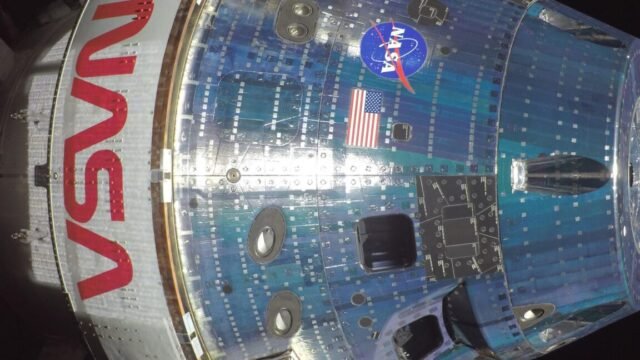
NASA recently announced a significant shakeup to the Artemis program that will land humans on the Moon. The moves were designed to give the agency's lunar lander providers—SpaceX with its Starship vehicle, and Blue Origin with Blue Moon—more flexibility in reaching the Moon. For Starship, this means docking with Orion in Earth orbit, and then traveling to the Moon in tandem. For Blue Moon, it shifts the rendezvous with Orion all the way to low-lunar orbit. These changes benefit the lunar landers, but in turn impose more of a burden on the Orion spacecraft, which is built for NASA by Lockheed Martin. To understand the implications for the spacecraft, Ars spoke with Kirk Shireman, Human Spaceflight Exploration and Orion program manager at Lockheed.Read full article Comments

Technology

How to tell a cyberattack from a plain old outage

Over the past week, anyone could be forgiven for wondering whether a Diehard IV–style cyberwar had finally arrived in the US. Across just four consecutive business days, a mass Microsoft exchange outage broke IT services for thousands of companies, a Federal Aviation Administration tech screw-up grounded airplanes across the country, a software problem affecting JPMorgan Chase caused another round of disruption, a United Airlines system glitch delayed flights yet again, and an NSA classified network’s downtime left the agency’s staff sitting at home waiting to return to their office at Fort Meade. In the midst of a US war with Iran and rising fears of AI-enabled hacking, this still-unfolding comedy of IT errors colliding across American infrastructure felt to plenty of observers like more than a coincidence. Yet there’s still no evidence that any one of these clustered technological failures were related, much less caused by hackers. Their improbable, sequential timing left Americans anxiously doomscrolling for signs of foul play. But in cases like these, it’s the job of cybersecurity analysts (and reporters at WIRED) to determine—vibes aside—whether the latest tech outage was actually an accident or the result of a cyberattack.Read full article Comments

Advertisement
Technology

Elon Musk says: ‘I’m not MAGA’

During his appearance Wednesday at The New York Times' DealBook Summit, Elon Musk said that he wasn't sure what the term "MAGA" meant and also commented that he felt "pretty foolish" for having spent so much money during the U.S. midterms.