Breaking
Advertisement

Technology

Technology

Some iPhone Duo screens are already failing

The iPhone Duo launched last week, offering anyone willing to spend $2,000 a chance to experience Apple's first foldable phone. For some early buyers, the morning after isn't going great. Despite the company's big talk about its "precision-engineered" hinge, some devices appear to have a hardware flaw that destroys the device's impressive internal display within hours (or minutes) of use. The Internet is currently overflowing with images of busted iPhone Duos, all sporting almost identical damage. The OLED is marred by several bright lines originating just below the midpoint of the display. These bands of damaged pixels extend all the way to the bottom and right edges. Some units also show lines of dead pixels following the crease from the top to the area where the bright lines begin. Anyone who has seen a damaged OLED panel will be familiar with this type of defect. When the layers of the display are damaged, the pixels no longer receive the correct voltage to illuminate them. Instead, they get the full driving voltage and are permanently on at maximum brightness. Some pixels can get no voltage, leaving them totally black. The only fix is to replace the OLED, but swapping the iPhone Duo's screen reportedly costs half as much as the device itself.Read full article Comments

Technology

F1 in Texas: The American race that fans love to attend

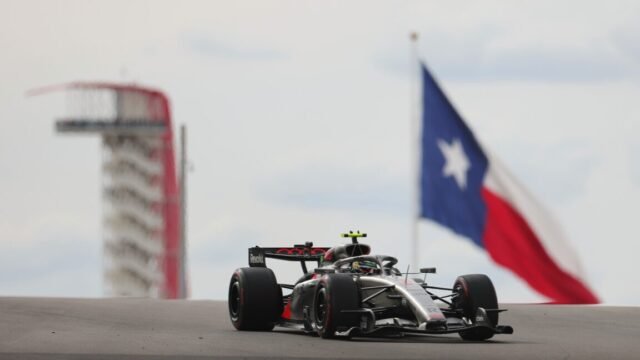
Audi provided flights from Washington, DC, to Austin, Texas, and accommodation so Ars could attend the US Grand Prix. Ars does not accept paid editorial content. AUSTIN, Texas—Formula 1 returned to US shores this weekend with its annual visit to the Circuit of the Americas in Austin, Texas. Once in danger of falling off the calendar due to lack of interest, it’s now one of the most popular tracks on the calendar and, of the US’s three races, it's the one the real fans mostly attend. Unlike Miami or Las Vegas, which race on temporary street circuits, COTA is a permanent race track with plenty of run-off areas instead of concrete walls. Designed by motorcycle racer Kevin Schwanz—Herman Tilke’s company did only the buildings and infrastructure, contrary to popular belief—the track combines a mix of corner speeds with challenging turn sequences, a few heavy braking zones, and plenty of elevation changes. It’s a place Ars knows rather intimately by now. We’ve driven it in everything from an Audi TT-S to a Corvette ZR1 to a bicycle, and that’s just in the real world. Over the years, we’ve been there for F1 to learn about how the sport puts together its broadcasts, how Pirelli designs its tires, and how various tech partners help teams manage their data and strategies. We even saw the race through a neophyte’s eyes. And that’s just F1—we’ve logged many hours there with the World Endurance Championship and IMSA for the Lone Star Le Mans races in sweaty September.Read full article Comments

Advertisement
Technology

Anthropic officially files for its public debut

Anthropic has officially filed for an IPO, revealing soaring revenue, mounting losses, major enterprise adoption, and an unusual governance structure designed to preserve founder control and its AI safety mission.

Technology

Tesla gave up the EV crown. Now it wants to win the autonomy race.

Elon Musk’s “flying” Roadster jumped and flipped through the air this month in a stunt that went viral around the world. But his bigger bet is on changing the way Tesla makes money—and the wider car industry is scrambling to catch up. Five days after the spectacle, made possible by compressed-gas thrusters developed by Musk’s SpaceX, he revealed the companies were exploring a merger that could accelerate his push into autonomous driving. At stake is more than a technological race. Car groups, already grappling with growing Chinese competition, are seeking to move beyond a business model centered on vehicle sales towards one that also generates recurring revenues from software and AI-powered services.Read full article Comments

Technology

From impulse purchase to pocket studio: The M-Vave FM-1

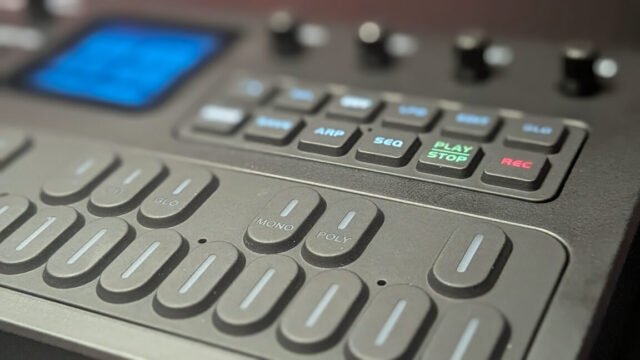
The M-Vave FM-1 is exactly the kind of device I have a weakness for. I may not have an intended use for the frequency-modulation synthesizer, but when a low price meets a high coolness factor, I'm powerless to keep it out of my cart. Initially billed as a pocket cousin of the famous Yamaha DX7 synthesizer, the FM-1 is a bargain at only $59.72 after fees. At release, it was a cool device that did what it said on the box, but not much else. But in July, some intrepid tinkerers on Reddit’s r/synthdiy board began reverse-engineering the FM-1's stock firmware to expand the device's abilities. By September, custom firmware began appearing. We're not even through October, and there are already more community firmware projects available to install on the FM-1 than I could ever hope to cover.Read full article Comments

Advertisement