Breaking
Advertisement

Technology

Technology

Buckle up for more body-swapping hijinks in Jumanji: Open World trailer

Let's face it, the mid-December box office will be dominated by Avengers: Doomsday and Dune: Part Three, but for those seeking fun holiday family fare, Jumanji: Open World opens the very next week on Christmas Day. Sony Pictures just released a new trailer for director Jake Kasdan’s sequel to his 2019 hit, Jumanji: The Next Level, teasing the usual wacky hijinks with a twist that calls back to the original 1995 film. As previously reported, Kasdan gave the franchise a welcome major overhaul with the release of 2017’s Jumanji: Welcome to the Jungle, updating the original board game into a vintage video game and giving us a hugely entertaining action-adventure. Welcome to the Jungle racked up over $960 million at the global box office and spawned the equally successful 2019 sequel Jumanji: The Next Level. A third film was always in the cards: The Next Level featured a tantalizing mid-credits scene in which a heater repairman (Lamorne Morris) visits Spencer Gilpin’s (Alex Wolff's) house, sees the broken video game console, and inadvertently triggers the game. The COVID-19 pandemic paused the third film’s development, but things picked up again in 2024, and here we are. Per the official synopsis:Read full article Comments

Technology

A hidden ocean change near Antarctica could have global consequences

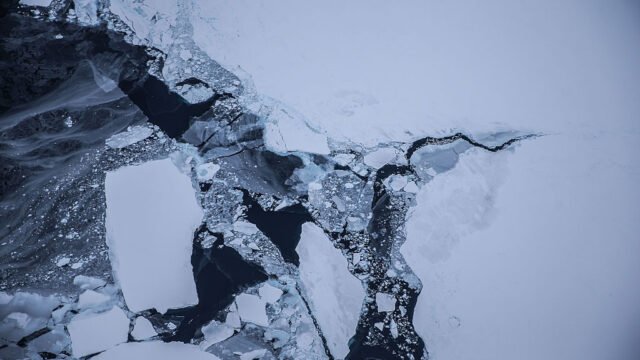
The rapid decline of Antarctic sea ice since 2016 has triggered a dramatic shift in a crucial part of Earth’s climate system, scientists say. In a paper published Wednesday, researchers documented a sharp salinity increase in a vast layer of the Southern Ocean, extending from 2,300 to 4,000 feet deep and encircling Antarctica. The shift reverses decades of freshening and echoes ocean changes usually associated with major global climate shifts over millennia but is now happening in just a few years. The switch from a decades-long trend of freshening water to increasing salinity has implications that could extend beyond Antarctica. The layer, known as Antarctic Intermediate Water, spreads northward into the Indian, Pacific, and Atlantic oceans, transporting heat, carbon, oxygen, and nutrients toward the tropics, and even across the equator, said co-author Bishakhdatta Gayen, a researcher and professor at the University of Melbourne and at the Centre for Atmospheric and Oceanic Sciences in Bengaluru, India.Read full article Comments

Advertisement
Technology

China’s snooping around Pacific undersea cables raises risks for Big Tech

Subsea cable projects owned by US companies such as Google and Meta face some of the greatest risks from the threat of deep-sea sabotage in the Pacific Ocean, according to a new report. That coincides with Chinese research ships spending an extraordinary amount of time apparently surveying undersea cables—not to mention Chinese commercial ships being investigated for cutting cables in both European and Asian waters. Most damage to the undersea cables that form the Internet’s backbone is the result of accidents involving bottom-trawling fishing nets and ship anchors dragging on the seabed, with storms and undersea landslides also factoring in. But the recent rise in international tensions and open conflicts have placed new scrutiny on more suspicious instances of cable-cutting damage, with analysts warning about Russia and China in particular engaging in cable sabotage or tampering as “gray zone” tactics that fall short of direct military confrontation. One of the newest risk assessments of China’s gray zone tactics targeting the Internet’s undersea infrastructure comes from a research report published by the US-China Economic and Security Review Commission, an independent government commission that advises Congress. The report was contracted to the London-based think tank China Strategic Risks Institute and published in September 2026.Read full article Comments

Technology

Apple refreshes the iMac, entry-level MacBook Pro with the M6 chip

Apple has announced refreshes for the iMac and the entry-level, 14-inch MacBook Pro. Both machines are getting the M6 chip, which was introduced in the Mac mini several weeks ago. The M6 is split into two variants for the iMac. Picking the "M6 chip with two Thunderbolt ports" option gets you a 10-core CPU and a 10-core GPU, whereas picking "M6 chip with four Thunderbolt ports" gets you 12 cores for each, instead. The two-port variant maxes out at 24 GB of RAM and 1TB of storage, whereas the four-port one maxes out at 32GB of RAM and 2TB of storage.Read full article Comments

Advertisement
Technology

South Carolina’s measles outbreak jumped to Washington state 5 times in 2 weeks

Since measles was declared eliminated in the US in 2000, the country's occasional cases have come mainly from international travelers—visitors from far-flung places where the virus still spreads freely — or unvaccinated US residents who return from abroad with a highly infectious souvenir. But as vaccination rates have slipped nationwide in recent years and outbreaks grow bigger and more frequent, domestic travel now poses a greater risk than international incursions. In a study published this week in NEJM Evidence, Washington state health officials highlight that risk, detailing how an explosive outbreak in South Carolina reached their distant state through five distinct importation events over two weeks in January. In all, the introductions led to 26 cases among residents before officials stamped out the spread. South Carolina's measles outbreak began on October 2, 2025, and was declared over on April 26, 2026. Officials confirmed 997 cases in the state during the outbreak. At the time, it was the largest measles outbreak recorded since the virus was declared eliminated, but Pennsylvania's ongoing outbreak has since surpassed it.Read full article Comments

Technology

China’s top-secret spaceplane can’t hide in low-Earth orbit

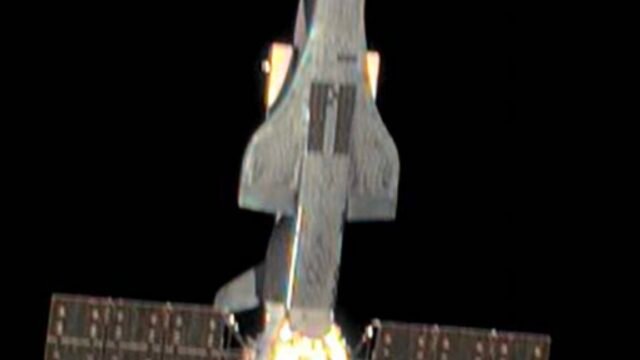
A winged Chinese spacecraft bearing a strong resemblance to the US military's X-37B spaceplane was photographed in orbit by a passing US-owned commercial satellite in 2024, and we finally have the image. The Chinese spaceplane has delta wings, payload bay doors, a dark heat shield, and a rear-mounted service module with power-generating solar arrays. In other words, the design of the winged ship is, to a great degree, a copy of the X-37B spaceplane flown by the US Space Force. The photo was taken by a commercial imaging satellite owned by a company called Vantor, known as Maxar in 2024. Vantor is one of several companies that provide reconnaissance imagery of locations around the world to the US military and US intelligence agencies. The same Earth-imaging satellites can point their telescopes at objects in space.Read full article Comments

Technology

“No human at the helm”: Delaware plan would let AI agents run entire businesses

A Delaware proposal to let companies be operated by AI agents would help the firms' human owners evade legal responsibility for reckless and harmful actions taken by the AI, US Rep. James Comer (R-Ky.) told Delaware Governor Matt Meyer in a letter yesterday. Comer, chairman of the House Committee on Oversight and Government Reform, told Meyer that the committee "seeks assistance obtaining documents related to your state administration’s efforts to establish a new form of corporate entity to be known as an Artificial Intelligence Company (AIC)." Comer said the proposal is ripe for abuse. "We are concerned that Delaware’s AIC proposal could be used to protect powerful AI companies and their investors from responsibility for reckless harmful actions, while also protecting non-transparent forces seeking anticompetitive regulatory capture behind state AI initiatives," Comer's letter said.Read full article Comments

Advertisement
Technology

Anthropic IPO warns its AI could blackmail people, become sentient, end humanity

The Securities and Exchange Commission's publication on Monday of Anthropic's S-1 form—ahead of a heavily anticipated initial public offering—has led to plenty of discussion of whether the company's quickly ballooning revenues will be able to overcome its even higher costs. But amid the numbers and forward-looking optimism about AI "rapidly transform[ing] every sector of the global economy in ways greater than the impact of industrialization, electricity, semiconductors, and the internet," Anthropic also spends an inordinate amount of time in its S-1 laying out the myriad risk factors that could bring the company down. Across 93 pages and over 70,000 words, Anthropic's S-1 "Risk Factors" section discusses literally hundreds of potential problems that could negatively impact its business in the coming years. Many of these potential risks are the kind of standard worries about competition, costs, customer acquisition, and potential regulation that almost any business must worry about. But some risks highlight interesting potential points of failure for Anthropic specifically and the hype-filled AI bubble more generally. After wading through Anthropic's book-length treatise on its greatest risks, we've narrowed the list to the seven most surprising, interesting, or thought-provoking potential problems. Consider this a far-from-comprehensive look that potential Anthropic investors should keep in mind.Read full article Comments