Breaking
Advertisement

Technology

Technology

Code-execution flaw in UEFI firmware affects most servers on planet Earth

Defenders across the world face the burden of responding to yet another botched code-execution vulnerability, this time in boot-time firmware used by most of the world’s server vendors and data centers. The vulnerability, with a severity rating of 9.5 out of 10, resides in the TianoCore EDK II, an open source codebase that hardware makers and cloud providers use to create the UEFI firmware that runs during the boot-up sequence. Last year, a representative of the UEFI Forum called EDK2 the "preeminent solution / implementation of the UEFI specifications." Virtually all UEFI suppliers (sometimes still called IBVs or independent BIOS vendors), including AMI, Insyde, and Phoenix, use the reference code extensively. Project Mu, Microsoft's hardened EDK2 fork, used the code containing the vulnerable component as well. The vulnerability, tracked as CVE-2026-97631, is a memory-corruption flaw in an ICMP component that attackers can exploit to execute malicious code that runs before the operating system and firmware can implement defenses like Secure Boot, which establishes a chain of trust for all code, including the Trusted Platform Module (TPM), loaded during boot. While final payloads delivered by CVE-2026-97631 have no persistence—meaning they run only once—they can give attackers a wide opening to install other payloads that also run each time early in the boot process.Read full article Comments
Technology

Google begins certifying Registered App Stores for Android, but not in the US

Running an app ecosystem has gotten a lot more complex for Google after its loss in the Epic Games antitrust case. While US users can access app stores in Google Play by court order, international users will use Google's voluntary Registered App Stores program. Google has announced that stores wishing to be part of that program are now free to apply, and support will roll out to some Android devices later this year. App stores accepted into the program will enjoy preferential treatment on the Android platform. Users of approved stores will be able to install apps with a single click, similar to the experience in the Play Store. These stores will also be allowed to update apps silently in the background like Google's store does. "In March, we announced the Registered App Stores program to give third-party app stores a more streamlined way to reach users while maintaining the safety and security of the Android ecosystem," said a Google spokesperson. "Eligible app stores outside the US can now apply to register their stores ahead of the new simplified installation experience rolling out to users later this year."Read full article Comments

Technology

Vibe genes? Natural(ish) language comes to protein, genome design software

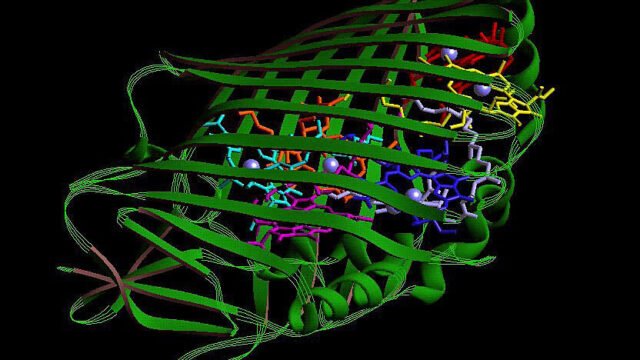
Protein design tools may be getting increasingly sophisticated, but you still need a sophisticated understanding of protein structure for them to work. This can include knowing enzyme mechanisms down to the positions of specific amino acids, as well as the water molecules that also occupy the area where catalysis takes place. Once you specify these, the tools can build the rest of a protein around this target. A large collaboration of researchers based in China, however, decided to bring protein design to the masses, making a tool that can take natural language prompts and use them to produce proteins with the function you specify. If your measure for success is a working protein, then the success rate may not be great. But they still manage to get the job done. And, in a separate announcement, Hugging Face shared that it's now hosting a tool that does similar things on the DNA level. The equivalent of vibe coding may have come to protein design—at least if you have access to a lab where you can sort the good designs from the dozens of failed ones.Read full article Comments

Advertisement
Technology

Warner Bros. drops final trailer for Dune: Part Three

The end of the year is fast approaching and with it, the pre-Christmas release of Dune: Part Three, the final installment in Denis Villeneuve's acclaimed adaptation of sci-fi author Frank Herbert's novel(s). Warner Bros. gave us a broody and haunting extended teaser in March and a July trailer jam-packed with tantalizing hints of what to expect, along with plenty of Easter eggs to delight avid book fans. Now we've got one last action-packed trailer setting up the final act for iconic anti-hero Paul Atreides (Timothée Chalamet). (Spoilers for first two films in the franchise below.) Previously, 2021’s Dune culminated in the brutal defeat of House Atreides by rival House Harkonnen, with Paul and his mother, Lady Jessica (Rebecca Ferguson), fleeing to the desert and taking refuge among the Fremen. Among them is Chani (Zendaya), whom Paul has been seeing in visions all along.Read full article Comments

Technology

Ford simplifies using your EV as a home battery with the $30K Fathom

This morning, Ford revealed that buyers of the forthcoming Fathom—the company's sub-$30,000 electric pickup truck due next year—will get more than just a truck. Until now, vehicle-to-home technology—like the setup Ford developed for the now-discontinued F-150 Lightning—takes DC power from the electric vehicle and runs it through an inverter built into the wallbox to turn it into AC the house can use. But with the Fathom, that inverter is built into the truck from the start. So every Fathom will be able to act as a backup battery for your home. It’s typical: You wait a decade for a cheap electric truck, and then two come along almost at once. And they’re two radically different products from two radically different automakers that I think will reveal a few preferences from the EV-buying public. One is the Blank Slate, from a brand new startup offering a bare-bones two-door that capitalizes on features the Internet says it wants, like no onboard modem, no touchscreens, and no infotainment system. The other is the result of one of Detroit’s big three taking a long, hard look at Chinese EVs and asking itself, “How do we make a car that cheap?” Although the Ford Fathom will cost $5,000 more than a Slate, that money does buy an extra pair of doors, modern conveniences like an infotainment system, CarPlay, electric windows, and a vast dealership network to service the car. That may be helpful given how many recalls Ford issues each year.Read full article Comments

Technology

DeepMind unveils Genie 4 world model promising more realistic physics and humans

Last year, Google DeepMind sent gaming stocks tumbling with the reveal of its Genie 3 world model. Since then, world models have become a major focus of AI labs around the world, but Google isn't resting on its laurels. Researchers have been hard at work on an updated model that improves on Genie 3 in almost every way. And if you pay Google enough money, you might actually get to use Genie 4 before too long. It's easy to look at the output of Genie 4 and see a video game, which is why Genie 3 caused so much consternation in the gaming industry. DeepMind doesn't think about it that way, though. According to Google, world models are a key element in the march toward artificial general intelligence (AGI). A world model creates a virtual world, but it doesn't require pre-rendering environments or programming interactive elements. You simply tell the model what you want, and it generates the experience frame by frame in real time as you explore it. DeepMind says this technology could create infinite training environments for physical robots or unlock new avenues of rapid prototyping for creative fields. Of course, that requires the model to accurately simulate what you want. Genie 4 has several improvements that make its simulations more useful, and that's thanks in part to Google's updated Gemini models.Read full article Comments

Advertisement
Technology

From cheap tool to premium subscription: When a beloved app’s price skyrockets

How much are you willing to pay to keep using your favorite app? Maybe you’ve used it for years. Perhaps it performs a function so essential and specific that you couldn’t imagine what you’d do without it. But when the developer announces an extraordinary price hike, you’re forced to consider how much you really value that app. Earlier this year, Evernote, a note-taking app, changed its subscription tiers, forcing some users to go from paying $130 per year to $250. The highest tier now costs more than 3.3 times as much as the most advanced tier did in 2023 and 10 times more than what Evernote charged for annual subscriptions from its 2008 launch until 2016.Read full article Comments

Technology

Apple iPhone Duo review: Two screens, two experiences, two thousand dollars

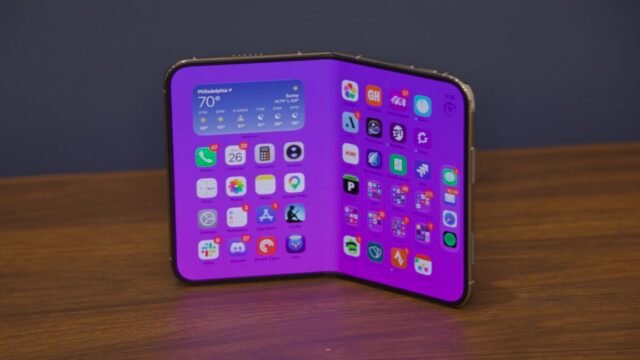
I understand the appeal of foldable phones—they let manufacturers keep expanding screen sizes while still producing devices that can reasonably fit in a pocket. In practice, though, every foldable Android phone I've seen in public has had a ridiculously visible seam between the two halves of the screen, often with what looks like delamination from the underlying surface, giving the display an ugly, bubbly appearance. Back when Android phones began shipping with bigger and bigger screens and the iPhone was stuck at a miserly four inches, I was jealous. But I've never looked at anyone using a chunky, fragile-looking foldable phone in public and pined for Apple's take on the idea. Nevertheless, that take has arrived, in the form of the iPhone Duo. This $1,999-and-up foldable is the biggest change to the iPhone in years, with both hardware and software updates that dramatically change how you interact with the device.Read full article Comments

Technology

Sculpture re-creates odd optical effects of famed Lycurgus Cup

Dating back to around 400 CE and made of dichroic glass, the Lycurgus Cup is notable for exhibiting different colors depending on the light. (It gets its name from the scene depicted on its surface, of King Lycurgus of Thrace.) Light it from the front, and the cup looks green; light it from behind, and the color changes to a deep red. University of Sheffield scientists have re-created the original recipe to produce a contemporary glass sculpture with the same optical effect. The cup is considered one of the seven glass wonders of the world, one of just 40 glass cage cups that survived. Exactly why the unusual color effects of the Lycurgus Cup occurred was a mystery until 2007, when a team of scientists discovered the color shifts were due to the presence of nanoparticles in the glass—the result of Roman artisans adding finely ground gold and silver into the mix. Those nanoparticles change how the electrons in the cup vibrate in response to light so that the color one sees shifts with the observer’s vantage point. As we reported in 2019, it’s a similar phenomenon to the one responsible for the shifting colors of 19th-century daguerreotypes due to the scattering properties of nanoparticles. The Romans added salt when they melted the silicon (sand) to make the glass, and those salts contained gold atoms. In the melting process, those atoms aggregate and produce nanoparticles, which in turn produce the colors. It’s how any stained glass is made. It's also similar to how the precise lattice-like structure of photonic crystals produces iridescent colors in nature, like the wings of butterflies, or opals.Read full article Comments

Advertisement
Technology

US officials want Section 702 renewed before damaging court ruling goes public

Two Democratic senators who have long overseen US intelligence say the Trump administration is illegally withholding a secret court’s findings from Congress until lawmakers renew a program that lets federal agents read Americans’ communications without a warrant. Seven months ago, the Foreign Intelligence Surveillance Court objected to search filters that let intelligence analysts pull Americans’ messages from intercepted data without the approvals, written justifications, or records the law requires. The court approved another year of surveillance anyway. The ruling has never been made public, and Senators Ron Wyden of Oregon and Adam Schiff of California say the administration’s own deadline for releasing it passed in September. The program, Section 702 of the Foreign Intelligence Surveillance Act (FISA), lapsed in June after Congress failed to renew it, though collection continues under the court’s March approval. The administration’s own public documentation says rulings like this one are reviewed for public release “within 180 days of issuance.” That window closed September 13, even as intelligence officials press lawmakers to reauthorize the program by the end of the year.Read full article Comments