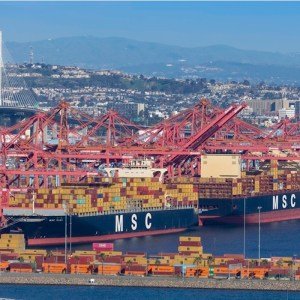
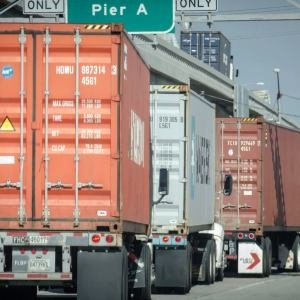
The Port of Long Beach moved 997,177 twenty-foot-equivalent units in September, its busiest month in 115 years and a 25% increase from September 2025, port officials said Thursday. The total surpassed the port’s previous monthly record of 987,191 TEUs, set in October 2024. Port Chief Executive Noel Hacegaba said shippers increasingly relied on Long Beach as they adjusted to high diesel costs, Panama Canal access restrictions and the prospect of a new U.S.-China trade agreement. He said the record came with no congestion. Loaded imports rose 31.3% year over year to 509,390 TEUs, while exports increased 7.8% to 91,747 TEUs. Empty container moves climbed 22.1% to 396,040 TEUs. window.googletag = window.googletag || {cmd: []}; googletag.cmd.push(function() { var gptSlot = googletag.defineSlot('/21776187881/FW-Responsive-Main_Content-Slot1', [[300, 100], [320, 50], [728, 90], [468, 60]], 'div-gpt-ad-1709668545404-0').defineSizeMapping(gptSizeMaps.banner1).addService(googletag.pubads()); googletag.pubads().enableSingleRequest(); googletag.pubads().collapseEmptyDivs(); googletag.enableServices(); setInterval(function() { if (!document.hidden) { googletag.pubads().refresh([gptSlot]); } }, 60000); }); googletag.cmd.push(function() { googletag.display('div-gpt-ad-1709668545404-0'); }); Through the first nine months of 2026, the port handled 7,675,255 TEUs, up 3.9% from the same period in 2025. Hacegaba highlighted Total Terminals International, which set a Port of Long Beach monthly rail record in September by handling 59,410 moves, nearly half of the terminal’s total container volume. The port also announced an incentive program ahead of Caltrans’ planned 16-month deck-replacement project on the Vincent Thomas Bridge, which begins Nov. 7. Starting in late October, Long Beach container terminals will offer additional evening and Saturday gates for six weeks, excluding Thanksgiving week, to give truckers more flexibility during the closure. The port expects to remain fully open while the bridge project proceeds at the neighboring Port of Los Angeles. Read more articles by Stuart Chirls here. window.googletag = window.googletag || {cmd: []}; googletag.cmd.push(function() { var gptSlot = googletag.defineSlot('/21776187881/fw-responsive-main_content-slot3', [[728, 90], [468, 60], [320, 50], [300, 100]], 'div-gpt-ad-1665767553440-0').defineSizeMapping(gptSizeMaps.banner1).addService(googletag.pubads()); googletag.pubads().enableSingleRequest(); googletag.pubads().collapseEmptyDivs(); googletag.enableServices(); setInterval(function() { if (!document.hidden) { googletag.pubads().refresh([gptSlot]); } }, 60000); }); googletag.cmd.push(function() { googletag.display('div-gpt-ad-1665767553440-0'); }); Read more: Houthi attacks add new geopolitical risk to softening container rates New chief for DP World Americas Philadelphia ports sets $837 million expansion, first new berth in 50 years Despite new record, Port of LA chief warns of tariff-driven planning risk window.googletag = window.googletag || {cmd: []}; googletag.cmd.push(function() { var gptSlot = googletag.defineSlot('/21776187881/fw-responsive-main_content-slot4', [[300, 100], [320, 50], [728, 90], [468, 60]], 'div-gpt-ad-1709668086344-0').defineSizeMapping(gptSizeMaps.banner1).addService(googletag.pubads()); googletag.pubads().enableSingleRequest(); googletag.pubads().collapseEmptyDivs(); googletag.enableServices(); setInterval(function() { if (!document.hidden) { googletag.pubads().refresh([gptSlot]); } }, 60000); }); googletag.cmd.push(function() { googletag.display('div-gpt-ad-1709668086344-0'); }); Shippers waiting an extra week for US-bound containers The post New Long Beach record as volume nears 1M containers appeared first on FreightWaves.
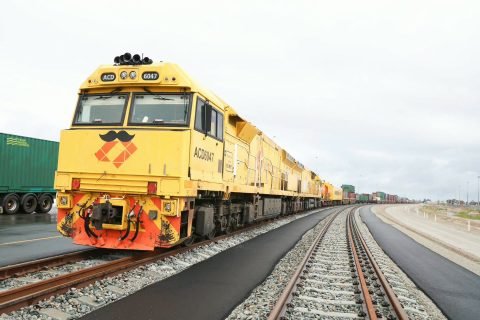
AUSTRALIA: Rail freight operator Aurizon’s A$60m terminal in the Kewdale suburb of Perth has been officially opened by Western Australia’s Minister for Transport & Major Infrastructure Rita Saffioti. Saffioti said the ability to handle 1 800 m long double-stacked interstate trains without the need for shunting or the train to be broken up would make a ‘huge difference’ to efficiency. She said the facility was the only terminal in WA to feature dual-gauge track, providing direct access to both the northern and southern freight networks, improving flexibility and network connectivity. ‘With container stacking capacity of 250 000 TEU per year, this facility will play a critical role in meeting future freight growth and increasing demand for rail services in WA and importantly, help get more more trucks off our roads to improve safety for our regional communities’, said Saffioti. Aurizon said it had outgrown its Forrestfield site, which will be re-purposed to support rail services for Aurizon’s growing national motor vehicle distribution network. ‘Everything from supermarket goods and consumer products to industrial inputs and motor vehicles move on interstate rail freight services and as the economy and consumer demand continues to grow, so does the volume of freight we transport for our customers’, said Aurizon Managing Director & CEO Andrew Harding at the opening on September 30. ‘Perth is a critical node for these services and supports the high-volume east-west corridor.’
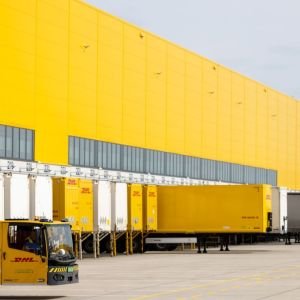
DHL Group said it plans to invest more than $447 million in logistics infrastructure, freight services and technology in Central and Eastern Europe by 2030 because the region is home to a growing number of innovative, high-growth companies that need supply chain, international transportation and distribution services. DHL (XETRA: DHL) is focusing investment in sectors and geographic regions that offer high-growth opportunities, with the goal of increasing revenue by 50% between 2023 and 2030. Last year, DHL Group said it would invest more than $570 million to expand capacity and capabilities in the Middle East. The express freight company said it has added Poland, the Czech Republic, Hungary and Romania to its 2030 strategic growth plan because the region is playing an increasingly important role in production and trade, while also being a large consumption market. The four countries are increasingly attracting European manufacturers and distributors, and foreign companies seeking closer proximity to the European consumer market as part of a growing nearshoring trend. Why It Matters: DHL is one of the largest third-party logistics providers in the world. window.googletag = window.googletag || {cmd: []}; googletag.cmd.push(function() { var gptSlot = googletag.defineSlot('/21776187881/FW-Responsive-Main_Content-Slot1', [[300, 100], [320, 50], [728, 90], [468, 60]], 'div-gpt-ad-1709668545404-0').defineSizeMapping(gptSizeMaps.banner1).addService(googletag.pubads()); googletag.pubads().enableSingleRequest(); googletag.pubads().collapseEmptyDivs(); googletag.enableServices(); setInterval(function() { if (!document.hidden) { googletag.pubads().refresh([gptSlot]); } }, 60000); }); googletag.cmd.push(function() { googletag.display('div-gpt-ad-1709668545404-0'); }); The investment program spans most business groups, supporting capacity expansion in warehousing, ground freight transportation, supply chain control towers and international express services, including the planned construction of a new DHL Express air freight express terminal in Katowice, DHL said in a news release last week. “Central and Eastern Europe is becoming increasingly important for global trade flows and supply chain networks. Poland, in particular, is developing into one of Europe’s most dynamic logistics and manufacturing hubs,” said John Pearson, CEO of DHL Express. “As customers strive for greater resilience and flexibility, they need logistics partners who can seamlessly connect production, inventory, and markets across borders. With these investments, we are expanding the infrastructure and international connectivity required to support the growth ambitions of the dynamic companies driving the economic development of this region.” Poland grows as major trade hub Poland has become a regional economic power over the past 30 years, with merchandise trade growing more than two times faster than global trade and 2.7 times faster than trade within the European Union over the past decade, according to the DHL Globalization Tracker published this month. The report, written in conjunction with New York University’s Stern School of Business, forecasts Poland’s goods trade will grow 28% faster than global trade and 91% faster than EU trade over the next three years. The analysis also shows an increasing diversification of Poland’s trade relations. While Germany remains an important trading partner and the majority of Polish trade takes place within the European Union, trade with both the United States and China has increased significantly over the past 10 years. “Central and Eastern Europe is consolidating its role as a strategic location for production, distribution, and regional fulfillment activities, particularly for companies seeking closer proximity to the European market,” said Hendrik Venter, CEO of DHL Supply Chain. The contract logistics unit, for example, recently entered the Romanian market through an expanded partnership with Polish retailer Pepco. DHL said Poland will continue to play a central role in its growth ambitions for the region. DHL Group has already invested significantly in the Polish market in recent years. In 2024, DHL opened a $201 million international logistics centre in Poznań, one of the largest logistics investments in the company’s history in Poland. The site supports several DHL business units, including DHL eCommerce, DHL Freight, and Post & Parcel Germany, and also serves as a key logistics hub connecting Poland with European and global markets. window.googletag = window.googletag || {cmd: []}; googletag.cmd.push(function() { var gptSlot = googletag.defineSlot('/21776187881/fw-responsive-main_content-slot3', [[728, 90], [468, 60], [320, 50], [300, 100]], 'div-gpt-ad-1665767553440-0').defineSizeMapping(gptSizeMaps.banner1).addService(googletag.pubads()); googletag.pubads().enableSingleRequest(); googletag.pubads().collapseEmptyDivs(); googletag.enableServices(); setInterval(function() { if (!document.hidden) { googletag.pubads().refresh([gptSlot]); } }, 60000); }); googletag.cmd.push(function() { googletag.display('div-gpt-ad-1665767553440-0'); }); DHL eCommerce operates a significant network of fulfillment centers, parcel lockers and pickup points in Poland in support of e-commerce marketplaces. Poland is among DHL Group’s 10 largest markets worldwide in terms of the number of employees, with more than 10,000 people working there. More warehouse capacity in Germany DHL Group also continues to invest in Germany, where the company is headquartered. DHL Express last week officially opened a new station in Cologne-Marsdorf, significantly expanding its capacity in the region.The 215,000-square foot site features three Pick-up and Delivery bays with 78 loading and unloading bays, a warehouse area with 35 bays of its own, and a modern sortation system capable of processing up to 6,000 domestic and international parcels. The site includes 78 charging points for electric vehicles. window.googletag = window.googletag || {cmd: []}; googletag.cmd.push(function() { var gptSlot = googletag.defineSlot('/21776187881/fw-responsive-main_content-slot4', [[300, 100], [320, 50], [728, 90], [468, 60]], 'div-gpt-ad-1709668086344-0').defineSizeMapping(gptSizeMaps.banner1).addService(googletag.pubads()); googletag.pubads().enableSingleRequest(); googletag.pubads().collapseEmptyDivs(); googletag.enableServices(); setInterval(function() { if (!document.hidden) { googletag.pubads().refresh([gptSlot]); } }, 60000); }); googletag.cmd.push(function() { googletag.display('div-gpt-ad-1709668086344-0'); }); DHL also said it is on track to complete a new 315,000-square foot logistics center outside Jena, Germany, by March. Jena is a high-tech industrial city in the eastern German state of Thuringia. DHL said the warehouse will offer logistics services for growing businesses in high-tech manufacturing, semiconductors, healthcare and battery technology. One of DHL Supply Chain’s key customers in the area is Zeiss, a leading manufacturer of eyeglass lenses, camera and cinematic lenses, and binoculars. Click here for more FreightWaves/American Shipper stories by Eric Kulisch. Write to Eric Kulisch at ekulisch@freightwaves.com. RELATED STORIES: DHL steps up Middle East expansion with $570M in planned investments DHL acquires US e-commerce logistics business IDS Fulfillment window.googletag = window.googletag || {cmd: []}; googletag.cmd.push(function() { var gptSlot = googletag.defineSlot('/21776187881/fw-responsive-main_content-slot5', [[728, 90], [468, 60], [320, 50], [300, 100]], 'div-gpt-ad-1665767778941-0').defineSizeMapping(gptSizeMaps.banner1).addService(googletag.pubads()); googletag.pubads().enableSingleRequest(); googletag.pubads().collapseEmptyDivs(); googletag.enableServices(); setInterval(function() { if (!document.hidden) { googletag.pubads().refresh([gptSlot]); } }, 60000); }); googletag.cmd.push(function() { googletag.display('div-gpt-ad-1665767778941-0'); }); The post DHL earmarks $450M for Eastern Europe logistics expansion appeared first on FreightWaves.
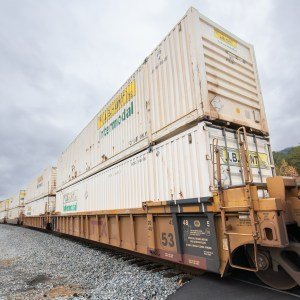
J.B. Hunt Transport Services’ third quarter may prove to be a speed bump on the road to recovery. The company previously flagged significant cost pressures, some growth-related, heading into the Thursday print. To meet demand, some of its business units offered sign-on bonuses and increase driver recruitment spending. Some costs appear transitory, while others may linger through the end of the year. J.B. Hunt (NASDAQ: JBHT) reported third-quarter revenue of $3.68 billion, which was 20% higher year over year and ahead of the $3.59 billion consensus estimate. Earnings per share of $1.82 were 6 cents higher y/y and 1 cent above analysts’ lowered expectations. (A higher tax rate was a 4-cent EPS headwind in the period, partially offset by a 2-cent decline in net interest expense.) The company identified roughly $45 million in costs at an investor conference in mid-September. A sharp spike in diesel prices, driver hiring costs and elevated cargo claims forced the company to guide to a 5% to 10% sequential EPS decline in the third quarter (implying $1.77 at the midpoint of the range). The actual impact from the items totaled over $50 million in the period. However, management told analysts on a Thursday evening call that “everything [is] playing out like a normal cycle,” noting it is common to incur incremental costs ahead of higher pricing and revenue. “Any time that we see this pressure happening from a driver environment, [it] typically yields a much better pricing environment for the next bid season,” said President and CEO Shelley Simpson. The brunt of the cost-price mismatch likely occurred in August and September, and should fade as the magnitude of the cost pressure eases and recent contractual rate wins bleed through to results. It said office headcount was down 4.5% y/y in the period, as driver count increased 3.5%. Fuel surcharges operate on a one-week lag. Diesel prices were up sequentially in nine of the 13 weeks of the third quarter. By month, retail diesel prices dipped 1% sequentially in July, but increased 10% sequentially in August and another 15% in September. The near-term headwind will become an earnings tailwind when prices revert. The third quarter marked a fifth straight quarter of y/y improvement in operating income and EPS. The company’s earnings turnaround started in the 2025 third quarter, well ahead of peers. Intermodal can exit 2027 operating within margin target range Intermodal revenue increased 20% y/y to $1.83 billion as loads were up 8.5% and revenue per load increased 11%. The period was up against an easier volume comparison to a year ago (-1%). By month, shipments grew y/y by 9% in July, 8% in August and 9% in September. Shipments increased 18% y/y in the East and 1% in the transcontinental network. Total intermodal carloads were up 6% y/y on the U.S. Class I railroads in the period (North American container moves were up 5% y/y). Excluding fuel, revenue per load was up just 2% y/y. However, a 3% decline in length of haul, due to the mix shift to the East, was a modest headwind to yield metric. Management said it captured low-single-digit contractual rate increase in the 2026 bid season, which ended last month. Sonar data shows the mode is currently 31% cheaper than truck, which is notably higher than the typical 10% to 15% discount carried in the East (approximately 25% in the West). Elevated truckload rates and record diesel prices remain ample tailwinds for road-to-rail conversion. The unit booked a 91.9% operating ratio (inverse of operating margin), which was 15 basis points worse y/y. Higher costs (driver personnel, equipment and employee benefits) led to an 11% increase in cost per load, offsetting the increase in yield. The company’s container fleet was 92.1% utilized in the quarter, 170 bps better than in the second quarter and well ahead of the 83.6% utilization rate in the 2025 third quarter. However, average loads per container were down 1% y/y in the period, possibly due to a modest deterioration in rail service. Improved rates and continued cost management could restore margins to the company’s long-term target range of 10% to 12% by the end of next year, management said. Dedicated a Q3 cost victim The dedicated unit’s OR deteriorated 360 bps y/y to 91.5%. Revenue increased 11% y/y to $960 million as revenue per truck per week increased 10% and average trucks in service were up 1%. Revenue per truck was up just 3% excluding fuel. J.B. Hunt sold service on 425 trucks in the quarter (970 trucks year-to-date), but its pipeline remains at an all-time high. Higher driver costs, group medical claims and insurance premiums were among the headwinds in the quarter. It also incurred an elevated level of startup costs at new accounts. Average trailers in service increased 11% y/y even though loads grew just 3%. It said it can revisit customer contracts and recoup incremental costs, like higher driver costs, before the annual rollover. Brokerage books another profit After 13 quarters operating in the red, the brokerage unit booked a second straight operating profit. Revenue increased 57% y/y as loads grew 22% and revenue per load jumped 29% (inclusive of fuel). A 14.3% gross margin was 70 bps lower y/y but 180 bps better than the second quarter. Purchased transportation costs (spot rates) cooled following the Fourth of July. Loads per employee fell 5% y/y but gross profit per employee increased 17%. Headcount was 28% higher y/y. The company’s asset-light TL unit returned to profitability after a modest second-quarter loss. The $7-million operating profit was driven by a 29% y/y increase in revenue per load (excluding fuel) and a 4% increase in trailer utilization (loads per average trailer). The operating income result was roughly flat y/y. Shares of JBHT were down 3% in pre-market trading on Friday. The stock fell 14% from its mid-September earnings update to the Thursday close. Why it matters? J.B. Hunt’s quarterly results serve as a bellwether for the intermodal, trucking and logistics industries. The company’s third quarter was a modest slowdown after four quarters of strong recovery. However, some of the incremental costs that plagued the period were likely transitory in nature. More FreightWaves articles by Todd Maiden: LTL rates hit new high in Q3, moving higher in Q4 Cass: TL linehaul rates up 10% in September, shipment counts remain positive Yellow Corp., Teamsters settle on WARN Act claims The post J.B. Hunt experiences growing pains in Q3 appeared first on FreightWaves.
Waymo is bringing its robotaxis to Canada, and Toronto is first. Its cars will start driving the city’s streets in the coming days, and the company wants its first public riders on board in 2028. That makes Toronto Waymo’s fourth announced market outside the US, after London, Tokyo, and Singapore. But there’s a catch: Ontario doesn’t have rules for a commercial driverless service yet. more…
SOUTH AFRICA: Transnet Engineering and Wabtec have signed a R6.6bn long-term Material & Technical Support Agreement which aims to boost the availability of two fleets of freight locomotives. The Class 43D (C30Aci) and 44D (ES40Aci) diesel locomotives were built in the USA and locally by Wabtec predecessor GE Transportation and Transnet Engineering. Under the agreement announced on October 15, Wabtec will provide Transnet Engineering with components and predictive maintenance capabilities using its Expert-on-Alert digital condition-monitoring platform. The agreement extends beyond maintenance support, and includes technical collaboration, knowledge transfer and initiatives to strengthen local capabilities and develop industry skills to support the long-term growth of South Africa’s rail sector. ‘This agreement supports Transnet’s Reinvent for Growth strategy and represents an important step in improving the performance of our locomotive fleet’, said Transnet Engineering CEO Bessie Mabunda. ‘The 43D and 44D locomotives serve critical freight corridors that move export commodities, containers and general freight across South Africa. Strengthening their reliability and availability will help improve service delivery, support freight recovery and enhance the country’s logistics competitiveness.’ Transnet Group Chief Operating Officer Solly Letsoalo highlighted the importance of timely component delivery and increasing local manufacturing capacity. ‘I’ve been impressed that some of the parts actually started arriving earlier than expected. We need to continue that process where we find ways and means of bringing the parts earlier’, said Letsoalo. ‘And my wish is that we can move as many as possible of these components to be manufactured locally, and where possible, manufactured in a Transnet Engineering facility.’
A California jury has awarded nearly $9.4 million to a medical supply distributor after finding that a Wyoming-based logistics broker and its managing member made fraudulent representations that led to a failed $9.5 million shipment of medical gloves. The Los Angeles County Superior Court jury found Oak Sourcing & Logistics LLC and Matthew John Sandvig liable for intentional misrepresentation in a dispute with Ashtel Studios Inc., a California company that imported nitrile examination gloves during the COVID-19 pandemic. The Oct. 9 verdict awarded Ashtel $9.397 million in economic damages, including $6.43 million in out-of-pocket expenditures and nearly $2.97 million in other economic losses. The dispute centered on Oak Sourcing’s representations about its financial resources, customer contracts and ability to purchase millions of boxes of medical gloves. According to Ashtel’s original complaint, Sandvig told company executives in March 2021 that Oak Sourcing had an $800 million personal protective equipment contract, long-term supply commitments with hospitals and access to substantial financing. Those representations helped persuade Ashtel to enter into two large glove transactions totaling $14.7 million, according to the complaint. Two shipments, one unpaid order The companies’ first transaction, dated July 2, 2021, involved 500,000 boxes of nitrile gloves valued at $5.2 million. Ashtel imported the gloves from China through the Port of Long Beach in 14 shipping containers. The products were subsequently transported to the company’s warehouse in Ontario, California. Oak Sourcing eventually paid for the first shipment in August 2021, approximately three weeks after its arrival, although Ashtel alleged that certain transportation and warehousing expenses remained unpaid. A second purchase order, dated July 7, 2021, called for 1 million boxes of nitrile examination gloves at $9.50 per box, totaling $9.5 million. The second shipment arrived in 27 containers, but Oak Sourcing allegedly failed to complete payment or take possession of the merchandise. Ashtel alleged that the broker repeatedly delayed inspections, requested additional shipping documentation and indicated that payment would follow receipt of funds from its downstream customer. The company later learned that Oak Sourcing’s purported end customer was another intermediary rather than a hospital or other direct purchaser, according to the complaint. Ashtel said it incurred additional drayage, warehousing and storage expenses while attempting to resolve the transaction and eventually resold the gloves to reduce its losses. The two purchase orders involved a combined 1.5 million boxes of gloves transported in 41 ocean shipping containers. Jury finds intentional misrepresentation The jury concluded that both Oak Sourcing and Sandvig made false representations, knew those statements were false or acted recklessly regarding their truth, and intended Ashtel to rely on them. Jurors also found that Ashtel reasonably relied on those representations and suffered financial harm as a result. In addition to the $9.397 million fraud award, the jury found that Oak Sourcing owed Ashtel $4,272,252 on an open book account claim. That finding represents a separate legal claim, and the amount should not be added to the fraud award without determining how the court will address overlapping damages in its final judgment. The jury also rejected Oak Sourcing’s counterclaims against Ashtel, including allegations of intentional and negligent misrepresentation, concealment and breach of the covenant of good faith and fair dealing. Jurors further determined that Sandvig engaged in conduct involving malice, oppression or fraud, potentially exposing the defendants to punitive damages. However, Ashtel agreed to forgo punitive damages in exchange for the defendants waiving their rights to challenge the judgment through post-trial motions, appeals or other proceedings, according to Eugene Rome, founding partner of Rome LLP, which represented Ashtel. Rome clarified that the agreement was not an additional monetary settlement. The jury’s findings underscore the distinction between a failed commercial transaction and fraud, Rome said. “A fraud verdict is a finding that the representations about the company and the volume of business it had were knowingly false when they were made,” Rome said in an Oct. 13 statement. “That goes well beyond a breach of contract.” Related-company proceedings remain unresolved The litigation began in March 2022, when Ashtel filed a federal lawsuit against Sandvig, Oak Sourcing and Oak Insurance Group LLC in the U.S. District Court for the Central District of California. The defendants moved to dismiss the federal action for lack of jurisdiction. Ashtel subsequently voluntarily dismissed the case without prejudice, and a federal judge closed the proceeding in May 2022 without ruling on the merits. The dispute continued in Los Angeles County Superior Court, where Judge Nicole M. Heeseman presided over the jury trial. Although the jury has returned its verdict, the case has not been fully resolved. Rome told FreightWaves that Ashtel intends to submit a proposed judgment for the court’s approval. A separate bench trial concerning alter ego allegations involving Oak Insurance Group will also proceed at a future date, he said. Those allegations concern whether the related business entities should be treated as legally separate for purposes of liability. No finding against Oak Insurance Group is established by the jury verdict. Rome said the case illustrates the risks of relying on a counterparty’s representations when entering large commercial transactions. “While large transactions create the prospects of substantial profits, they equally entail traps for the unwary,” Rome told FreightWaves. Oak Sourcing & Logistics is identified in the litigation as a Wyoming-based intermediary in medical supply transactions. The available court records do not establish that it operated as a federally licensed freight broker. FreightWaves attorneys representing Oak Sourcing & Logistics. No responses had been received as of publication. Why it matters: The verdict highlights the financial risks facing suppliers and logistics intermediaries when major transactions rely on misleading claims about customer contracts and purchasing capacity. More FreightWaves articles by Noi Mahoney: R&R trucking CEO reports $12.7M in assets after company collapse Mexico trucker shortages, visa restrictions squeeze cross-border capacity Texas trucking firm sued over age limits on drivers New Jersey CDL school lawsuit questions evidence behind FMCSA shutdown The post Jury hits Wyoming logistics broker with $9.4M fraud verdict appeared first on FreightWaves.
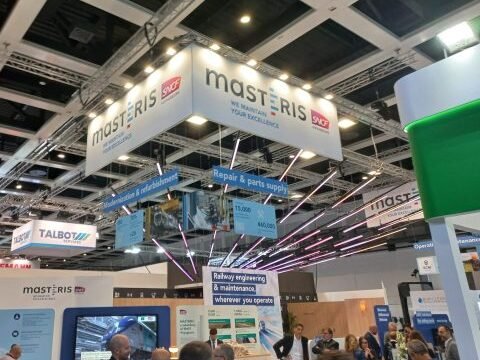
FRANCE: SNCF-owned rolling stock maintenance and engineering services specialist Masteris is seeking to win more work outside its home market as the opening of the domestic passenger rail sector to competition means its long-standing dominance is likely to end. Masteris was created in 2009 as a subsidiary of SNCF Voyageurs Matériel with a view to winning work in a market that was already in the initial stages of liberalising, primarily in rail freight. The company has 150 customers for the maintenance, overhaul and redesign of train fleets in 12 countries in Europe. However, speaking at the InnoTrans 2026 trade fair in Berlin on September 23, SNCF Voyageurs Managing Director Alain Krakovitch explained that the company still had much more work to do if it was to remain competitive in a changing landscape. ‘The boundaries between operators, constructors and suppliers are more and more fluid’, he said, adding that new actors were ‘revolutionising the market, and changing the prospects of the sector’. A particular challenge in the current period, he argued, is the surge in rail traffic seen since the pandemic, which is ‘putting pressure on rolling stock fleets, costs, availability and performance’. These pressures mean that operators are ‘more and more demanding in terms of what they need from maintenance, overhaul work, and life extension specialists’. Regional owners reshape the fleet Liberalisation of the French passenger market is already having a profound effect on the rolling stock services market, driven by the rise of regionally owned rolling stock companies. These Sociétés Publiques Locales have already been established in several parts of the country: one, known as SPIIT (Société Publique Interrégionale d’Investissements dans les Transports), manages rolling stock on behalf of the local authorities in Occitanie, Nouvelle-Aquitaine, Centre-Val-de-Loire and Bretagne, while Grand Est Mobilités is the asset manager for that région. The SPLs are likely to become one of the main procurers of maintenance and refurbishment services in France in the years ahead, and SNCF Voyageurs expects 90% of its domestic maintenance business will be managed through competitive calls to tender. The national operator says that this change alone represents ‘a revolution’ for what had until now been a de facto monopoly for SNCF Voyageurs in passenger rolling stock maintenance. Now the company intends to use Masteris as a vehicle to win new business elsewhere as it loses share in its traditional domains. Meanwhile, SNCF Voyageurs is further restructuring its activities to adapt to the new conditions: SNCF Voyageurs Matériel and Masteris become ‘business lines’ within the wider group, with Masteris specifically targeting work in open markets. ‘The ambition is to deploy on a large scale our expertise, with a strong competitive mindset’, Krakovitch explained. Masteris has identified four main opportunities for growth: mid-life refits, drawing on the long-running OPTER programme in France that covers refurbishment of almost 1 000 regional trainsets; maintenance in operations; supply chain and spares management; and engineering services. ‘Engineering services are a key way to grow and to be international’, commented Masteris Chief Executive Rémi Peltier. He reported that the company had already started to work in new segments, such as urban rail, supporting tram operators in Firenze and Dublin, and working with LVMH to support the operation of the Venice-Simplon-Orient-Express luxury tourist train. ‘Development in urban rail is a key area of focus’, Krakovitch concluded. France: Regions refine their rolling stock strategies
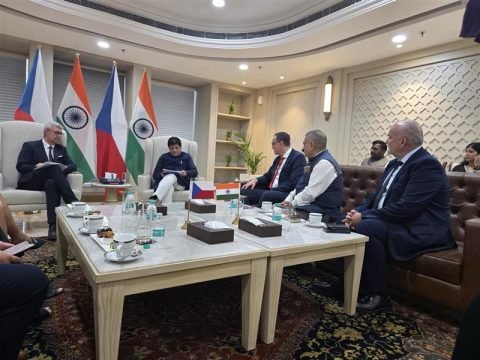
INTERNATIONAL: Škoda Group participated in major Czech business missions to India and Azerbaijan during October, as part of its strategy to strengthen its presence in ‘promising’ international markets and to develop comprehensive offerings encompassing rolling stock, digital technologies, signalling systems and services throughout a vehicle’s entire lifecycle. ‘India is a strategic market’ The Indian mission included meetings with representatives of the government, major industrial companies and potential business partners including Bharat Heavy Electricals Ltd and BEML. Discussions focused on the modernisation of rail transport, the development of industrial co-operation and opportunities for the application of advanced signalling technologies, including ETCS. ‘India is a strategic market for us with exceptional potential. Significant investments in railway infrastructure and transport modernisation create opportunities not only for the supply of rolling stock, but also for advanced technologies, signalling systems and long-term industrial co-operation. Our ambition is to develop stable partnerships with major Indian companies that will be based on a combination of our technological expertise and knowledge of the local market’, said Škoda Group CEO & Chairman Petr Novotný. Škoda Group is already co-operating with TATA AutoComp Systems in the Indian market, where its long-term strategy envisages the gradual expansion of its local industrial presence, the involvement of Indian partners and the transfer of technological know-how. It said this approach is also aligned with the Make in India initiative, which promotes domestic manufacturing and the development of industrial capabilities. Opportunities in Azerbaijan Discussions with state transport holding company Azcon and others in Azerbaijan focused on opportunities for co-operation in modernising railways and the Baku metro, developing local servicing and maintenance capabilities and providing technical training. Škoda Group said it aims to establish long-term partnerships with local companies, which could in the future include the localisation of selected industrial activities, technology transfer and the creation of new employment opportunities.
CHINA: Hong Kong’s government has authorised the Northern Link Spur Line project under the Railways Ordinance. This will become the third direct cross-boundary railway, linking the metro networks of Hong Kong and Shenzhen to deepen cross-boundary connections with the mainland. The project which was authorised by the Transport & Logistics Bureau on September 18 involves the construction of a 6.2 km underground line from San Tin station on the NOL Main Line, through stations provisionally named Chau Tau and The Loop to the Huanggang border point in Shenzhen, where there will be co-located border facilities and access to the Shenzhen metro. The Part 1 Project Agreement for the NOL project was signed by MTR Corp and the government in 2025. This enabled the start of major advanced works for the main line, which will connect the existing East Rail Line at Kwu Tung with the Tuen Ma Line at Kam Sheung Road to form a loop connecting the New Territories and the Kowloon urban area. Excavation works are underway for the first tunnel boring machine launching shaft, and the structure of the electrical substation for the tunneling works has also been completed. The NOL Main Line and Spur Line projects are being developed together to maximise synergies, and both expected to open no later than 2034. See also Lion dance launches Hong Kong Northern Link metro expansion project