FRANCE: SNCF-owned rolling stock maintenance and engineering services specialist Masteris is seeking to win more work outside its home market as the opening of the domestic passenger rail sector to competition means its long-standing dominance is likely to end. Masteris was created in 2009 as a subsidiary of SNCF Voyageurs Matériel with a view to winning work in a market that was already in the initial stages of liberalising, primarily in rail freight. The company has 150 customers for the maintenance, overhaul and redesign of train fleets in 12 countries in Europe. However, speaking at the InnoTrans 2026 trade fair in Berlin on September 23, SNCF Voyageurs Managing Director Alain Krakovitch explained that the company still had much more work to do if it was to remain competitive in a changing landscape. ‘The boundaries between operators, constructors and suppliers are more and more fluid’, he said, adding that new actors were ‘revolutionising the market, and changing the prospects of the sector’. A particular challenge in the current period, he argued, is the surge in rail traffic seen since the pandemic, which is ‘putting pressure on rolling stock fleets, costs, availability and performance’. These pressures mean that operators are ‘more and more demanding in terms of what they need from maintenance, overhaul work, and life extension specialists’. Regional owners reshape the fleet Liberalisation of the French passenger market is already having a profound effect on the rolling stock services market, driven by the rise of regionally owned rolling stock companies. These Sociétés Publiques Locales have already been established in several parts of the country: one, known as SPIIT (Société Publique Interrégionale d’Investissements dans les Transports), manages rolling stock on behalf of the local authorities in Occitanie, Nouvelle-Aquitaine, Centre-Val-de-Loire and Bretagne, while Grand Est Mobilités is the asset manager for that région. The SPLs are likely to become one of the main procurers of maintenance and refurbishment services in France in the years ahead, and SNCF Voyageurs expects 90% of its domestic maintenance business will be managed through competitive calls to tender. The national operator says that this change alone represents ‘a revolution’ for what had until now been a de facto monopoly for SNCF Voyageurs in passenger rolling stock maintenance. Now the company intends to use Masteris as a vehicle to win new business elsewhere as it loses share in its traditional domains. Meanwhile, SNCF Voyageurs is further restructuring its activities to adapt to the new conditions: SNCF Voyageurs Matériel and Masteris become ‘business lines’ within the wider group, with Masteris specifically targeting work in open markets. ‘The ambition is to deploy on a large scale our expertise, with a strong competitive mindset’, Krakovitch explained. Masteris has identified four main opportunities for growth: mid-life refits, drawing on the long-running OPTER programme in France that covers refurbishment of almost 1 000 regional trainsets; maintenance in operations; supply chain and spares management; and engineering services. ‘Engineering services are a key way to grow and to be international’, commented Masteris Chief Executive Rémi Peltier. He reported that the company had already started to work in new segments, such as urban rail, supporting tram operators in Firenze and Dublin, and working with LVMH to support the operation of the Venice-Simplon-Orient-Express luxury tourist train. ‘Development in urban rail is a key area of focus’, Krakovitch concluded. France: Regions refine their rolling stock strategies
FRANCE: SNCF-owned rolling stock maintenance and engineering services specialist Masteris is seeking to win more work outside its home market as the opening of the domestic passenger rail sector to competition means its long-standing dominance is likely to end.
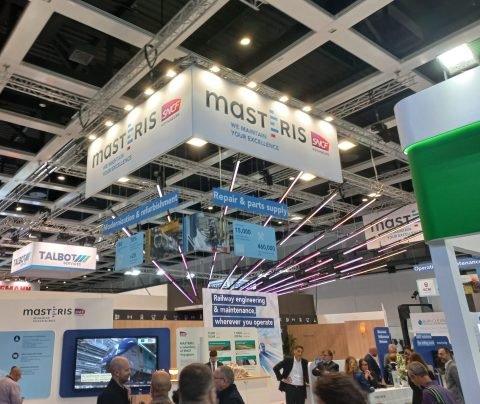
Masteris was created in 2009 as a subsidiary of SNCF Voyageurs Matériel with a view to winning work in a market that was already in the initial stages of liberalising, primarily in rail freight. The company has 150 customers for the maintenance, overhaul and redesign of train fleets in 12 countries in Europe.
However, speaking at the InnoTrans 2026 trade fair in Berlin on September 23, SNCF Voyageurs Managing Director Alain Krakovitch explained that the company still had much more work to do if it was to remain competitive in a changing landscape. ‘The boundaries between operators, constructors and suppliers are more and more fluid’, he said, adding that new actors were ‘revolutionising the market, and changing the prospects of the sector’.
A particular challenge in the current period, he argued, is the surge in rail traffic seen since the pandemic, which is ‘putting pressure on rolling stock fleets, costs, availability and performance’. These pressures mean that operators are ‘more and more demanding in terms of what they need from maintenance, overhaul work, and life extension specialists’.
Regional owners reshape the fleet
Liberalisation of the French passenger market is already having a profound effect on the rolling stock services market, driven by the rise of regionally owned rolling stock companies.
These Sociétés Publiques Locales have already been established in several parts of the country: one, known as SPIIT (Société Publique Interrégionale d’Investissements dans les Transports), manages rolling stock on behalf of the local authorities in Occitanie, Nouvelle-Aquitaine, Centre-Val-de-Loire and Bretagne, while Grand Est Mobilités is the asset manager for that région.
The SPLs are likely to become one of the main procurers of maintenance and refurbishment services in France in the years ahead, and SNCF Voyageurs expects 90% of its domestic maintenance business will be managed through competitive calls to tender.
The national operator says that this change alone represents ‘a revolution’ for what had until now been a de facto monopoly for SNCF Voyageurs in passenger rolling stock maintenance. Now the company intends to use Masteris as a vehicle to win new business elsewhere as it loses share in its traditional domains. Meanwhile, SNCF Voyageurs is further restructuring its activities to adapt to the new conditions: SNCF Voyageurs Matériel and Masteris become ‘business lines’ within the wider group, with Masteris specifically targeting work in open markets.
‘The ambition is to deploy on a large scale our expertise, with a strong competitive mindset’, Krakovitch explained. Masteris has identified four main opportunities for growth: mid-life refits, drawing on the long-running OPTER programme in France that covers refurbishment of almost 1 000 regional trainsets; maintenance in operations; supply chain and spares management; and engineering services.
‘Engineering services are a key way to grow and to be international’, commented Masteris Chief Executive Rémi Peltier. He reported that the company had already started to work in new segments, such as urban rail, supporting tram operators in Firenze and Dublin, and working with LVMH to support the operation of the Venice-Simplon-Orient-Express luxury tourist train. ‘Development in urban rail is a key area of focus’, Krakovitch concluded.
France: Regions refine their rolling stock strategies
Source: Railway Gazette