Transportation
Hilton Honors best-ever points sale: Get a 120% bonus when you buy points
Hilton Honors members, listen up: The program is offering a whopping 120% bonus when you purchase points right now. That…
Category Added in a WPeMatico Campaign
Hilton Honors members, listen up: The program is offering a whopping 120% bonus when you purchase points right now. That…
The first time I visited Sydney many years ago, I checked off all the tourist boxes:Sydney Opera House tour? Check.Sydney…
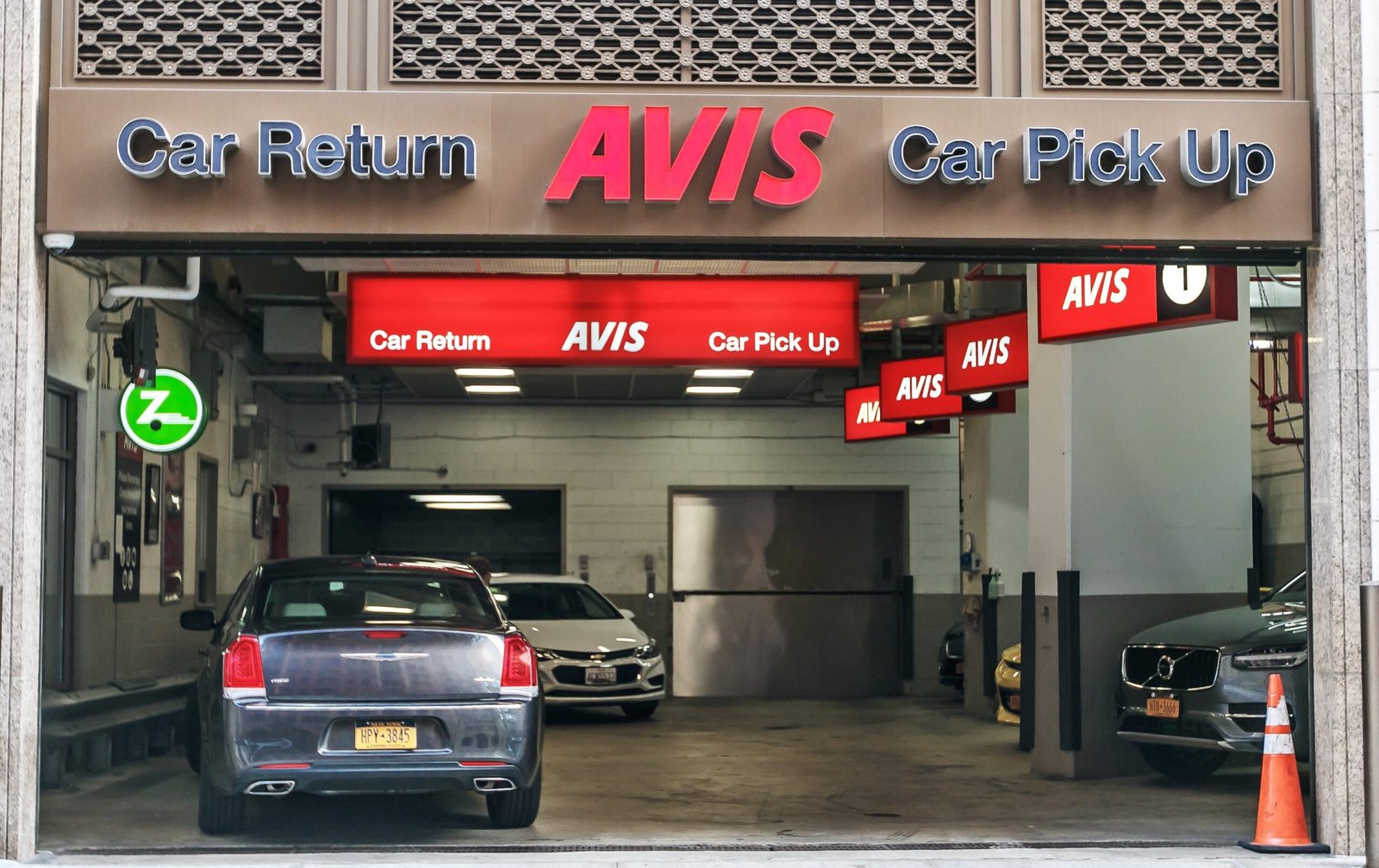
Several travel credit cards offer complimentary rental car elite status, giving cardholders access to perks that can make picking up…
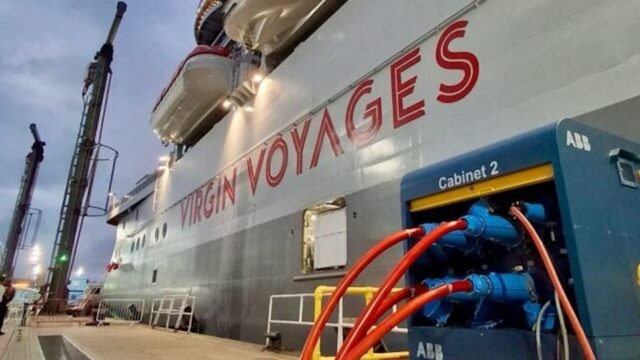
Portsmouth International Port has taken a huge step towards reducing the air pollution caused by idling marine engines with the launch of the UK’s first high-voltage, multi-berth shore power system that allows docked ships to connect to grid power and shut off their on-board generators. In theory, shore power reduces emissions and slashes fuel costs. The reality is somewhat different. more…
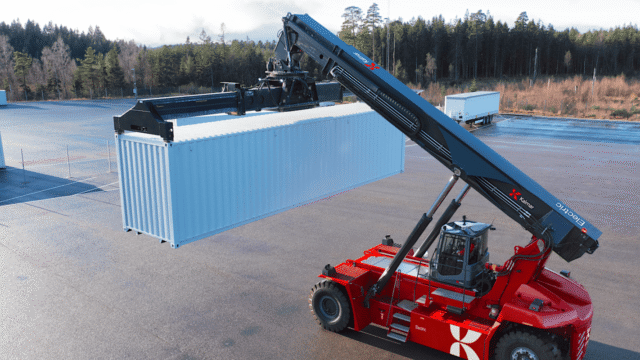
The world’s ports operators work in confined spaces, moving massively heavy loads with incredible precision in perilous conditions with razor-thin margins. It’s no wonder, then, that they’re moving to electric equipment – and the Port of Helsingborg is just the latest to do so, thanks to its latest order for two new Kalmar reach stackers. more…
While much of the automotive world sits dumbfounded as China gobbles up all its customers, BMW continues to roll out extremely well-crafted, technologically advanced electric vehicles that impress in both drive quality and price. The latest is the BMW iX4, a coupe-shaped SUV that puts a sportier spin on the automaker's iX3. The iX4 is the third vehicle to be released on BMW's next-generation Neue Klasse platform, following the iX3 and i3 models. The iX4 50 xDrive will come first in March 2027, followed by an even more high-performance M60 xDrive version later in the year. The automaker is positioning this new lineup as its bulwark against t … Read the full story at The Verge.
Editor’s note: This is a contributed commentary. It comes amid FMCSA’s ongoing revocation of registered ELDs over hours-of-service log manipulation and FreightWaves welcomes responses from other parties. An ELD connection has become an important part of how freight moves. Brokers use it tounderstand whether a carrier is operating, whether vehicles are associated with that carrier, andwhether the right truck is present for a load. Carriers use that connection to demonstrate theircapacity and gain access to freight. That makes the integrity of the provider behind the connection consequential. A technicalintegration cannot be treated as a universal endorsement of everything that provider does. Ithas to be governed by standards, reviewed as conditions change, and subject to action whenthose standards fail. Highway has worked with hundreds of ELD providers over nearly five years. We do not chargeproviders to integrate. FMCSA registration is a starting point, but it is not a blanket pass intoHighway. We maintain our own requirements for integrations and the data they contribute. Wecan decline an integration or end one that does not meet those requirements, and we haveended integrations with providers that remained on FMCSA’s registered list. We also examineproviders that reappear under a new name after a prior provider was revoked. A new label doesnot erase the underlying history. None of this means every carrier using a problematic ELD provider is doing something wrong. Asingle provider may serve hundreds or thousands of legitimate businesses. If concerns arise,brokers need a clear view of risk and a way to act on it, while good carriers need a fair path tokeep working. We can introduce appropriate controls around the carriers or transactions thatpresent concern as we establish the facts. When an integration must end, we work to givelegitimate carriers notice and a workable opportunity to change providers. Enforcement has toprotect the network without treating every customer of a provider as guilty. It is also important to be precise about what different data can establish. Highway does notreceive drivers’ hours of service records through these integrations or perform the safetyreviews assigned to FMCSA. Reports of manipulated logs warrant serious scrutiny. At the sametime, ELD telemetry is one input in a broader assessment of carrier identity and cargo risk. Itshould never be asked to carry a decision by itself. In nearly five years of operating Highway, we have not identified a successful cargo theft inwhich manipulated ELD data was relied on for a carrier hiring or tendering decision. Thatdescribes the losses we have investigated. It does not mean ELD manipulation is harmless orthat providers should face no consequences for it. It means the industry should distinguishhours of service enforcement from the particular question of whether a cargo decision wasdefeated by falsified ELD data. Both deserve accurate evidence and appropriate action. We are now building another layer of accountability through the Highway Certified PartnerNetwork program. Participating providers, in multiple categories, will make additionalcommitments to the integrity and reliable delivery of the data they contribute. Brokers andcarriers will be able to see which providers have made those commitments and make their owndecisions accordingly. Participation in certification is voluntary. Meeting Highway’s existingrequirements to maintain an integration is not. Certification creates a higher, visible standard; itdoes not replace enforcement of the baseline. This is not just about ELD providers. We startedthis with insurance agents and will extend that accountability requirement to anyone whocontributes data to a freight transaction and hiring decision. The real test of any standard is what happens when a transaction fails. Highway puts its ownbalance sheet behind qualifying loads with a Performance Guarantee of up to $100,000. Acrossroughly one million guaranteed loads, it has paid out once. We can make that commitmentbecause the guarantee is tied to a broader, enforceable assessment of the carrier and the load,rather than a single signal from a single provider. The freight market needs an ELD ecosystem in which a provider’s commitments are visible, itsdata can be trusted, and failures have consequences. Brokers should be able to set the bar forthe freight they move. Legitimate carriers should have a fair path when their provider fails it.Highway will keep enforcing the standard and standing behind qualifying loads that meet it. Questions will come. They should. But many of the loudest questions in this market come frompundits and competitors who attempt to demand an instant declaration without owning theconsequences of that declaration. They are free to ask. They are not the people to whomHighway is accountable. We answer to the brokers and carriers who trust us with decisions thataffect freight and livelihoods. We are their stewards, and we are proud of how we show up forthem. Theodore Roosevelt’s man in the arena comes to mind. The arena in freight is a load at risk, a legitimate carrier trying to keep working, and a customerwho needs someone to make a decision and own it. It is easy to call for a sweeping action fromthe stands. It is harder to establish the facts, apply a standard fairly, and remain accountable forwhat happens next. That is the work we have chosen. We have yet to see another carrier identity platform pair an enforceable standard with aperformance guarantee across this volume of freight, who “bear the brunt of the day”. We willwelcome anyone willing to meet that bar. Until then, we are back in the arena doing the work,correcting course when the evidence calls for it, and putting our own balance sheet behindqualifying loads. Our customers deserve nothing less. Michael Caney is Chief Commercial Officer of Highway, a carrier identity and fraud-prevention platform. Highway’s products, including its Certified Partner Network and Performance Guarantee, are discussed in this article. The views expressed are the author’s own and do not necessarily reflect those of FreightWaves. The post ELD Data Needs An Enforceable Standard appeared first on FreightWaves.
An ice cream stop could soon double as a fast-charging stop for EV drivers in Ohio. Family-owned United Dairy Farmers (UDF) is adding its first DC fast chargers at six of its 170 stores, with openings expected to begin in early 2027. more…
#fwtv_6Dq5x3DID38 .fwtv-panel{border:1px solid #d0d0d0;padding:18px;border-radius:6px;line-height:1.6}#fwtv_6Dq5x3DID38 .fwtv-panel p{margin:0 0 12px}#fwtv_6Dq5x3DID38 .fwtv-note{font-style:italic;color:#666;margin-top:16px;padding-top:12px;border-top:1px solid #e0e0e0}Managed transportation isn’t one thing — and misunderstanding it can cost shippers money. John Conrad of Evans Transportation Services breaks down what managed transportation actually means, where AI helps (and where it’s oversold), and why using too many 3PLs can drive rates up instead of down. If you manage freight, routing guides or brokerage partners, this is the part you need to hear. #ManagedTransportation #3PL #FreightShippers who spread freight across multiple third-party logistics providers in pursuit of lower rates may be getting the opposite result, according to John Conrad, Chief Revenue Officer at Evans Transportation Services. When too many 3PLs chase the same lane simultaneously, carriers recognize the bidding competition and delay accepting loads, ultimately extracting higher rates — a dynamic Conrad calls “broker poker.” “Those brokers who are going out to the marketplace over and over and over again on the same lane, they’re driving the rate up because the carriers get smart and they say, I’m going to wait for a little while because you guys are all bidding on it,” Conrad said. “And at the end of the day, I’m going to be able to get a little bit higher rate if I wait.” “Sometimes what can happen is when you flood the marketplace with too many bidders and too many 3PLs, you can actually do the opposite of what you’re intending to do.” Conrad said there are legitimate cases for using more than one 3PL, but the bar should be a pre-existing, trusted relationship in a specific segment of a shipper’s business — not rate arbitrage. Evans itself retains other 3PLs within its managed transportation solutions when a shipper already has a vetted partner on a given segment, rather than displacing relationships built over years or decades. On the broader freight market, Conrad offered a cautious outlook for shippers. He noted that even during a brief period when fuel prices appeared to be falling, average per-mile rates did not drop alongside them — and when fuel rebounded, rates began climbing again. He pointed to Gulf Coast markets around Houston and Louisiana, where load-to-truck ratios have reached “hundreds and hundreds of loads to one truck,” as a pressure point that an approaching tropical storm could worsen further by driving fuel costs and spot rates higher still. Conrad also flagged the open-equipment and heavy-haul segment as the most volatile mode in the current market, outpacing dry van and LTL in unpredictability. He attributed much of that volatility to AI data center construction, agreeing that large equipment orders arriving in batches absorb available capacity in concentrated bursts — and said that demand is unlikely to slow as long as consumers and businesses continue requiring faster data processing. Evans Transportation, a privately held, family-owned company founded in 1985, serves roughly 300 customers and holds an MC number beginning with 1, reflecting its status as one of the earliest licensed 3PLs following trucking deregulation. Conrad described the firm’s approach to managed transportation as “outsourcing done right,” combining proprietary technology with off-the-shelf tools and, most recently, an agentic AI voice system to handle initial inbound call volume before routing inquiries to live staff.Flooding a lane with multiple competing 3PLs can cause carriers to hold out for higher rates, backfiring on shippers seeking savings.Gulf Coast load-to-truck ratios have hit hundreds of loads per truck, and a tropical storm threat risks pushing fuel costs and spot rates even higher.Heavy haul and open equipment is the most volatile freight mode right now, driven largely by AI data center construction absorbing capacity in large batches.This Summary is generated thanks to a transcription of the interview, for the full interview please enjoy the video above. The post Why Adding 3PLs Can Backfire on Shippers appeared first on FreightWaves.
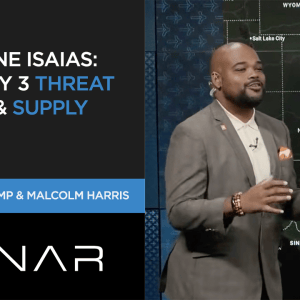
#fwtv_50EBU11H0S0 .fwtv-panel{border:1px solid #d0d0d0;padding:18px;border-radius:6px;line-height:1.6}#fwtv_50EBU11H0S0 .fwtv-panel p{margin:0 0 12px}#fwtv_50EBU11H0S0 .fwtv-note{font-style:italic;color:#666;margin-top:16px;padding-top:12px;border-top:1px solid #e0e0e0}Hurricane Isaias is intensifying in the Gulf, threatening to become a Category 3 storm and unleash significant damage across the Southeast. We break down the storm’s projected path, its potential impact on critical infrastructure like refineries and ports, and what freight and logistics operators can expect for trucking capacity and diesel prices. Stay ahead of the storm’s supply chain disruptions with our full analysis.Hurricane Isaias, currently a Category 1 storm, is forecast to strengthen to a Category 2 by Wednesday and potentially reach Category 3 with winds of up to 100 miles per hour before making landfall Friday around 2 p.m., according to a FreightWaves Sonar analysis. The storm’s projected path stretches from just east of Houston across to the Florida Panhandle, encompassing major freight corridors and energy infrastructure in the Gulf Coast region. The most consequential supply chain risk lies in the energy sector. Up to six refineries sit in the storm’s path, and Gulf State refineries collectively account for 50% of the nation’s refining capacity — a total of 18.2 million barrels per day. Offshore production operators are already sending home nonessential workers, though output continues normally for now. Any significant damage could take days to weeks to repair, a concern amplified by already-elevated diesel prices. “Gulf State refineries account for 50% of the national refining capacity of 18.2 million barrels per day. I don’t think this storm is going to be strong enough to do a lot of damage — but it is something for us to keep watching as we’re already in this current environment where diesel prices are incredibly elevated,” said Julie Van de Kamp. Freight markets in the Southeast are beginning to respond. Tender rejections in New Orleans, Mobile, and Montgomery are already running in the 17% to 19% range, edging above national averages. Truckload volumes are also ticking upward in New Orleans and Mobile as some shippers move freight ahead of the storm’s arrival. Van de Kamp said she expects to see a “Southeast pop” in spot rates and tender rejections depending on the extent of flooding and how quickly carriers can access affected areas once the storm passes. Port operations are another watch item. The Port of Mobile and Port of New Orleans both fall within the projected impact zone, raising the possibility of vessel delays and slowdowns in cargo unloading. Van de Kamp said the Port of Houston is not expected to be significantly affected. FEMA staging locations — including Jacksonville and Atlanta — could also generate emergency freight demand in the days following landfall. Rainfall totals of 3 to 6 inches are expected across a broad swath of the region, with localized amounts potentially reaching 10 inches. Malcolm Harris, who provided the meteorological analysis, said flooding is his primary concern, noting that the storm’s eye is becoming more defined by the hour. He advised residents in Gulf Shores, Alabama, and the Baton Rouge area to monitor conditions closely and use common sense regarding evacuation decisions. “I do not play about the weather,” Harris said, adding that areas from Louisiana to the Florida Panhandle should prepare for torrential rain, wind, and storm surge. FreightWaves will continue monitoring Sonar’s WeatherOptics and Everstream tools for shifts in tender rejection rates and freight volumes as Isaias approaches the Gulf Coast.Hurricane Isaias could reach Category 3 with 100 mph winds by Friday landfall, threatening six Gulf refineries that represent 50% of U.S. refining capacity at 18.2 million barrels per day.Tender rejections in New Orleans, Mobile, and Montgomery are already running 17–19%, with truckload volumes rising as shippers move freight ahead of the storm.Ports of Mobile and New Orleans face potential slowdowns; FEMA staging in cities like Jacksonville and Atlanta could generate emergency freight demand post-landfall.This Summary is generated thanks to a transcription of the interview, for the full interview please enjoy the video above. The post Hurricane Isaias: Category 3 Threat to Gulf & Supply Chain appeared first on FreightWaves.