
Breaking
Advertisement

Transportation

Category Added in a WPeMatico Campaign

Transportation

English language rule’s comments bring criticism from Sikh organization

With the more than 2,200 comments filed to the Federal Motor Carrier Safety Administration are overwhelmingly in favor of codifying current regulations on English Language Proficiency (ELP), the few urging caution tend to stick out. That is particularly true in the case of the Sikh Coalition, which is not a trucking-specific organization but one that given the large number of Sikh drivers on U.S. highways has taken particular interest in the ELP regulation. The Sikh Coalition, in its comments filed to FMCSA, described itself as a “nonprofit and nonpartisan organization dedicated to ensuring that members of the Sikh community in America are able to practice their faith without fear of discrimination or backlash.” Its description of the organization goes on to say that the group “(defends) the civil rights and civil liberties of Sikhs, including Sikh truck drivers, by providing direct legal services, advocating for legislative change, educating the public about Sikhs and Sikhi, and fostering civic engagement amongst Sikh Americans.” The Notice of Proposed Rulemaking (NPRM) on ELP took comments through last Friday. The proposed rule “would make updates,” according to the NPRM, to various existing regulations to “reflect that noncompliance with ELP requirements will result in a driver being placed out of service.” The one exception would be truck traffic localized to the U.S.-Mexico border that wasn’t heading further inland. Supporters mount email campaign The largest source of comments submitted to FMCSA was through a campaign from an unknown organizer in support of the proposed rule. It manifested itself in the form of verbatim submissions by dozens of individuals that raised the story of Dalilah Coleman. Dalilah Coleman was five when she was injured in a 2024 crash in California involving a driver in the U.S. illegally. The email comments from that lobbying drive all opened with the same wording. “Dalilah’s story should not be the next in a saga of many others like it,” the emails said. “It should be the last one ever told. The illegal alien driving that truck should never have been allowed behind the wheel.” That crash led to the introduction of Dalilah’s Law in the House of Representatives and the Senate. Its provisions include ELP requirements. While the House of Representatives” Committee on Transportation & Infrastructure voted to advance the bill, it has not been taken up by the full House. Its Senate companion did not get a vote in the corresponding committee. Given the calendar, passage of Dalilah’s Law is unlikely to occur this year. It would need to be considered by the next Congress to become law. Concerns about discrimination In its comment to FMCSA, the Sikh Coalition said it “(agrees) there is a common-sense safety need for all drivers to understand a level of English as is already required by federal law.” But it added that “certain steps needed to be taken to mitigate the risk of discrimination during the course of or under the guise of ELP enforcement.” The Coalition said in earlier communications with the Department of Transportation, it had “raised concerns” about several issues, including what it said was “the lack of clear criteria for roadside inspectors to use to determine whether to subject drivers to ELP assessments, and the lack of any information as to what recourse is available to drivers rendered out of service (OOS) due to alleged ELP violations.” It cited a FMCSA decision from 2016 that the agency “had previously removed the requirement to place drivers out-of-service because the Commercial Vehicle Safety Alliance could not substantiate the safety impact of the requirement.” The Coalition also said it had communicated to FMCSA that the Sikhs’ analysis of FMCSA data on roadside inspections between 2021 and 2025 showed that just 0.19% “involved a driver’s inability to communicate in or understand English.” ELP was a Road Check focus However, this year’s Road Check Week resulted in EPL violations becoming a top 5 reason for inspectors to hand down an OOS order. ELP violations consisted of 9.1% of all OOS orders. “Our goal is to reduce the risk of any discrimination against truck drivers who could be profiled for their appearance and subject to disproportionate or discriminatory additional scrutiny during roadside inspections in the name of ELP enforcement,” the Sikh Coalition comments said. “It is critical that FMCSA establish clear, objective standards for roadside inspectors tasked with carrying out ELP enforcement to mitigate the risk of wrongful discrimination against Sikh or other commercial drivers.” The Coalition’s comments also raise the social media post posted last month by the Department of Homeland Security–later taken down–that made reference to Sikh drivers and declared “Get off our roads, you don’t know how to drive, Mr. Singh.” “FMCSA has consistently provided reason to believe that it is less interested in improving safety outcomes and more interested in removing certain drivers from the road because of where they come from,” the Coalition’s comments said. It wrapped up its comments by asking FMCSA to withdraw the NPRM, and “instead invest in tailored, evidence-based safety measures.” The key U.S. trucking organizations, in their comments, broadly backed the goals of the ELP rule. But there were recommendations for some changes. ATA’s concerns The American Trucking Associations, in a comment that seemed to indirectly echo the Sikh Coalition’s criticism that the ELP/OOS criteria could be vague, said the ATA “remains concerned that the current assessment process leaves room for subjective interpretation by individual enforcement officials.” “Without standardized scoring metrics or clearly defined evaluation criteria, ELP determinations may vary considerably from one roadside inspection to another,” the ATA said. “For example, a driver’s level of English proficiency may be deemed sufficient by one officer yet insufficient by another based on differing interpretations of the same interaction.” ATA called on FMCSA to work with the states issuing CDLs “to establish and build in a standardized ELP assessment as part of the CDL issuance and renewal process.” “Doing so would help evaluate and catch drivers with ELP deficiencies at ‘the front door’ – ensuring drivers are tested for ELP based on a consistent national standard before receiving a credential to operate, rather than relying primarily on roadside inspections to identify deficiencies after a driver has entered the workforce.” The Owner Operator Independent Drivers Association’s (OOIDA) comments had few recommendations and was more effusive in its praise than ATA. But it did add a history of earlier enforcement action. It said that CVSA removed an ELP requirement in 2015. After that, OOIDA wrote, “ELP violations went largely unenforced and unreported for a decade.” “In 2014, there were over 100,000 ELP violations at roadside; yet in 2024, there were just 9,700 ELP violations reported,” OOIDA said. “The lack of ELP enforcement, in conjunction with the growth of States issuing Non-Domiciled Commercial Driver s Licenses to foreign drivers during the same period, permitted hundreds of thousands of unqualified drivers to work on our nation’s roads. This needlessly resulted in numerous fatal crashes.” More articles by John Kingston FMCSA’s Elison: ‘weeks’ away from fixing Motus user experience Wall Street analysts positive on C.H. Robinson deal; S&P more cautious FMCSA split sleeper berth pilot program moves closer to launch The post English language rule’s comments bring criticism from Sikh organization appeared first on FreightWaves.

Transportation

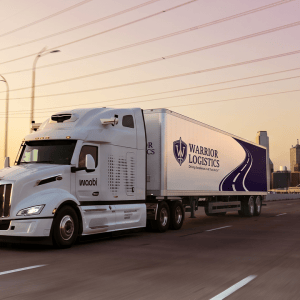
Waabi signs Warrior Logistics for Dallas-Houston freight

Waabi and Warrior Logistics announced a commercial partnership Wednesday to move routine customer freight on Waabi Driver-powered autonomous trucks between Dallas and Houston. Warrior, an asset-based carrier headquartered in Coppell, Texas, has added a fleet of Waabi’s trucks to its network to haul recurring shipments for food and beverage, consumer goods and other customers. The companies began commercial operations earlier this year. Routes completed by the autonomous trucks since then have produced 100% on-time pickup and delivery and zero safety incidents, according to Waabi. Neither company disclosed how many Waabi trucks Warrior runs or how many loads they have hauled. The carrier, founded in 2015, runs more than 200 trucks of its own, according to the companies’ release. It is using the Waabi trucks to add capacity and raise utilization across that broader fleet as customer demand grows. “Our customers want more capacity on our core lanes, and they want it to be consistent,” said Scott McFarlane, CEO of Warrior Logistics. “Our partnership with Waabi gives us the flexibility to deliver that. Waabi Driver-powered trucks complement our professional drivers, build density on our power lanes, and add capacity on the routes that are less desirable for our drivers.” McFarlane described a network where autonomous trucks and professional drivers run side by side. That mix lets Warrior take on more freight and keep its drivers on the lanes they want to run, he said. Why Warrior signed on Warrior began the partnership for three reasons, McFarlane said: a leadership team it trusts, technology he called truly innovative and a co-development approach that let the carrier see firsthand how safely the Waabi Driver performs. “The results on our own freight speak for themselves,” he said. “Warrior has helped shape our technology over the course of our partnership and the impact we’re seeing across their operations shows how we can help carriers take on more freight, serve more customers and grow their business,” said Lior Ron, COO of Waabi. Over the coming year, the two companies will jointly pick and develop the next lanes for the autonomous trucks across Warrior’s network. Waabi’s Dallas-Houston business The Warrior deal comes nine days after Waabi and Volvo Autonomous Solutions began hauling freight for Warp, their first customer operation together. Volvo VNL Autonomous trucks running the Waabi Driver move Warp freight directly to third-party facilities on the same corridor, with an observer in the driver’s seat. Commercial load volume on Waabi’s Dallas-Houston route has grown more than 80% this year, the company said. It did not give a baseline. Its first revenue loads on Interstate 45 between Dallas and Houston moved in September 2023, the week it announced a 10-year deal with Uber Freight. In July, Waabi said its software, trained only on a Peterbilt 579, drove a Volvo VNL Autonomous truck with no new data or fine-tuning. Waabi’s trucks are not yet driverless. Ron told FreightWaves in January the company will remove the driver only once the truck and its fully redundant platform are ready from the manufacturer. This month, he said Waabi is “fully on track for driverless next year, with Volvo as the first OEM platform.” The post Waabi signs Warrior Logistics for Dallas-Houston freight appeared first on FreightWaves.

Advertisement
Transportation

Intermodal: Freight’s MUST-HAVE in Volatile Markets

#fwtv_7fO1qWfJPGg .fwtv-panel{border:1px solid #d0d0d0;padding:18px;border-radius:6px;line-height:1.6}#fwtv_7fO1qWfJPGg .fwtv-panel p{margin:0 0 12px}#fwtv_7fO1qWfJPGg .fwtv-note{font-style:italic;color:#666;margin-top:16px;padding-top:12px;border-top:1px solid #e0e0e0}Intermodal conversion is no longer an option but a necessity for shippers, driven by past supply chain chaos and persistent fuel costs. FreightWaves Finance Editor Todd Maiden breaks down J.B. Hunt’s strategic plays in intermodal and dedicated, revealing how major carriers are navigating current market headwinds and positioning for future growth. Learn which segments are poised to win in the coming quarters and why industrial activity will play a crucial role.J.B. Hunt Transport Services flagged a 5% to 10% sequential step-down in third-quarter earnings per share from the second quarter at a recent investor conference, putting the company roughly flat year over year. That disclosure, combined with headwinds from diesel cost run-ups and driver-related expenses, may have caught Wall Street off guard — but analysts tracking the stock say the market misread the story. While most truckload and intermodal carriers are only one quarter into their earnings recovery, J.B. Hunt began its turnaround in the third quarter of 2025, making this its fourth consecutive quarter of year-over-year improvement.The company launched a $100 million cost-reduction initiative roughly a year ago — a program that had already grown to more than $130 million as of last quarter. Headcount is being managed through natural attrition rather than layoffs, and AI-driven lean initiatives are in place. For the broader carrier universe, analysts are tracking roughly 20% average earnings growth per company this quarter, following 25% year-over-year growth across the space in the second quarter.Fuel was cited as a significant but transitory drag. Nine of the 13 weeks in the third quarter saw diesel prices step higher sequentially, causing carriers to chase costs even with fuel surcharges in place. Once prices stabilize, that headwind is expected to reverse. Driver additions in J.B. Hunt’s dedicated segment were described as growth-oriented spending — prefunding future capacity rather than a sign of structural cost pressure.“Modal conversion is no longer something we’ll contemplate. It’s really a necessity. But I think there’s some scars there from what it was in the past.”Intermodal’s October 1 bid season is the most closely watched near-term catalyst. Volumes are already up mid-single digits this quarter, even as drayage driver availability is acting as a ceiling on further growth. Contract pricing, which lagged through a soft 2023 and a flattish 2024, is expected to inflect materially this cycle. J.B. Hunt’s intermodal operating ratio has already improved from a trough of 93.6 to approximately 91, against a long-term target of 88 to 90 — and that progress has come without meaningful price increases. Key customers including Walmart, Amazon, and Home Depot require incremental, cycle-based rate negotiations rather than spot-market-style repricing, which limits how quickly rates can move.In LTL, public carriers including Old Dominion, XPO, and Saia weathered 3.5 years of industrial softness but maintained pricing power throughout. LTL tonnage inflected positive year over year in March and has continued to accelerate, coinciding with the ISM manufacturing PMI turning positive in January and remaining in growth territory for all nine months of the year. Carriers have been running at more than 30% excess door capacity while investing heavily in terminal networks; analysts expect that slack to begin absorbing, driving outsized margin gains given the sector’s high fixed-cost structure.Amazon’s stated ambitions in LTL drew skepticism. The overall LTL market is a $60 billion total addressable market — large in absolute terms but small relative to global parcel, where the TAM potentially exceeds $1 trillion. Amazon currently operates roughly 30 terminals configured primarily for inbound freight rather than the cross-dock, pickup-and-delivery, and linehaul infrastructure a national LTL network requires. Regional carriers, meanwhile, are said to be at or near capacity limits in their terminal networks, a dynamic that favors large national players sitting on substantial excess capacity.J.B. Hunt warned of a 5%-10% sequential EPS decline in Q3, but its cost-takeout program has grown from $100M to over $130M and its earnings recovery is four quarters old — a full year ahead of most peers.Intermodal volumes are up mid-single digits this quarter even as drayage driver shortages cap growth; October 1 bid season is seen as the critical test for whether contract rates can inflect materially after two soft years.LTL tonnage turned positive year over year in March and has accelerated alongside a manufacturing PMI that has been in growth territory all nine months of the year, with carriers running 30%-plus excess door capacity poised to leverage fixed-cost networks.This Summary is generated thanks to a transcription of the interview, for the full interview please enjoy the video above. The post Intermodal: Freight’s MUST-HAVE in Volatile Markets appeared first on FreightWaves.

Transportation

Why Rail Is Booming: Intermodal & Carload Growth Explained

#fwtv_ay2VAGc4UZg .fwtv-panel{border:1px solid #d0d0d0;padding:18px;border-radius:6px;line-height:1.6}#fwtv_ay2VAGc4UZg .fwtv-panel p{margin:0 0 12px}#fwtv_ay2VAGc4UZg .fwtv-note{font-style:italic;color:#666;margin-top:16px;padding-top:12px;border-top:1px solid #e0e0e0}US rail traffic is surging, with intermodal and carload volumes hitting new highs. This isn’t just a few bright spots; growth is broad-based across nearly all industrial sectors, driven by tight trucking capacity and high diesel prices. Find out what this means for the broader industrial economy and if this “renaissance” is here to stay.U.S. intermodal rail traffic jumped 10.4% year-over-year in week 40, while domestic carload volume rose 3.4%, producing an overall U.S. rail traffic increase of 7.2% compared to the same week in 2025, according to Association of American Railroads data cited by rail reporter Bill Stephens. North American figures were also positive, with carload volume up 2.6% and intermodal up 9.1% for a combined gain of 5.9%.The numbers matter for carriers and shippers because they reinforce a durable industrial expansion, not a short-term blip. The AAR’s September and third-quarter Rail Industry Overview, released the day before the weekly data, found that 17 of 20 carload categories posted year-over-year gains in September and that chemicals traffic — the second-largest carload commodity — set a September record and is on pace for a new annual record.Western railroads led intermodal growth, with BNSF up 12.5% and Union Pacific up 19.4% for the week, a performance Stephens attributed to record container volumes moving through the ports of Los Angeles and Long Beach and now pumping through the broader economy. Eastern carriers also posted solid gains: CSX was up 8.9% and Norfolk Southern up 5.4%.“It’s nothing but tailwinds for intermodal due to the cost savings, partly related to the surge in diesel price, the tight trucking capacity. And the third ingredient there is that rail service seems to be holding up for the most part despite this volume surge,” Stephens said.Motor vehicles and parts — a category that has lagged in 2025 — rebounded sharply, up 9.4% in week 40. Metallic ores and metals continued double-digit year-over-year growth, consistent with what the AAR described as manufacturing expansion that “took off at the start of the year” and “appears to be increasingly durable.” Excluding coal and grain, carload volume was up 5.6% for the week. Coal was down 2%, while grain edged up just 0.5%.The AAR flagged one risk: if diesel prices remain elevated long enough, consumer spending could soften. For now, consumer goods spending was up 2.7% in August, according to the AAR. Stephens noted that inflation data is beginning to broaden beyond gasoline into food prices, a trend worth watching for consumer-dependent freight segments.On the regulatory front, parties are filing their intent to participate with the Surface Transportation Board in the Union Pacific–Norfolk Southern merger review. Stephens said that STB board member Richard Kloster drew attention when the board accepted the merger application, calling for stronger data and better arguments — comments Stephens characterized as likely reflecting broader board sentiment rather than a political maneuver. Further detail is expected when both railroads hold earnings calls, with questions anticipated on conditions being sought by other railroads and on Kloster’s remarks.U.S. intermodal rail traffic rose 10.4% in week 40, led by BNSF (+12.5%) and Union Pacific (+19.4%) on record West Coast port volumes.AAR’s September report found 17 of 20 carload categories grew year-over-year, with chemicals traffic setting a September record and on pace for an annual record.Elevated diesel prices and tight trucking capacity are sustaining intermodal momentum, but railroads warn prolonged fuel inflation could eventually weigh on consumer spending.This Summary is generated thanks to a transcription of the interview, for the full interview please enjoy the video above. The post Why Rail Is Booming: Intermodal & Carload Growth Explained appeared first on FreightWaves.

Transportation

Democratizing Trucking Tech: What Small Fleets NEED to Know

#fwtv_Frl2EDSy1MA .fwtv-panel{border:1px solid #d0d0d0;padding:18px;border-radius:6px;line-height:1.6}#fwtv_Frl2EDSy1MA .fwtv-panel p{margin:0 0 12px}#fwtv_Frl2EDSy1MA .fwtv-note{font-style:italic;color:#666;margin-top:16px;padding-top:12px;border-top:1px solid #e0e0e0}The trucking industry is rapidly evolving, making cutting-edge technology a must-have for carriers of all sizes. Learn how Datatruck is transforming the landscape for small and mid-sized fleets, offering advanced TMS solutions that help them boost profits, cut costs, and gain unparalleled operational visibility. Jordan Kidd, Head of Product at Datatruck, explains why legacy systems are failing to adapt and how AI-native solutions are creating new opportunities for growth and efficiency. Discover how these innovations are democratizing freight tech, ensuring even the smallest operators can scale and thrive without massive overhead.DataTruck is building a carrier-focused transportation management system aimed at small and mid-size fleets that have historically been priced out of sophisticated software — a segment the company’s head of product, Jordan Kidd, calls “an overlooked space.” The company recently earned a spot on the FreightWaves Freight Tech 100 and is now competing for the Freight Tech Top 25, with an awards ceremony planned at F3. Kidd argued that running a trucking operation on email, spreadsheets, and QuickBooks is no longer viable for even the smallest carriers. Real-time tracking mandates from shippers and tighter integration requirements from invoice factoring companies are forcing operators to adopt formal software — whether they want to or not. “It’s becoming a requirement to have tracking, real-time tracking,” Kidd said. “There’s just so many parts of the operation that are basically enforcing a requirement for some sort of software.” The TMS market has long been split between stripped-down free tools for small carriers and enterprise platforms that can cost millions of dollars per year to purchase and operate, Kidd said. AI-assisted development is compressing that gap, making it feasible for a single platform to serve a broader slice of the market. DataTruck’s stated goal is to help a five- or ten-truck fleet acquire software that enables it to scale to 25 trucks — growth that Kidd said “wouldn’t have been possible before.” “Some of the moat that the large carriers had was systems to undergird customer requirements, driver requirements, just all of the parts of the operation. They could run really well on these large established systems. But as we see technology and TMS progressing, that technology is being democratized down to the smaller carriers.” Kidd also pointed to the 2017 ELD mandate as a structural inflection point that the TMS industry has largely failed to address in the nearly ten years since. Before the mandate, a TMS was essentially a digital clipboard — a place to log loads, invoices, and driver pay. After the mandate, asset location data began flowing into systems automatically, shifting the architecture entirely. Despite that shift, Kidd said most TMS providers have not reinvented their core paradigm to match the new data flows. On legacy incumbents applying AI to aging infrastructure, Kidd was skeptical. “I think it’s difficult to take an infrastructure that’s 20 or 30 years old and bolt on AI and really see the value that you need to see out of an AI investment,” he said. He also raised concerns about the proliferation of point-solution AI add-ons — AI billers, AI callers, and similar tools — that bolt onto existing systems but do not share a common data layer, creating integration friction that erodes their individual value. DataTruck’s pitch centers on being both a system of record and a system of action, with end-to-end cohesion across dispatching, billing, and asset visibility. Kidd framed operational blind spots — such as loads that fall through the cracks when billing responsibilities are shared across multiple staff members — as the kind of margin leak that software can systematically close as a carrier grows beyond the point where a single person can hold all operational context in their head.DataTruck is targeting carriers as small as five trucks with a carrier-focused TMS it says can support scaling to 25 trucks, a threshold previously out of reach without costly enterprise software.Jordan Kidd says the 2017 ELD mandate fundamentally shifted TMS data flows, but most providers have not updated their core architecture in the nearly ten years since.DataTruck is a Freight Tech 100 honoree competing for the Freight Tech Top 25, with winners to be announced at the F3 conference.This Summary is generated thanks to a transcription of the interview, for the full interview please enjoy the video above. The post Democratizing Trucking Tech: What Small Fleets NEED to Know appeared first on FreightWaves.

Advertisement
Transportation

Freight Market Alert: Why October’s Tender Rejections Hit 14% Unexpectedly

#fwtv_QMA94oozxhk .fwtv-panel{border:1px solid #d0d0d0;padding:18px;border-radius:6px;line-height:1.6}#fwtv_QMA94oozxhk .fwtv-panel p{margin:0 0 12px}#fwtv_QMA94oozxhk .fwtv-note{font-style:italic;color:#666;margin-top:16px;padding-top:12px;border-top:1px solid #e0e0e0}The SONAR Truckload Rejection Index is skyrocketing, hitting an unexpected 14% in October – a significant development outside normal seasonal patterns. This isn’t driven by a demand spike, but rather by persistent market imbalance and insufficient supply across the country. Key regions like Los Angeles, Harrisburg, and Atlanta are showing unusual disruptive activity, with spot rates rising in critical areas. Discover where the tightening is happening and what it means for capacity heading into peak season.The SONAR Tender Rejection Index climbed to 14.17% this week — an unusual mid-October spike that Zach Strickland, who presented the data in a SONAR Market Update, called a significant and unexpected development. What makes the move notable is what is not behind it: the SONAR Tender Volume Index shows no demand-side surge, meaning the tightening is being driven entirely by a supply shortfall. “The only explanation is that we still have continued market imbalance,” Strickland said. “Supply is still not sufficient to cover demand in terms of truckload capacity.” Strickland noted that mid-October is typically a brief breathing period before the holiday rush, making the breadth of the current disruption all the more striking. The SONAR Weighted Rejection Index is flashing elevated readings across a wide swath of the country simultaneously — including Knoxville, Harrisburg, Memphis, Atlanta, Green Bay, Des Moines, Los Angeles, Ontario (Calif.), and El Paso. Distribution-center-heavy markets such as Columbus, Harrisburg, and Atlanta are particularly notable because those hubs usually absorb inbound capacity from westbound lanes, not repel it. “To see this as broad and stretched across the country is something that is worth noting,” Strickland said. “The weighted rejection index jumping up in all these places all at once is weird because a lot of that freight ends in those markets.” Los Angeles and Ontario are receiving special attention. Record import volumes moved through the Port of Los Angeles in September, Strickland noted, and he described the maritime peak this year as a “prolonged plateau” rather than a traditional spike. Lean retailer inventories — the product of just-in-time ordering strategies — are now triggering a broad replenishment push that is stretching truckload capacity from the West Coast eastward. Los Angeles van rejection rates are up 1.87 percentage points week over week, with spot rates running well above contract and 38% of the market’s top 50 lanes showing spot-market tightening signals. Spot rates have not yet responded to the rejection surge, but Strickland said he expects the National Truckload Index, the Regional Truckload Index, and possibly the Flatbed Truckload Index to move higher within the coming week. Tender lead times are running 3.5 to 4 days, while spot freight is being booked a day or less out — a lag that explains why the rate indexes have not yet caught up to the tightening signals. On the loosening side, Houston is showing the strongest softening signals in the van market, partially offsetting the national picture. In the refrigerated segment, Milwaukee is posting the tightest conditions among major reefer markets, while Stockton, Calif., is showing the softest signal. Strickland cautioned that despite lower overall demand, the market remains volatile heading into the holiday season. “This market is still very unstable and you really can’t fall asleep on it just yet,” he said.SONAR Tender Rejection Index hit 14.17% in mid-October with no demand-side spike, signaling a pure capacity shortfallLos Angeles van rejections rose 1.87 percentage points week over week, with spot rates well above contract on 38% of top 50 lanesSpot rate indexes (NTI, RTI, FTI) have not yet reacted but are expected to move higher within the coming week as the tightening works through the marketThis Summary is generated thanks to a transcription of the interview, for the full interview please enjoy the video above. The post Freight Market Alert: Why October’s Tender Rejections Hit 14% Unexpectedly appeared first on FreightWaves.

Transportation

Lectric XPress Lite e-bike $1,099 + XPress2 FREE $336 bundle, EcoFlow 572Wh RIVER 3 Max new $303 low, snow blower lows, more

Our midweek Green Deals edition is being led by Lectric’s newest 46-pound Xpress Lite e-bike that just launched at $1,099, which coincides with the bundle for $336 in FREE gear on the XPress2 Cruiser/Commuter e-bikes at $1,299 continuing over from the Better-Than-Prime sale. Right behind that we have two options for EcoFlow’s 572Wh RIVER 3 Max Expanded Power Station at a new $303 low or getting a FREE $40 tool pegboard at Amazon for $319. From there, we have two cordless electric snow blower deals on EGO’s 21-inch model with 2x 6.0Ah batteries at an $899 annual low, or the 80V Greenworks 20-inch model at a new $450 low. There’s also Worx’s newest 40V 3-in-1 Trivac Cordless Leaf Blower/Vacuum/Mulcher with either 2x or 4x battery bundles starting from $260, as well as more deals to get you through fall and winter below. You’ll also find the hangover deals from the last two days at the bottom of the page, like the yesterday’s EcoFlow TITAN series whole-home backup system early-bird deposit deals or the brand’s latest flash sale lineup ending tonight, and more. Head below for other New Green Deals we’ve found today and, of course, Electrek’s best EV buying and leasing deals. Also, check out the new Electrek Tesla Shop for the best deals on Tesla accessories. more…

Advertisement
Transportation

Houthi attacks add new geopolitical risk to softening container rates

Repeated Houthi missile and drone attacks on Saudi Arabia’s airports and energy infrastructure have sharply escalated the Saudi-Houthi conflict, raising the prospect of renewed disruption to Red Sea shipping as the 2027 contract-tendering season gets underway. Saudi Arabia has vowed a “serious response” after strikes on Riyadh’s King Khalid International Airport killed at least 14 people and injured more than 300. The airport remains closed until at least October 17, airlines have canceled flights, and the Houthis have threatened further attacks on Saudi airports, and military targets. The Yemen-based militia overnight hit the headquarters of Aramco, the Saudi oil producer, with missiles. The attacks follow Houthi attempts beginning in July to close the Bab el-Mandeb Strait to Saudi-linked traffic, including vessel attacks into August after nearly nine months of relative quiet. The ‘other’ Mideast strait guards the Red Sea’s southern entrance to the Gulf of Aden. The latest escalation increases the likelihood that Red Sea transits could again become more dangerous, although no broad closure of the waterway has been confirmed. window.googletag = window.googletag || {cmd: []}; googletag.cmd.push(function() { var gptSlot = googletag.defineSlot('/21776187881/FW-Responsive-Main_Content-Slot1', [[300, 100], [320, 50], [728, 90], [468, 60]], 'div-gpt-ad-1709668545404-0').defineSizeMapping(gptSizeMaps.banner1).addService(googletag.pubads()); googletag.pubads().enableSingleRequest(); googletag.pubads().collapseEmptyDivs(); googletag.enableServices(); setInterval(function() { if (!document.hidden) { googletag.pubads().refresh([gptSlot]); } }, 60000); }); googletag.cmd.push(function() { googletag.display('div-gpt-ad-1709668545404-0'); }); For container lines, the immediate effect is uncertainty rather than a confirmed capacity shock, said analyst and SONAR data contributor Freightos (NASDAQ: CRGO). Carriers had gradually increased Asia-Europe transits through the Red Sea since June, helping expand effective vessel supply; a renewed wave of attacks could reverse that trend and support rates. Asia-Europe Rates Still Elevated Spot rates on Asia-Europe lanes have fallen steadily since July, driven primarily by the post-peak demand slowdown and by carriers’ gradual return to Red Sea routings. Yet prices remain well above year-ago levels: both major Asia-Europe trades were above $3,000 per FEU last week, roughly 70% higher than in October 2025. Some carriers have already announced October general rate increases. Asia-Mediterranean spot prices rose 7% to $3,800 per FEU last week, a move that could help establish a higher benchmark ahead of annual contract negotiations. The market’s underlying support is fragile. Lingering congestion in Northern Europe and the Far East has absorbed capacity, while a threatened German port strike that could have worsened European delays was recently averted. Contract negotiations face uncertainty Shippers and carriers are entering tendering season for 2027 annual contracts with conflicting signals. Carriers enter talks with rates still historically elevated, but there are reasons shippers may resist locking in current levels. window.googletag = window.googletag || {cmd: []}; googletag.cmd.push(function() { var gptSlot = googletag.defineSlot('/21776187881/fw-responsive-main_content-slot3', [[728, 90], [468, 60], [320, 50], [300, 100]], 'div-gpt-ad-1665767553440-0').defineSizeMapping(gptSizeMaps.banner1).addService(googletag.pubads()); googletag.pubads().enableSingleRequest(); googletag.pubads().collapseEmptyDivs(); googletag.enableServices(); setInterval(function() { if (!document.hidden) { googletag.pubads().refresh([gptSlot]); } }, 60000); }); googletag.cmd.push(function() { googletag.display('div-gpt-ad-1665767553440-0'); }); Newbuild deliveries expected next year would expand fleet capacity, while continued growth in Red Sea transits would further increase effective capacity by shortening Asia-Europe voyages. Those factors have led some shippers to expect rates to ease in 2027 and to hesitate over long-term commitments at present levels. Trans-Pacific peak may be ending The trans-Pacific trade has held near peak-season levels since July, supported by sustained demand and Asia congestion. But the first signs of easing are emerging: Far East-U.S West Coast rates dipped 2% to $8,150 per FEU, potentially signaling the start of a post-Golden Week decline. The National Retail Federation’s latest U.S. import forecast points to a sharp seasonal slowdown, projecting November ocean arrivals to fall 11% month over month. Even so, full-year 2026 imports are projected to be just 1.4% above 2025 and 1.2% above 2024, approaching the record volume set in 2021. Outlook window.googletag = window.googletag || {cmd: []}; googletag.cmd.push(function() { var gptSlot = googletag.defineSlot('/21776187881/fw-responsive-main_content-slot4', [[300, 100], [320, 50], [728, 90], [468, 60]], 'div-gpt-ad-1709668086344-0').defineSizeMapping(gptSizeMaps.banner1).addService(googletag.pubads()); googletag.pubads().enableSingleRequest(); googletag.pubads().collapseEmptyDivs(); googletag.enableServices(); setInterval(function() { if (!document.hidden) { googletag.pubads().refresh([gptSlot]); } }, 60000); }); googletag.cmd.push(function() { googletag.display('div-gpt-ad-1709668086344-0'); }); Rates may continue to soften through the remainder of the quarter as peak-season cargo tapers. The principal upside risk is geopolitical: A sustained Houthi campaign against Saudi targets, or renewed attacks on commercial shipping in the Red Sea, could tighten effective capacity and complicate carriers’ efforts to defend rate levels heading into 2027 contract talks. Read more articles by Stuart Chirls here. Read more: New chief for DP World Americas window.googletag = window.googletag || {cmd: []}; googletag.cmd.push(function() { var gptSlot = googletag.defineSlot('/21776187881/fw-responsive-main_content-slot5', [[728, 90], [468, 60], [320, 50], [300, 100]], 'div-gpt-ad-1665767778941-0').defineSizeMapping(gptSizeMaps.banner1).addService(googletag.pubads()); googletag.pubads().enableSingleRequest(); googletag.pubads().collapseEmptyDivs(); googletag.enableServices(); setInterval(function() { if (!document.hidden) { googletag.pubads().refresh([gptSlot]); } }, 60000); }); googletag.cmd.push(function() { googletag.display('div-gpt-ad-1665767778941-0'); }); Philadelphia ports sets $837 million expansion, first new berth in 50 years Despite new record, Port of LA chief warns of tariff-driven planning risk Shippers waiting an extra week for US-bound containers 1 million boxes set new Los Angeles port record window.googletag = window.googletag || {cmd: []}; googletag.cmd.push(function() { var gptSlot = googletag.defineSlot('/21776187881/fw-responsive-main_content-slot6', [[728, 90], [468, 60], [320, 50], [300, 100]], 'div-gpt-ad-1665767872042-0').defineSizeMapping(gptSizeMaps.banner1).addService(googletag.pubads()); googletag.pubads().enableSingleRequest(); googletag.pubads().collapseEmptyDivs(); googletag.enableServices(); setInterval(function() { if (!document.hidden) { googletag.pubads().refresh([gptSlot]); } }, 60000); }); googletag.cmd.push(function() { googletag.display('div-gpt-ad-1665767872042-0'); }); The post Houthi attacks add new geopolitical risk to softening container rates appeared first on FreightWaves.