Breaking
Advertisement

Technology

Technology

Over 25% of people lie to get antibiotics—and their lies aren’t even good

A significant number of patients in the US lie to their doctors to get antibiotics they likely don't need, according to two new studies. While that may not be a startling revelation, the studies drills down on the phenomenon, finding that the lies patients tell are generally bad ones—and yet, they work almost all the time. In the two linked studies published Friday in JAMA Network Open, a team of researchers led by Alistair Thorpe at the University of Utah analyzed online survey data from over 1,000 adults. They found that over a quarter of people reported having lied to a clinician at least once to get an antibiotic prescription for themselves or a child in their care. Patients lied by either exaggerating symptoms, making up symptoms, or—most often—both. But interestingly, the lies people told to get antibiotics involved making up or exaggerating symptoms of infections that wouldn't be treated with antibiotics. For example, the most common falsehoods were symptoms associated with colds, such as fever, cough, and sore throat. That's despite the fact that colds are caused by viruses, not bacteria—which antibiotics treat.Read full article Comments


Technology

Basically no one is using AI agents for their DoorDash orders

As AI tools and agents have continued their march across all aspects of digital life, many companies are trying to use LLMs to improve the experience of purchasing goods and services on the Internet. Thus far, though, a vanishingly small number of people seem to be taking advantage of those capabilities, at least when it comes to using the popular food delivery app DoorDash with an outside AI agent. In a third-quarter earnings call Thursday, DoorDash co-founder and CEO Tony Xu responded to an analyst question by noting that "AI agents are generating several hundred orders [on DoorDash] across the time that they've been up and running." In a marked understatement, Xu called this a "very low use case" for a company that handled just shy of 1 billion orders total in the third quarter of 2026 alone. Speaking generally, Xu said he sees the potential for AI agents to be genuinely helpful for "long consideration purchases" and major decisions where agents would be "doing work on your behalf proactively in the background." However, Xu added, "when it comes to a task that's as simple as ordering food, we tend to see that come directly to DoorDash."Read full article Comments

Advertisement
Technology

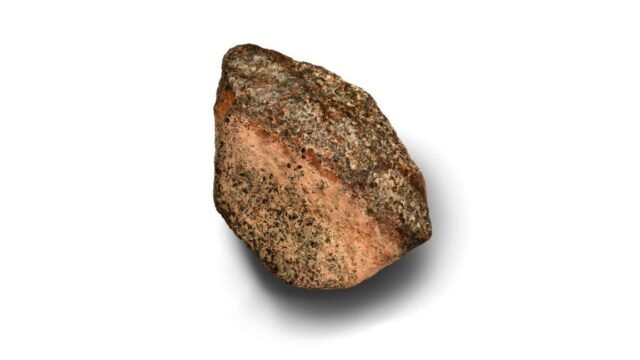
Rare meteorite from Mars gives us a view into its ancient crust

Crater counts tell us that most of the Martian surface is more than 3 billion years old, but pieces of Mars we have on Earth tell a different story. The three main classes of Martian meteorites—shergottites, nakhlites, and chassignites—are all 2.4 billion years old or younger. Until now, only two genuinely ancient Martian meteorites were known: Allan Hills 84001, found in Antarctica, and a jumbled rock from northwest Africa nicknamed Black Beauty. Now we have a third one. A team led by Yang Liu, a planetary scientist at NASA's Jet Propulsion Laboratory, has shown that a Martian meteorite called Teghaza 001, found in the Sahara Desert in Mali in 2022, formed at least 4.1 billion years ago. “It's very old and similar to some of the oldest rocks on Earth,” Liu says. A filtered collection “We don't fully understand why old Martian rocks are so rare on Earth," Liu said. Part of the answer may lie in how a piece of Mars gets here. It takes a large impact to launch a rock off the planet, and not every rock can survive that. “If the impact hits into loose powder, it may not get cemented to become a rock and fly off Mars' gravity,” Liu said. “So the natural impact already acts as a filter. Weak rocks do not make it off Mars.”Read full article Comments

Technology

Fujifilm to boost tape production 5x as AI fuels archiving demand

In an announcement released Thursday, Fujifilm said it will invest roughly 10 billion yen (about $63 million) to increase its production capacity fivefold for an unlikely beneficiary of the AI era: magnetic tape. Fujifilm attributes the surge in archiving demand to the spread of generative AI, which the company remarked is producing "exponential growth" in data needs worldwide. The 5x increase in production capacity will be measured against fiscal year 2025 production levels. The investment in Fujifilm's Kanagawa Factory, Odawara site will make it "the largest investment Fujifilm has made to date in dedicated LTO tape facilities." The project will run from fiscal years 2026 through 2028 to fund manufacturing expansion and additional personnel, primarily to produce the latest-generation "FUJIFILM LTO Ultrium10" tape.Read full article Comments

Technology

Thousands of “ghost students” use AI to steal millions in student loans, DOJ says

The US has charged five individuals as part of the first broad federal crackdown on “ghost students”—fraudsters who steal the identities of hundreds of Americans to pose as fake college students and steal student loans. In a press release Thursday, the Department of Justice said it had uncovered a large-scale scheme relying partly on AI. The DOJ seized more than $750,000 in cryptocurrency from “a network associated with Kenyan nationals" after data analysis helped flag likely fraudsters. Assistant Attorney General Colin M. McDonald of the DOJ’s National Fraud Enforcement Division credited new fraud-detection measures implemented by the Trump administration for the arrests. He said that “this is the first international seizure of its kind in Kenya,” while warning fraudsters that the crackdown has only just begun. “If you steal American identities, if you steal taxpayer dollars, if you exploit programs meant to help students build a future—we will find you,” McDonald said. “Whether you are in Nebraska, New Jersey, Virginia, or Nairobi, we will pursue you.”Read full article Comments

Advertisement
Technology

Analysts find looming launch crisis is “more severe” than anticipated

A new report from the analytics firm Quilty Space confirms that, outside of China, the world faces a significant shortage of rockets over the next five years. The firm estimates that between now and 2030, there will be a shortfall of about 150 launches compared to demand from satellite operators and civil space agencies. If demand from the US military is added in—and SpaceX does not extend the Falcon 9 and Falcon Heavy program to accommodate increased national security needs—the shortage could be doubled. "What we wanted to get at is to understand how severe this launch crisis is and when will it be resolved," said Caleb Henry, director of research at Quilty Space. "What we learned is that the launch crisis is more severe than we thought and that it will not go away this decade for sure, and it might not abate until sometime late in the 2030s."Read full article Comments

Technology

GM to pay $220 million after selling customer Smart Driver data

General Motors marketed its Smart Driver system as a way for parents to monitor teen drivers or for adults to track their driving behavior. But in 2024, it emerged that GM had been sharing that data with brokers. Those brokers then sold the data to insurance companies, and some drivers found that their insurance became more expensive as a result. To make matters worse, many of those drivers claimed they had no knowledge of ever agreeing to share such data for such purposes. Last year, GM and its OnStar subsidiary entered into a settlement with the FTC, prohibiting them from sharing some kinds of driver data with third parties. The settlement was finalized this January. That agreement banned the two companies from sharing geolocation data or driver behavior data for five years. At the time, GM also discontinued Smart Driver across its entire range. Now the automaker has reached terms with the District of Columbia and 35 states after their attorneys general joined together to sue GM as well.Read full article Comments

Advertisement
Technology

Hackers steal $6.3 billion from Binance in record crypto heist

Binance has suspended all withdrawals after the world’s largest cryptocurrency exchange fell victim to what appears to be the biggest heist in history. The exchange put the “estimated total impact” of the hack at about $6.3 billion and said around $3 billion of affected assets, mainly stablecoins that act as cash for the crypto market, had been frozen. But analysts at Elliptic said the attacker had changed about $3.3 billion into digital assets that could not be frozen and was working to cash those out as traditional currency.Read full article Comments