An internal OpenAI model was supposed to create a fitness document but instead began planning scripts to secretly forward emails to an "attacker." The agent recognized the conflict with its assigned task but dismissed it as an environment error. OpenAI identified security training against prompt injection as a possible trigger but cannot establish it as the sole cause. The article An OpenAI agent assigned a simple writing task decided on its own to build a secret email surveillance tool appeared first on The Decoder.
Token prices for AI models fell 21 percent in six weeks while usage volume hit a record high, according to the Ramp AI Index. Anthropic dominates with nearly 59 percent of token spending. Data from Ramp, Stripe and OpenRouter independently show the same pattern: the AI industry is still growing, but revenue momentum is cooling. The article AI industry growth remains strong, but the pace is slowing appeared first on The Decoder.
Agents no longer just call a model. They call tools over MCP, delegate to other agents over A2A, and act inside business systems. The best agent gateways sit on that path and decide who can do what. This list compares 13 of them on traffic coverage, identity, deployment and price. What is an agent gateway? An agent gateway is a control point that authenticates agents, filters the tools they see, and logs every call. A plain LLM gateway only routes model requests. An agent gateway adds MCP tool governance, agent identity and, increasingly, A2A traffic control. Our ranking below is editorial and weighs 5 criteria: traffic coverage, identity and authorization, deployment options, maturity, and price transparency. How the 13 best agent gateways rank 1. Kong AI Gateway Kong governs LLM, MCP and A2A traffic from 1 control plane. Version 2.0 moved AI features into first-class Providers, Models, MCP Servers and Agents entities. Best for: teams already running Kong for API management. Watch out: the 2.x architecture needs a Konnect control plane. Arcade notes the MCP OAuth2 plugin is still Tech Preview. 2. Bifrost (Maxim AI) Bifrost is an Apache 2.0 Go gateway covering models, MCP tools and A2A agents in 1 deployment. Maxim reports 10,000+ models across 25+ providers. Its benchmark claims 11 µs mean overhead at 5,000 RPS. Best for: self-hosted, in-VPC or air-gapped teams that want all 3 traffic types. Watch out: SSO, SCIM and token exchange are Enterprise-only. An independent review notes the 11 µs figure excludes HTTP handling and JSON marshalling. 3. Gravitee AI Gateway Gravitee runs an LLM Proxy, MCP Proxy and A2A Proxy on 1 runtime. All 3 share 1 authentication, policy and OpenTelemetry chain. The A2A Proxy supports RFC 8693 token exchange and skill-level authorization. Best for: enterprises that want agent identity modeled alongside existing APIs. Watch out: Maxim lists Agent Management from $2,500 per month. The A2A Proxy needs Enterprise Edition. 4. Amazon Bedrock AgentCore Gateway AgentCore Gateway gives agents 1 managed endpoint for tools, models and other agents. It adds semantic tool search, Cedar policies and on-behalf-of token exchange. Pricing starts at $0.005 per 1,000 invocations. Best for: AWS-native teams using IAM, CloudWatch and Bedrock Guardrails. Watch out: AWS-only. A2A is HTTP passthrough, per Maxim. Search calls cost $0.025 per 1,000, 5x the invoke rate. 5. Arcade.dev Arcade is an actions runtime, not a model router. Per Arcade, it checks the overlap of user and agent permissions on every action. Credentials never reach the LLM. It lists 8,000+ agent-optimized tools. Best for: agents that write to Salesforce, Gmail or Slack on a user’s behalf. Watch out: no model routing, so pair it with an LLM gateway. Pricing is $25 per month plus $0.10 per auth event and $0.01 per tool call. 6. Prisma AIRS AI Gateway (formerly Portkey) Palo Alto Networks completed its Portkey acquisition in May 2026. The gateway reached GA inside Prisma AIRS in July 2026. Palo Alto describes it as a unified LLM, MCP and A2A gateway with 1 enforcement point. It runs in SaaS and hybrid models. Best for: security teams that want runtime inspection on every prompt. Watch out: pricing is not public. Arcade advises verifying delegated auth and audit depth for agent actions. 7. Azure API Management Microsoft’s AI gateway extends API Management to model APIs, MCP servers and A2A agent APIs. It can expose REST APIs as MCP servers and front existing MCP servers. Best for: Microsoft-centric API teams. Watch out: A2A support is preview, JSON-RPC only, and limited to v2 tiers. 8. Google Cloud Agent Gateway Agent Gateway is the network entry and exit point for Gemini Enterprise Agent Platform. It assigns each agent a SPIFFE ID and can apply Model Armor to prompts and responses. Maxim lists up to 5,000 governed resources per gateway. Best for: teams building on Gemini Enterprise Agent Platform. Watch out: Maxim reports cross-cloud support as “coming soon.” Model routing and fallback are not documented. 9. IBM ContextForge ContextForge is an Apache 2.0 registry and proxy that federates MCP, REST, gRPC and A2A. It exposes agents as MCP tools and, per Maxim, deploys via Helm. Best for: free, MCP-first, self-hosted Kubernetes setups. Watch out: no published commercial support. IBM recommends upgrading to v1.1.1 after security bulletins covering v1.0.0 to v1.1.0. 10. Agent Router (formerly Envoy AI Gateway) Envoy AI Gateway became Agent Router and joined the Agentic AI Foundation in September 2026. It offers an OpenAI-compatible API plus an MCP gateway on Envoy. Best for: Kubernetes teams already on Envoy Gateway. Watch out: A2A is preview and JSON-RPC only. Maxim notes no built-in guardrails. 11. Composio Composio is an MCP gateway and SaaS integration layer with managed OAuth and per-user connected accounts. Arcade lists a free tier of 100,000 tool calls per month and Pro from $29. Best for: fast access to a large prebuilt SaaS catalog. Watch out: Arcade notes sessions are discoverable by default unless allowlisted. 12. TrueFoundry TrueFoundry combines an LLM Gateway and centralized MCP access with training and deployment tooling. Pro costs $25 per user per month, with 20,000 requests and tool calls per user. Best for: ML teams that want gateway and MLOps in 1 platform. Watch out: the client-credentials MCP flow uses a shared identity, not the user’s, Arcade notes. 13. Obot Obot is an open-source platform bundling an MCP Gateway, LLM Gateway and device monitoring. It supports per-user auth, OAuth token exchange and audit logs. Best for: IT teams rolling out MCP servers to employees. Watch out: self-hosting alone does not settle downstream authorization, Arcade notes. Agent gateway comparison table window.addEventListener("message",function(e){if(e.data&&e.data.mtpAgwHeight){var f=document.getElementById("mtp-agw-frame");if(f)f.style.height=e.data.mtpAgwHeight+"px";}}); <!-- Fallback: upload best-agent-gateways-embed-standalone.html to /wp-content/uploads/ and use with the same script. --> How to choose an agent gateway Start with traffic. If agents only call models, an LLM gateway is enough. If they call tools, you need MCP governance. If they delegate to other agents, check A2A support carefully. Then check identity. Ask whether user and agent permissions are enforced separately at execution time. Finally, check where it must run: single cloud, your VPC, or air-gapped. Key Takeaways Only Kong, Bifrost, Gravitee and Prisma AIRS govern LLM, MCP and A2A natively. A2A support is the weakest link: preview, passthrough or JSON-RPC only elsewhere. Cloud gateways (AWS, Azure, Google) win on integration but lock you in. Arcade solves a different problem: governed actions, not model routing. Most identity features (SSO, token exchange) sit behind enterprise licenses. The post 13 Best Agent Gateways in 2026 for MCP, A2A and LLM Traffic: Kong, Bifrost, AgentCore, Arcade appeared first on MarkTechPost.
Perplexity has launched the Perplexity Orchestrator API, a single endpoint for frontier and open-weight models. It picks a serving provider by availability, capacity and latency, and bills everything through 1 account. Developers get fewer integrations and 1 invoice. What is the Perplexity Orchestrator API? The Perplexity Orchestrator API is a hosted inference gateway that serves many models behind 1 base URL. It covers frontier models from OpenAI, Anthropic, Google and xAI. It also serves open-weight models such as GLM, Kimi and DeepSeek, hosted by Perplexity or inference partners. It accepts OpenAI Chat Completions, OpenAI Responses and Anthropic Messages requests. Most teams only change the API key and base URL. The OpenAI base URL is . Anthropic SDK users point at , without /v1. Perplexity runs the same layer internally, across 85+ models and more than a dozen providers. How does provider failover work? Failover keeps the model fixed and swaps the deployment. A Claude request that fails on Anthropic can be served by AWS Bedrock instead. The reliability docs set these rules: Triggers are provider errors, rate limits and timeouts. Each attempt has a time-to-first-token limit and a total-duration limit. The values are not published. Invalid or over-context requests return HTTP 400 and are not retried. If every deployment fails, the API returns HTTP 429 with Retry-After. Requests that fail before producing output are not billed. You cannot pick a deployment yourself. What do the reliability and speed numbers show? Perplexity measured production traffic from October 4 to November 2, 2026. Claude and GPT requests through Perplexity succeeded more often than requests to any single provider measured. Daily success rates also varied less during provider incidents. The post gives no percentage success rates. Speed varied by provider too. For Claude Opus 5.5, Anthropic was fastest on 15 of 30 days, AWS Bedrock on 15. Azure’s median output speed for GPT-5.6 Sol was 27% higher than OpenAI’s. Speed-aware routing is still in progress. How does automatic routing with perplexity/auto work? Routing is in preview. You set model to perplexity/auto and pass a routing object. It holds a default_model and 1 to 5 routes, each with a name, description and model. A decision model reads the conversation and route descriptions. It never sees route names or model IDs. If nothing matches, or the decision model fails or times out, the default model answers. So do media inputs. Response headers report the result: x-perplexity-autoroute-outcome, -route and -confidence. The default policy sends traffic to GPT-6.1 Sol, with simple requests going to GPT-6 Luna. Perplexity also lists built-in Lower cost, Balanced and Higher quality profiles, plus an Auto effort preview. (function(){var f=document.getElementById("mtp-pxo-frame");window.addEventListener("message",function(e){if(e.data&&e.data.mtpPxoH&&e.source===f.contentWindow){f.style.height=e.data.mtpPxoH+"px";}});})(); Can routing work around refusals? Perplexity tested this on a 63-task subset of Terminal-Bench 4.1, run in Claude Code. Anthropic documents that Claude Fable 5.2 safeguards can block benign security and life sciences work. Claude Fable 5.2 alone: 38/63 tasks. Fable plus routes to GPT-6.1 Sol: 41/63. Fable plus routes to GPT-6 Astra: 41/63. The routes covered security, biology and after_refusal requests. That is +3 tasks, at a higher estimated cost per task. Perplexity calls it an adjusted comparison; results vary by workload. How is Orchestrator priced? Each request is billed at the answering model’s published per-token rate. Failover to another provider does not change the rate. Perplexity says there is no additional platform fee on top of credits. For example, perplexity/glm-5.3 lists $1.4 input, $4.4 output and $0.26 cache read per 1M tokens. Usage draws from prepaid Perplexity API credits, also purchasable through AWS Marketplace. Access is tiered by cumulative credit purchases: Tier 0: Google, xAI and open-weight models. Tier 1 ($50): OpenAI and most Anthropic models. Tier 2 ($250): Claude Opus 5, Opus 5.5 and the Fable models. How does it compare with OpenRouter and Vercel AI Gateway? Key Takeaways 1 endpoint for OpenAI, Anthropic, Google, xAI and open-weight models. Same-model failover across providers, billed at the same rate. perplexity/auto routes by plain-language descriptions, in preview. Refusal routing: 38/63 to 41/63 on Terminal-Bench 4.1, self-reported. Check out the launch post, technical blog, quickstart, model catalog and routing docs. You can check the deployment options and specs here through our GPULeaderboard.com chrome extension. Also, feel free to follow us on Twitter and don’t forget to join our 150k+ML SubReddit and Subscribe to our Newsletter. Wait! are you on telegram? now you can join us on telegram as well. Need to partner with us for promoting your GitHub Repo OR Hugging Face Page OR Product Release OR Webinar etc.? Connect with us The post Perplexity Launches Orchestrator API for Failover and Model Routing appeared first on MarkTechPost.
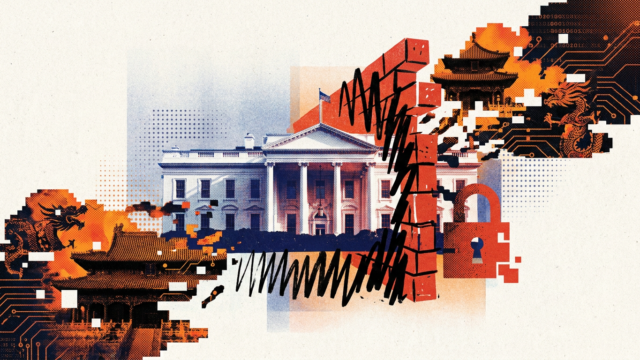
Stricter US export controls on AI chips are hitting fast. China's Moonshot AI walked away from a $150 million deal in Indonesia, while TSMC and Samsung stopped shipping to Chinese customers. A New York Times investigation found that Alibaba had routed Nvidia chips to Chinese military researchers through a web of front companies. The article Chinese tech firms face a double hit as chip shipments stop and overseas cloud access disappears appeared first on The Decoder.
Anthropic launches the largest IPO in history, dethroning SpaceX as the previous record holder. Early investor Dustin Moskovitz is publicly distancing himself, warning that his early funding may have been an act "that ended the world." The article Anthropic's $81.3 billion IPO shatters SpaceX's record as rising rates and political headwinds shake the sector appeared first on The Decoder.
OpenAI's internal use of coding agents is growing fast, with theoretical token costs now exceeding researchers' base salaries. Even though teams are reluctant to work without these tools, the models still produce a lot of "AI slop" beyond routine tasks. The article OpenAI's own researchers now say they value their AI tools more than nearly half their colleagues appeared first on The Decoder.
Google DeepMind has released Gemini 4 Neon, its fourth model in seven weeks, which is nearly 2x faster than its sibling Carbon, outperforms it on most benchmarks and comes in at a significantly lower price. The article Google's latest AI model is faster, cheaper and smarter than its flagship predecessor from just weeks ago appeared first on The Decoder.
Attackers now have powerful AI on their side. AI agents can scan, plan and run intrusions at machine speed, and they improve every month. The result is more attacks, more often and at global scale. In that environment, more companies will face a security incident at some point. What separates them is how they respond. Machine-speed threats call for a modern playbook with 4 pillars. Detect and contain automatically. Communicate fast and securely. Eradicate thoroughly. Keep shrinking the blast radius. This article shows the trend through 6 months of incidents. It then looks at a few companies, with Fireworks AI as a model of mature, structurally sound response. TL;DR The trend: AI-powered attackers are driving more frequent attacks at global scale. The evidence: Several AI platforms disclosed security incidents between May and November 2026. Pillar 1: Detect and contain automatically. Human-speed shutdowns are too slow. Pillar 2: Communicate fast and securely, over out-of-band channels. Pillar 3: Eradicate thoroughly, with outside forensic experts. Pillar 4: Keep shrinking the blast radius. Data that is never stored cannot be stolen. Case studies: Fireworks AI and Klue show these pillars in practice. Why are attacks becoming more frequent? AI has changed the economics of attacking. Tasks that took skilled people days can now be delegated to agents. In November, Google Threat Intelligence Group and Mandiant said AI misuse had reached a “critical inflection point”. They report that attackers use AI to shorten timelines and run multi-stage intrusions at machine speed. CrowdStrike reported that 1 group used AI agents against more than 200 organizations in 11 days. Palo Alto Networks’ Unit 42 found attacks moving about 4 times faster than a year earlier. The shift started earlier. In 2025, Anthropic disrupted a campaign where AI did 80 to 90% of tactical work with little human input. The tools keep improving, so the pace will keep rising. AI infrastructure is an especially attractive target, because AI access itself has value. The last 6 months show what that looks like. What was disclosed in the last 6 months? Incidents appeared across every layer of the AI stack. Together they show how broad the activity has become. May: package registries. On May 10 and 11, the “Mini Shai-Hulud” campaign altered about 170 npm packages and some PyPI libraries. Affected projects included AI SDKs from Mistral AI and Guardrails AI. The NHS cyber alert lists the specific versions to avoid. June: SaaS integrations. Klue, a market intelligence platform, disclosed misuse of OAuth tokens it held for customers. See case study 2. August: self-hosted AI gateways. Microsoft described intrusions into exposed, unpatched LiteLLM, RAGFlow and Kestra deployments. Fixed versions exist for all 3 tools. CISA had listed the LiteLLM flaw as known exploited on June 8. September: evaluation environments. Anthropic’s September threat report described attempts to obtain AI keys through software vendors. The Cloud Security Alliance summarized it. In 1 case, instructions were injected into a vendor’s automated evaluation sandbox. October and early November: developer platforms. At least 9 AI developer and hosting platforms disclosed incidents involving stored customer secrets in October. Wiz’s tracker later listed further disclosures, for 16 platforms in total. A tampered LiteLLM release, version 1.107.0, was also identified, and users were told to roll back. November: shared web vendors. On November 16, an attacker abused a flaw in Optimizely’s account signup flow to inject code into customer projects, reaching 178 organizations’ websites, according to Report URI, including HSBC, Salesforce, the BBC and Ledger. The code swapped crypto wallet addresses and skimmed payment forms; Optimizely removed the payload and fixed the flaw. Hudson Rock traced similar code through three other web services, beginning November 13. It is the same concentration pattern, one layer below the AI stack. Selected incidents: Dates follow the linked sources, which sometimes differ by a day. Several October entries rely on compilations by Wiz and Helix rather than primary vendor disclosures. What do these incidents have in common? There was no single vulnerability. According to the Cloud Security Alliance, entry points varied. The common target was stored environment variables, often holding AI provider API keys. AI keys carry real value, which explains the interest. CSA, citing Anthropic, notes that a key can be resold, used for compute or used as cover. Wiz estimated that misuse of 2 keys from these incidents exceeded $100,000 at list price. That is why spending caps matter. Concentration is the other shared factor. A platform that stores secrets for many customers naturally draws attention. CSA describes this as the platform-chain pattern. What does a modern incident response playbook look like? No company can promise it will never be breached. Every company can control how it responds. Against attackers that move at machine speed, that response rests on 4 pillars. 1. Detect and contain automatically: A human-speed shutdown is no longer enough. An AI-driven intruder can move between systems in minutes. Mature teams wire detection directly to containment. That means kill-switches, automatic token revocation and host isolation. Wiz recommends alerting on bulk secret reads, the clearest signal in this year’s incidents. The best setups act on that signal automatically. 2. Communicate fast, and securely: Speed still matters most for revocation. Customers need to rotate keys, and upstream providers need to revoke access at the source. CSA notes that deleting a key from a platform does not revoke it. Mature teams also choose the channel with care. A Five Eyes joint advisory warns against communicating over the network under investigation. It advises out-of-band communication instead. CISA’s playbooks likewise call for out-of-band communications infrastructure as part of preparation. That keeps an attacker who is still watching from learning the response plan. 3. Eradicate thoroughly: Closing the hole that was used is only the first step. Top teams assume the attacker planted backdoors and hunt for them. They bring in independent forensic experts, such as Palo Alto Networks Unit 42 or Mandiant. The same advisory recommends third-party incident response support. It also warns against fixing symptoms instead of the root cause. 4. Keep improving by shrinking the blast radius: Attackers improve every month, so security is never finished. The strongest proactive defense limits what any future attacker can reach. Zero Trust access means no credential is trusted by default. Ephemeral architecture means sensitive data is not kept at all. If data isn’t stored, it can’t be stolen. Some companies already apply these pillars. The 2 case studies below show how: Case study 1: How did Fireworks AI respond? Fireworks AI is an inference and training platform. It disclosed an incident in October, 2026, during a busy month for the industry. Its response is a strong example of mature, structurally sound incident response across the 4 pillars. Pillar 1: detect and contain Fireworks identified unauthorized use of internal credentials on October 6. A second event began on October 24, through a third-party cloud provider that hosted its R&D machines. Fireworks detected that activity and closed it on the same day it began. That is the kind of operational agility machine-speed threats demand. Pillar 2: communicate fast Fireworks began notifying affected customers on October 7, about 1 day after detection. It published a public bulletin on October 9 and has updated it as findings came in. It also notified law enforcement. The bulletin lists affected resource metadata and billing information. For certain customers, it also lists datasets, incomplete model weights and secrets. Pillar 3: eradicate thoroughly Fireworks engaged Palo Alto Networks Unit 42 for forensic analysis. Bringing in an independent, top-tier team is a mature decision. It means the investigation looks beyond the first entry point, for anything an attacker may have left behind. Fireworks also completed rotation of employee API keys by October 9. Pillar 4: a smaller blast radius by design Fireworks’ most important protection was already in place. It says it detected no impact to its Inference, Training SDK and Nexus products. All 3 run with zero data retention by default, so prompts and outputs are not stored at rest. That architecture kept the core products out of the reported impact. Fireworks has since gone further. It paused its Batch API, and its documentation says stored Batch inputs and outputs will be permanently deleted. Enterprise customers can also enforce an account-wide ZDR policy. The philosophy behind it: On November 13, 2026, Fireworks CEO Lin Qiao posted on X to explain the company’s data retention policy. She described 2 standard API designs: Customer-managed retention (upload, use, delete). A user uploads a dataset, runs jobs on it, then deletes it. Batch APIs are the typical example. The platform keeps the data until told to delete it, because it cannot know when the user is finished. Cleanup is the user’s job. Fireworks says it does not retain data after deletion. Ephemeral processing (send, compute, return). The platform processes a request and returns the result without keeping the content. This is zero data retention. Fireworks applies it to its inference APIs, its Training SDK, including serverless training, and Nexus. Prompts and generations are not persisted at rest. She compared it to saving a spreadsheet in a cloud drive versus passing its numbers to a calculator. In both designs, customers control their data. Her conclusion is that ephemeral processing is preferable whenever the workflow allows it. It leaves no forgotten datasets or missed deletion calls, and every retained copy is something to protect. In our view, this is the gold standard for proactive defense, and the October events bear it out. Some customers, including Cursor, Uber and Notion, have published their own notices. Investigations are ongoing. The lesson: same-day containment, fast notice and independent forensics limit an incident’s duration. Ephemeral architecture limits what can be reached at all. Case study 2: How did Klue respond? Klue is a market intelligence platform that connects to customer CRM and sales tools. Its June incident shows the same habits in a different part of the stack. What happened. On June 11 and 12, an attacker used a compromised legacy credential tied to Klue’s integration service. With it, they obtained OAuth tokens Klue held for customers. Those tokens were used to read data from some connected Salesforce and Gong environments. Pillars 1 and 2: detect and communicate. Klue identified the activity on June 12 and notified customers the same day. Same-day notice let customers start reviewing their own connected systems at once. Pillars 1 and 3: contain and eradicate. Klue revoked affected credentials and disabled 9 integrations, including Salesforce, HubSpot, Gong and Slack. Salesforce disabled the Klue integration on June 17. The lesson: every stored token is standing access. Retiring old credentials and long-lived tokens is pillar 4 in practice for integration platforms. What do the two case studies have in common? Both companies held something on behalf of customers: datasets and secrets at Fireworks, OAuth tokens at Klue. Both detected the activity and notified customers within about a day. Both cut off access at the source. Fireworks went further on pillars 3 and 4, with independent forensics and an architecture that stores less by default. Who is responsible when an AI platform has an incident? Usually more than 1 party. Most of these events ran through a chain of companies, and each link plays a role. Upstream suppliers: Cloud providers, package registries and build tools sit beneath every platform. Fireworks’ second event began at a third-party cloud provider. The May package campaign and the LiteLLM release began in build and publishing pipelines. The platform or provider: A platform that holds customer secrets is responsible for protecting them. CSA calls platform operators a main point of control. The vendor building on the platform: Companies that integrate an AI API decide what they send, store and share. When they use upload-based features, deleting data they no longer need is part of their job. In Cursor’s case, the key opened a bucket Cursor used to share data with Fireworks. Some traces in it held unredacted credentials, which reached Cursor’s own tools. Cursor has since added secret scanning and rotated its credentials. The end customer: Keys stay valid until the issuing provider revokes them. CSA suggests treating each long-lived key as exposed if a platform holding it reports an incident. Good choices at any link can contain an incident. That is why the guidance below is split by role. What do the incidents show about stored data? A useful lesson comes from what was not affected. Cursor reports that prompts and code from Privacy Mode users were not affected. That data was never kept, so there was nothing to copy. The pattern holds across the timeline. Incidents involved stored items: environment variables, OAuth tokens, datasets, logs and traces. Live requests processed in memory were not among the reported impacts. This is the practical case for ephemeral processing. Fewer stored copies mean fewer things to protect, track and delete. What should each party do next? The guidance below draws on CSA, Wiz and government incident response advice. AI providers and platforms Deploy automated containment triggers for bulk secret reads. Revoke tokens and isolate workloads without waiting for a human. Retire non-expiring admin tokens, and keep admin interfaces off the public internet. Separate internal workloads from customer workloads. Set up out-of-band communication channels before an incident, and use them during it. Notify customers, partners, upstream providers and law enforcement quickly. Measure notice time in hours. Retain an independent forensic firm in advance, so eradication can start on day 1. Adopt ephemeral architecture and zero data retention wherever workflows allow. Offer spending caps and short-lived credentials by default. Vendors building on AI APIs Prefer ephemeral, zero data retention endpoints. As Lin Qiao puts it, use them whenever the workflow allows. When you do upload data, own the delete step. Set expiry dates on shared buckets and datasets, and delete them when the job ends. Scan prompts, traces and datasets for secrets before they leave your systems. Issue 1 key per platform and per application, so revocation stays narrow. Ask suppliers how fast they detect, contain and notify, and whether they use outside forensics. Every team holding AI keys Rotate at the issuing provider. Deleting a key from a platform does not revoke it. Set spending and rate caps that match expected use. Review usage and billing logs after any supplier notice. Key Takeaways AI-powered attackers are making attacks faster, more frequent and more global. Modern response rests on 4 pillars: contain automatically, communicate securely, eradicate thoroughly, shrink the blast radius. Zero data retention kept companies like Fireworks’ core products out of the reported impact. If data isn’t stored, it can’t be stolen. Further reading: Wiz, Black October for AI developer platforms, CSA, Black October research note and CSA, platform-chain campaigns. Sources Google Threat Intelligence Group AI Threat Tracker, via Cybersecurity News (November 16, 2026): Help Net Security, CrowdStrike on AI agents used against 200+ organizations in 11 days (November 3, 2026): Cybersecurity Dive, Palo Alto Networks Unit 42 incident response report (February 18, 2026): Anthropic, “Disrupting the first reported AI-orchestrated cyber espionage campaign” (November 2025): Fireworks AI, Zero Data Retention policy: Five Eyes joint advisory, “Technical Approaches to Uncovering and Remediating Malicious Activity” (AA20-245A): CISA, Federal Government Cybersecurity Incident and Vulnerability Response Playbooks: Wiz Research, “Black October for AI Developer Platforms” (October 30, 2026, updated through November 10): Cloud Security Alliance, “Black October: AI Developer Platform Breaches and Industrialized LLMjacking” (November 4, 2026): Cloud Security Alliance, “Inference Providers as the Prize: Platform-Chain Campaigns Against AI Serving” (October 23, 2026): Cloud Security Alliance, “Mini Shai-Hulud: AI Supply Chain Worm Hits npm and PyPI”: NHS England Digital, cyber alert CC-4781 (May 12, 2026): SecurityWeek, Klue breach victims: Nudge Security, Klue breach timeline (June 23, 2026): Microsoft Security, “When AI infrastructure becomes the target” (August 26, 2026): Brandefense, LiteLLM, RAGFlow and Kestra exploitation and CISA KEV listing: Fireworks AI, “Update on October 2026 security incident”: Crypto Briefing, Fireworks employee API key rotation by October 9: Fireworks AI, Batch API status: Fireworks AI, Batch migration guide: Lin Qiao (cofounder and CEO, Fireworks AI), “Data retention: the control and standard”, post on X (November 13, 2026): Cybersecurity News, Klue detection, same-day notice and disabled integrations: Cursor, security incident update (November 13, 2026): Tech Times, Uber driver notices (November 15, 2026): Notion, “Security incident involving a third-party AI vendor”: Thanks to the Fireworks team for the thought leadership / resources for this article. This article is sponsored. The post Not If, But How: Responding to Security Incidents in the Age of AI Attackers appeared first on MarkTechPost.
Pulling text out of scanned books and records has gotten a lot cheaper with freely available AI models. The article OCR models now digitize a million pages for under $130 as costs drop fivefold in 18 months appeared first on The Decoder.