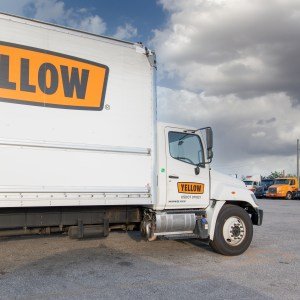
Yellow Corp. Teamsters will receive some WARN Act money even though two separate courts found the company was not liable for failing to give 60 days’ advance notice as required by federal law ahead of its July 2023 shutdown. A Tuesday memo from a Teamsters director to Yellow Corp. local unions said the IBT had reached a settlement in principle with the bankrupt estate allowing the additional claims. The plan includes approximately $17.2 million in claims pertaining to the WARN Act. The deal represents five days of damages under the federal law, with employees falling under the New Jersey WARN Act receiving 30 days of damages. The agreement also calls for the allowance of $1.2 million in grievance claims that were pending when the company shut down, and $1.8 million in claims for unused personal holidays for New York, New Jersey, Pennsylvania and Western Teamsters that are allowed per their contracts. The memo also reiterated a prior agreement in which the estate will pay employee claims totaling $71.5 million for paid time off, sick leave and other claims. “The Teamsters leadership chose full payment on contract claims and some recovery on the WARN Act over years of additional litigation on the WARN Act claims with an uncertain outcome,” the memo said. The deal still has to be signed by both parties and approved by a federal bankruptcy court in Delaware. However, the memo said no further objections are expected, noting that Yellow’s largest shareholder, MFN Partners, has withdrawn its objection to a bankruptcy plan confirmation. Teamsters that were employed by Yellow are expected to receive full payment on their PTO and sick-time claims. A per-person cap of $22,650 is in place ($15,150 for priority claims and $7,500 for additional benefit claims). The memo noted that a few employees have claims exceeding the cap amount and that excess amounts will be paid at the same rate as general unsecured claims, which is projected to be less than 20%. Payments are expected to be distributed “within months” of the court’s approval, assuming no further appeals. Yellow terminated 3,500 nonunion employees on July 28, 2023, and 22,000 union employees two days later. The company filed for bankruptcy on Aug. 6, 2023. The bankruptcy court previously determined that Yellow was a “liquidating fiduciary” winding down affairs, not an operating business, at the time of the layoffs, thus exempt from WARN Act requirements. That decision also said Yellow appeared to act in good faith, but that if the court was found incorrect on its view of the WARN requirements, back pay and benefits should be limited to just 14 days, not the 60 days requested. The U.S. District Court in Delaware later affirmed the bankruptcy court’s finding, adding that the company also qualified under a separate exemption as a faltering company. Why it matters? Former employees have some clarity on their financial recovery, which now includes reduced WARN Act payments. Full payment of accrued PTO and sick leave will be distributed within months of the bankruptcy court granting final approval. More FreightWaves articles by Todd Maiden: LTL survey: Old Dominion, Daylight Transport take home top honors again Transportation prices surge as capacity tightens further in September STG Logistics announces new CEO, board members The post Yellow Corp., Teamsters settle on WARN Act claims appeared first on FreightWaves.
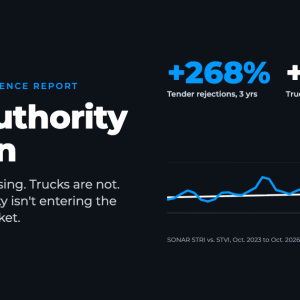
The short answer No. As of October 2026, new trucking capacity is not entering the freight market, even after a full year of elevated tender rejections. SONAR data shows tractors in new for-hire fleets fell to 19,520 in August, while the SONAR Truckload Rejection Index (STRI) held near 14%, about three times its 2023–2025 range. In past cycles, high rejections pulled new trucks into the market within a few quarters. This time they haven’t. Operating authority counts are rising, but authorities don’t measure trucks. SONAR’s new Sitrep, The Authority Illusion, lays out the data. Key takeaways New capacity is shrinking, not growing. Tractors in new for-hire fleets fell to 19,520 in August 2026, down about 14% from the first-half average. Rejections are up 268% in three years. Volume is up 9%. The market is tight because trucks are leaving, not because freight is surging. Authority counts are misleading. Net authority additions hit five-year highs above 2,000 a week in August and September 2026, but much of that reflects FMCSA’s Motus system rollout. Estimated new grants ran about 17% below the first quarter. Fewer new carriers are actually starting. Only about two in three new interstate registrants buy liability insurance, down from more than nine in ten in 2019. Expect a tight market through early 2027. Rising insurance costs and a narrowing pool of compliant drivers are keeping new capacity out. How is this freight cycle different from 2020–2022? In the last cycle, new capacity answered the price signal. In this one, it hasn’t. When STRI spiked in mid-2020, tractors in new for-hire fleets started climbing within a couple of quarters and peaked in mid-2022 at about 47,000. This cycle runs the other way. New-fleet tractors fell from that 2022 peak, bottomed in early 2025, ticked up in the spring, then flattened. STRI began rising sharply in fall 2025, yet new-fleet tractor counts have since turned lower. Total for-hire tractors fell by about 51,000 in August alone. Tender rejections rising in 2025–2026 while tractors in new for-hire fleets fall. Has truckload freight volume increased? Barely. Over the three years ending October 2026, the SONAR Truckload Volume Index (STVI) is up 9%, while STRI is up 268%. At their early-summer 2026 peak, rejections were up more than 350%. If demand were driving the market, those two lines would move together. Instead, carriers are rejecting nearly four times as many loads on roughly the same volume. That gap normally closes as new trucks enter and rejections fall back. It hasn’t closed. The American Transportation Research Institute (ATRI) reaches the same conclusion, describing 2026’s rate gains as a supply-side recovery. Truckload volume up 9% while tender rejections are up 268% over three years. Why are trucking authorities rising if capacity isn’t? Because an operating authority is permission to haul, not a truck. A one-truck owner-operator and a 5,000-truck fleet each count as one authority. From 2019 to 2022, total authorities rose 51% while for-hire tractors rose just 12%. The 2026 jump is also largely administrative. Net authority additions topped 2,000 a week in late August and late September, the highest in five years. Over the same stretch, FMCSA’s new Motus registration system paused deactivations and cleared a backlog of applications and reinstatements. Net revocations turned negative for the first time since at least 2019, and estimated new authority grants ran about 17% below the first quarter. Weekly net authority additions spike above 2,000 in late 2026. What’s keeping new trucking capacity out of the market? Three pressures are raising the cost of entry at the same time. A narrower pool of compliant drivers. As of January 2, 2026, 202,345 CDL and permit holders were in prohibited status in FMCSA’s Drug and Alcohol Clearinghouse. A non-domiciled CDL rule effective March 16, 2026 could affect up to 194,000 drivers over time. English language proficiency enforcement now takes about 2,700 drivers out of service a month, according to SONAR data. Rising insurance costs. Liability and cargo premiums rose 3.9% in 2025 to about 10.6 cents a mile, even as crash rates fell, and kept climbing in early 2026, according to ATRI. For a small carrier, a lapsed policy means a revoked authority. Thin margins. Truckload operating margins were barely positive in 2025, which makes adding trucks hard to justify. The largest carriers are feeling it too. In second-quarter 2026 results, Schneider called the market driver-constrained, and Knight-Swift and Werner said driver availability was limiting their fleets. What should shippers expect over the next six months? Expect the truckload market to stay tight through early 2027, with STRI well above the 4% to 6% range of 2023 through 2025. The fastest source of relief is parked trucks: ATRI found about 10% of carriers’ trucks sat without a driver in 2025. They return only if carriers can find compliant drivers to seat them. The signals that will show the turn first: Tractor counts and new-fleet tractors rising for two or more consecutive months STRI falling while STVI holds steady First-time insurance filings, not authority counts, picking up Frequently asked questions Is trucking capacity growing in 2026? No. Measures of trucks actually running are falling: total for-hire tractors fell about 51,000 in August 2026, and new fleets reporting miles are at their lowest since early 2020. Only authority counts are rising. What is a trucking operating authority? An operating authority, or MC number, is FMCSA’s permission for a company to haul regulated freight for hire across state lines. It says nothing about how many trucks the company runs or whether they are moving. Why are tender rejections high if freight volume is flat? Because capacity has left the market. With fewer trucks and compliant drivers available, carriers reject more contracted loads even when volume barely changes. What is the best indicator of real trucking capacity? Tractor counts, fleets reporting miles, and tender rejections. First-time insurance filings are a better gauge of new entry than authority or registration counts. Why did net revocations turn negative in 2026? FMCSA’s Motus rollout paused USDOT deactivations and processed a backlog of reinstatements, so reinstatements outnumbered revocations. It was an administrative effect, not a wave of new carriers. Read the full Sitrep The Authority Illusion covers seven years of authority, tractor, insurance and registration data, a 2026 capacity scorecard, and the indicators shippers should watch instead. Read the full Sitrep inside FreightWaves Market Monitor or the SONAR platform. For real-time tender rejections, volumes and carrier fleet data, subscribe to SONAR. Sources: SONAR (STRI, STVI, TCFHN, TCFH, CDNCA, CDNR, ELPVOOS); ATRI, An Analysis of the Operational Costs of Trucking: 2026 Update; FMCSA Drug and Alcohol Clearinghouse Monthly Report, December 2025; Transport Topics, Schneider expects supply reduction momentum through 2026; FMCSA Licensing & Insurance and Company Census data. The post Is Trucking Capacity Coming Back? Why New Capacity Isn’t Entering the 2026 Freight Market appeared first on FreightWaves.
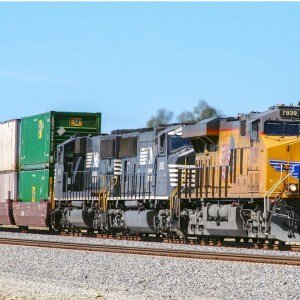
Union Pacific Chief Executive Jim Vena said he is “99.99%” confident regulators will approve the railroad’s proposed $85 billion acquisition of Norfolk Southern, arguing that the combination would speed freight deliveries and strengthen rail’s competition with trucking. Speaking with Fox Business News Oct. 6, Vena defended the proposed merger against opposition from some labor unions, agricultural groups and competing railroads. Asked how certain he was of approval, Vena acknowledged a small measure of uncertainty: “You always have to have a little bit of doubt, but I’m 99.99%.” The transaction remains subject to approval by the Surface Transportation Board. window.googletag = window.googletag || {cmd: []}; googletag.cmd.push(function() { var gptSlot = googletag.defineSlot('/21776187881/FW-Responsive-Main_Content-Slot1', [[300, 100], [320, 50], [728, 90], [468, 60]], 'div-gpt-ad-1709668545404-0').defineSizeMapping(gptSizeMaps.banner1).addService(googletag.pubads()); googletag.pubads().enableSingleRequest(); googletag.pubads().collapseEmptyDivs(); googletag.enableServices(); setInterval(function() { if (!document.hidden) { googletag.pubads().refresh([gptSlot]); } }, 30000); }); googletag.cmd.push(function() { googletag.display('div-gpt-ad-1709668545404-0'); }); “We know that the process through the STB, even though it’s … crazy long, they’ll get to the right decision,” Vena said. “And the right decision is, you have to do what’s better for the country and more opportunity to move ahead and not look backwards.” Vena said joining the Union Pacific (NYSE: UNP) and Norfolk Southern (NYSE: NSC) networks could save customers 24 to 48 hours by eliminating interchange delays on freight moving between the western and eastern United States. The railroads contend that the combination would allow them to compete more effectively with trucking through lower prices and greater efficiency. The combined railroad would encompass roughly 50,000 miles of track, and opponents of the consolidation contend it would give the partners near-monopoly powers in rail transportation. Vena argued that competitors’ opposition reflected concern about the stronger service offering the merged company could bring to the market. “In the business world, if they thought we were doing something illogical and it made no sense, they would just stay quiet … and let us fail, but we’re not failing,” he said. “That’s what they’re worried about. We’re gonna have a better product, lower price, more capability to move and win in the marketplace.” In an August letter to the Trump administration, the Stop the Rail Merger Coalition of shippers said the combination would place nearly half of the nation’s rail traffic under one company’s control. The coalition warned of harm to farmers, manufacturers, energy producers and railroad workers, along with higher consumer costs and risks to supply chains. President Donald Trump had initially expressed support for the transaction. A final STB decision is expected in 2027. window.googletag = window.googletag || {cmd: []}; googletag.cmd.push(function() { var gptSlot = googletag.defineSlot('/21776187881/fw-responsive-main_content-slot3', [[728, 90], [468, 60], [320, 50], [300, 100]], 'div-gpt-ad-1665767553440-0').defineSizeMapping(gptSizeMaps.banner1).addService(googletag.pubads()); googletag.pubads().enableSingleRequest(); googletag.pubads().collapseEmptyDivs(); googletag.enableServices(); setInterval(function() { if (!document.hidden) { googletag.pubads().refresh([gptSlot]); } }, 30000); }); googletag.cmd.push(function() { googletag.display('div-gpt-ad-1665767553440-0'); }); Subscribe to FreightWaves’ Rail e-newsletter and get the latest insights on rail freight right in your inbox. Read more articles by Stuart Chirls here. Read more: window.googletag = window.googletag || {cmd: []}; googletag.cmd.push(function() { var gptSlot = googletag.defineSlot('/21776187881/fw-responsive-main_content-slot4', [[300, 100], [320, 50], [728, 90], [468, 60]], 'div-gpt-ad-1709668086344-0').defineSizeMapping(gptSizeMaps.banner1).addService(googletag.pubads()); googletag.pubads().enableSingleRequest(); googletag.pubads().collapseEmptyDivs(); googletag.enableServices(); setInterval(function() { if (!document.hidden) { googletag.pubads().refresh([gptSlot]); } }, 30000); }); googletag.cmd.push(function() { googletag.display('div-gpt-ad-1709668086344-0'); }); Major chemical producer backs UP-NS merger Another strong week for industrial rail freight ‘Higher rates, less reliable service’: Family farmers oppose rail merger STB tabs former BNSF exec as economics director, adds senior adviser Union Pacific begins battery-electric locomotive testing in Southern California window.googletag = window.googletag || {cmd: []}; googletag.cmd.push(function() { var gptSlot = googletag.defineSlot('/21776187881/fw-responsive-main_content-slot5', [[728, 90], [468, 60], [320, 50], [300, 100]], 'div-gpt-ad-1665767778941-0').defineSizeMapping(gptSizeMaps.banner1).addService(googletag.pubads()); googletag.pubads().enableSingleRequest(); googletag.pubads().collapseEmptyDivs(); googletag.enableServices(); setInterval(function() { if (!document.hidden) { googletag.pubads().refresh([gptSlot]); } }, 30000); }); googletag.cmd.push(function() { googletag.display('div-gpt-ad-1665767778941-0'); }); The post Union Pacific CEO ‘99.99%’ confident rail merger will win approval appeared first on FreightWaves.
EUROPE: The Slovenian national operator’s maintenance subsidiary SŽ-VIT has completed its first overhaul of a Siemens Mobility Vectron electric locomotive, which was returned to leasing company Beacon Rail in September. SŽ-VIT said its Ljubljana Maintenance Section carried out the full overhaul of locomotive 191-023 on its own, ‘marking a major achievement and an important new business opportunity’. SŽ-VIT has been providing electric locomotive maintenance since 2019, and entered the international market by working with MRCE before it was acquired by Beacon Rail in 2023. It has experience with SŽ’s Siemens Class 541 locos from the Taurus family, which was a forerunner of the Vectron, and has undertaken inspection work on Vectrons. It said the expansion of its capabilities to undertake overhauls went without major hurdles. Knorr-Bremse trained its staff to overhaul braking systems, and it purchased bogie measuring equipment. Two Vectron overhauls are planned to be completed this year, with a further six in 2027. It is also working to expand the range of services offered to include wheel replacements. Diesel loco refurbished In a separate project, SŽ-VIT has refurbished ex-SŽ diesel locomotive 643-027 which was originally built by Đuro Đaković and equipped it for use by Skinest Rail on the Croatian network. The work included a repaint and installing Altpro’s RAS8385 IS automatic train protection system, along with Funkwerk’s Mesa 26 dual mode GSM-R, a screw air compressor and LED lights. SŽ-VIT also has a long-term deal to maintain the loco on-site in Zagreb and at its workshop in Maribor. Skinest Rail has expressed interest in buying a second locomotive of the same type if it demonstrates reliability during the warranty period.
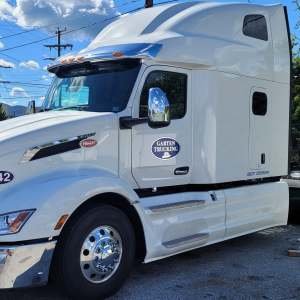
The U.S. Supreme Court has rejected the certiorari request of a small Virginia trucking company that had been ordered by the National Labor Relations Board (NLRB), and then a federal appellate court, to negotiate with a union seeking to represent the company’s drivers. Without comment, the Supreme Court on Monday–the first day of its term–rejected the request of Gartner Trucking of Covington, Virginia to review the decision from earlier this year handed down by the Fourth Circuit. In that decision, the circuit backed the NLRB’s order that Gartner negotiate with the Association of Western Pulp and Paper Workers who have sought to organize the company’s drivers. Gartner’s primary business is hauling paper products. The battle between the union and the company–which the Fourth Circuit described as featuring “bitter and lengthy disputes”–goes back to an August 2021 vote where the rank and file in Covington rejected the union by a vote of 65-30. But it didn’t end there. Fight continues after failed vote According to a recap of the fight in the Fourth Circuit decision, the union filed “a bevy of unfair labor practice charges” against Garten for actions it took leading up the vote as well as afterward. The union formally filed those charges with the NLRB, “contending that these violations fatally tainted the election results,” according to the Fourth Circuit summary. An administrative law judge (ALJ) heard the case in February 2023 and concluded Garten had engaged in several unfair labor practices: unlawfully interrogating employees; creating an impression that union activities were under surveillance; threatening closure of the business; and making disciplinary threats. The ALJ ordered a new election be held, an action known as a Gissel order after a 1969 Supreme Court decision also involving the NLRB that gave the board power to call for a new referendum should it find unfair labor practices may have tainted a vote. Garten then filed objections with the NLRB. There is no evidence in the record to suggest the second election has taken place. The NLRB in September 2023 affirmed the findings of the ALJ. Garten appealed to the Fourth Circuit. What is First Amendment protected? The NLRB and the appellate court needed to deal with issues of the First Amendment, specifically, what could Garten say that was protected speech and what could it not say because it would be considered unfair coercion? “There is a fundamental difference between speech imposing a proper quid pro quo and speech which merely attempts to persuade on the merits, leaving employees free to vote without penalty or reward dangling over their heads,” the appellate court said. Ultimately, the Fourth Circuit found a statement by the company management–“as a matter of fact if it wasn’t for the union trying to steal money out of your paychecks you would already have your raises”–as evidence Garten had “crossed the line” between protected and coercive speech. It upheld the NLRB order for a new vote. In its now-rejected petition for certiorari, Garten said the process leading up to the election was “fair and untainted.” “A variety of witnesses called by General Counsel testified that they were free to discuss the Union without fear or pressure, wore union paraphernalia without consequence and never heard management say that there would be adverse consequences if they supported the union.” The Garten petition also said employees “were not asked to identify who supported the union, questioned about their own union activities or the union activities of others, asked who signed a card, or who attended union meetings.” More articles by John Kingston FMCSA’s Elison: ‘weeks’ away from fixing Motus user experience Wall Street analysts positive on C.H. Robinson deal; S&P more cautious Cybersecurity portal to fight bad guys open for business: NMFTA The post Garten Trucking appeal on NLRB order rejected by SCOTUS appeared first on FreightWaves.
FedEx Corp. has taken another step in leveraging massive amounts of shipment data to create revenue beyond its own logistics network by sharing it with outside enterprises so they can improve their supply chain performance. On Tuesday, FedEx Dataworks (NYSE: FDX) announced it is working with Stripe Capital to explore how supply chain intelligence could open opportunities for small-and medium businesses to secure financing. The news follows recent partnerships with ServiceNow and Dun & Bradstreet to turn FedEx operating signals into predictive insights and benchmarks embedded into customer workflows. “Enterprises need access to real world logistics intelligence to power their AI systems and workflows and this partnership demonstrates market demand for what we have built,” said FedEx CEO Raj Subramaniam on the company’s Dec. 18 earnings call. Stripe is a payments company that provides digital infrastructure businesses use to accept and manage money online, primarily helping them bill customers, process payments and analyze transaction data. Its developer tools let companies add payments to their websites and apps without having to build that pipe themselves. With Stripe, businesses can accept credit cards, digital wallets like Apple Pay and Google Pay, and other payment methods, across multiple currencies. The Stripe Capital unit provides fast business loans and merchant cash, with flexible payment terms. Traditional financing models have strict benchmarks that can make it difficult for smaller businesses to secure capital. FedEx and Stripe are developing a product that aims to exploit operational indicators, such as shipment activity, inventory movement, and fulfillment performance, alongside traditional financial information to generate a more complete picture of business performance. With those real-time signals, Stripe will be better positioned to evaluate, approve, and deploy tailored funding more quickly than traditional lending processes, eliminating the friction for SMBs. “FedEx and Stripe power the physical and digital foundations of global trade,” said John Collison, co-founder and president of Stripe. “Together, we can turn the operational momentum of a small business, like shipping a thousand packages a week, into access to growth finance through Stripe Capital.” The first joint solution is planned for launch in early 2027, the companies said in a news release. Additionally, FedEx will begin using Stripe to expand payment options for customers globally, adding more than 50 new payment methods and helping remove friction at checkout. FedEx created Dataworks in 2020 to apply advanced analytics, and more recently agentic AI capabilities, to internal data on millions of freight movements, creating predictive intelligence that could be commercialized to help companies spot supply chain risks and take preventive action. Vishal Talwar was appointed in August 2025 to lead Dataworks. Why It Matters: FedEx is trying to become more profitable by removing structural costs, consolidating networks and focusing on premium freight. Whether it can make a profit repackaging data as supply chain intelligence and selling it remains to be seen. Extracting supply chain insights for customers “We’re extending proven FedEx intelligence to move up the value chain with customers, helping them coordinate their supply chains, and creating new high margin digital revenue streams,” Talwar said at FedEx’s Investor Day event in February. “We are moving beyond delivery to becoming a true partner in orchestrating our customers’ entire supply chains.” Last October, FedEx Dataworks joined with ServiceNow (NYSE: NOW) to integrate economic and supply chain network data with ServiceNow’s automated procurement solutions to help businesses make smarter sourcing decisions. ServiceNow is a subscription-based cloud platform for automating and managing work across large organizations. The initial focus was to give businesses a single system that anticipates, adapts and acts before they experience supplier shortfalls using shipment data, route performance and availability, and disruptive events. In May, the partners began embedding FedEx Dataworks intelligence into source-to–pay workflows. Utilizing data insights like shipment delays from the FedEx physical network allows ServiceNow to automatically trigger workflows to help resolve costly disruptions. Instead of toggling between systems, near real-time logistics intelligence is surfaced for procurement teams at the moment of decision, inside the platform where they already work, the companies said. FedEx teamed up with commercial database Dun & Bradstreet in February to help businesses gain a more comprehensive view of their supplier networks. D&B helps companies assess risk, find customers and verify who they are doing business with. The first joint product fuses FedEx surface and air shipping data with Dun & Bradstreet’s maritime shipping volumes and container delays data, business activity signals and other contextual information. It is designed to provide richer insights into the direction of the retail market, allowing business and financial decisionmakers to detect directional changes before they appear in traditional government reports, such as monthly retail sales or inventory data. The two entities are working to develop other additional joint insights beyond the Retail Momentum Index. Click here for more FreightWaves/American Shipper stories by Eric Kulisch. Write to Eric Kulisch at ekulisch@freightwaves.com. (Correction: A previous version of this story incorrectly stated the founding date for FedEx Dataworks.) RELATED STORIES: FedEx Dataworks: A gem in the right hands FedEx appoints Vishal Talwar as chief digital officer FedEx, UPS highlight parcel security, risk management tools The post Stripe taps FedEx data to expand small business access to financing appeared first on FreightWaves.
Rarely seen by the general public, rail road excavators are a critical piece of the infrastructure puzzle – one that can travel directly on the tracks while digging, lifting, and clearing obstacles from the track, working on everything from track maintenance and renewal to utility and civil construction projects. This one’s electric. more…
HANNOVER, Germany — A heavy truck today carries anywhere from 100 to 150 small computers. It’s a persistent challenge keeping them updated with the latest software as soon as they roll off the assembly line. Coretura, the 50-50 joint venture of Daimler Truck and Volvo Group, was set up to change both, its CEO says. The company, based in Gothenburg, Sweden, provides what Johan Lundén called “essentially an enabler”: standardized software for high-performance computers. Think of it like a truck operating system, the application programming interfaces truckmakers build their own software on, and the toolchain their developers use to do it. Lundén spoke with reporters at IAA Transportation. Not every one of those small computers has its own connection, so an over-the-air update may have to pass through several units to reach the one it was meant for. It can also have unintended consequences. “You can change something you hadn’t intended to. Say you’re updating the infotainment system, and suddenly the vehicle won’t start,” Lundén said. Coretura’s answer is to centralize more of that work on two main high-performance computers. One would carry advanced driver assistance and safety functions, the heaviest compute load. The other would run infotainment, with vehicle control placed wherever it fits because it draws less compute. Lundén said the split is “our proposal as of now. That’s not a given standard.” Replacing most of those units with two high-power computers could leave perhaps 40 to update instead of 150, Lundén said, with far less orchestration. Where Coretura sits in the truck Coretura’s layer is the operating system. Everything above it, including transportation management systems and each truckmaker’s own features, stays with the truckmakers or third-party vendors. Coretura recently picked a Vector-QNX software platform as the foundation for its high-performance computers. “In simplistic terms: the operating system on your computer, but for the truck — that’s us — and then of course the layers above,” Lundén said. He is less fond of the “iPhone on wheels” comparison. “When your phone freezes or an app won’t load, you get a bit annoyed, but life goes on,” he said. “In a truck, a failure in a safety-critical system is a different matter.” The platform walls off safety-critical systems from routine updates, and Coretura answers for the cybersecurity of the computers and connectivity unit it supplies. Coretura’s starting point for automated driving is Level 2-plus. Later the founders’ autonomous units would add compute and a virtual driver on top to reach Level 4. Trucks that improve after delivery Today’s truck slowly decays once it leaves the plant, Lundén said, with software updates limited to what maintenance requires. “In a software-defined world, you could say it’s at its worst when it rolls off the production line, and then every software update, every addition will just improve the performance of the vehicle, or could improve the performance of the vehicle,” he said. The ceiling remains physics. “If you bought a 4×2 tractor, there’s no software in the world that’s going to make it a 6×2 or a 6×4,” Lundén said. Battery-electric trucks have the most room because tuning battery use for a specific job takes little certification, he said. Changing a diesel’s injection system triggers new emissions certification. While a driver may not have a preference on whether his vehicle is software defined or not, the benefits show up under the hood. What a driver would notice is updates timed so they don’t cut into uptime and functions added after the truck is delivered. For example, driver assistance functions can be updated to improve safety, or software can be updated to improve quality and efficiency. Selling beyond Volvo and Daimler Volvo Group and Daimler Truck are Coretura’s first customers, and Lundén said the company is “here to sell to any and all commercial vehicle players” that want an operating system and base platform. The two founders together cover a large part of the market, which Lundén said puts Coretura “very close to a standard.” “Taking the leap of faith and saying, yeah, we’re going to replace the core of our vehicle’s electronics and rely on you is a pretty big step for many,” he said. Plenty of truckmakers have shown interest, Lundén added, but there remains a long way to go. Timeline runs to the end of the decade Coretura started with about 50 employees in June 2025. Lundén said it is now closing in on 170, all in Gothenburg, and headed toward 400 to 450 by the end of the decade. Coretura builds everything as code stored in a repository, which supports a high degree of automation in development and testing. A toolchain for building applications in Linux and Android environments is already running, Lundén said. He pointed to Daimler Truck CEO Karin Rådström’s remarks at the show that Daimler would have its first vehicle running Coretura software toward the end of the year. Autocar Professional reported that vehicle will be a demonstration. “There’s a lot of maturity steps where the really important ones are when you get into production-like and production-hardened software, which will be closer to the end of the decade,” he said. The post Coretura wants trucks to improve after they leave the plant appeared first on FreightWaves.
Users of some Samsung devices in the US and Canada can now lock, unlock, and start select GM vehicles using a digital key stored in their Samsung Wallet. Support will start on select 2026 and 2027 Cadillac EVs, including the 2025-2027 Lyriq, 2026-2027 Optic, and 2027 Vistiq. GM says more models will be supported by the end of 2026. GM announced earlier this month that digital keys would also be coming to a few GMC and Chevy trucks in December. It noted that the feature is not a Samsung Wallet exclusive, coming to Apple Wallet and Google Wallet for compatible iPhones, Apple Watches, and Pixel devices. It's unclear, however, if those device … Read the full story at The Verge.
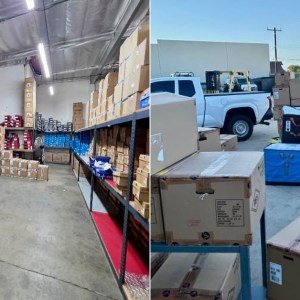
LAPD detectives searched a Whittier, California, shoe retailer Sept. 30, uncovering 59 pallets containing branded merchandise. LAPD connected the goods to stolen BNSF and Union Pacific rail cargo. Recovered property totaled about $1 million. Police also arrested business owner Waseem Saman onsite. The haul included Nike, New Balance, Brooks and Sanuk footwear, according to LAPD. Investigators also located Yeti cups, jugs, JanSport backpacks, plus Shark vacuums. Authorities served the warrant at Whittier retailer Shoes n Shoes. Brands covered consumer goods spanning apparel, drinkware, luggage, appliances. Warehouse search leads to arrest Task force detectives contacted Saman while executing a search warrant, according to LAPD. The 45-year-old Placentia resident admitted purchasing much inventory from brokers or middlemen. Police characterized those suppliers as illegitimate distributors serving listed brands. Officers booked him at Van Nuys Jail on suspicion of receiving stolen property. LAPD identified Saman’s booking offense as California Penal Code 496(a), receiving stolen property. Department records listed number 7331207 within its October 6 announcement. Authorities did not name any suspected middlemen through that release. Detectives continue investigating. Rail police join cargo theft investigation Rail investigators from Union Pacific and BNSF joined this operation. Alameda Belt Line personnel also participated alongside Los Angeles Port Police. County District Attorney’s Office Bureau of Investigation contributed support. LAPD framed such collaboration as important for combating large-scale cargo theft. Police have not explained how the recovered cargo originally left BNSF or Union Pacific control. Agency announcement omits theft dates, shipping origins, destinations, individual load values. Investigators also left brokers plus middlemen unnamed in connection with Saman’s purchases. LAPD asked anyone possessing information to contact its Commercial Crimes Division. Why it matters Stolen freight does not always disappear after the initial theft. This recovery shows how valuable cargo can resurface through commercial channels far beyond its original transportation route. Click here for more articles on cargo theft and freight fraud by Phil Brink. CBP finds $6M in cocaine hidden under floor of empty semi-trailer bound for Canada – FreightWaves Thieves clone $60K shipment, redirect 41,000 pounds of glycerin in Illinois – FreightWaves LA jury convicts 2 in $2M nationwide cargo theft ring using purchased trucking companies – FreightWaves The post LAPD uncovers $1M in stolen BNSF and Union Pacific rail cargo at Los Angeles–area shoe retailer appeared first on FreightWaves.