Like a real-life episode of "Suits," the demise of famed white-shoe Wall Street law firm Weil, Gotshal & Manges has been the talk of the legal industry. And now an AI firm has entered the picture.
As AI tools and agents have continued their march across all aspects of digital life, many companies are trying to use LLMs to improve the experience of purchasing goods and services on the Internet. Thus far, though, a vanishingly small number of people seem to be taking advantage of those capabilities, at least when it comes to using the popular food delivery app DoorDash with an outside AI agent. In a third-quarter earnings call Thursday, DoorDash co-founder and CEO Tony Xu responded to an analyst question by noting that "AI agents are generating several hundred orders [on DoorDash] across the time that they've been up and running." In a marked understatement, Xu called this a "very low use case" for a company that handled just shy of 1 billion orders total in the third quarter of 2026 alone. Speaking generally, Xu said he sees the potential for AI agents to be genuinely helpful for "long consideration purchases" and major decisions where agents would be "doing work on your behalf proactively in the background." However, Xu added, "when it comes to a task that's as simple as ordering food, we tend to see that come directly to DoorDash."Read full article Comments
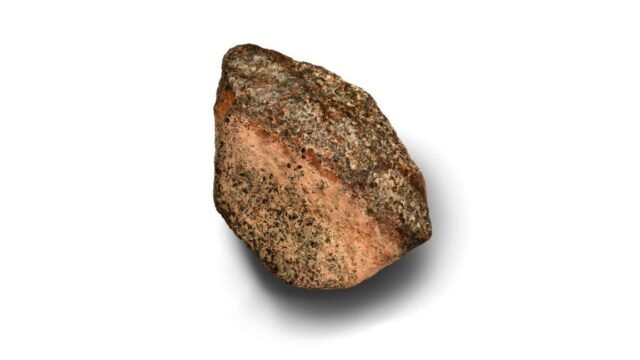
Crater counts tell us that most of the Martian surface is more than 3 billion years old, but pieces of Mars we have on Earth tell a different story. The three main classes of Martian meteorites—shergottites, nakhlites, and chassignites—are all 2.4 billion years old or younger. Until now, only two genuinely ancient Martian meteorites were known: Allan Hills 84001, found in Antarctica, and a jumbled rock from northwest Africa nicknamed Black Beauty. Now we have a third one. A team led by Yang Liu, a planetary scientist at NASA's Jet Propulsion Laboratory, has shown that a Martian meteorite called Teghaza 001, found in the Sahara Desert in Mali in 2022, formed at least 4.1 billion years ago. “It's very old and similar to some of the oldest rocks on Earth,” Liu says. A filtered collection “We don't fully understand why old Martian rocks are so rare on Earth," Liu said. Part of the answer may lie in how a piece of Mars gets here. It takes a large impact to launch a rock off the planet, and not every rock can survive that. “If the impact hits into loose powder, it may not get cemented to become a rock and fly off Mars' gravity,” Liu said. “So the natural impact already acts as a filter. Weak rocks do not make it off Mars.”Read full article Comments
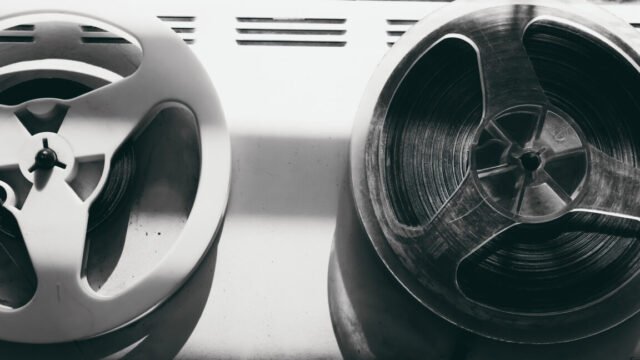
In an announcement released Thursday, Fujifilm said it will invest roughly 10 billion yen (about $63 million) to increase its production capacity fivefold for an unlikely beneficiary of the AI era: magnetic tape. Fujifilm attributes the surge in archiving demand to the spread of generative AI, which the company remarked is producing "exponential growth" in data needs worldwide. The 5x increase in production capacity will be measured against fiscal year 2025 production levels. The investment in Fujifilm's Kanagawa Factory, Odawara site will make it "the largest investment Fujifilm has made to date in dedicated LTO tape facilities." The project will run from fiscal years 2026 through 2028 to fund manufacturing expansion and additional personnel, primarily to produce the latest-generation "FUJIFILM LTO Ultrium10" tape.Read full article Comments
The US has charged five individuals as part of the first broad federal crackdown on “ghost students”—fraudsters who steal the identities of hundreds of Americans to pose as fake college students and steal student loans. In a press release Thursday, the Department of Justice said it had uncovered a large-scale scheme relying partly on AI. The DOJ seized more than $750,000 in cryptocurrency from “a network associated with Kenyan nationals" after data analysis helped flag likely fraudsters. Assistant Attorney General Colin M. McDonald of the DOJ’s National Fraud Enforcement Division credited new fraud-detection measures implemented by the Trump administration for the arrests. He said that “this is the first international seizure of its kind in Kenya,” while warning fraudsters that the crackdown has only just begun. “If you steal American identities, if you steal taxpayer dollars, if you exploit programs meant to help students build a future—we will find you,” McDonald said. “Whether you are in Nebraska, New Jersey, Virginia, or Nairobi, we will pursue you.”Read full article Comments
A new report from the analytics firm Quilty Space confirms that, outside of China, the world faces a significant shortage of rockets over the next five years. The firm estimates that between now and 2030, there will be a shortfall of about 150 launches compared to demand from satellite operators and civil space agencies. If demand from the US military is added in—and SpaceX does not extend the Falcon 9 and Falcon Heavy program to accommodate increased national security needs—the shortage could be doubled. "What we wanted to get at is to understand how severe this launch crisis is and when will it be resolved," said Caleb Henry, director of research at Quilty Space. "What we learned is that the launch crisis is more severe than we thought and that it will not go away this decade for sure, and it might not abate until sometime late in the 2030s."Read full article Comments
At TechCrunch Founder Summit 2026, happening November 4 at SoWa Power Station in Boston, networking powered by Braindate is designed to make those conversations easier to find, whether they are in 1:1 or small-group on-site meetings. Register before the event starts to save up to $100 on your pass, plus get a second for free.
General Motors marketed its Smart Driver system as a way for parents to monitor teen drivers or for adults to track their driving behavior. But in 2024, it emerged that GM had been sharing that data with brokers. Those brokers then sold the data to insurance companies, and some drivers found that their insurance became more expensive as a result. To make matters worse, many of those drivers claimed they had no knowledge of ever agreeing to share such data for such purposes. Last year, GM and its OnStar subsidiary entered into a settlement with the FTC, prohibiting them from sharing some kinds of driver data with third parties. The settlement was finalized this January. That agreement banned the two companies from sharing geolocation data or driver behavior data for five years. At the time, GM also discontinued Smart Driver across its entire range. Now the automaker has reached terms with the District of Columbia and 35 states after their attorneys general joined together to sue GM as well.Read full article Comments
Binance has suspended all withdrawals after the world’s largest cryptocurrency exchange fell victim to what appears to be the biggest heist in history. The exchange put the “estimated total impact” of the hack at about $6.3 billion and said around $3 billion of affected assets, mainly stablecoins that act as cash for the crypto market, had been frozen. But analysts at Elliptic said the attacker had changed about $3.3 billion into digital assets that could not be frozen and was working to cash those out as traditional currency.Read full article Comments
Nissan provided flights from Washington, DC, to Santa Barbara, California, and accommodation so Ars could drive the Rogue Hybrid. Ars does not accept paid editorial content. Nissan has a new version of its best-selling Rogue SUV, and it’s launching the model here with the latest version of its e-Power hybrid system, which Ars tested back in February. Most of the hybrid cars you can buy today are parallel hybrids, which means that they have an internal combustion engine and an electric motor, both of which drive some or all of the wheels—everything works in parallel. But there’s another approach. Instead of connecting the engine to the wheels via a transmission, it can act as a generator and charge the traction battery, which in turn powers the electric motor. Since the engine and motor work in series, this is known as a series hybrid. That’s mostly how the Chevrolet Volt worked. As does Honda’s hybrid CR-V. Well, mostly; engineers worked out it was more efficient for those cars' gasoline engines to directly drive the wheels at highway speeds, something that to this day makes a certain subset of hybrid car enthusiast irrationally angry. If you know anyone like that in your life, send them to wherever the nearest Nissan dealership is, because the 2027 Rogue Hybrid is exactly what they’ve been asking for. Series hybrids Under the hood, with its crisp shut line and slim horizontal lights that give me something of a Range Rover vibe, there’s a 1.5 L, three-cylinder turbocharged direct-injection engine that generates 148 hp (110 kW). It only revs to 5,200 rpm because it’s optimized to charge the battery, not cope with the various loads of an engine connected to a gearbox and the wheels. That also allows the engine to operate at a rather impressive 42 percent thermal efficiency—we would need to look at Formula 1 engines to find higher.Read full article Comments