Breaking
Advertisement

Technology

Technology

Starlink spectrum deal boosts Musk plan to beat AT&T, T-Mobile, and Verizon

SpaceX has a deal to purchase nationwide low-band spectrum licenses for a planned terrestrial mobile network that would complement the space-based Starlink cellular service. SpaceX will buy up to 14 megahertz of spectrum in the 800 MHz band from investment firm Grain Management, which bought the spectrum rights from T-Mobile earlier this year. T-Mobile had obtained the spectrum when it bought Sprint in 2020 and was required to sell the licenses under a merger condition imposed by the US government. "This prime low-band spectrum addresses one of the key remaining technical gaps that will pave the way for Starlink Mobile to become a major mobile carrier in the US," SpaceX said yesterday. SpaceX this week also received US approval to launch 15,000 satellites for an upgraded version of its mobile service that it says will be far more powerful than the current offering.Read full article Comments

Technology

Amazon and others are done keeping data center deals secret. Is it enough to build trust?

Amazon says it will stop using NDAs when negotiating data center deals with local governments, following a similar move from Microsoft earlier this year. Secrecy has fueled community backlash against AI infrastructure, with opposition leading to hundreds of proposed and enacted moratoriums from New York to San Francisco. Meanwhile, a wave of startups is betting that consumers will hand AI agents access […]

Technology

Automattic interim CFO resigns just weeks after boardroom shakeup

Automattic's interim chief financial officer Jeremy Klaperman has left the company less than a month after taking the role, TechCrunch has learned. Sources say his departure followed a demotion back to his previous position, marking another executive exit amid the organization's leadership turmoil.

Advertisement
Technology

Microsoft barred from sponsoring foreign workers for US residency

Donald Trump’s administration has temporarily banned Microsoft, Adobe, and several other tech companies from sponsoring workers for permanent US residency, claiming they abused immigration programs at the expense of American citizens. Vice-president JD Vance said on Thursday that the H-1B visa programme for highly skilled foreign workers had “become rife with fraud” and that over-reliance on such schemes was “a fundamental insult to the American worker.” He added that “no company in the US” had “abused this system” more than Microsoft.Read full article Comments

Advertisement
Technology

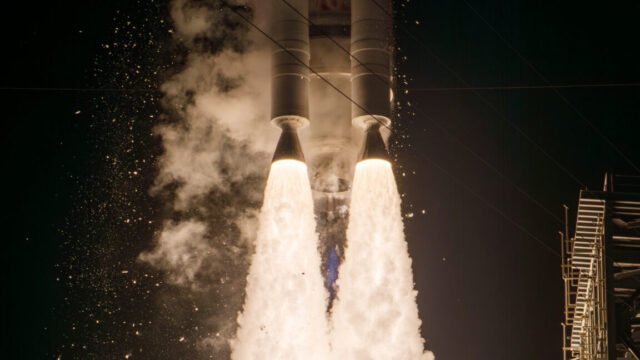
Rocket Report: A rare Falcon 9 scrub; is it just about Vulcan’s time to shine?

Welcome to Edition 9.14 of the Rocket Report! The big news this week, from our perspective, is that United Launch Alliance's Vulcan rocket appears to be close to launching. We've seen a no-earlier-than launch date for the return to flight mission of October 29 (an Amazon Leo flight), and the next rocket up after that, also an Amazon Leo mission, is also planned for this year. Assuming the solid rocket boosters work, Vulcan could be poised for a major breakthrough next year in cadence. As always, we welcome reader submissions, and if you don't want to miss an issue, please subscribe using the box below (the form will not appear on AMP-enabled versions of the site). Each report will include information on small-, medium-, and heavy-lift rockets as well as a quick look ahead at the next three launches on the calendar. Nuri rocket notches another success. South Korea successfully deployed five satellites for its first domestically launched microsatellite constellation during the fifth flight of its homegrown Nuri rocket Wednesday, Yonhap News Agency reports. In addition to the primary payload of five New-space Earth Observation Satellite Constellation for National Safety microsatellites, nine of the rocket's 10 CubeSat secondary payloads were released as planned, according to the Korea AeroSpace Administration. PERSAT-02, developed by South Korean startup Quaternion, failed to separate from the rocket.Read full article Comments

Technology

Volkswagen’s replacement for the ID.4 crossover is here

Volkswagen’s ID.4 is no more. The midsize crossover debuted in 2021, one of VW's first new electric vehicles designed in the wake of dieselgate. A year later, the company began local production in Chattanooga, Tennessee, and a couple of years ago facelifted the model, adding a much-improved rear drive unit in the process. But Chattanooga turned its attention away from the ID.4 earlier this year. And, having sold almost a million ID.4s (and near-identical ID.5s) globally, the German automaker has decided it’s time for its replacement. Meet the ID. Tiguan. Dropping the numerical and adopting the moniker of VW’s big seller is a statement. “The Tiguan is our best-selling model worldwide, and the ID.4 and ID.5 are among our most successful electric cars. The ID. Tiguan brings these two success stories together,” said Thomas Schäfer, CEO of the VW brand. VW was an early pioneer of using flexible vehicle architectures to create a multitude of bodystyles and sizes with common parts, and its transition into building EVs hasn’t changed that. The ID. Tiguan uses an updated version of the company’s mass-market EV platform, now called MEB+, with either 58 kWh or 77 kWh battery packs. The smaller pack is only available with a 187 hp (140 kW) rear electric motor, but the 77 kWh battery can be had with either a 281 hp (210 kW) rear-wheel drive powertrain or as a 295 hp (220 kW) all-wheel drive version. Range is up to 373 miles (600 km), at least according to the European WLTP test.Read full article Comments

Technology

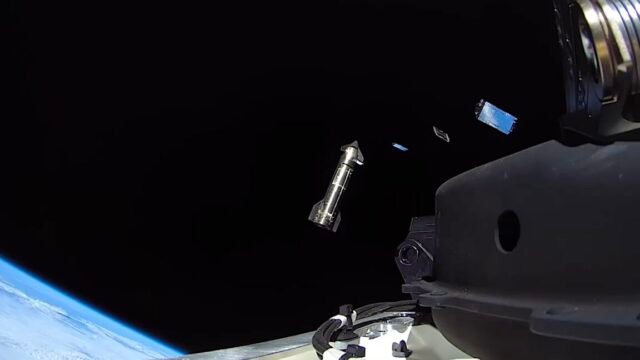
SpaceX calls for better coordination in orbit after near-misses with Starlink

Space has plenty of room for more megaconstellations, but only if all operators are willing to share information about where their satellites are and where they're going, a top executive at SpaceX and its AI subsidiary said this week. Michael Nicolls, SpaceX's vice president for Starlink and president of Elon Musk's artificial intelligence company, xAI, used a presentation Tuesday at the International Astronautical Congress in Turkey as a clarion call for improved data-sharing among satellite operators. SpaceX's Starlink constellation now has more than 11,000 satellites, about two-thirds of all active spacecraft in low-Earth orbit. Radars and telescopes routinely track thousands more pieces of space junk.Read full article Comments

Advertisement
Technology

Judge weighs if Trump can charge $100K for early access to Truth Social posts

Likely in the next few weeks, a federal judge will decide if Donald Trump can become the first president to personally profit from selling early access to government information in his social media posts. At a hearing Wednesday, Department of Justice civil attorney Brantley Mayers argued that there was no conflict whatsoever with Trump charging up to $100,000 monthly for instant API access to Truth Social posts that often break news from his administration. Trump is the largest stakeholder and majority owner of Trump Media & Technology Group, the parent company that owns Truth Social, and the value of the API access comes largely from Trump’s role as president.Read full article Comments