Sakana AI's MASS method lets one language model improve itself by solving tasks, judging results, and refining workflows, reaching a win rate of nearly 70 percent against the base model after two rounds. But when the model misses the same errors across all three roles, it can mistake them for progress and reinforce them during training. The article Sakana AI's self-improving model gets better at solving and judging, but can't catch its own blind spots appeared first on The Decoder.
Microsoft researchers found that autonomous AI agents get trapped in what they call "idea basins" because of their growing chat context, local solution regions they can't escape. Their "Fork-and-Flush" method clears the chat history but keeps the workspace, achieving up to 66 percent better results on the same compute budget. The article Clearing chat history helps AI agents find better solutions appeared first on The Decoder.
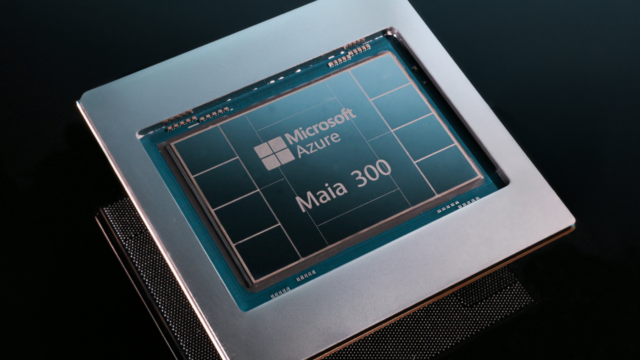
Microsoft will make its in-house Azure Maia chips the main AI inference system across its products starting in 2027, deploying them at multi-gigawatt scale. The upcoming Maia 300 should deliver 40 percent more tokens per megawatt than leading GPU systems. CEO Satya Nadella calls it "our biggest bet yet on our own silicon." The article Microsoft plans to scale its own Maia AI chips to gigawatt levels by 2027 appeared first on The Decoder.
The White House has reversed course and restored the UK's AI Security Institute's early access to AI models from Anthropic, Google DeepMind, and OpenAI. In September, the Trump administration had told the companies to stop sharing their models with the British agency. Diplomatic pressure from AI Minister Kanishka Narayan led to the reversal. The article White House reverses course and restores UK AI Safety Institute's access to frontier models appeared first on The Decoder.
Andrej Karpathy, co-founder of OpenAI and now at Anthropic, sees a widening knowledge gap in AI. About 75 percent of the world's population has barely touched LLMs. Roughly 5,000 people, meanwhile, have access to internal frontier systems whose agent swarms do work that would take top experts years. The public, at best, sees a weird chatbot. The article Anthropic's Andrej Karpathy says "the external world has seen the preview" of what AI can actually do appeared first on The Decoder.
Google Deepmind's AlphaProof Nexus solved dozens of open math problems, including nine Erdős problems two of which were unsolved for 56 years, per a study in Science. The publication comes as OpenAI faces a boycott for dumping AI proofs on GitHub without peer review. Deepmind had its results reviewed before publishing. The article Google Deepmind's AlphaProof Nexus solved dozens of open math problems and actually got peer reviewed appeared first on The Decoder.
AI live translation tools turn speech into translated captions or speech while people are still talking. The market now spans consumer apps, meeting add-ons, event platforms and developer APIs. We checked 12 tools against official product, pricing and documentation pages. What is an AI live translation tool? It listens, transcribes, translates and outputs captions or synthetic speech in near real time. Most products chain speech recognition, machine translation and text-to-speech. Captions suit webinars. Speech output suits two-way calls. The 12 tools, grouped by use case Real-time conversations and developer APIs 1. Palabra.ai: Palabra.ai does two-way speech-to-speech translation with automatic voice cloning and captions. It claims under 1 second latency and offers a WebRTC and WebSocket API. API speech-to-speech costs $0.04 per minute; Meetings plans start at $60 per month. 2. Google Translate Live translate: Google’s Gemini 3.5 Live Translate covers 70+ languages and preserves intonation and pacing. Google says output runs a few seconds behind the speaker. It works in the Translate app with any headphones, and in the Gemini Live API preview. 3. Apple Live Translation: Apple’s Live Translation plays translated speech through AirPods and runs entirely on device. It supports 10 language variants. It needs recent AirPods and an Apple Intelligence iPhone on iOS 26. Inside meeting platforms 4. DeepL Voice: DeepL Voice for Meetings translates 40+ languages into voice and subtitles in Teams, Zoom and Google Meet. Meeting data is deleted when the call ends. DeepL Pro plans include 30 Voice minutes per user monthly. 5. Microsoft Teams Interpreter agent: Interpreter is a Copilot agent for speech-to-speech interpretation in Teams, with optional voice simulation. Admin docs list 9 languages; the support page lists 10. A Copilot license includes 20 hours per user monthly. 6. JotMe: JotMe captures Zoom, Teams, Meet and Webex audio without a bot. Its 200+ languages are translation targets; fast mode offers 13. Pro costs $10 per month billed annually. 7. Talo: Talo joins Zoom, Google Meet or Teams with translated voice and captions in 60+ languages. Pro costs $80 per month billed annually for 400 minutes. Events and webinars 8. Wordly: Wordly sells conference AI interpretation with captions and AI audio across 3,000+ language pairs. Per its FAQ, audio plays after each sentence ends. Packages start at about $1,500 for 10 hours. 9. Interprefy: Interprefy combines human interpreters with Interprefy AI captions and speech. Its knowledge base lists 82 fully supported languages. Interprefy Now turns attendee phones into receivers. Pricing is quote-based. 10. KUDO: KUDO pairs an AI speech translator with 12,000+ human interpreters. The AI side lists 77 languages, up to 32 per meeting. Pricing is quote-based. 11. Boostlingo: Boostlingo targets healthcare, legal and events. Its AI products cover 130+ languages, backed by human interpreters. It states 90 to 98% AI accuracy and HIPAA compliance. 12. Maestra Live: Maestra Live adds live captions, translation and dubbing to Zoom, Meet, Teams, OBS and vMix in 125+ languages. Premium costs $79 per month; dubbing starts at $159. How do the 12 AI live translation tools compare? window.addEventListener("message",function(e){if(e.data&&e.data.mtpFrame==="mtp-lt12"){var f=document.getElementById("mtp-lt12-frame");if(f)f.style.height=e.data.h+"px";}}); #mtp-lt12-wrap p:empty,#mtp-lt12-wrap hr{display:none!important} Which AI live translation tool should you pick? Two-way calls or product integration: Palabra.ai or the Gemini Live API. Travel and face-to-face: Google Translate or Apple Live Translation. Daily meetings on one platform: DeepL Voice, Teams Interpreter, JotMe or Talo. Conferences and webinars: Wordly, Interprefy or KUDO. Regulated, high-stakes sessions: Boostlingo or KUDO, with human interpreters on standby. Key Takeaways Gemini 3.5 Live Translate brings speech-to-speech in 70+ languages to any headphones. Teams Interpreter covers only 9 to 10 languages but ships with Copilot. Event platforms like Wordly, Interprefy and KUDO stay mostly quote-based. Language counts are not apples to apples, so pilot on your own pairs. Check each vendor’s official page linked above for current languages and pricing. Facts verified October 12, 2026. The post Top 12 AI Live Translation Tools in 2026: Latency, Languages, Pricing appeared first on MarkTechPost.
The Technology Innovation Institute (TII) in Abu Dhabi has released Falcon-ASR, a 1.6B parameter Arabic speech recognition model. It focuses on the Emirati dialect and also transcribes English, French, Spanish and Portuguese. In TII’s evaluation, Falcon-ASR posts a 20.92% average word error rate (WER) across 6 Arabic test sets. That beats the best published entry in TII’s leaderboard snapshot by 2.25 points. For developers building Arabic voice products, the catch is access: today it runs only as a hosted demo. TL;DR Size: 1.6B parameters. Max audio context: Not disclosed (the demo accepts clips up to 60 seconds and 20 MB). Runs on: Not disclosed. No weights or quantized variants are published. Access is a Hugging Face demo, with API and native apps planned. Performance: Lowest Arabic and Emirati WER in TII’s own comparisons, with solid English results. Best: 20.92% average Arabic WER, 2.25 points below Audar-ASR-V1-Turbo (23.17%). Worst: 11.86% WER on Earnings-22, its weakest English test set. Bottom line (best): a compact 1.6B model leading larger Arabic systems in TII’s tests. Bottom line (worst): no weights, no license, no API yet, and all scores are self-reported. What is Falcon-ASR? Falcon-ASR is a speech-to-text model from TII that converts spoken Arabic and 4 other languages into text. All 5 languages share one set of weights. The model needs no language flag and outputs text in the language spoken. It also returns word-level timestamps, linking each word to its position in the audio. This is important for subtitling, searchable recordings and meeting notes. How does Falcon-ASR handle Arabic dialects? Dialectal Arabic has far fewer transcribed resources than Modern Standard Arabic (MSA). TII trained Falcon-ASR on Emirati, MSA, other Gulf and Arabic dialects, and English. The objective is everyday speech, including dialect forms and language switching. Training audio was augmented with background noise, overlapping speech, music, room reverberation and telephony effects. Speed and pitch were varied too. The same treatment was applied to Emirati recordings. The model builds on TII’s Falcon3-Audio work. That research describes audio-language models built on instruction-tuned LLMs and Whisper encoders, trained on under 30K hours of public audio. Our editorial and technical team at Marktechpost could not find any published Falcon-ASR’s exact architecture or training data size. How does Falcon-ASR score on Arabic benchmarks? TII followed the protocol of the Open Universal Arabic ASR Leaderboard, run by the ELM Research Center. It ranks systems by equal-weight average WER over 6 test sets. TII used the leaderboard’s pinned manifests. Competitor numbers are published leaderboard averages checked on 30 September 2026. Lower is better. Note that Falcon-ASR’s figure is TII’s own run, not a leaderboard entry. The Audar model card lists its own average CER as 9.20%. How does Falcon-ASR perform on Emirati speech? TII built an internal Emirati and Gulf test set from held-out recordings with human-validated transcripts. It complements the UAE subset of the public Casablanca dataset. Falcon-ASR leads by 4.07 WER points over Qwen3-Omni. This test set is private, so it cannot be reproduced. Audar reports 19.4% WER on a different Emirati set (Mixat), so the numbers are not directly comparable. How good is Falcon-ASR at English? On the 7 English test sets used by the Hugging Face Open ASR Leaderboard, TII reports a 5.74% mean WER. Per-set scores range from 1.75% on LibriSpeech clean to 11.86% on Earnings-22. For context, Qwen3-ASR-1.7B lists 5.76% mean WER on that leaderboard. French, Spanish and Portuguese are supported, but TII published no scores for them. Comparison: Falcon-ASR vs closest Arabic ASR models Sources: Falcon-ASR figures from TII’s blog. Audar, Cohere and Qwen leaderboard figures from the ELM leaderboard as reproduced on the Audar card. Emirati WER for all models is from TII’s internal evaluation. window.addEventListener('message',function(e){var f=document.getElementById('fasr-frame');if(f&&e.source===f.contentWindow&&e.data&&e.data.fasrHeight){f.style.height=e.data.fasrHeight+'px';}}); Key Takeaways Falcon-ASR is a 1.6B Arabic-first speech model from TII with an Emirati focus. It reports 20.92% average Arabic WER, 2.25 points ahead of Audar-ASR-V1-Turbo. On TII’s Emirati set it beats a 30B Qwen3-Omni by 4.07 WER points. 1 set of weights covers 5 languages, with word-level timestamps. No weights, license or API yet: test it via the 60-second demo. Check out the Falcon-ASR blog, the Falcon3-Audio paper and try the demo. Also, feel free to follow us on Twitter and don’t forget to join our 150k+ML SubReddit and Subscribe to our Newsletter. Wait! are you on telegram? now you can join us on telegram as well. The post TII Releases Falcon-ASR: 1.6B Arabic Speech Model Hits 20.92% WER appeared first on MarkTechPost.
Cloudflare has released Clef-omni, a new open-weight member of its Clef decision model family. Clef-omni is a Cloudflare decision model that scores text, images, audio and video in 1 call. It arrived on October 9, 2026, 8 days after the original Clef and Clef-flash launch. The same update cut Clef-flash pricing below TypeSafe’s Jev and made hosted Clef roughly 2x faster. For developers, this removes the transcription and captioning steps that multimodal agent pipelines usually need. TL;DR Size: 30B total, 3B active parameters (MoE); 64,000-token context on Workers AI Runs on: Workers AI as @cf/cloudflare/clef-omni; self-hosting tested on a single H200, about 64 GB GPU memory in bfloat16 Performance: Close to Clef on routing and intent tasks, behind it on most reasoning and workflow evals Best: 97.7 macro-F1 on CLINC150+OOS, top of the 4 Clef and Jev models Worst: 2.6 accuracy on POP909-CL, and 47.4 on GPQA Diamond versus Jev’s 78.3 Bottom line: Best: one call decides across 4 modalities. Worst: weaker accuracy than text-focused Clef on hard reasoning. What is a decision model? A decision model returns typed answers with probabilities instead of generated text. You send a state and a schema of questions. The model returns a probability for every allowed option. Clef supports 3 question types: noul (true or false), choice and score. The format follows the Jev and SystemOne API from TypeSafe AI. How does Clef-omni work? Clef-omni is post-trained from Qwen3-Omni-30B-A3B-Instruct. Cloudflare keeps the comprehension backbone and drops the text-to-speech output path. The model runs a single prefill pass over the full payload. Video frames and audio are synced into 1 sequence for joint processing. A small joint schema head then scores the options. Each valid option first gathers evidence from the input. Field vectors then cross-attend across the full context to compute confidence scores. Cloudflare froze the Qwen3 backbone and trained LoRA adapters. Training combined label-smoothed cross-entropy with Brier score calibration. Supported inputs on Workers AI, per the developer docs: Images: up to 4, PNG, JPEG or WebP, 64 to 1,024 tokens each Audio: up to 4 clips, WAV or MP3, 300 seconds each, about 780 tokens per minute Video: up to 2 clips, MP4 or WebM, 60 seconds each, sampled at 2 frames per second Questions: 1 to 64 per request Cloudflare reports text decisions in about 130 ms at the median and images in about 150 ms. A 21-second video with sound scores in about 1.5 seconds. How does Clef-omni perform on benchmarks? Cloudflare compared Clef-omni against Clef, Clef-flash and Jev on its Decision Index run. Clef-omni leads on intent classification: 94.8 macro-F1 on BANKING77 and 97.7 on CLINC150+OOS. It also tops Amazon ESCI at 57.8. It trails elsewhere. Home appliances case-exact accuracy is 69.3, versus 97.73 for Clef-flash. When2Call accuracy is 63.3, versus 80.97 for Jev. On TypeSafe’s workflow evals, Clef-omni scores below Clef in all 5 reported metrics. (function(){window.addEventListener("message",function(e){var d=e.data;if(d&&d.mtpFrame==="clefomni"&&d.h){var f=document.getElementById("mtp-clefomni-frame");if(f)f.style.height=d.h+"px";}});})(); Clef-omni vs Clef vs Clef-flash vs Jev Benchmark scores are from Cloudflare’s announcement and were not independently verified. How much faster is Clef? Cloudflare moved hosted Clef to SGLang and tuned its serving stack. No new weights were released. Median latency fell from 262 ms to 152 ms at about 800 tokens, a 1.7x gain. At about 3,400 tokens it fell from 616 ms to 305 ms, a 2.0x gain. At about 16,000 tokens it dropped from 2,721 ms to 1,635 ms. Clef support lands in SGLang 0.5.22. Key Takeaways Clef-omni scores text, images, audio and video in 1 decision call. It is a 30B-A3B MoE on Qwen3-Omni, Apache-2.0, at $0.15 per million tokens. Clef-flash now costs $0.038, under Jev’s $0.042, with 24k hosted context. Hosted Clef is 1.7x to 2.0x faster at the median after moving to SGLang. Clef-omni wins intent tasks but trails Clef on reasoning and workflow evals. Check out the Cloudflare announcement, model weights and Workers AI docs. All credit goes to the researcher of this project. Also, feel free to follow us on Twitter and don’t forget to join our 150k+ML SubReddit and Subscribe to our Newsletter. Wait! are you on telegram? now you can join us on telegram as well. The post Meet Cloudflare Clef-omni: A 30B-A3B Multimodal Decision Model for Audio, Video, Image and Text appeared first on MarkTechPost.
The vLLM Semantic Router team has released Decision 3.0, a family of multimodal decision models. Decision 3.0 multimodal decision models read text, JSON and images, then answer typed questions about them. There are 5 sizes, from 0.8B to 27B, all under Apache-2.0. For developers, this is a fast way to classify, route and gate requests without parsing generated text. TL;DR Size: 5 models: d3-lite (0.85B), d3-nano (2.21B), d3-mini (4.54B), d3-flash (8.39B), d3 (26.09B). Context length: not disclosed. Runs on: latency measured on 1 AMD Instinct MI325X GPU. BF16 weights; no official quantized variants listed. Performance: the 27B d3 leads both the text and vision tables in its card, but on internal evaluation. Best: 97.7 on KIE (CORD+FUNSD) document extraction (d3). Worst: 34.1 on R-Bench-M (d3). Bottom line: Best: a 9B model now beats last generation’s 27B. Worst: scores are self-reported against live board data. What is Decision 3.0? Decision 3.0 is a set of open decision models from vLLM Semantic Router that return probabilities instead of text. You pass a state (text or JSON), optional images, and named questions. Each question is a Choice, a Yes/No, or a Score on a scale. The model answers all questions in one call and returns a probability for every answer. This is the ‘system one’ pattern for routers and guardrails. Instead of prompting an LLM and parsing its output, you get calibrated scores you can threshold. How does d3 work? Each model is a fine-tune of a Qwen base. The 27B d3 is built on Qwen3.8-27B. The smaller 4 build on Qwen3.5 checkpoints at 0.8B, 2B, 4B and 9B. Every size carries a vision encoder: 0.10B in d3-lite, 0.33B in d3-nano and d3-mini, and 0.46B in d3-flash and d3. Requests accept several PNG, JPEG or WebP images, each read at up to 1.6 megapixels. Every question sees all images. Each question gets its own forward pass over the input. Install targets transformers==5.17.0, and the optional flash-linear-attention package speeds up the linear-attention layers. Loading needs trust_remote_code=True. How does Decision 3.0 perform on benchmarks? Through the model card, the research team state the Jev Decision Index 0.3.1, a board that ranks open reproductions of TypeSafe’s Jev decision system. d3 numbers are the team’s internal evaluation. On text, d3 scores 64.1, ahead of Perplexity Decider v1.1 (62.8) and Jev (60.1). One caveat: Torchcast Decision 27B posts a higher public-suite score (65.1 vs 64.9). On the vision board, d3 scores 71.6 against 70.6 for Perplexity Decider v1.1. The size story is the strongest part. d3-flash (9B) scores 59.0, above Decision 2.0’s 27B at 55.9. On the public suite, gains over Decision 2.0 range from +8.0 (27B) to +15.1 (0.8B). Class leadership is not uniform, though: d3-mini (4B) and d3-flash (9B) lead both their text and vision tables. d3-lite (0.8B) leads on text but ranks 3rd on vision (41.1, behind JPT-0.8B at 42.1). d3-nano (2B) leads its vision table but trails LiquidAI d1-3B on text (35.8 vs 40.1). On public vision tasks, d3 scores 97.3 on InfographicVQA and 89.9 on Mind2Web, both approximate rebuilds. It is weaker on MMMU-Pro vision (46.2) and Hateful Memes moderation (44.6). #mtp-d3x-wrap{max-width:880px!important;margin:24px auto!important;background:transparent!important;border:0!important}#mtp-d3x-wrap iframe{display:block;width:100%!important;height:600px;border:0!important;background:#0b0f17!important;border-radius:16px}#mtp-d3x-wrap p:empty,#mtp-d3x-wrap hr,#mtp-d3x-wrap del,#mtp-d3x-wrap s{display:none!important} (function(){var f=document.getElementById('mtp-d3x-frame');window.addEventListener('message',function(e){if(e.source===f.contentWindow&&e.data&&e.data.mtpD3xHeight){f.style.height=Math.ceil(e.data.mtpD3xHeight)+'px';}});})(); How fast are the models? Medians below are for 1 request at a time on 1 AMD Instinct MI325X, per each card: d3-nano: 21.7 ms text, 92.0 ms with an image d3-lite: 23.5 ms text, 60.7 ms with an image d3-mini: 28.5 ms text, 115.0 ms with an image d3-flash: 29.7 ms text, 171.8 ms with an image d3: 84 ms text, 342 ms with an image All models were trained on AMD Instinct MI325X GPUs. How does d3 compare with other decision models? Key Takeaways 5 Apache-2.0 decision models, 0.8B to 27B, all with image input. d3 (27B) tops its text (64.1) and vision (71.6) tables, on internal evals. The 9B d3-flash (59.0) beats Decision 2.0’s 27B (55.9). The 0.8B and 2B models do not lead every board. Median text latency runs 21.7 to 84 ms on 1 MI325X. Check out the Hugging Face collection, the d3 model card and the vLLM Semantic Router GitHub repo. All credit goes to the researcher of this project. Also, feel free to follow us on Twitter and don’t forget to join our 150k+ML SubReddit and Subscribe to our Newsletter. Wait! are you on telegram? now you can join us on telegram as well. The post What is Decision 3.0? vLLM Semantic Router’s New Open Decision Models appeared first on MarkTechPost.