Deal alert: Get 50% off second night at Under Canvas when you book by Aug. 30
Transportation
Summer may be coming to a close, but that means prime camping weather is just around the corner. But that doesn’t mean you have to “rough it.” If you’ve been dreaming of a weekend in the woods, Under Canvas has a limited-time flash sale that can help you get away from it all for less.At Under Canvas, you can enjoy national parks like Zion, Yosemite and the Grand Canyon and some of the country’s most peaceful scenic areas, including Washington’s Columbia River Gorge and the Black Hills of South Dakota near Mount Rushmore, without sacrificing creature comforts when you book a glamping getaway with Under Canvas.Related: How to plan a national park weekend getawayUnder Canvas offers travelers a unique opportunity to experience the great outdoors without giving up things like comfortable beds, hot showers and chef-prepared foods, all while helping guests connect with nature through curated outdoor activities, communal gathering spots and furnished outdoor decks at every tent.Under Canvas Zion. TARAH CHIEFFI/THE POINTS GUYFor bookings of two nights or longer made between Thursday, Aug. 27, at 11 a.m. MT through Sunday, Aug. 30, 2026, at 11:59 p.m. MT, you can receive 50% off the second night. If you book four nights, the fourth night is also 50% off.This deal is available at all 14 Under Canvas locations across the U.S., ULUM Moab and The Fields of Michigan through each property’s season close date. There are no blackout dates, and this offer applies to refundable and nonrefundable rates.You can book directly online using code HALFOFF26 or by calling the reservations line. Here are the sale pages for each brand:Under CanvasThe Field of MichiganULUM Moab”We’re always looking for ways to get more people outside, and this is one of the most exciting opportunities we’ve offered all season to do it. There’s something special about this time of year—the air gets cooler, the crowds thin out, and the parks take on a completely different feel. We wanted to make it a little easier for people to get out and enjoy it, whether it’s a first trip to Yosemite, a return to Zion, or a chance to see the fall colors in the Northeast. If you’ve been thinking about getting outside, this is a pretty great time to do it,” Under Canvas CEO Noah Brodsky told TPG.Nightly rates vary by date and location, but your second (or fourth) night could cost less than $100, depending on where you stay and when. Let’s take a look at a sample booking to see just how much you could save.Under Canvas White Mountains. UNDER CANVASThe nightly rate at Under Canvas Moab in late October is $179. A two-night stay would run $358 before taxes and fees. With this deal, the two-night total would be $268.50. If you extended that to four nights, you would pay $537 during this sale, rather than the full price of $716. That is like getting one night for free.This sale is available for a very limited time. You must book by Aug. 30, 11:59 p.m. MT to take advantage of the savings using code HALFOFF26.Editorial disclaimer: Opinions expressed here are the author’s alone, not those of any bank, credit card issuer, airline or hotel chain, and have not been reviewed, approved or otherwise endorsed by any of these entities.
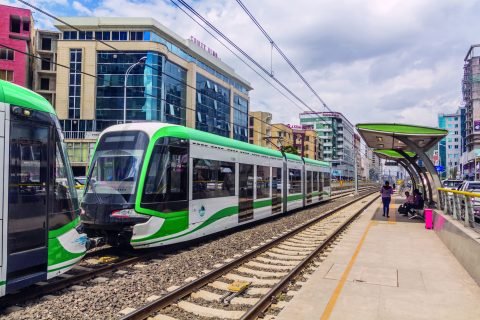
Shenzhen Metro Group has emerged over recent years as an increasingly active player in the development of metro, light rail and suburban projects across a swathe of emerging markets, from Algeria to Vietnam, as Benjámin Zelki explains. Embracing the expansionist ideals of China’s Belt & Road initiative, Shenzhen Metro Group Co and its partners in the Chinese urban rail supply chain are becoming increasingly active in the delivery of urban rail projects globally. Owned by the Shenzhen municipality, Shenzhen Metro Group was established in 1998. The group embarked on its first international projects in 2014, when it stated that its aim was for Shenzhen’s metro standards to be exported to more cities around the world. To date, SZMC has been involved in seven projects in six countries covering a total length of no less than 208.4 km. Examples of its work can be found in cities including Addis Ababa, Abuja, two projects in Hanoi, Tel Aviv, Cairo and the nearby New Administrative Capital, and Alger. Two projects in Hanoi Its most recent contract was announced in December 2025, and it covers the commissioning of Hanoi’s 39.6 km long, fully automated metro Line 5, where civil works started in July. The engineering, procurement, and construction contract was awarded to a consortium led by Pacific Construction Group, accompanied by Truong Son Construction Corp, Shenzhen Urban Design and Research Institute, Shenzhen Building Materials Trading Group, Shenzhen Metro International Investment Consulting, and Vietnam state railway DSVN. The three companies from Shenzhen will carry out design works and provide technical support, as well as undertaking testing and commissioning and providing operational training. They are to transfer technology and train staff for the management, operation and maintenance of the line. Route clearance work starts on Chinese-backed Hanoi metro Line 5 SZMC was also involved in the delivery of Vietnam’s first metro. The 13.1 km Line 2A in Hanoi opened in November 2021, linking Cát Linh to the Hà Đông business district. The company provided consultancy for training, preparation and commissioning tasks, as well as operations-related documentation and technical support. Operating in Tel Aviv With its November 2017 contract to operate Tel Aviv’s Red Line light rail, SZMC achieved a high-profile entry into a market that has had relatively little exposure to Chinese suppliers. As part of the Tevel Metro joint venture with bus operator Egged and China Civil Engineering Construction Corp, SZMC has been operating and maintaining the city’s 24 km Red Line light rail since it opened in August 2023. The 10-year contract is extendable for another six years. Civil works and railway systems for the Red Line, 12 km of which runs underground, were led by Chinese companies including China Railway Tunnel Group, China Civil Engineering Construction Corp, and China Railway Electrification Bureau, with DB Engineering & Consulting managing systems integration. Alstom supplied signalling and control systems, and CRRC Changchun built 90 five-section light rail vehicles. Capital Train Under three contracts signed between December 2019 and July 2022, SZMC has been increasingly involved in commissioning and shadow operation of the Capital Train suburban rail project taking shape in the area east of Cairo. Its scope covered 18 months of operational support prior to the line’s July 2022 opening, plus a further two years of operational supervision for the initial 68.8 km segment. This first section links Adly Mansour on Cairo Metro Line 3 and serves two branches, one running northeast to 10th Ramadan City and the other southeast to the New Administrative Capital. A second phase will extend the NAC branch by 18.5 km and four stations, and the third phase will add 16 km and three stations to serve the centre of 10th Ramadan City. SZMC is again supporting testing and commissioning, providing system integration, operational and staff training, and maintenance technical support for phases 2 and 3. Its role subsequently expanded to include construction management for Phase 3. The line is being built by a consortium of China Railway Engineering Corp and AVIC International Holding Corp under a US$1.24bn contract signed in August 2017, using Chinese finance. RATP Dev Mobility Cairo operates the line and is maintaining it for 15 years, with an optional five-year extension. CRRC Qingdao Sifang supplied 22 six-car EMUs and also has a maintenance contract lasting 12 years. Making use of MTR’s expertise In its home city, Shenzhen Metro Group says it has made use of its proximity to Hong Kong to benefit from MTR Corp’s expertise, and as a result it has begun developing properties along metro lines in Shenzhen, drawing on MTR’s experience on Line 4. MTR’s wholly-owned subsidiary MTR Corp (Shenzhen) Ltd financed and built the first section of Line 4, and took over operation in 2010 under a concession that could run until 2041 if all options are exercised. Shenzhen’s Line 13 Phase II northern extension opens Meanwhile, Shenzhen Line 13 is operated under a 30-year PPP by the MTR CREC Metro joint venture of MTR Corp, China Railway Electrification Bureau and the Shenzhen municipal authority. The consortium was also involved in the financing and construction of the first section as part of a PPP, and the line opened for use progressively from December 2024. Subsequent extensions were delivered by the municipality, and Shenzhen Metro joined MTR and its partners in operating the most recent section when it opened in June. African involvement SZMC’s inaugural international contract came in Ethiopia in 2014, when it was appointed to manage the operations and maintenance of Addis Ababa’s 31 km two-line light rail network for three years and five months. Having trained local personnel, SZMC handed over operations in 2018 to Addis Ababa Light Rail Transit Service Enterprise, which is owned by the local municipality. The two-line network serving 39 stops opened to traffic in September and November 2015. The infrastructure was built by China Railway Engineering Corp, and services are operated by a fleet of 41 three-section trams supplied by CNR (now CRRC) Changchun. Staying in Africa, SZMC provided operations and technical support for Abuja’s two-line diesel commuter rail network for a year and four months after it opened in July 2018. At the time, the line in the Nigerian capital was operated by China Civil Engineering Construction Corp, which led the civil works. The service was suspended in 2020 because of the Covid-19 pandemic, and operations resumed in June 2024, managed by the Federal Capital Territory Administration. The 42.5 km two-line network links Abuja main station to the airport and Idu to Gbazango. In the Algerian capital, SZMC is providing consultancy services for systems integration, design and construction for the 9.6 km airport extension of Alger metro Line 1. Work on the section started in July 2025. The project is being led by China Railway Construction Corp through a joint venture with various local state-owned contractors. This article first appeared in the October 2026 issue of Railway Gazette International Read the issue See also Japan: Part-privatised Tokyo Metro looks to grow internationally
In the Electrek Podcast, we discuss the most popular news in the world of sustainable transport and energy. In this week’s episode, we’ll discuss Rivian’s earnings, Waymo partnering with Toyota, Ford betting on V2H for the Fathom electric pickup truck, and more. more…
#fwtv_Rj9isPUg2qg .fwtv-panel{border:1px solid #d0d0d0;padding:18px;border-radius:6px;line-height:1.6}#fwtv_Rj9isPUg2qg .fwtv-panel p{margin:0 0 12px}#fwtv_Rj9isPUg2qg .fwtv-note{font-style:italic;color:#666;margin-top:16px;padding-top:12px;border-top:1px solid #e0e0e0}Schneider is making a monumental shift in its intermodal operations, moving all eastern rail business from CSX to Norfolk Southern. This strategic partnership aims to unlock significant growth, enhance capacity flexibility, and drive more freight off the roads and onto rail. Discover the full implications of this major move and what it means for the future of intermodal logistics.Schneider National is transferring its eastern intermodal operations to Norfolk Southern, ending its prior relationship with CSX in what both companies describe as a growth-driven realignment. The deal, announced the same day Schneider reported its third-quarter earnings, positions Norfolk Southern as Schneider’s exclusive eastern rail partner alongside Union Pacific in the West. Michael Baumgardt, Schneider’s EVP of Intermodal and Logistics, said the decision followed a lengthy evaluation focused on network reach, train frequency, and proximity to population centers. “It starts with growth and it’s really about, okay, how can we get closer to our customers? How can we make sure that we get more truck freight off of the road and into intermodal where it makes sense?” Baumgardt said. Customer response in the first 24 hours after the announcement was positive, he added, particularly around Schneider’s asset-based model featuring company drivers, company chassis, and company containers. Norfolk Southern’s Vice President Shawn Tureman said the railroad has been building toward this moment for years, growing from the third- to the second-largest intermodal franchise in the United States by 2018. In 2022, the railroad set a new target to double its intermodal franchise again and has been directing discretionary capital toward that goal ever since. “It’s not a question of if, but when. And the way we’re going to get there is by partnering with powerful partners like Schneider,” Tureman said. The current rate environment adds urgency to the move. Truckload rates carry a 30%-plus premium over intermodal rates, making intermodal an increasingly attractive option for shippers. Baumgardt said the primary capacity constraint is not equipment — boxes are available — but rather dray capacity and driver supply. He argued Schneider’s company-driver model gives it a structural advantage in managing that bottleneck. Both executives said the pending Norfolk Southern-CSX merger, a topic that surfaces weekly in industry discussions, was not the driver of this agreement, though they acknowledged it could improve the product. “The merger would be icing on the cake in terms of enhancing service, reliability, and speed,” Baumgardt said. Tureman echoed that view, pointing to single-line service, shorter routes, and reduced interchange friction as potential merger benefits for Schneider’s customers. On the transition itself, both sides said planning began immediately after the agreement and that the goal is a seamless handoff. Tureman said Norfolk Southern pulled forward some infrastructure investments specifically to prepare. “What I hope, 3 months from now, for our customers not to have noticed anything,” he said, adding that a smooth transition would set the stage for joint sales efforts heading into what he called a strong intermodal market in 2026 and 2027. Schneider reported earnings growth in its intermodal segment in Q3, consistent with the company’s stated growth pillars of logistics, dedicated, and intermodal. Dedicated revenue per truck rose 3.1% in the quarter, though Baumgardt emphasized that disciplined freight selection and appropriate driver allocation remain priorities as the company manages through the current freight cycle.Schneider is moving its eastern intermodal rail partnership to Norfolk Southern, complementing its existing western alliance with Union Pacific.Norfolk Southern grew from the 3rd to 2nd largest U.S. intermodal franchise by 2018 and launched a second doubling initiative at its 2022 Investor Day.Truckload rates currently run more than 30% above intermodal rates, with dray and driver availability — not box count — cited as the primary capacity constraint.This Summary is generated thanks to a transcription of the interview, for the full interview please enjoy the video above. The post Rail Rivalry: Schneider’s Bold Move to Norfolk Southern from CSX appeared first on FreightWaves.