Shenzhen Metro Group has emerged over recent years as an increasingly active player in the development of metro, light rail and suburban projects across a swathe of emerging markets, from Algeria to Vietnam, as Benjámin Zelki explains. Embracing the expansionist ideals of China’s Belt & Road initiative, Shenzhen Metro Group Co and its partners in the Chinese urban rail supply chain are becoming increasingly active in the delivery of urban rail projects globally. Owned by the Shenzhen municipality, Shenzhen Metro Group was established in 1998. The group embarked on its first international projects in 2014, when it stated that its aim was for Shenzhen’s metro standards to be exported to more cities around the world. To date, SZMC has been involved in seven projects in six countries covering a total length of no less than 208.4 km. Examples of its work can be found in cities including Addis Ababa, Abuja, two projects in Hanoi, Tel Aviv, Cairo and the nearby New Administrative Capital, and Alger. Two projects in Hanoi Its most recent contract was announced in December 2025, and it covers the commissioning of Hanoi’s 39.6 km long, fully automated metro Line 5, where civil works started in July. The engineering, procurement, and construction contract was awarded to a consortium led by Pacific Construction Group, accompanied by Truong Son Construction Corp, Shenzhen Urban Design and Research Institute, Shenzhen Building Materials Trading Group, Shenzhen Metro International Investment Consulting, and Vietnam state railway DSVN. The three companies from Shenzhen will carry out design works and provide technical support, as well as undertaking testing and commissioning and providing operational training. They are to transfer technology and train staff for the management, operation and maintenance of the line. Route clearance work starts on Chinese-backed Hanoi metro Line 5 SZMC was also involved in the delivery of Vietnam’s first metro. The 13.1 km Line 2A in Hanoi opened in November 2021, linking Cát Linh to the Hà Đông business district. The company provided consultancy for training, preparation and commissioning tasks, as well as operations-related documentation and technical support. Operating in Tel Aviv With its November 2017 contract to operate Tel Aviv’s Red Line light rail, SZMC achieved a high-profile entry into a market that has had relatively little exposure to Chinese suppliers. As part of the Tevel Metro joint venture with bus operator Egged and China Civil Engineering Construction Corp, SZMC has been operating and maintaining the city’s 24 km Red Line light rail since it opened in August 2023. The 10-year contract is extendable for another six years. Civil works and railway systems for the Red Line, 12 km of which runs underground, were led by Chinese companies including China Railway Tunnel Group, China Civil Engineering Construction Corp, and China Railway Electrification Bureau, with DB Engineering & Consulting managing systems integration. Alstom supplied signalling and control systems, and CRRC Changchun built 90 five-section light rail vehicles. Capital Train Under three contracts signed between December 2019 and July 2022, SZMC has been increasingly involved in commissioning and shadow operation of the Capital Train suburban rail project taking shape in the area east of Cairo. Its scope covered 18 months of operational support prior to the line’s July 2022 opening, plus a further two years of operational supervision for the initial 68.8 km segment. This first section links Adly Mansour on Cairo Metro Line 3 and serves two branches, one running northeast to 10th Ramadan City and the other southeast to the New Administrative Capital. A second phase will extend the NAC branch by 18.5 km and four stations, and the third phase will add 16 km and three stations to serve the centre of 10th Ramadan City. SZMC is again supporting testing and commissioning, providing system integration, operational and staff training, and maintenance technical support for phases 2 and 3. Its role subsequently expanded to include construction management for Phase 3. The line is being built by a consortium of China Railway Engineering Corp and AVIC International Holding Corp under a US$1.24bn contract signed in August 2017, using Chinese finance. RATP Dev Mobility Cairo operates the line and is maintaining it for 15 years, with an optional five-year extension. CRRC Qingdao Sifang supplied 22 six-car EMUs and also has a maintenance contract lasting 12 years. Making use of MTR’s expertise In its home city, Shenzhen Metro Group says it has made use of its proximity to Hong Kong to benefit from MTR Corp’s expertise, and as a result it has begun developing properties along metro lines in Shenzhen, drawing on MTR’s experience on Line 4. MTR’s wholly-owned subsidiary MTR Corp (Shenzhen) Ltd financed and built the first section of Line 4, and took over operation in 2010 under a concession that could run until 2041 if all options are exercised. Shenzhen’s Line 13 Phase II northern extension opens Meanwhile, Shenzhen Line 13 is operated under a 30-year PPP by the MTR CREC Metro joint venture of MTR Corp, China Railway Electrification Bureau and the Shenzhen municipal authority. The consortium was also involved in the financing and construction of the first section as part of a PPP, and the line opened for use progressively from December 2024. Subsequent extensions were delivered by the municipality, and Shenzhen Metro joined MTR and its partners in operating the most recent section when it opened in June. African involvement SZMC’s inaugural international contract came in Ethiopia in 2014, when it was appointed to manage the operations and maintenance of Addis Ababa’s 31 km two-line light rail network for three years and five months. Having trained local personnel, SZMC handed over operations in 2018 to Addis Ababa Light Rail Transit Service Enterprise, which is owned by the local municipality. The two-line network serving 39 stops opened to traffic in September and November 2015. The infrastructure was built by China Railway Engineering Corp, and services are operated by a fleet of 41 three-section trams supplied by CNR (now CRRC) Changchun. Staying in Africa, SZMC provided operations and technical support for Abuja’s two-line diesel commuter rail network for a year and four months after it opened in July 2018. At the time, the line in the Nigerian capital was operated by China Civil Engineering Construction Corp, which led the civil works. The service was suspended in 2020 because of the Covid-19 pandemic, and operations resumed in June 2024, managed by the Federal Capital Territory Administration. The 42.5 km two-line network links Abuja main station to the airport and Idu to Gbazango. In the Algerian capital, SZMC is providing consultancy services for systems integration, design and construction for the 9.6 km airport extension of Alger metro Line 1. Work on the section started in July 2025. The project is being led by China Railway Construction Corp through a joint venture with various local state-owned contractors. This article first appeared in the October 2026 issue of Railway Gazette International Read the issue See also Japan: Part-privatised Tokyo Metro looks to grow internationally
Shenzhen Metro Group has emerged over recent years as an increasingly active player in the development of metro, light rail and suburban projects across a swathe of emerging markets, from Algeria to Vietnam, as Benjámin Zelki explains.
Embracing the expansionist ideals of China’s Belt & Road initiative, Shenzhen Metro Group Co and its partners in the Chinese urban rail supply chain are becoming increasingly active in the delivery of urban rail projects globally.
Owned by the Shenzhen municipality, Shenzhen Metro Group was established in 1998. The group embarked on its first international projects in 2014, when it stated that its aim was for Shenzhen’s metro standards to be exported to more cities around the world.
To date, SZMC has been involved in seven projects in six countries covering a total length of no less than 208.4 km. Examples of its work can be found in cities including Addis Ababa, Abuja, two projects in Hanoi, Tel Aviv, Cairo and the nearby New Administrative Capital, and Alger.
Two projects in Hanoi
Its most recent contract was announced in December 2025, and it covers the commissioning of Hanoi’s 39.6 km long, fully automated metro Line 5, where civil works started in July.
The engineering, procurement, and construction contract was awarded to a consortium led by Pacific Construction Group, accompanied by Truong Son Construction Corp, Shenzhen Urban Design and Research Institute, Shenzhen Building Materials Trading Group, Shenzhen Metro International Investment Consulting, and Vietnam state railway DSVN.
The three companies from Shenzhen will carry out design works and provide technical support, as well as undertaking testing and commissioning and providing operational training. They are to transfer technology and train staff for the management, operation and maintenance of the line.
Route clearance work starts on Chinese-backed Hanoi metro Line 5
SZMC was also involved in the delivery of Vietnam’s first metro. The 13.1 km Line 2A in Hanoi opened in November 2021, linking Cát Linh to the Hà Đông business district. The company provided consultancy for training, preparation and commissioning tasks, as well as operations-related documentation and technical support.
Operating in Tel Aviv
With its November 2017 contract to operate Tel Aviv’s Red Line light rail, SZMC achieved a high-profile entry into a market that has had relatively little exposure to Chinese suppliers.
As part of the Tevel Metro joint venture with bus operator Egged and China Civil Engineering Construction Corp, SZMC has been operating and maintaining the city’s 24 km Red Line light rail since it opened in August 2023. The 10-year contract is extendable for another six years.
Civil works and railway systems for the Red Line, 12 km of which runs underground, were led by Chinese companies including China Railway Tunnel Group, China Civil Engineering Construction Corp, and China Railway Electrification Bureau, with DB Engineering & Consulting managing systems integration. Alstom supplied signalling and control systems, and CRRC Changchun built 90 five-section light rail vehicles.
Capital Train
Under three contracts signed between December 2019 and July 2022, SZMC has been increasingly involved in commissioning and shadow operation of the Capital Train suburban rail project taking shape in the area east of Cairo.
Its scope covered 18 months of operational support prior to the line’s July 2022 opening, plus a further two years of operational supervision for the initial 68.8 km segment. This first section links Adly Mansour on Cairo Metro Line 3 and serves two branches, one running northeast to 10th Ramadan City and the other southeast to the New Administrative Capital.
A second phase will extend the NAC branch by 18.5 km and four stations, and the third phase will add 16 km and three stations to serve the centre of 10th Ramadan City. SZMC is again supporting testing and commissioning, providing system integration, operational and staff training, and maintenance technical support for phases 2 and 3. Its role subsequently expanded to include construction management for Phase 3.
The line is being built by a consortium of China Railway Engineering Corp and AVIC International Holding Corp under a US$1.24bn contract signed in August 2017, using Chinese finance. RATP Dev Mobility Cairo operates the line and is maintaining it for 15 years, with an optional five-year extension. CRRC Qingdao Sifang supplied 22 six-car EMUs and also has a maintenance contract lasting 12 years.
Making use of MTR’s expertise
In its home city, Shenzhen Metro Group says it has made use of its proximity to Hong Kong to benefit from MTR Corp’s expertise, and as a result it has begun developing properties along metro lines in Shenzhen, drawing on MTR’s experience on Line 4.
MTR’s wholly-owned subsidiary MTR Corp (Shenzhen) Ltd financed and built the first section of Line 4, and took over operation in 2010 under a concession that could run until 2041 if all options are exercised.
Shenzhen’s Line 13 Phase II northern extension opens
Meanwhile, Shenzhen Line 13 is operated under a 30-year PPP by the MTR CREC Metro joint venture of MTR Corp, China Railway Electrification Bureau and the Shenzhen municipal authority. The consortium was also involved in the financing and construction of the first section as part of a PPP, and the line opened for use progressively from December 2024. Subsequent extensions were delivered by the municipality, and Shenzhen Metro joined MTR and its partners in operating the most recent section when it opened in June.
African involvement
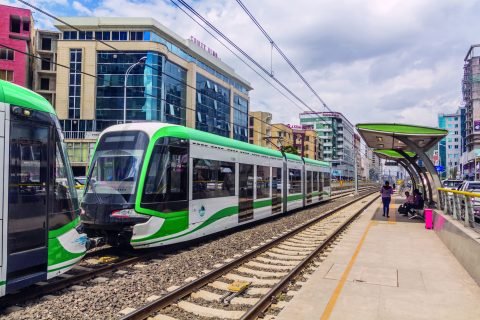
SZMC’s inaugural international contract came in Ethiopia in 2014, when it was appointed to manage the operations and maintenance of Addis Ababa’s 31 km two-line light rail network for three years and five months.
Having trained local personnel, SZMC handed over operations in 2018 to Addis Ababa Light Rail Transit Service Enterprise, which is owned by the local municipality.
The two-line network serving 39 stops opened to traffic in September and November 2015. The infrastructure was built by China Railway Engineering Corp, and services are operated by a fleet of 41 three-section trams supplied by CNR (now CRRC) Changchun.
Staying in Africa, SZMC provided operations and technical support for Abuja’s two-line diesel commuter rail network for a year and four months after it opened in July 2018. At the time, the line in the Nigerian capital was operated by China Civil Engineering Construction Corp, which led the civil works.
The service was suspended in 2020 because of the Covid-19 pandemic, and operations resumed in June 2024, managed by the Federal Capital Territory Administration. The 42.5 km two-line network links Abuja main station to the airport and Idu to Gbazango.
In the Algerian capital, SZMC is providing consultancy services for systems integration, design and construction for the 9.6 km airport extension of Alger metro Line 1. Work on the section started in July 2025.
The project is being led by China Railway Construction Corp through a joint venture with various local state-owned contractors.
This article first appeared in the October 2026 issue of Railway Gazette International
Read the issue
See also
Japan: Part-privatised Tokyo Metro looks to grow internationally
Source: Railway Gazette