Waymo’s next robotaxi is a purpose-built Toyota bZ4X
Transportationvia The Verge Transportation
Quick Read
Waymo announced today that when it launches a robotaxi service in Tokyo in 2027, it will use Toyota bZ4X electric vehicles that are assembled in Japan. The news builds on the strategic partnership between Waymo and Toyota which was first announced in April 2025. The robotaxis will be built entirely under one roof at Toyota's Takaoka plant in Toyota City, Aichi Prefecture, Japan. Instead of building regular cars and modifying them later, the factory will install Waymo's self-driving sensors and computers right on the assembly line as each car is made. A team-up between the world's largest automaker and the world's leader in autonomous dri … Read the full story at The Verge.
Waymo announced today that when it launches a robotaxi service in Tokyo in 2027, it will use Toyota bZ4X electric vehicles that are assembled in Japan. The news builds on the strategic partnership between Waymo and Toyota which was first announced in April 2025.
The robotaxis will be built entirely under one roof at Toyota’s Takaoka plant in Toyota City, Aichi Prefecture, Japan. Instead of building regular cars and modifying them later, the factory will install Waymo’s self-driving sensors and computers right on the assembly line as each car is made.
A team-up between the world’s largest automaker and the world’s leader in autonomous dri …
While Mexican truckers have suspended a nationwide strike that disrupted highways across 19 states, industry leaders warned that demonstrations could resume if federal and state authorities fail to address grievances that include cargo theft and violence against drivers. The suspension follows negotiations between Mexico’s Interior Ministry (Segob) and four trucking organizations — the National Chamber of Freight Transport (CANACAR), the Honorable Mexican Alliance of Transport Organizations (HAMOTAC), the Mexican-American Federation of Transporters (FEMATRAC) and the Organization for the Integration of Conventional Rights (INDECO). The groups agreed to establish negotiations with multiple government agencies covering highway security, infrastructure, taxation, labor regulations and social security. However, trucking leaders emphasized that the agreement represents a temporary suspension of protests rather than a resolution of the industry’s demands. window.googletag = window.googletag || {cmd: []}; googletag.cmd.push(function() { var gptSlot = googletag.defineSlot('/21776187881/FW-Responsive-Main_Content-Slot1', [[300, 100], [320, 50], [728, 90], [468, 60]], 'div-gpt-ad-1709668545404-0').defineSizeMapping(gptSizeMaps.banner1).addService(googletag.pubads()); googletag.pubads().enableSingleRequest(); googletag.pubads().collapseEmptyDivs(); googletag.enableServices(); setInterval(function() { if (!document.hidden) { googletag.pubads().refresh([gptSlot]); } }, 60000); }); googletag.cmd.push(function() { googletag.display('div-gpt-ad-1709668545404-0'); }); The demonstrations began Monday when truckers staged protests and highway blockades over cargo theft, extortion, violence against drivers and rising operating costs. Mexico’s Interior Ministry reported demonstrations at 38 locations across 19 states, involving 691 vehicles and 858 participants. CANACAR disputed the government’s assessment, saying the protest movement extended across all 32 Mexican states. Trucking leaders demand concrete solutions At a Tuesday news conference following negotiations with federal officials, Carlos García Álvarez, national president of HAMOTAC, thanked truckers who participated in the demonstrations and credited their efforts with bringing government officials to the negotiating table. The trucking organizations outlined agreements to establish working sessions with federal agencies responsible for public safety, transportation infrastructure, taxation and labor regulations. Lauro Rincón Hernández, president of FEMATRAC, said highway security remains among the industry’s most pressing concerns. “We cannot continue to endure more highway robberies, more loss of property, more truck drivers murdered,” Rincón Hernández said, according to Mexican transportation publication T21. window.googletag = window.googletag || {cmd: []}; googletag.cmd.push(function() { var gptSlot = googletag.defineSlot('/21776187881/fw-responsive-main_content-slot3', [[728, 90], [468, 60], [320, 50], [300, 100]], 'div-gpt-ad-1665767553440-0').defineSizeMapping(gptSizeMaps.banner1).addService(googletag.pubads()); googletag.pubads().enableSingleRequest(); googletag.pubads().collapseEmptyDivs(); googletag.enableServices(); setInterval(function() { if (!document.hidden) { googletag.pubads().refresh([gptSlot]); } }, 60000); }); googletag.cmd.push(function() { googletag.display('div-gpt-ad-1665767553440-0'); }); The organizations are demanding stronger measures to prevent highway robberies, extortion and violence against commercial truck drivers. According to various media reports here and here, CANACAR representatives said 15 truck drivers have been killed in Mexico this year, including three in Veracruz and two in San Luis Potosí. Trucking representatives also expressed concerns that drivers and fleet owners are reluctant to report crimes because they fear retaliation from criminal organizations. The industry has complained about difficulties recovering stolen commercial vehicles, even after authorities locate them. García Álvarez told Mexican journalist Azucena Uresti that the demonstrations were suspended following months of discussions with federal officials, but highway insecurity remains unresolved. window.googletag = window.googletag || {cmd: []}; googletag.cmd.push(function() { var gptSlot = googletag.defineSlot('/21776187881/fw-responsive-main_content-slot4', [[300, 100], [320, 50], [728, 90], [468, 60]], 'div-gpt-ad-1709668086344-0').defineSizeMapping(gptSizeMaps.banner1).addService(googletag.pubads()); googletag.pubads().enableSingleRequest(); googletag.pubads().collapseEmptyDivs(); googletag.enableServices(); setInterval(function() { if (!document.hidden) { googletag.pubads().refresh([gptSlot]); } }, 60000); }); googletag.cmd.push(function() { googletag.display('div-gpt-ad-1709668086344-0'); }); “It seems like a crime to be a transport worker,” García Álvarez said. Government agrees to four areas of negotiations During the Tuesday news conference, the leaders of HAMOTAC, FEMATRAC, INDECO and CANACAR outlined four major areas of negotiations with federal officials. The negotiations involve fiscal policies and fleet modernization about tax incentives, financing and measures to help carriers replace aging commercial vehicles; highway security, highway infrastructure, and labor regulations and social security. Augusto Ramos Melo, president of CANACAR, said the trucking industry is seeking simplified social security requirements and more affordable options for small carriers and independent operators. Ramos Melo said the discussions would also address proposed reductions in the workweek and how working hours and overtime should be calculated for truck drivers. The CANACAR president emphasized that the industry is dominated by small businesses, making regulatory costs and administrative requirements particularly important. window.googletag = window.googletag || {cmd: []}; googletag.cmd.push(function() { var gptSlot = googletag.defineSlot('/21776187881/fw-responsive-main_content-slot5', [[728, 90], [468, 60], [320, 50], [300, 100]], 'div-gpt-ad-1665767778941-0').defineSizeMapping(gptSizeMaps.banner1).addService(googletag.pubads()); googletag.pubads().enableSingleRequest(); googletag.pubads().collapseEmptyDivs(); googletag.enableServices(); setInterval(function() { if (!document.hidden) { googletag.pubads().refresh([gptSlot]); } }, 60000); }); googletag.cmd.push(function() { googletag.display('div-gpt-ad-1665767778941-0'); }); He said the organizations would seek agreements with defined timelines rather than open-ended discussions. Protests could resume if agreements fall short Despite the suspension, trucking organizations have not ruled out renewed highway demonstrations. Irma Serrano, FEMATRAC’s representative in Guanajuato, told Mexican news outlet La Silla Rota that national leaders had informed regional representatives about the agreements reached with federal officials. Serrano said the suspension is temporary and depends on whether authorities establish specific commitments and deadlines to resolve the industry’s concerns. window.googletag = window.googletag || {cmd: []}; googletag.cmd.push(function() { var gptSlot = googletag.defineSlot('/21776187881/fw-responsive-main_content-slot6', [[728, 90], [468, 60], [320, 50], [300, 100]], 'div-gpt-ad-1665767872042-0').defineSizeMapping(gptSizeMaps.banner1).addService(googletag.pubads()); googletag.pubads().enableSingleRequest(); googletag.pubads().collapseEmptyDivs(); googletag.enableServices(); setInterval(function() { if (!document.hidden) { googletag.pubads().refresh([gptSlot]); } }, 60000); }); googletag.cmd.push(function() { googletag.display('div-gpt-ad-1665767872042-0'); }); No date has been announced for additional demonstrations. Why it matters: Persistent cargo theft, extortion and attacks on truck drivers threaten Mexico’s transportation industry and the reliability of North American supply chains. The post Mexico truckers halt protests, demand action on deadly highway crime appeared first on FreightWaves.
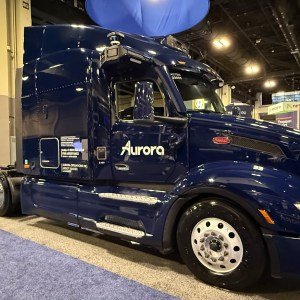
Aurora Innovation cut its 2026 revenue forecast to about $9 million on Wednesday, down from the $14 million to $16 million reported in its second-quarter results, after a six-week manufacturing delay. The company reported third-quarter revenue of $3 million and an operating loss of $257 million. Over the past month, output at Roush, which upfits Aurora’s trucks in Livonia, Michigan, was held back by material shortages, component quality problems and issues found in end-of-line testing, CEO Chris Urmson said on the earnings call. Aurora now expects Roush to reach 20 trucks a week in early December and delivering 200 trucks by the end of February “Instead of producing 20 trucks a week in October, we’re going to do that in December, it really has no impact on our ability to go and scale and deliver a thousand trucks next year,” Urmson told Bloomberg, which interviewed him about Aurora’s quarterly results. Aurora re-sources parts for the Roush line Some of the delay traced to complex components that arrived late or below Aurora’s quality bar. Maday said Aurora moved some of those parts, including wire harnesses, to “a more capable production supplier.” He said that in most cases the change was cost-neutral or could save money once reduced rework is counted, and that it would not materially affect gross margin. Other problems are typical of any new line, where some parts don’t fit together perfectly at first. Aurora Driver kits from supplier Fabrinet are running ahead of truck builds, and Roush is adding a second shift, Maday said. “I really do think that this is just a little bit of a pivot to the right in terms of when we can start hitting the run rate, but there is nothing that is really prohibiting us from hitting the run rate at this point,” Maday said. Aurora said Roush can push past 20 trucks a week by expanding the line. Cash use rises with the fleet Third-quarter revenue rose to $3 million from $1 million a year earlier. The operating loss widened to $257 million from $222 million and included $54 million in stock-based compensation. Net loss was $234 million, or 12 cents a share, compared with $201 million, or 11 cents, a year earlier. Aurora used about $170 million in operating cash during the quarter and spent $36 million on capital expenditures, which it said was within its quarterly average target. Asked by a Morgan Stanley analyst on the call whether the fourth-quarter increase reflected a structurally higher expense base, Maday said the money goes to hardware kits, components and truck builds at Roush. Research and development spending will change little, he said, with some added general and administrative cost to support hundreds of trucks. “The vast majority of the increase is planned, it has been expected, and it is all related to building up the fleet,” he said. The bill for the fleet is arriving before the revenue. Aurora ended September with just over $1 billion in cash and short-term investments, down from nearly $1.2 billion at the end of June. During the quarter, it sold 6 million shares through its at-the-market program for $41 million in net proceeds and used $23 million of that to cover taxes on vesting employee stock. Maday said Aurora should reach positive cash flow in 2028 with more revenue and fewer assets on its books, via Insurance Journal / Bloomberg News. MOUs now cover 1,000 trucks Charger Logistics signed a nonbinding memorandum of understanding to own and operate 500 Aurora Driver-powered trucks under Aurora’s driver-as-a-service model, with deliveries expected in 2027 and 2028. With Hirschbach Motor Lines’ 500-truck MOU in April, Aurora’s announced MOUs now cover 1,000 trucks. The Charger MOU builds on the transportation-as-a-service agreement Charger signed with Aurora in July for freight between Dallas and Laredo, Texas. Aurora said the deal represents a potential multiyear revenue stream in the hundreds of millions of dollars. “Since launching autonomous operations along the Laredo corridor, we’ve realized immediate operational benefits that point to a clear path to scaling,” Charger President Andy Khera said in Aurora’s shareholder letter. Maday said Aurora and its customers agreed on pricing and volumes in the MOUs and that the remaining terms are operational, such as who services the trucks and how they are disposed of at the end of their lives. “On the two MOUs, we fully expect these to convert,” he said. Urmson said the initial 200 trucks are fully contracted, and Maday said Aurora has 10 driverless customers. Weigh stations, customer sites and beacons Autonomous trucks have relied on voluntary enhanced pre-trip inspections, or EPTI, to bypass weigh stations, Aurora said in its shareholder letter. Its system can now determine whether a station is open, pull into an available scale lane and handle different scale layouts, the company said. “EPTI is a really useful tool that allows you to have certainty and bypass weigh stations, but it also adds complexity in training and operations at customer sites,” Urmson said. In November, Aurora trucks will begin running directly to sites for several driverless customers, including navigating security checkpoints on their own. Federal rules require the driver of a stopped truck to set out reflective triangles or flares. On Oct. 7, the Federal Motor Carrier Safety Administration granted a five-year exemption letting Level 4 autonomous trucks use cab-mounted amber beacons instead. Other carriers running Level 4 trucks can use it after notifying the agency, according to the Federal Register notice. Volvo and PACCAR to follow Roush Roush is the first step in a phased manufacturing plan. Aurora is integrating its driver directly on Volvo’s factory line while preparing for full production with Volvo and PACCAR, according to the earnings release. Volvo Autonomous Solutions plans to launch driverless trucks with the Aurora Driver in the first quarter of 2027 and deploy more than 300 that year. AUMOVIO plans to start production of Aurora’s third-generation hardware kit in the second half of 2027. Urmson tied the end-of-2027 goal back to February. “We still expect to get 200 trucks out of this in February, and we see this still enabling the 1,000+ trucks we expect on the road by the end of next year,” he said. Why it matters: Aurora still needs more than 1,000 trucks on the road by the end of 2027, now from a later start. For Charger and Hirschbach, whose 1,000 trucks still need binding contracts, and for investors facing a $250 million quarter, December’s 20-truck week at Roush is the next test. The post Aurora reaffirms it’s on track to produce more than 1000 trucks in 2027 appeared first on FreightWaves.
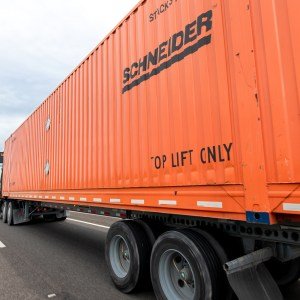
Schneider National announced Thursday it has inked a deal to utilize Norfolk Southern’s rail network in the East. The announcement was in conjunction with the multimodal transportation provider’s third-quarter report, which was slightly worse than expected. New Norfolk Southern service agreement Schneider said its new service agreement with Norfolk Southern (NYSE: NSC) will make the company the only entirely asset-based provider on a single-line transcontinental railroad in the U.S., assuming the railroad’s merger with peer Union Pacific (NYSE: UNP) is approved. (Schneider transferred its Western intermodal business to Union Pacific in 2023.) Schneider’s intermodal service is executed with its own drivers and tractors, chassis (23,900), containers (26,800) and over 60 rail hubs in North America. “As we transition our primary eastern rail provider to Norfolk Southern, we’ll expand access to key markets, increase network flexibility and create new opportunities to better serve our customers,” said Michael Baumgardt, executive vice president of intermodal and logistics at Schneider. “It will strengthen Schneider’s competitive position and enhance the reliable service experience our customers expect.” window.googletag = window.googletag || {cmd: []}; googletag.cmd.push(function() { var gptSlot = googletag.defineSlot('/21776187881/FW-Responsive-Main_Content-Slot1', [[300, 100], [320, 50], [728, 90], [468, 60]], 'div-gpt-ad-1709668545404-0').defineSizeMapping(gptSizeMaps.banner1).addService(googletag.pubads()); googletag.pubads().enableSingleRequest(); googletag.pubads().collapseEmptyDivs(); googletag.enableServices(); setInterval(function() { if (!document.hidden) { googletag.pubads().refresh([gptSlot]); } }, 60000); }); googletag.cmd.push(function() { googletag.display('div-gpt-ad-1709668545404-0'); }); The new service begins in January. Schneider pointed to the success it has had with CPKC’s (NYSE: CP) cross-border, steel-wheel service as a factor in its decision to switch providers. Schneider said the move doesn’t jeopardize its existing relationship with CPKC. Schneider was an early user of the Southeast Mexico Express (SMX), a joint offering from CSX (NASDAQ: CSX) and CPKC, connecting Mexico to Texas and to the Southeast U.S. “I mean, if you look at the UP today, we’re using the CPKC out of Mexico, despite the fact that they have a service,” said Jim Filter, Schneider president and CEO, on a call with analysts. “And they continue to operate with us and love everything that we’re doing with them, but they understand there’s a place that we don’t use them. And so, it’s not that unusual that you’re not going to go with one provider for everything.” Noisy Q3 on path to recovery Schneider (NYSE: SNDR) reported adjusted earnings per share of 29 cents for the third quarter, a penny below consensus but 17 cents higher year over year. Net interest expense was a 5-cent y/y tailwind, in part due to a reversal of interest accruals tied to a claim settlement (3 cents). A lower tax rate also helped slightly. But a separate claim in its logistics segment partially offset these benefits. Consolidated revenue of $1.59 billion was 9% higher y/y and slightly better than the $1.58-billion consensus estimate. It raised the bottom end of its full-year adjusted EPS guidance range by 10 cents to a new range of $1 to $1.10. The consensus estimate was $1.06 at the time of the print. (The company reported full-year 2025 adjusted EPS of 63 cents.) Truckload revenue (ex-fuel) was flat y/y at $625 million as an 8% increase in revenue per truck (ex-fuel) was offset by an 8% decline in average trucks in service. The utilization metric was 3% higher y/y for its dedicated fleet and 21% higher for the one-way fleet. window.googletag = window.googletag || {cmd: []}; googletag.cmd.push(function() { var gptSlot = googletag.defineSlot('/21776187881/fw-responsive-main_content-slot3', [[728, 90], [468, 60], [320, 50], [300, 100]], 'div-gpt-ad-1665767553440-0').defineSizeMapping(gptSizeMaps.banner1).addService(googletag.pubads()); googletag.pubads().enableSingleRequest(); googletag.pubads().collapseEmptyDivs(); googletag.enableServices(); setInterval(function() { if (!document.hidden) { googletag.pubads().refresh([gptSlot]); } }, 60000); }); googletag.cmd.push(function() { googletag.display('div-gpt-ad-1665767553440-0'); }); One-way contract renewals averaged just under 20% in the quarter, as management said that the capacity crackdown is expanding. This allowed the fleet to return to profitability. The company has sold dedicated service on 850 trucks this year, but is still working to offset a previously disclosed customer loss. The TL unit reported a 93% operating ratio (inverse of operating margin), which was 380 basis points better y/y, but 120 bps worse than the second quarter. Intermodal revenue (ex-fuel) increased 2% y/y to $288 million. A 2% decline in loads was offset by a 3% increase in revenue per load (ex-fuel). Intermodal contract renewals are “comfortably in the mid-single-digit range,” management said. The unit reported a 92.1% OR, 190 bps better y/y. The logistics segment reported breakeven results as a confidential claim settlement negatively impacted the period. window.googletag = window.googletag || {cmd: []}; googletag.cmd.push(function() { var gptSlot = googletag.defineSlot('/21776187881/fw-responsive-main_content-slot4', [[300, 100], [320, 50], [728, 90], [468, 60]], 'div-gpt-ad-1709668086344-0').defineSizeMapping(gptSizeMaps.banner1).addService(googletag.pubads()); googletag.pubads().enableSingleRequest(); googletag.pubads().collapseEmptyDivs(); googletag.enableServices(); setInterval(function() { if (!document.hidden) { googletag.pubads().refresh([gptSlot]); } }, 60000); }); googletag.cmd.push(function() { googletag.display('div-gpt-ad-1709668086344-0'); }); Net debt leverage was 0.1x at the end of the quarter, down from 0.3x at the end of 2025. Schneider lowered its full-year net capex plan to a range of $325 million to $350 million. Net capex totaled $289 million in 2025. Why it matters? Schneider’s new service agreement with Norfolk Southern expands its market access and potentially establishes it as a unique asset-based provider on a single-line transcontinental rail network alongside its growing cross-border intermodal service. Meanwhile, Schneider’s results serve as a bellwether for the health of the truckload and intermodal markets. More FreightWaves articles by Todd Maiden: FedEx Freight sees volumes stabilize, eyes Q4 margin improvement Saia’s expanded terminal network delivers record revenue, tonnage XPO’s pricing, operating initiatives drive Q3 beat The post Schneider partners with Norfolk Southern; raises outlook despite Q3 miss appeared first on FreightWaves.