United’s Airbus A321XLR is about to make its (domestic) debut: Here are the routes
Transportation
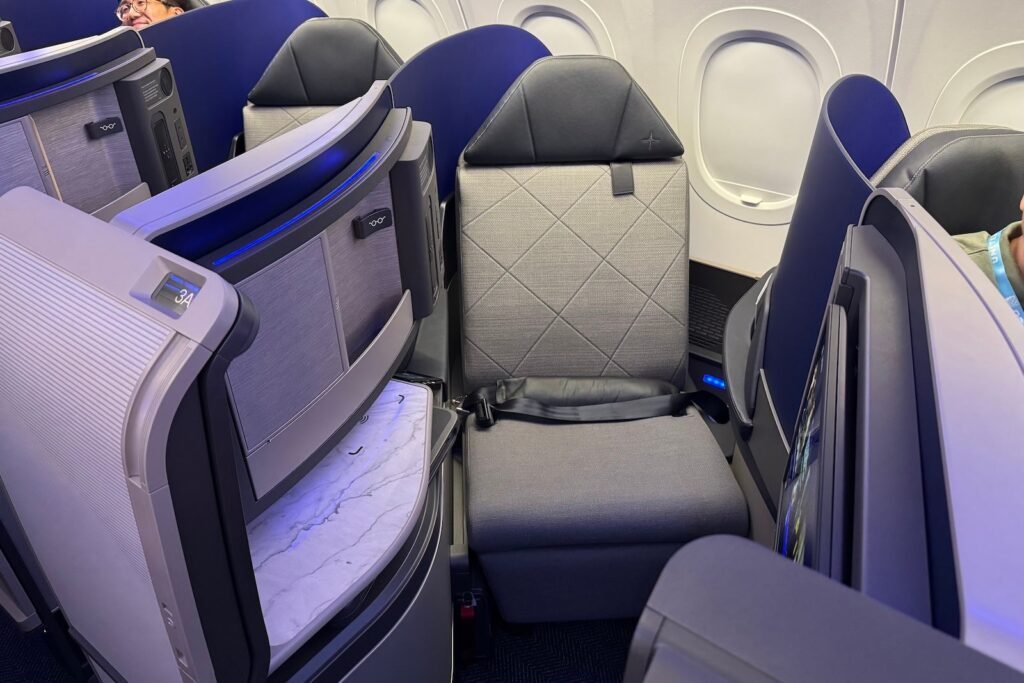
Who doesn’t like that new-plane smell?United Airlines travelers can look forward to the scent onboard its brand-new Airbus A321XLRs when they begin flying in September.Ahead of the new aircraft’s global debut in December, you can experience the new long-range narrow-body aircraft on some domestic services.United will christen the XLR on flights from its Dulles International Airport (IAD) hub to San Diego International Airport (SAN) on Sept. 9 and to Los Angeles International Airport (LAX) on Oct. 1, a spokesperson confirmed Friday.The new Polaris business class suites on United’s XLR. SEAN CUDAHY/THE POINTS GUYLong-range aircraft goes domestic (for now)The XLRs are United’s newest plane.They’re designed especially for longer flights, with 20 lie-flat Polaris business-class suites up front in a 1-1 layout. There are also 12 Premium Plus (premium economy) recliners arranged in a 2-2 layout. In the back are 34 extra-legroom Economy Plus seats in a 3-3 layout — except for four seats where the middle seat is blocked — along with 84 standard economy seats.There’s even a snack bar for all passengers at the back of the cabin.Premium economy on United’s new XLR. SEAN CUDAHY/THE POINTS GUYUnited has orders for 50 XLRs that will primarily fly transatlantic flights from its IAD and Newark Liberty International Airport (EWR) hubs.The airline will shift the XLR to long-haul flights Dec. 1 when it begins flying daily between IAD and both Amsterdam Airport Schiphol (AMS) and Dublin Airport (DUB).And, next summer, the XLR is headlining United’s blockbuster 2027 transatlantic expansion, flying five of nine new routes, including to Ibiza, Spain; Luxembourg; and Toulouse, France.But for the next few months, the plane will operate some transcontinental service domestically — something executives had suggested this week could happen, albeit on a temporary basis.Booking United’s new Airbus A321XLRFor anyone looking to fly on the XLR before its international debut, MileagePlus award tickets are available on IAD-SAN for as few as 12,700 miles in economy for Sept. 9. And, if they are lucky, travelers can snag one of the new premium economy seats sold as just an extra-legroom economy option.MileagePlus award availability on United’s inaugural XLR flight from IAD to SAN on Sept. 9. UNITED AIRLINESFirst-class seats are available later in September, starting at 85,000 miles.First-class awards are available on the XLR beginning Sept. 10. UNITED AIRLINESBottom lineUnited ultimately plans to focus its new XLR on long-haul international service. But with its luxe new domestic airplane delayed and crews still adapting to this new aircraft, it’s not surprising to see the new aircraft make its debut on the domestic front — at least for a few months.Related reading:United MileagePlus: Your guide to earning, redeeming, status and moreThe best credit cards for United Airlines flyersUnited’s big MileagePlus changes are in effect: What to knowThe best credit cards to reach elite status17 hours in United’s swanky new Polaris Studio suiteUnited adds 10 new international destinations in massive 13-route global expansionEditorial disclaimer: Opinions expressed here are the author’s alone, not those of any bank, credit card issuer, airline or hotel chain, and have not been reviewed, approved or otherwise endorsed by any of these entities.
WEX is expanding its use of artificial intelligence and digital payment technology for trucking fleets, announcing a partnership with Euclid AI on Tuesday aimed at automating back-office operations and reducing costs for over-the-road carriers. The announcement came during the WEX OTR Summit in Jacksonville, Florida, where Cade Mund, senior director and head of product for WEX OTR, outlined the company’s technology roadmap for 2026 and 2027, including cardless fueling, modernized fleet management software and AI-powered purchasing tools. Under the agreement, WEX (NYSE: WEX) and San Francisco-based Euclid AI will work together to bring AI agents designed specifically for trucking operations to WEX’s OTR customers. Euclid said its technology has enabled fleet managers to handle five to 10 times more work while reducing costs per transaction by 80% to 90% in existing production deployments. window.googletag = window.googletag || {cmd: []}; googletag.cmd.push(function() { var gptSlot = googletag.defineSlot('/21776187881/FW-Responsive-Main_Content-Slot1', [[300, 100], [320, 50], [728, 90], [468, 60]], 'div-gpt-ad-1709668545404-0').defineSizeMapping(gptSizeMaps.banner1).addService(googletag.pubads()); googletag.pubads().enableSingleRequest(); googletag.pubads().collapseEmptyDivs(); googletag.enableServices(); setInterval(function() { if (!document.hidden) { googletag.pubads().refresh([gptSlot]); } }, 60000); }); googletag.cmd.push(function() { googletag.display('div-gpt-ad-1709668545404-0'); }); “Our customers are looking for practical ways to take cost and complexity out of running a fleet, and AI agents built specifically for trucking are a significant step forward,” said Tim Hampton, senior vice president and general manager of WEX OTR, in a news release. Hampton said the collaboration would extend WEX’s services beyond its existing payments and fleet management products. AI agents target trucking paperwork, compliance Euclid’s technology is designed to automate repetitive administrative tasks that consume time and resources at trucking companies. Its Precision Agents can process bills of lading, proof-of-delivery documents, driver qualification records and compliance paperwork, according to the announcment. The agents can also manage communications involving drivers, customers and dispatchers, including shipment updates, document requests and follow-up messages. Other applications include automating multistep workflows, such as moving freight documentation through billing or managing compliance renewals. Euclid CEO Ahmad Kakar said the partnership would make the company’s technology available to WEX’s OTR customer base. window.googletag = window.googletag || {cmd: []}; googletag.cmd.push(function() { var gptSlot = googletag.defineSlot('/21776187881/fw-responsive-main_content-slot3', [[728, 90], [468, 60], [320, 50], [300, 100]], 'div-gpt-ad-1665767553440-0').defineSizeMapping(gptSizeMaps.banner1).addService(googletag.pubads()); googletag.pubads().enableSingleRequest(); googletag.pubads().collapseEmptyDivs(); googletag.enableServices(); setInterval(function() { if (!document.hidden) { googletag.pubads().refresh([gptSlot]); } }, 60000); }); googletag.cmd.push(function() { googletag.display('div-gpt-ad-1665767553440-0'); }); “We’ve already delivered major results for the largest carriers in the country,” Kakar said in a statement. “Together, we’re putting that same power in the hands of WEX OTR customers.” WEX did not announce a specific deployment schedule or pricing structure for the new AI services. WEX expands cardless fueling network During his presentation, titled “Fueling the Future 2.0: The WEX OTR Product & Payments Roadmap,” Mund said the company’s strategy centers on making fuel purchases more seamless, intelligent and connected to other fleet operations. “I believe that the future of fueling is a frictionless experience for our customers,” Mund said. He said WEX recently launched its cardless fueling network, allowing drivers to purchase fuel without relying on a physical payment card. window.googletag = window.googletag || {cmd: []}; googletag.cmd.push(function() { var gptSlot = googletag.defineSlot('/21776187881/fw-responsive-main_content-slot4', [[300, 100], [320, 50], [728, 90], [468, 60]], 'div-gpt-ad-1709668086344-0').defineSizeMapping(gptSizeMaps.banner1).addService(googletag.pubads()); googletag.pubads().enableSingleRequest(); googletag.pubads().collapseEmptyDivs(); googletag.enableServices(); setInterval(function() { if (!document.hidden) { googletag.pubads().refresh([gptSlot]); } }, 60000); }); googletag.cmd.push(function() { googletag.display('div-gpt-ad-1709668086344-0'); }); The network is operating at Pilot Flying J, Love’s, TravelCenters of America, Maverik and SCI terminals, according to Mund, with additional merchants expected to join. While WEX wants to reduce reliance on physical fuel cards, Mund said traditional cards will remain part of the payments ecosystem. “I think plastic is going to be around for a while,” he said. “I don’t think it’s just going to go away.” Fleet management modernization continues WEX is also upgrading its eManager fleet management platform, which Mund acknowledged has become outdated. “There’s a customer quote that I heard this year that said eManager, you can do pretty much everything if you can find it,” Mund told attendees. The company is redesigning the system to simplify navigation and improve access to fleet management functions. window.googletag = window.googletag || {cmd: []}; googletag.cmd.push(function() { var gptSlot = googletag.defineSlot('/21776187881/fw-responsive-main_content-slot5', [[728, 90], [468, 60], [320, 50], [300, 100]], 'div-gpt-ad-1665767778941-0').defineSizeMapping(gptSizeMaps.banner1).addService(googletag.pubads()); googletag.pubads().enableSingleRequest(); googletag.pubads().collapseEmptyDivs(); googletag.enableServices(); setInterval(function() { if (!document.hidden) { googletag.pubads().refresh([gptSlot]); } }, 60000); }); googletag.cmd.push(function() { googletag.display('div-gpt-ad-1665767778941-0'); }); WEX has also introduced a unified authentication system intended to allow customers to access multiple services through a single login, including fuel management, permitting and fuel tax tools. Other improvements include application programming interfaces that allow carriers to integrate fuel pricing and discount data into their own optimization systems. Looking ahead to 2027, Mund said WEX plans to continue expanding cardless fueling, modernizing payment products and incorporating AI into fleet management decisions. Potential applications include monitoring transactions, recommending changes to fuel card settings and helping process requests for purchases outside a driver’s normal fueling network. window.googletag = window.googletag || {cmd: []}; googletag.cmd.push(function() { var gptSlot = googletag.defineSlot('/21776187881/fw-responsive-main_content-slot6', [[728, 90], [468, 60], [320, 50], [300, 100]], 'div-gpt-ad-1665767872042-0').defineSizeMapping(gptSizeMaps.banner1).addService(googletag.pubads()); googletag.pubads().enableSingleRequest(); googletag.pubads().collapseEmptyDivs(); googletag.enableServices(); setInterval(function() { if (!document.hidden) { googletag.pubads().refresh([gptSlot]); } }, 60000); }); googletag.cmd.push(function() { googletag.display('div-gpt-ad-1665767872042-0'); }); “AI can help make those decisions and perform those actions on your behalf,” Mund said. Why it matters: WEX says AI-powered automation and digital payments could help trucking fleets reduce administrative costs, streamline operations and improve efficiency amid tight margins. The post WEX, Euclid AI target 90% reduction in trucking transaction costs appeared first on FreightWaves.
Truckload broker Landstar System noted strong demand for its dry van and flatbed offerings on its third-quarter call with analysts on Tuesday. A tightened capacity backdrop and the buildout of data centers are shaping the favorable fundamentals. However, insurance claims activity clouded an otherwise solid result. “You can look down the P&L and if you skip one line known as insurance and claims, you’d have a lot of good news to write home about,” said Landstar President and CEO Frank Lonegro. Landstar (NASDAQ: LSTR) reported third-quarter earnings per share of $1.42, which was 24 cents below the consensus estimate. The miss was attributable to $13 million (29 cents per share) in adverse adjustments to claims reserves and $8 million (18 cents per share) in unfavorable developments on two prior-year claims. The result was 20 cents better than the adjusted EPS result from a year ago, which excluded several non-recurring items. Consolidated revenue was up 25% y/y to $1.51 billion, which was largely in line with the consensus estimate. Total truck revenue increased 29% y/y to $1.41 billion as loads increased 3% and revenue per load jumped 25%. Higher diesel fuel prices, along with improving TL pricing, drove the yield increase. Revenue per load was up 7.5% from the second quarter. Dry van loads increased 6% y/y, with revenue per load up 23%. Flatbed loads increased 4% y/y, with yield up 29%. Landstar noted elevated heavy-haul demand. Total truck loads are up 7% y/y in October, with revenue per load 29% higher. Both metrics are running “slightly above” historical sequential trends. The company normally sees a slight increase in truck revenue from the third to the fourth quarter as both loads and revenue per load increase approximately 1%. Landstar culled its approved carrier list from over 100,000 in 2022 to nearly 68,000 in the recent quarter. The bulk of the reductions occurred in 2023 and into 2024 to combat cargo theft. The decline was also the result of deteriorating TL market conditions, especially for owner operators. Landstar’s approved carrier list was up 5% sequentially in the third quarter. Trucks provided by business capacity owners (BCOs) increased 165 units sequentially to 8,709. This was the largest sequential increase since the 2021 third quarter. The BCO truck count is up 22 units from the end of the third quarter. The BCO truck turnover rate improved 480 basis points y/y to 26.6%. BCO revenue per mile—Landstar’s preferred metric for TL pricing as it excludes fuel surcharges—was up 23% y/y on dry van loads and up 19% y/y on flatbed shipments. BCO revenue per load was 10.9% higher sequentially in the period. Landstar’s BCOs are owner-operators who haul almost exclusively for the company. Changes among this segment of capacity have historically signaled turns in the broader TL market. Variable contribution, or net revenue, increased 25% y/y to $212 million. (The calculation measures revenue remaining after purchased transportation expenses and agent commissions are paid.) A variable contribution margin of 14% was 10 bps lower y/y. The adjusted operating margin (as a percentage of variable contribution) declined 220 bps y/y to 30.9%. Insurance and claims expenses (as a percentage of BCO revenue) increased 220 bps y/y to 9.4%. The expense line was up $22.3 million y/y (to $55.3 million) due to the aforementioned unfavorable claims items, totaling $21 million. However, Landstar’s accident frequency improved again, dropping to 0.57 DOT reportable accidents per million miles through the first nine months of the year. A spike in nuclear verdicts has materially moved the expense line in recent years. In 2016, the company guided insurance expense to just 3.2% of BCO revenue. Why it matters? Landstar’s commentary provides some insight on how the industry is adapting, following the Supreme Court’s broker liability ruling. Its third-quarter results highlight how claims volatility can offset improving freight fundamentals, especially as insurers and brokers continue to adjust to a tougher liability environment. More FreightWaves articles by Todd Maiden: Werner Enterprises sees cost headwinds lingering into Q1 Knight-Swift again eyes big rate increases as new bid season nears Heartland Express sees earnings turnaround in Q3 The post Insurance claims adjustments tank Landstar’s otherwise strong Q3 appeared first on FreightWaves.
Port Houston recorded an 11% year-over-year increase in container volumes in September, fueled by stronger imports and improving export activity through its Bayport and Barbours Cut container terminals. The port handled 376,419 twenty-foot equivalent units (TEUs) during the month, compared with 337,659 TEUs during the same month in 2025, according to figures presented during the Oct. 21 Port Commission meeting. Through the first nine months of 2026, Port Houston handled 3.35 million TEUs, up 2% from 3.27 million TEUs during the same period last year. Loaded container imports rose 16% year over year in September to 174,189 TEUs, while loaded exports increased 2% to 132,009 TEUs. Port Houston CEO Charlie Jenkins said September’s performance represented a significant improvement after a challenging start to 2026. “We had a pretty rough start to the year,” Jenkins told commissioners, adding that recent cargo activity had improved the port’s outlook heading into the final quarter. Ryan Mariacher, the port’s chief operations officer, said container activity at Bayport and Barbours Cut continued to benefit from stronger import demand, while export volumes began accelerating toward the end of September. “The growth at Bayport and Barber’s Cut for the month was largely driven by imports,” Mariacher said during the meeting. He added that the second half of September and first half of October brought a long-anticipated surge in export volumes. Port officials said ocean carriers and shippers expect the stronger export activity to continue in the near term, potentially supporting additional freight movements through Houston’s container terminals. Houston container imports outperform national trends John Mosley, Port Houston’s chief commercial officer, said import demand remained unusually strong during the third quarter, traditionally the peak shipping season as retailers prepare for year-end sales. “This year has been unusually high with Port Houston outpacing the rest of the country,” Mosley told commissioners. He cited National Retail Federation Port Tracker data showing Houston among the strongest-performing major U.S. container gateways for import growth. Loaded imports through Port Houston increased 6% year to date through September, compared with a much weaker national import market, according to Mosley. The port’s September figures showed loaded imports increasing to 1.56 million TEUs through the first nine months, compared with 1.47 million TEUs during the same period in 2025. Mosley said the port was cautiously optimistic that exports would continue strengthening during the fourth quarter. Port officials have been meeting with major international ocean carriers to discuss additional shipping capacity, improved terminal throughput and opportunities to expand services. Eric Casey, Port Houston’s chief operating officer, said the port launched a new container and refrigerated cargo service in September and was negotiating additional services. “Commercially, we started a new container and reefer service in September, and more services are being negotiated today, so we are growing,” Casey said. The port’s September 2026 comparative statistics also showed a 31% increase in empty container exports, to 55,963 TEUs, compared with 42,782 TEUs a year earlier. The increase in empty equipment movements underscores the importance of container repositioning as ocean carriers balance import and export demand. Vessel traffic increases as cargo volumes rebound Port Houston recorded 750 vessel movements at its public terminals during September, up 10% from 681 a year earlier. Through September, vessel movements totaled 6,562, an 8% increase from 6,096 during the same period last year. Barge activity also increased, with 181 movements in September, up 23% year over year. The higher vessel activity coincided with stronger cargo throughput at the port’s public terminals, where total revenue tonnage increased 15% year over year to 4.88 million tons. Year-to-date cargo tonnage reached 42.37 million tons, up 2% from the same period in 2025. Port officials also highlighted the completion of Port Houston-led portions of Project 11, the Houston Ship Channel expansion project designed to accommodate larger vessels and improve navigation. The project widened a section of the Houston Ship Channel through Galveston Bay from 530 feet to 700 feet, allowing larger ships to move more efficiently and reducing daylight navigation restrictions. Jenkins said Port Houston was also advancing planning for Project 12, the next major expansion of the Houston Ship Channel, while considering ways to accelerate individual improvements to maintain the competitiveness of its container terminals. He noted that Port Houston previously accelerated channel improvements serving Bayport and Barbours Cut rather than waiting for the broader federal project schedule. Steel imports surge 181% in September Beyond containers, Port Houston reported a sharp increase in steel shipments, reflecting stronger activity tied to construction, manufacturing and energy infrastructure projects. Steel imports totaled 539,993 tons in September, up 181% from 192,351 tons a year earlier. Combined steel imports and exports exceeded 581,000 tons, the port’s strongest monthly steel performance since May 2022, according to operations officials. Port Houston also reported its first consecutive months exceeding 500,000 tons of steel in more than a decade. General cargo volumes have also increased, with officials pointing to rail-bound project cargo, including large electrical equipment and infrastructure components, as an important contributor to growth. September cargo statistics at a glance Why it matters: Stronger container volumes at Port Houston signal continued demand for Gulf Coast freight transportation and could support additional trucking, warehousing and intermodal activity. The post Port Houston container volumes jump 11% as imports surge in September appeared first on FreightWaves.