United bolsters Newark hub with routes to Virginia, Arkansas, Tennessee and Nebraska
Transportation
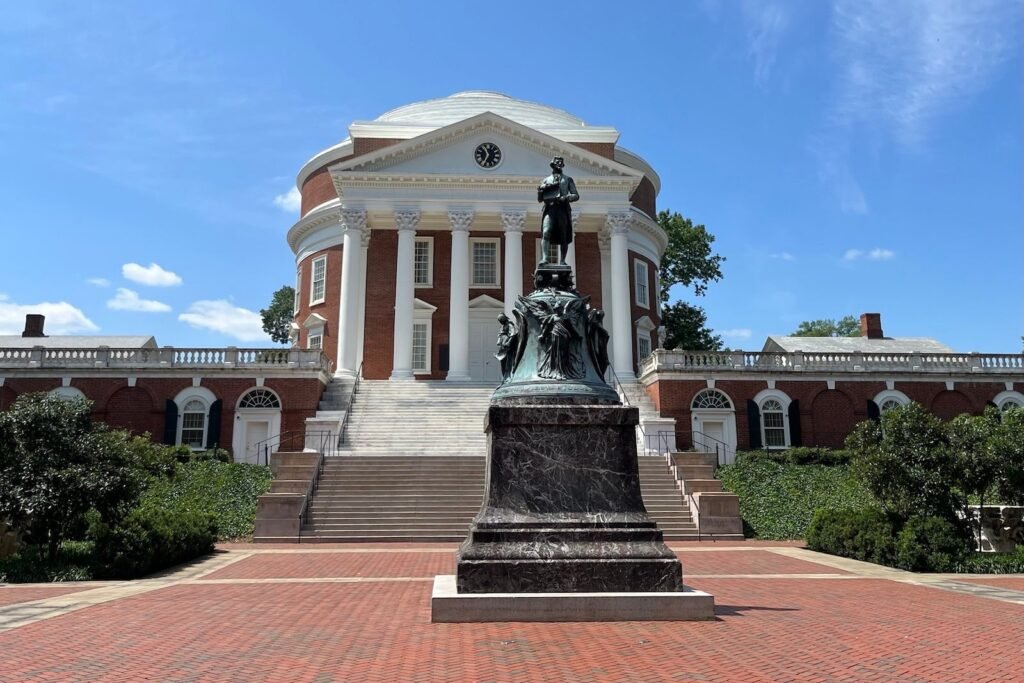
United Airlines often makes a big splash by adding new routes to off-the-beaten-path destinations on big wide-body planes.This week, though, the Chicago-based carrier is adding service to a handful of smaller U.S. cities on regional jets.Fresh off announcing its return to Moab, Utah, United on Friday confirmed four new and returning routes from its Newark Liberty International Airport (EWR) hub.The United Express service will see the carrier bring back flights from Newark to cities in Arkansas, Nebraska and Tennessee.And, it’ll give my Virginia hometown a new link to the New York City area (details below).United’s 4-route regional additionHere’s the rundown of United’s four routes announced Friday:RouteFrequencyAircraft<span style=”font-weight: 400;”>EWR to Charlottesville-Albemarle Regional Airport (CHO) near Charlottesville, Virginia </span><span style=”font-weight: 400;”>Daily</span><span style=”font-weight: 400;”>Bombardier CRJ550</span><span style=”font-weight: 400;”>EWR to McGhee-Tyson Airport (TYS) in Knoxville, Tennessee</span><span style=”font-weight: 400;”>Twice daily</span><span style=”font-weight: 400;”>CRJ550</span><span style=”font-weight: 400;”>EWR to Northwest Arkansas National Airport (XNA) in Bentonville, Arkansas</span><span style=”font-weight: 400;”>Daily</span><span style=”font-weight: 400;”>Embraer 175</span><span style=”font-weight: 400;”>EWR to Omaha Eppley Airfield (OMA) in Omaha</span><span style=”font-weight: 400;”>Daily</span><span style=”font-weight: 400;”>E175</span>All four of the routes will launch Sept. 24.United Express expansionThe Newark-Charlottesville service is an all-new route for United, bolstering its footprint at the Central Virginia airport.United already operated CHO service to Chicago’s O’Hare International Airport (ORD) and has long flown a very short route to Dulles International Airport (IAD).Charlottesville is home to Thomas Jefferson’s Monticello and the University of Virginia, and it’s a short drive from the Blue Ridge Mountains. (You can catch a fabulous view of the mountains upon takeoff or landing, depending on your seat.)Read more: Best United credit cardsThe Rotunda at the University of Virginia in Charlottesville. SEAN CUDAHY/THE POINTS GUYMeanwhile, United’s Newark service to Knoxville, Bentonville and Omaha may be familiar to residents of those cities.The carrier last operated Northwest Arkansas-Newark flights in 2022.Its last regularly scheduled service to Newark from Omaha and Knoxville came in 2020 and prior to the COVID-19 pandemic.Related reading:United MileagePlus: Your guide to earning, redeeming, status and moreThe best credit cards for United Airlines flyersUnited’s big MileagePlus changes are in effect: What to knowThe best credit cards to reach elite status17 hours in United’s swanky new Polaris Studio suiteUnited’s new MileagePlus reality: Cardholders win, others lose groundEditorial disclaimer: Opinions expressed here are the author’s alone, not those of any bank, credit card issuer, airline or hotel chain, and have not been reviewed, approved or otherwise endorsed by any of these entities.
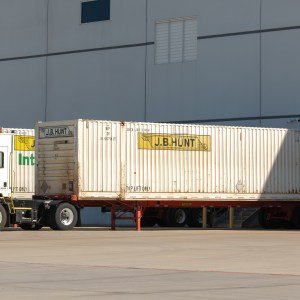
J.B. Hunt Transport Services’ third quarter slightly surpassed analysts’ lowered expectations following the company’s earnings warning issued in September. J.B. Hunt (NASDAQ: JBHT) reported third-quarter revenue of $3.68 billion Thursday after the market closed. The result was ahead of a $3.59 billion consensus estimate. Earnings per share of $1.82 were 1 cent higher than analysts’ revised expectations. (A higher tax rate was a 4-cent EPS headwind in the quarter, partially offset by a 2-cent decline in net interest expense.) The result was slightly better than its September update, calling for a 5% to 10% sequential decline in EPS, implying $1.77 at the midpoint of the range. At the time, the company flagged near-term cost pressures—a sharp runup in diesel prices ($10 million), driver-related costs ($25 million) and elevated cargo claims ($10 million)—as headwinds. The actual impact in the quarter was over $50 million. The third quarter marked a fifth straight quarter of year-over-year improvement to operating income and EPS. The company’s earnings turnaround started in the 2025 third quarter, well ahead of peers. window.googletag = window.googletag || {cmd: []}; googletag.cmd.push(function() { var gptSlot = googletag.defineSlot('/21776187881/FW-Responsive-Main_Content-Slot1', [[300, 100], [320, 50], [728, 90], [468, 60]], 'div-gpt-ad-1709668545404-0').defineSizeMapping(gptSizeMaps.banner1).addService(googletag.pubads()); googletag.pubads().enableSingleRequest(); googletag.pubads().collapseEmptyDivs(); googletag.enableServices(); setInterval(function() { if (!document.hidden) { googletag.pubads().refresh([gptSlot]); } }, 60000); }); googletag.cmd.push(function() { googletag.display('div-gpt-ad-1709668545404-0'); }); Intermodal revenue increased 20% y/y to $1.83 billion as loads were up 8% and revenue per load increased 11%. Higher fuel prices pushed revenue higher in the period. Excluding fuel, revenue per load was up 2% y/y. Volumes increased 18% y/y in the East and 1% on transcontinental lanes. A 3% decline in length of haul, due to a mix shift to the East, was a modest headwind to revenue per load. The unit booked a 91.9% operating ratio (inverse of operating margin), which was 15 basis points worse y/y. Higher costs (driver personnel, equipment and employee benefits) were a drag in the quarter. The dedicated OR deteriorated 360 bps y/y to 91.5%. Revenue was up 11% y/y, almost entirely due to higher revenue per truck per week (inclusive of fuel). Revenue per truck was up just 3% excluding fuel. Average trailers in service increased 11% even though load counts grew just 3%. Higher driver costs, group medical claims, insurance premiums and new account startup costs were among the culprits. The brokerage unit booked a second straight operating profit after 13 quarters in the red. The company’s asset-light truckload unit swung to a $7-million operating profit after a modest second-quarter loss. Shares of JBHT were down 2.4% in after-hours trading on Thursday. The stock fell 14% from its mid-September earnings update to the Thursday close. J.B. Hunt will host a call at 5 p.m. EDT on Thursday to discuss third-quarter results. window.googletag = window.googletag || {cmd: []}; googletag.cmd.push(function() { var gptSlot = googletag.defineSlot('/21776187881/fw-responsive-main_content-slot3', [[728, 90], [468, 60], [320, 50], [300, 100]], 'div-gpt-ad-1665767553440-0').defineSizeMapping(gptSizeMaps.banner1).addService(googletag.pubads()); googletag.pubads().enableSingleRequest(); googletag.pubads().collapseEmptyDivs(); googletag.enableServices(); setInterval(function() { if (!document.hidden) { googletag.pubads().refresh([gptSlot]); } }, 60000); }); googletag.cmd.push(function() { googletag.display('div-gpt-ad-1665767553440-0'); }); Why it matters? J.B. Hunt’s quarterly results serve as a bellwether for the intermodal, trucking and logistics industries. The company’s third quarter was a modest slowdown after four quarters of strong recovery. However, some of the incremental costs that plagued the period were likely transitory in nature. More FreightWaves articles by Todd Maiden: LTL rates hit new high in Q3, moving higher in Q4 Cass: TL linehaul rates up 10% in September, shipment counts remain positive Yellow Corp., Teamsters settle on WARN Act claims The post First look: J.B. Hunt’s Q3 earnings appeared first on FreightWaves.
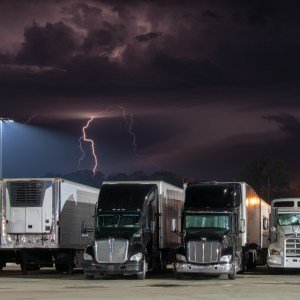
There will be a little more than 2,400 new truck parking spaces built over the next few years as a result of funding provided to various projects under the Nationally Significant Multimodal Freight & Highway Projects (INFRA) program. “A targeted objective of this funding opportunity is to directly address the national shortage of commercial motor vehicle parking,” the Department of Transportation said in announcing the grants Wednesday. “By funding projects that expand safe, accessible public parking for commercial drivers, the Department aims to reduce fatigue-related accidents, improve supply chain fluidity, and provide essential infrastructure along the nation’s most critical freight corridors. To support these national freight and mobility goals, the Department intends to invest in projects that enhance or maintain the operational efficiency of the national transportation network.” According to an FAQ document on INFRA, the funds for parking can only be provided to some sort of public entity or a public-private partnership. The list of acceptable entities to apply included potential applicants as big as a state or a group of them, down to an individual local government or a group of them. But it also provides that any of the public applicants could have applied with a “private entity to fund development, capacity expansion, or operations and maintenance.” There were 14 new parking projects approved by INFRA and announced by the Department of Transportation Wednesday. The precise total of new spots is 2,403. Biggest project in the Volunteer State The largest is a 500 spot project in Tennessee. That project is actually two separate projects, one near Nashville and the other near Knoxville. The recipients of the grant of just under $24 million are three counties, joined together under the banner of the Greater Nashville Regional Council. The new parking spots will be built at five separate Pilot Travel Center locations, according to the fact sheet released by the DOT. They will be built along interstate 40 and interstate 24. Border crossing parking The dropoff to the next largest project is significant: 305 spots to be built in Los Indios, Texas, near the Brownsville border crossing with Mexico. In that project, according to the DOT, work will need to be done to reconstruct about 0.35 miles of a local road that will provide access to a new parking area near the Los Indios Port of Entry. Cameron County was the entity granted the $9.2 million award. The other projects from largest to smallest, along with their sponsors, are as follows: Port of Savannah, 275 spots, sponsored by the Georgia Ports Authority, near the port of Savannah, less than two miles from gate 4 of the port, $24.5 million. Enfield, Connecticut, 260 spots at a new parking facility, sponsored by the state’s Department of Transportation, on interstate 91 north of Hartford, $13.5 million. Rest Iowa sponsored by the state’s Department of Transportation, described as “rural,” 150 spots spread out over six existing rest areas on interstate 80, $24.5 million, sponsored by the state’s Department of Transportation. Port of Wilmington, North Carolina, 140 spots, $6 million, at the port, serving interstate 40, sponsored by the North Carolina State Ports Authority. Interstate 49 rest area, new project on the future interstate 49 in Crawford County, Arkansas, 137 spots, $23 million, Arkansas Department of Transportation is the sponsor. Nebraska interstate 80 rest stop, sponsored by the state’s Department of Transportation, 120 spots for $7.5 million, building a new facility between mile markers 247 and 254 in Dawson County. Monroe County, Georgia, 109 spots, $13.5 million, adding spots at existing sites at two Georgia-owned parking facilities, one a weigh station and one a rest area, sponsored by the state’s Department of Transportation. Wisconsin project on interstate 41 near Dodge County, sponsored by the state’s Department of Transportation, 106 spots for $15 million, adding to two existing areas. Fort Worth Alliance project at a Pilot Travel Center, 100 spots, $5 million, state highway 170 & interstate 35 west, sponsored by the city of Fort Worth. Needles truck parking area, 100 spots at a new 15-acre site, near the interstate 40 and California 95 interchange, $6.4 million, sponsored by the city of Needles. Fergus Falls rest area in Minnesota, 63 spots, $27.7 million, sponsored by the state’s Department of Transportation, located on interstate 94. Southern Illinois project, sponsored by the state’s Department of Transportation, 38 parking spots, reconstructing the southbound Green Creek and Post Oak rest areas on interstate 57. More articles by John Kingston English language rule’s comments bring criticism from Sikh organization Wall Street analysts positive on C.H. Robinson deal; S&P more cautious FMCSA split sleeper berth pilot program moves closer to launch The post Federal DOT grants will fund more than 2,400 parking spots appeared first on FreightWaves.
freight visibility meant knowing where a given truck was, but the industry has only gotten more complex as it has digitized. On a recent episode of FreightWaves’ What the Truck?!?, host Malcolm Harris pressed Andrew Wimer, Associate General Manager, Transportation Management at Descartes, on how visibility metrics have evolved as shippers, carriers, and brokers demand a fuller picture of what’s happening with a load. Wimer, who oversees the Descartes MacroPoint visibility platform, said the fundamentals haven’t gone away. “It’s always been ‘Where’s my truck?’ or ‘Where’s the load? Where’s the freight?’” Wimer said of visibility’s original mandate. “That’s still essential. Don’t get me wrong. You need to know where your freight is or where your truck is.” But Wimer argued the industry’s reliance on electronic logging devices has created blind spots that go beyond simple location pings, and that closing those gaps means rethinking who gets a voice in the tracking process. For years, Wimer said, the industry treated ELDs as the definitive answer to tracking, fraud prevention, and driver accountability. That approach, according to Wimer, sidelined the drivers themselves. “There’s a massive network of millions of drivers who are very good drivers, who are reliable drivers, and who are safe drivers, and when they’re removed from visibility, they don’t have the ability to help validate shipment status,” Wimer said. Validation covers everything from confirming a delivery to speeding up paperwork. Drivers who stay engaged with a tracking app can flag when they’ve arrived at a dock, upload proof-of-delivery documents on the spot, or send updates that would otherwise require a phone call to dispatch. Removing them from the workflow, according to Wimer, meant losing that layer of real-time confirmation just as the industry leaned harder on ELDs as “the silver bullet” for tracking. The fix, however, is not to abandon ELDs. According to Wimer, “We need to bring the drivers back into the equation. We need to leverage ELDs along with the app within the driver community so that we can have the most robust dataset possible and improve our time to cash.” That philosophy is the foundation of Descartes MacroPoint ELD+: to run ELD and mobile app tracking on the same shipment simultaneously, rather than forcing brokers to choose one data source over another. “We’re combining the two data sources together,” Wimer said. “We’re tracking the ELD, the truck, and the driver so that you can have continuity over the tracking session.” The redundancy is the point. If a driver’s phone loses signal, or an ELD provider’s API goes down, the other data source keeps the shipment visible instead of leaving a broker or shipper with a blind spot in the timeline. “If there’s a gap in connectivity or signal or for whatever reason there’s an issue with one of the devices, the other one’s still picking up data and fulfilling any gaps in visibility so you can provide your shippers with good customer service and meet your compliance metrics and scorecards,” Wimer said. Under the hood, Descartes MacroPoint no longer picks a single best identifier to track on a shipment. It tracks all of them at once, on one session, and feeds it all back to the transportation management system. “We’re tracking them all on a single session,” Wimer said. “We’re sending it all back to the TMS.” Beyond redundancy, Wimer said the dual data streams give brokers and carriers a new tool for spotting trouble. When a truck’s ELD and a driver’s phone stop telling the same story, that divergence itself is a signal. “Truck and driver should be telling the same story, moving down the highway together,” Wimer said. “If they go separate ways or signals go different directions, that should set off an alert and an operational workflow to call and investigate.” A mismatch doesn’t always mean fraud, but it’s worth a phone call. “If something odd is going on, get after it before it’s too late,” Wimer said. He pointed to a broader pattern the industry has had to reckon with over the past year: bad actors spoofing location data on both ELDs and driver-facing apps. “There’s spoofing of both ELDs and of the mobile app across any platform,” Wimer said. “Having multiple signals to help validate fraud and give you more data to then go out and talk to carriers is very important.” There’s one specific scam that brokers run into often: a carrier selling a team-driver service (with two drivers alternating behind the wheel to keep a truck moving around the clock) while actually running solo, a bait-and-switch that can show up as a single phone number covering a load that should have two. Wimer, who spent time on the brokerage side of the business before joining Descartes, said he’s seen it firsthand. Tracking multiple sources of data, he said, is an excellent way to catch issues like that as they occur. Rolling out the new ELD+ feature, Wimer said, required no new lift from Descartes’ TMS partners or the brokers using them. Using Descartes Tai TMS as an example, Wimer explained that a broker’s existing driver information (including phone number, truck number, and trailer number) flows automatically into Descartes MacroPoint to kick off tracking, and the solution handles the rest internally. “ELD plus just starts off the bat,” Wimer said. “There’s nothing extra a customer needs to do.” That’s a deliberate design choice rooted in how Descartes manages its relationships with the TMS providers that feed MacroPoint driver data. “We don’t want to add complexity to what a TMS has to send to MacroPoint to take advantage of additional features,” Wimer said. “We want to handle that within the application ourselves, so that customers don’t need the TMS to do anything additional to reap the value from it.” The scale behind that promise, Wimer said, comes from roughly two decades of building out the MacroPoint driver network. “We’ve been building a driver network for roughly two decades,” Wimer said. “We’re talking millions of unique drivers on the network, with their cell phones. They’re ready to track.” On the ELD side, MacroPoint has spent nine years building out telematics integrations and now connects with more than 500 ELD and telematics providers globally. Wimer said that Descartes has worked to maintain the network carefully so tracking doesn’t break down over vendor disputes. Asked what shippers, carriers, and brokers should do first if they suspect their visibility still has gaps, Wimer pointed to the data brokers put into their own systems at the moment of dispatch. “The first thing would be ensuring that you are working with your brokers on the floor to get full driver information. That’s the biggest gap we see,” Wimer said. Wimer said he recognized the temptation to cut corners on driver data firsthand, from his own time working as a broker under deadline pressure. That habit, multiplied across an industry, is what still undermines visibility tools no matter how many data sources feed them, Wimer said. “Getting accurate and good driver information in your TMS is still the biggest hurdle that I see our customers have,” Wimer said. “It starts with a good phone number. It starts with a good truck number or trailer number in the TMS so that then we have something accurate to track against.” Click here to learn more about Descartes. The post Freight Visibility Gets a Second Set of Eyes appeared first on FreightWaves.