Podcast: Tesla Roadster delay, EV deliveries, battery swap comes back, and more
Transportationvia Electrek
Quick Read
In the Electrek Podcast, we discuss the most popular news in the world of sustainable transport and energy. In this week’s episode, we discuss the Tesla Roadster delay, EV deliveries in the US, battery swap coming back, and more. more…
In the Electrek Podcast, we discuss the most popular news in the world of sustainable transport and energy. In this week’s episode, we discuss the Tesla Roadster delay, EV deliveries in the US, battery swap coming back, and more.
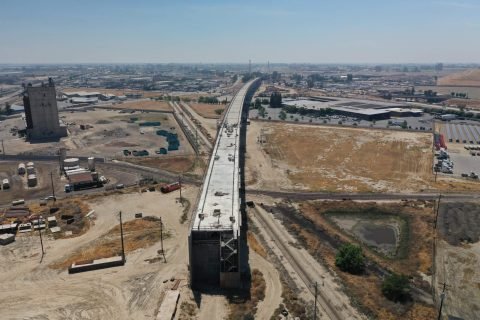
USA: Siemens Mobility has been selected to supply and maintain three American Pioneer 220 trainsets for the California High Speed Rail project’s Initial Operating Section between Bakersfield and Merced. Alstom and Siemens Mobility had prequalified for the project’s rolling stock contract. Planned contracts Documents released ahead of the California High Speed Rail Authority board meeting on October 28 set out plans to approve the award to Siemens Mobility of a $281.7m contract to supply three trainsets, along with $284.1m maintenance and full service agreement for 2030-40, and to make a $206.3m provision for testing, cost escalation, foreign exchange, taxes and other items. Delivery of the trainsets is envisaged from the end of 2029, enabling testing from spring 2030 ahead of the opening of the 275 km Initial Operating Section in 2033-34. There would be options to order up to 19 more trainsets at $62.1m each. The 10-year maintenance contract is to be based on monthly payments tied to availability and reliability, with options for five-year extensions up to a total of 30 years. American Pioneer 220 The 354 km/h (220 mile/h) AP220 trainsets from Siemens Mobility’s Velaro Novo family would be built in Germany, with CHSRA having dropped federal Buy American requirements in August. The aluminium-bodied trainsets will be designed to meet US federal Tier III crash and fire safety rules for operation above 200 km/h, and to cope with long climbs, tunnels and altitudes up to 1 400 m. The 8.2 MW trainsets will have distributed power and batteries to provide emergency propulsion and keep the air-conditioning running if the overhead power fails. The trainsets would be able to work in pairs. Measures to control costs include using Siemens Mobility’s standard configurations, with choices limited to livery, colours and some materials. The seven-car trains would be 202 m long with at least 450 reclining seats arranged 2+2, with a 990 mm pitch and power and USB-C points at every seat. There would be an accessible toilet in every coach. The interiors will offer the flexibility for later changes, with possibilities including different seating concepts, family and bicycle areas and food service. The design life will be 30 years and 20 million km. In May 2024 Siemens Mobility was selected to supply and maintain 10 seven-car AP220 trainsets for the Brightline West project to build a 351 km high speed line linking Las Vegas with Rancho Cucamonga east of Los Angeles. Read Railway Gazette International‘s exclusive interview with California High Speed Rail Authority CEO Ian Choudri.
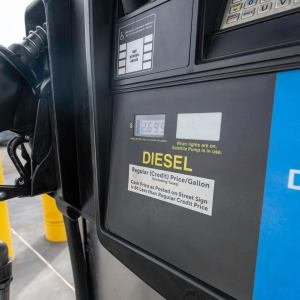
A tanker carrying 40,000 metric tons of Russian diesel is heading for New York under a new U.S.-Russia supply agreement, marking a reopening of a trade curtailed by Washington’s 2022 ban on Russian oil and petroleum imports. The Malta-flagged Agioi Fanendes loaded ultra-low-sulfur diesel at Primorsk, Russia’s Baltic Sea oil port, on Oct. 22 and is expected to arrive in the United States Nov. 7, according to LSEG ship-tracking data cited by Reuters. The buyer and seller were not immediately identified. The voyage is the first identified U.S.-bound shipment under the agreement President Donald Trump announced Oct. 9. It’s reported to be the first U.S. import since the 2022 ban, although maritime analyst Kpler states that it would be the first Russian diesel delivery since July 2023. Kremlin spokesman Dmitry Peskov confirmed Friday to Reuters that the first tanker under the arrangement had departed and said regular supplies would follow. Russian Deputy Prime Minister Alexander Novak has said additional shipments are planned as Russian and U.S. companies finalize delivery contracts. The agreement combines U.S. sanctions relief with Russia’s decision to lift its own restrictions on diesel exports. Trump announced an initial release of 300,000 metric tons to U.S. and global markets, followed by 500,000 tons in November and 1 million tons “immediately thereafter.” The shipment comes as Trump seeks to rein in soaring diesel prices ahead of the Nov. 3 midterm elections. Its scheduled arrival, however, falls after Election Day. At roughly 300,000 barrels, the cargo represents about 7% of the approximately 4 million barrels of diesel consumed by the U.S. economy each day, according to AP. Energy policy experts cited by the news agency said the import agreement was unlikely to substantially reduce fuel prices. The agreement has drawn criticism from Ukraine, which has urged its partners to tighten restrictions on Russian energy revenue as Putin presses his war against Kyiv. Ukrainian President Volodymyr Zelenskyy called the U.S. decision “a weak decision by strong partners,” AP reported. Read more articles by Stuart Chirls here. Read more: Time-definite ocean delivery? Container ship completes new Arctic route trial How new capacity is raising rates in chaotic ocean market No. 2 container line studying US-UK route for nuclear ships Trans-Pacific facing new booking risks as reliability sinks Container ship attacks escalate in Strait of Hormuz The post Russian diesel tanker heads for U.S. following Trump-Putin deal appeared first on FreightWaves.
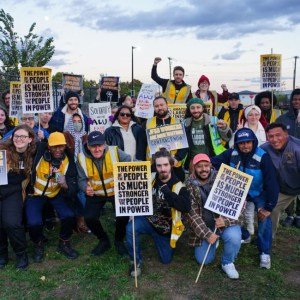
Four and a half years after a grassroots union was voted in by workers at an Amazon warehouse in Staten Island, New York, the battles in court over Amazon’s pushback against the vote continues. At issue in the latest set of filings in the Fifth Circuit is a National Labor Relations Board decision from April where the NLRB ordered Amazon (NASDAQ: AMZN) to negotiate with the union, which after its successful vote to unionize with no particular national organization is now aligned with the Teamsters as ALU-International Brotherhood of Teamsters (IBT) Local 1, with the ALU standing for Amazon Labor Union. There were dual filings last week with the Fifth Circuit in the case of Amazon vs. NLRB over the board’s April decision to require Amazon to sit down and bargain with the Teamsters for a contract covering the workers at the facility known as JFK8. The briefs filed October 16 by Amazon and the Teamsters are vastly different, not just because they are coming at the case as adversaries, but because they take an entirely different approach. Legal arguments by Amazon The Amazon brief is more on narrow legal grounds about what the NLRB can and can not do. The Teamsters brief is a 115-page behemoth that relitigates and reviews the entire history of the Staten Island union and the many of the disputes that have been a hallmark of the contentious relationship between the Teamsters and Amazon. For Amazon, the battle on Staten Island marks the only time it has ever faced off against a unionization drive at one of its facilities and lost. For example, a year later, another attempt at unionization at a separate Staten Island facility failed. In a closely-watched 2021 election because it was the first of a kind, Amazon beat back a unionization drive at its facility in Bessemer, Alabama. In that case it was not the Teamsters but the Retail, Wholesale and Department Store Workers Union that sought to represent workers there. Oral arguments…or not In the Fifth Circuit case, the two sides are far enough apart that their respective briefs couldn’t even agree on whether there is a need for oral arguments. “While this Court could deny Amazon’s petition for review and grant the Board’s motion for enforcement without oral argument, the Court may find oral argument useful to address the briefing,” the union said in a fence-straddling statement in its brief. What did Amazon say? “Amazon agrees with (the union) that the issues raised in its petition can be decided without oral argument.” Why it didn’t bargain The Amazon brief is notable also in that it says it has not bargained with the union because it was seeking a court to overturn the NLRB’s certification of the election and the April order for it to negotiate. A lack of bargaining was needed to push the issue to a court, the company said. “An employer cannot obtain direct judicial review of a decision certifying a union election,” the Amazon brief says. “Instead, the employer must refuse to bargain with the union, be found to have committed an unfair labor practice, and then challenge the certification when it seeks review of that finding.” The legal term of what Amazon is pursuing in its action against the NLRB is a “test of certification challenge.” NLRB Edge, a blog about the NLRB written by Matt Bruenig, said in a post following the NLRB decision that the board rejected Amazon’s arguments after “finding that all representation issues raised by Amazon either were or could have been litigated in the underlying representation proceeding, and that Amazon offered no newly discovered evidence or special circumstances justifying reconsideration.” Was it a big win? Amazon’s brief does touch on allegations it has leveled against the union. It said the union’s Staten Island efforts “engaged in a campaign marked by threats, coercion and intimidation.” It also said the union “narrowly prevailed” in its election; by contrast, the union touted the win as being a margin of almost 11% of all ballots cast. But the more legally-oriented question the Amazon action against the NLRB puts before the Fifth Circuit is focused on a union request that beyond just ordering Amazon to bargain, it must engage in an “enhanced remedy.” The union describes the remedy as Amazon reading aloud at a “mandatory meeting”, according to the union, “a notice of employees’ rights under the National Labor Relations Act.” Although such a reading had been recommended by the NLRB’s General Counsel, the full board rejected that remedy. Amazon is recommending rejection of that union request because, one, it thinks the election on Staten Island is going to be decertified, making the issue moot. Second, the “enhanced remedy” of the reading of rights in a test-of-certification case has no precedent in labor law, according to Amazon. And third, Amazon says the union has not made a sufficient case that the reading is warranted. The union says if the Fifth Circuit agrees with Amazon’s arguments, “it would be improper to set aside the election.” Instead, it recommends the case be remanded to the NLRB “to provide further rationale for its decision.” Joint employer case rolls on Meanwhile, another battle between the Teamsters and Amazon continues to play out before the NLRB. The fight there is over an April agreement between Amazon and the NLRB’s General Counsel. That agreement was designed to end a process on terms favorable to Amazon in which a lower rung of the NLRB process in Los Angeles had found that Amazon was a joint employer along with a direct service provider, the independently-owned companies that actually deliver products. That agreement stopped the process that was launched in Los Angeles from getting to the full board. Amazon has long argued that its DSPs are independent. The Teamsters have argued otherwise and that Amazon is a joint employer with all of them, given their level of control over the delivery companies. It isn’t a stretch to say that in terms of its labor structure, being held to be a joint employer would be almost an existential threat to the way it does business. The deal struck by the General Counsel ending the process was favorable enough to Amazon that Teamsters lawyers at the time called it an “ambush settlement agreement.” The NLRB docket on the case has mostly been quiet in recent months. The last substantive entry on it is a letter from Teamsters attorneys who said that unless there is an “immediate reinstatement of these proceedings,” accepting the agreement “will represent the Board’s capitulation to the corporate interests that operate to the detriment of working people across the country, who depend on the Board to effectuate the Act and protect their rights.” More articles by John Kingston English language rule’s comments bring criticism from Sikh organization Texas judge upholds nuclear verdict against C.H. Robinson CEO’s letter boasts of lots of arrows pointing up at Triumph Financial The post NLRB ordered Amazon to bargain with Staten Island workers; it’s now in federal court appeared first on FreightWaves.