JetBlue says domestic Mint flyers can now access its lounges, too
Transportation
JetBlue is opening up its BlueHouse lounges to anyone flying business class.The airline said on Monday that passengers flying Mint on domestic routes can now access its lounges for free, reversing an earlier policy that restricted complimentary access to Mint passengers flying internationally, among other eligible guests.The only catch is that passengers have to be flying a Mint or “Mint Flex” fare. The airline’s “Mint Base” fares are not eligible for lounge access.During a media preview of the airline’s new lounge at Boston Logan International Airport (BOS) on Monday, airline president Marty St. George said the airline would begin the newly expanded access as the Boston lounge location opens.Notably, this will not include passengers flying in BlueFirst, the airline’s forthcoming domestic first-class product.JetBlue opened its first lounge in December 2025 at New York’s John F. Kennedy International Airport (JFK). The Boston location opens on Thursday, Aug. 27.With the changes, here’s who can access the new lounges for free:Credit card holders with the JetBlue Premier Card, which comes with a $499 annual feeTop-tier Mosaic 4 elite status members of the airline’s JetBlue TrueBlue loyalty programPassengers flying in Mint business-class cabins, domestic or internationalMosaic 4 members and Premier Card holders can bring one complimentary guest. Subsequent guests cost $39 each. Mint customers can bring non-Mint guests for $39 each.Mosaic 1 and Mosaic 2 members, as well as JetBlue Plus Card and JetBlue Business Card holders, can purchase access for $79 per person. Mosaic 3 members can access the lounge for $59 each.The information for the JetBlue Premier, JetBlue Plus and JetBlue Business cards has been collected independently by The Points Guy. The card details on this page have not been reviewed or provided by the card issuer.Related reading:When is the best time to book flights for the cheapest airfare?The best airline credit cardsWhich US airline is best? TPG’s 2026 rankingsFlight delayed or canceled? Here’s what to doThe best credit cards to reach elite statusWhat are points and miles worth? TPG’s monthly valuationsWas the ‘fast, free’ Wi-Fi really slow on your flight, too? Here’s what’s going onEditorial disclaimer: Opinions expressed here are the author’s alone, not those of any bank, credit card issuer, airline or hotel chain, and have not been reviewed, approved or otherwise endorsed by any of these entities.
Chattanooga–It hasn’t been that long–less than a month–since Jesse Elison spoke to an industry event and addressed the issue of the beleaguered new Motus registration system. The deputy administrator of the Federal Motor Carrier Safety Administration (FMCSA) spoke Monday at FreightWaves’ Broker Compliance Symposium, one of two one-day sessions that serve as a prelude to the larger Future of Freight Festival here that begins Tuesday The biggest news in his presentation was really no news: after saying at the National Motor Freight Traffic Association in early October that FMCSA was “weeks away” from fixing the issues with the rollout of the agency’s new registration system, Elison offered no new indication that a resolution was at hand. Interviewed by FreightWaves podcast host Charles Gracey, Elison did say it would be “really weeks and not months, not like six months before we tackle this, before we stabilize it.” He conceded that the “user experience” has been on “working on keeping people out,” which is actually a goal, to ensure that unqualified carriers can not register with the system. “But it is still absolutely more people than just the bad actors we intended it for,” Elison said. Keeping out some bad guys “But that measuring stick, it has worked,” Elison said about the blocked path for unqualified registrants. “But we need to be a little better than that. There are companies out there that want to operate. They want to build this trust.” Elison added that conditions are still better than the first four to six weeks of Motus’ operations, “which were really, really brutal.” “You’re trying to fix something and then you break it, and then you need to get your handle around that where you’re not breaking things and you’re going in the right direction,” Elison said. Elison spoke of the long-term benefits of Motus without any indication that conditions for its users will be better soon. “Motus is going to deliver,” Elison said. “It’s going to be the system that really serves the industry.” Users who are experiencing “challenges” should “reach out to us,” Elison said. “Please contact us because we move on those in real time.” FMCSA has waived certain registration requirements as a result of the Motus woes. Elison’s message at the symposium: “If you don’t need to go in, don’t go in yet.” For those who do have immediate registration needs, Elison recommended that if they can’t fully register, “reach out to your insurance contacts. Reach out to whoever you have to. Reach out directly to FMCSA and we will definitely reach out to them.” Changes due to elections? There is little doubt that FMCSA and the Department of Transportation under Secretary of Transportation Sean Duffy and FMCSA administrator Derek Barrs have shaken up trucking regulation like no other pair of top guns have done in years. Whether it’s the move to restrict non-domiciled holders of CDLs or shutting down CDL schools, the impact has been significant. Motus was an inherited project, but neither Elison nor Barrs has blamed earlier administrators for its problems. With a Republican defeat of some magnitude projected for Election Day next week, Elison said he did not see a change in current FMCSA policies. “Regardless of how things go over in the next week or so, we are going to continue to deliver, and we’ve got the support from the Secretary, which is an absolute game changer,” Elison said. He added that there “will be a little bit of wind maybe attempted to take that out of our sail.” Broker transparency rule…it’s coming One looming issue: the broker transparency rule. Whatever is in the final rule is not known, but it will govern to some degree what brokers must disclose to shippers and carriers about their own activities. Its release has been seen as somewhat close to imminent for awhile. Elison would only say that “you’re going to hear a lot more (FMCSA actions) like the broker transparency rule.” It will be part of what Elison said would be other rules that FMCSA “is going to deliver on in the very near future.” One issue Elison said FMCSA will seek to deliver on “in the near future” is in the agency’s Unified Agenda, released over the summer, a sort of formal “to-do” list, is for changes or strengthening of rules governing new entrants. Elison described it as a priority. In the Unified Agenda, FMCSA said it would seek a formal rulemaking “for ensuring a new applicant carrier is knowledgeable about the applicable safety requirements before being granted New Entrant authority.” FMCSA, according to the Unified Agenda, “is considering whether to implement a proficiency examination as part of its revised New Entrant Safety Assurance Process as well as other alternatives.” Part of the agency’s efforts in that regard would be to push back against allowing CDL schools to self-certify their compliance with federal rules. Elison said a goal would be to “bring uniformity across the board.” More articles by John Kingston English language rule’s comments bring criticism from Sikh organization Texas judge upholds nuclear verdict against C.H. Robinson CEO’s letter boasts of lots of arrows pointing up at Triumph Financial The post FMCSA’s Elison addresses Motus again, still no date on full repair appeared first on FreightWaves.
Mexican trucking companies launched an indefinite nationwide strike Monday protesting highway insecurity, cargo theft, extortion and rising operating costs, with demonstrations planned in major freight hubs along the U.S.-Mexico border. The strike, organized by the National Chamber of Freight Transportation (CANACAR) and other trucking organizations, calls for demonstrations across Mexico, including Nuevo Laredo, Reynosa, Monterrey, Tijuana and Mexico City. The protests could disrupt freight transportation through some of North America’s busiest commercial corridors, particularly in Nuevo Laredo, across the border from Laredo, Texas, the nation’s leading inland port of entry. CANACAR President Augusto Ramos Melo said trucking companies have grown increasingly frustrated with cargo theft, violence against drivers, deteriorating highways, excessive towing fees and regulatory burdens. The organizations are also protesting proposed changes to Mexico’s 2027 fiscal package that would reduce eligibility for a tax credit covering certain highway toll expenses. The demonstrations were expected to involve truck convoys and vehicles stationed along highways, near logistics facilities and other strategic freight locations. Organizers have called for peaceful protests, although traffic delays and interruptions to freight movements remain possible. Mexico’s Interior Ministry urged CANACAR to return to negotiations, saying several other transportation organizations had agreed to talks aimed at preventing disruptions to highways and commercial traffic. CANACAR maintained its call for demonstrations despite the government’s appeal. The strike comes amid mounting pressure on Mexico’s trucking industry, which plays a critical role in moving automotive parts, manufactured goods, agricultural products and other freight between Mexico and the United States. The duration of the protests and their impact on commercial border crossings remained unclear Monday. Why it matters: An extended trucking strike in Mexico could disrupt cross-border supply chains, delay shipments through major Texas and California trade gateways and increase transportation costs for U.S. importers and manufacturers. The post Mexican truckers launch national strike over highway security, rising costs appeared first on FreightWaves.
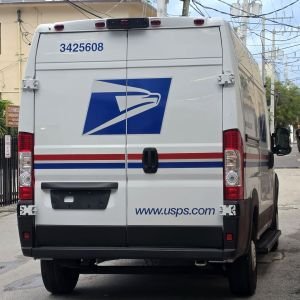
The U.S. Postal Service says it is ready for the holiday shipping rush and expects to improve upon its delivery performance during the 2025 peak season, when mail items and packages were delivered within 2.5 days on average compared to 2.8 days during the same period the prior year. Between Oct. 1 and Dec. 31 U.S. Postal Service mail and package volumes will increase about 40% for the holiday season. The carrier has hired more than 10,000 seasonal workers, down from 14,000 last year and from 40,000 just a few years ago. Since 2020, a combination of improved staffing, reduced supervisor vacancies and lowered overtime rates has resulted in a more stable workforce and reduced the need for temporary help, the carrier said in a news release on Thursday. “We have been preparing all year for this peak season, and we have enough capacity to handle whatever comes our way,” Postmaster General David Steiner said. Why It Matters: Peak season is when carriers are tested the most and can feel customer backlash if they aren’t prepared to handle the higher volumes. The postal operator credits new technology, logistics planning and execution for its ability to efficiently handle the influx of mail. Last year, between Nov. 15 and Jan. 9, on-time delivery scores were higher in nearly all service categories, with the best scores being in last mile delivery for shipped and postal consolidators injecting pre-sorted freight at post offices with large back-end receiving facilities to skip upstream postal processing.. The Postal Service installed 164 sophisticated, automated package sorting machines at facilities around the country this year, part of a $40 billion investment plan begun in 2022 to transform the organization’s middle-mile network. It has added a total of 673 high-speed sorters so far, according to the announcement. The machines can handle more and larger parcels than previous-generation machines. In fiscal year 2026, ending Sept. 30, the USPS opened 31 sorting and delivery centers and 10 regional processing and distribution centers that work in tandem with 35 local processing facilities. In total since 2022, the Postal Service has opened 182 S&DCs, 19 regional DCs and four standalone regional transfer hubs. S&DCs were created to remove duplication and increase efficiency in a network that relied on more than 18,000 destination delivery units — post offices with receiving docks postal officials said are too small, ill-equipped and poorly maintained. The sorting hubs consolidate work once assigned to about 10 DDUs and use small sorter equipment that can process between 2,500 to 4,300 pieces per hour to serve upward of 200,000 customers daily. A better tracking and reporting platform, introduced in 2025, is also helping increase package visibility. The tracking is nearly four times faster than the previous version, often providing updates within a minute of scanning, the USPS said. The platform is connected with other systems that allow customers to get accurate information about the location of their packages using the USPS app or by signing up for messages. In fiscal year 2026, ending Sept. 30, the USPS opened 31 sorting and delivery centers and 10 regional processing and distribution centers that work in tandem with 35 local processing facilities. In total since 2022, the Postal Service has created 182 S&DCs, 19 regional DCs and four standalone regional transfer hubs. S&DCs bring focus and structure to a network that for too long has relied on a haphazard and ever-growing patchwork of destination delivery units (DDUs), many of which are too small, ill-equipped and poorly maintained. With nearly 19,000 DDUs across the country, we were not only operating a costly delivery network but also perpetuating a system that has hindered our ability to evolve with the market as demand for package delivery soared. The answer to this problem is our new system of S&DCs. Each of these large, spacious, well-equipped facilities — many already owned by the Postal Service or on a long-term lease — typically consolidate the work once assigned to about 10 DDUs. Each S&DC will use the latest automated sorting equipment to serve upward of 200,000 customers daily, bringing new efficiencies to our delivery operation and improving our service performance. New commercial chief To improve strategic planning in targeted markets, the quasi-private organization created a Chief Solutions and Strategy Office to analyse the entire enterprise, centralize network planning and identify ways to work more effectively and efficiently. The group is also working more closely with USPS customers to better match their needs with postal solutions, the Postal Service said. In related news, the Postal Service earlier this month promoted Gary Reblin to chief commercial officer. He has served as chief technology officer since August 2025 after moving up the ranks for 35 years. In a LinkedIn message, Reblin said insights he gained as CTO will help decision making to modernize sales, competitive pricing for parcels, retail stores, delivery and tracking. Reblin is credited with helping shape the early partnerships that brought privately transported parcels directly to local post offices for delivery, which continue to serve as an area of revenue growth for the financially struggling organization. RELATED STORIES: US Postal Service on brink of financial collapse, chief tells Congress Large parcel carriers improved on-time delivery during 2025 peak season Amazon overtakes US Postal Service as largest parcel carrier The post U.S. Postal Service prepared for peak season surge appeared first on FreightWaves.