Infrabel selects supplier for 90-locomotive framework contract
Transportationvia Railway Gazette
Quick Read
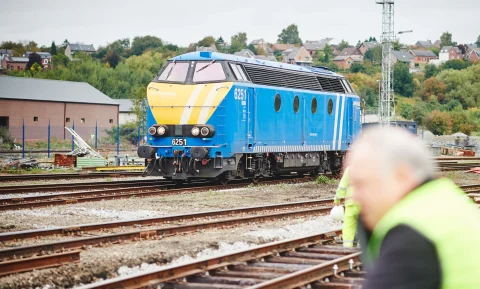
BELGIUM: Infrastructure manager Infrabel has selected Stadler for a framework contract covering the supply and maintenance of up to 90 locomotives to renew its engineering fleet. Framework contract Infrabel said the announcement of the preferred bidder on November 18 followed an ‘intensively prepared and transparently conducted’ European tendering process. The contract is to be finalised once the statutory standstill period has expired. Infrabel is not committing to a definitive number of locomotives at this stage, but the framework will cover a minimum of 60 and a maximum of 90 locos which can be ordered over 11 years depending on operational requirements, available resources and the volume of infrastructure works to be undertaken. The first prototypes are to be delivered from 2030, followed by a phased roll-out to be completed by mid-2036. The contract will also cover maintenance and technical support for a maximum of 40 years. This will take place in Belgium to ensure that long-term economic activity, specialised employment and technical expertise remain within the country. The full order for 90 locos and 40 years of maintenance would have a total value of just over €1bn, with maintenance accounting for about half. Modular locos The locomotives will primarily use electric power, with a small diesel engine for routes and yards where no overhead lines are available. Infrabel estimates that this could reduce CO₂ emissions by 60% to 70% compared with its current diesel fleet. A modular design will allow them to be adapted to use low-emission or zero-emission traction technologies once these are deemed sufficiently mature from a technical, operational and economic perspective. They will be fitted with ETCS. Engineering fleet renewal Infrabel currently has a fleet of around 215 locomotives, diagnostic trains, cranes, track-laying machines and other specialised vehicles for the construction, maintenance and renewal of the network. It said a large proportion of the locomotives date from 1961-66 and are approaching the end of their service life. The replacements are expected to offer greater performance and reliability, and to reduce costs relating to maintenance, fuel and the lease of third-party locomotives. ‘We are taking a necessary step towards renewing our fleet of rolling stock’, said Infrabel CEO Benoît Gilson. ‘These locomotives are essential for maintaining the Belgian rail network safely and reliably. The contract offers us the necessary flexibility to tailor our orders to our operational needs and available resources. At the same time, maintenance will be firmly established in Belgium for several decades.’
BELGIUM: Infrastructure manager Infrabel has selected Stadler for a framework contract covering the supply and maintenance of up to 90 locomotives to renew its engineering fleet.
Framework contract
Infrabel said the announcement of the preferred bidder on November 18 followed an ‘intensively prepared and transparently conducted’ European tendering process.
The contract is to be finalised once the statutory standstill period has expired. Infrabel is not committing to a definitive number of locomotives at this stage, but the framework will cover a minimum of 60 and a maximum of 90 locos which can be ordered over 11 years depending on operational requirements, available resources and the volume of infrastructure works to be undertaken.
The first prototypes are to be delivered from 2030, followed by a phased roll-out to be completed by mid-2036.
The contract will also cover maintenance and technical support for a maximum of 40 years. This will take place in Belgium to ensure that long-term economic activity, specialised employment and technical expertise remain within the country.
The full order for 90 locos and 40 years of maintenance would have a total value of just over €1bn, with maintenance accounting for about half.
Modular locos
The locomotives will primarily use electric power, with a small diesel engine for routes and yards where no overhead lines are available. Infrabel estimates that this could reduce CO₂ emissions by 60% to 70% compared with its current diesel fleet.
A modular design will allow them to be adapted to use low-emission or zero-emission traction technologies once these are deemed sufficiently mature from a technical, operational and economic perspective.
They will be fitted with ETCS.
Engineering fleet renewal
Infrabel currently has a fleet of around 215 locomotives, diagnostic trains, cranes, track-laying machines and other specialised vehicles for the construction, maintenance and renewal of the network.
It said a large proportion of the locomotives date from 1961-66 and are approaching the end of their service life. The replacements are expected to offer greater performance and reliability, and to reduce costs relating to maintenance, fuel and the lease of third-party locomotives.
‘We are taking a necessary step towards renewing our fleet of rolling stock’, said Infrabel CEO Benoît Gilson. ‘These locomotives are essential for maintaining the Belgian rail network safely and reliably. The contract offers us the necessary flexibility to tailor our orders to our operational needs and available resources. At the same time, maintenance will be firmly established in Belgium for several decades.’
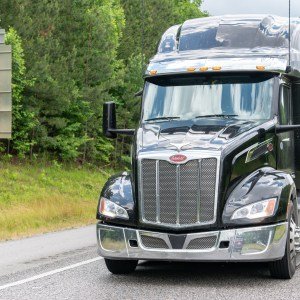
The forward radar on 6,185 Kenworth and Peterbilt trucks built between Feb. 11 and Oct. 8 can trigger braking for stopped or slow-moving vehicles in the left lane. PACCAR disclosed the defect in a Nov. 11 recall filing with the National Highway Traffic Safety Administration. Kenworth T680 and Peterbilt 579 tractors make up 5,498 of the trucks, all model year 2027. The recall is at least the fifth PACCAR has filed on 2027 trucks since July, NHTSA records show. One covered 5,919 trucks whose power distribution box may contain oil. As of Nov. 4, PACCAR had received eight warranty claims and eight field reports that may be related to the radar defect. No deaths or injuries have been reported. The company estimates 0.1% of the recalled trucks have the defect. “Forward collision mitigation is not affected because camera functionality detects objects in the same lane of travel,” PACCAR wrote in the filing. It lists no warning to the driver before a false braking event, and it does not advise owners to stop driving the trucks. window.googletag = window.googletag || {cmd: []}; googletag.cmd.push(function() { var gptSlot = googletag.defineSlot('/21776187881/FW-Responsive-Main_Content-Slot1', [[300, 100], [320, 50], [728, 90], [468, 60]], 'div-gpt-ad-1709668545404-0').defineSizeMapping(gptSizeMaps.banner1).addService(googletag.pubads()); googletag.pubads().enableSingleRequest(); googletag.pubads().collapseEmptyDivs(); googletag.enableServices(); setInterval(function() { if (!document.hidden) { googletag.pubads().refresh([gptSlot]); } }, 60000); }); googletag.cmd.push(function() { googletag.display('div-gpt-ad-1709668545404-0'); }); Cause traced to radar parameter data The filing traces the cause to a parameter calculator PACCAR uses. The calculator produces a software data set that is not written correctly into the radar’s memory. When the radar does not learn the truck’s specific parameters, it defaults to a lateral position too far left of its true position, PACCAR told NHTSA. The radar can then track stationary or slow-moving objects in the left lane as “relevant objects.” Timeline from complaints to recall PACCAR’s safety and compliance team learned of field complaints about automatic emergency braking events on Oct. 16 and held trucks at its plants, according to the filing’s chronology. Corrected software was available on Oct. 19 for trucks still at the plants and in production. On Oct. 20 and again on Oct. 30, PACCAR spoke with Bendix, the radar’s supplier, about the radar parameter issue. Its safety committee decided Nov. 4 to recall the trucks. The recall count is based on the radar part numbers and quantities Bendix shipped to PACCAR, minus trucks corrected at the plants. Heavy-truck emergency braking rule still pending NHTSA and the Federal Motor Carrier Safety Administration proposed in June 2023 to require automatic emergency braking on new trucks over 10,000 pounds. Three weeks earlier, NHTSA had opened a preliminary evaluation of about 250,000 Freightliner Cascadias after 18 owner complaints that the system braked with no hazard present. In 2025, the agencies moved the rule back to the proposal stage. The Transportation Department’s regulatory agenda targeted July 2026 for a supplemental proposal, which has not been published. Software fix and owner letters The remedy is a field software update that corrects the radar memory issue, according to the filing. PACCAR plans to notify dealers and owners on Jan. 10, 2027, the same day the trucks’ VINs become searchable on NHTSA’s recall lookup. Peterbilt owners can call 940-591-4220 and Kenworth owners 425-828-5888 about recall 26PACL. window.googletag = window.googletag || {cmd: []}; googletag.cmd.push(function() { var gptSlot = googletag.defineSlot('/21776187881/fw-responsive-main_content-slot3', [[728, 90], [468, 60], [320, 50], [300, 100]], 'div-gpt-ad-1665767553440-0').defineSizeMapping(gptSizeMaps.banner1).addService(googletag.pubads()); googletag.pubads().enableSingleRequest(); googletag.pubads().collapseEmptyDivs(); googletag.enableServices(); setInterval(function() { if (!document.hidden) { googletag.pubads().refresh([gptSlot]); } }, 60000); }); googletag.cmd.push(function() { googletag.display('div-gpt-ad-1665767553440-0'); }); Why it matters: Fleet managers running 2027 Kenworth or Peterbilt tractors built since February may want to brief drivers on unintended braking near slow left-lane traffic until the software update is done. VIN lookups open Jan. 10, 2027, when fleets can confirm which units need the update. The post PACCAR recalls 6,185 trucks over radar braking fault appeared first on FreightWaves.
With the possibility of the New York City Delivery Protection Act headed toward some sort of amended structure and then a vote in the New York City Council before the end of the year, the push against it has ramped into high gear. The opponents who have become increasingly visible just in the past few weeks–it’s tough to watch television in New York these days and after a little while not see one of their ads–have held onsite rallies and found an active media voice writing on the issue in a mostly critical way in The New York Post. Its latest article cites Amazon (NASDAQ: AMZN) warnings that the Act, if passed as is, could add $5 to every package it delivers in the city. window.googletag = window.googletag || {cmd: []}; googletag.cmd.push(function() { var gptSlot = googletag.defineSlot('/21776187881/FW-Responsive-Main_Content-Slot1', [[300, 100], [320, 50], [728, 90], [468, 60]], 'div-gpt-ad-1709668545404-0').defineSizeMapping(gptSizeMaps.banner1).addService(googletag.pubads()); googletag.pubads().enableSingleRequest(); googletag.pubads().collapseEmptyDivs(); googletag.enableServices(); setInterval(function() { if (!document.hidden) { googletag.pubads().refresh([gptSlot]); } }, 60000); }); googletag.cmd.push(function() { googletag.display('div-gpt-ad-1709668545404-0'); }); That brought a retort on X from Council Speaker Julie Menin, whose views on how the final version of the Act will look are considered vital to its outcome, The battle at times is taking on unusual political positioning. If it is assumed that the main target of the bill is Amazon–even though other companies like FedEx (NYSE: FDX) will be greatly affected as well–some of the arguments being made against the bill by the collection of direct service providers operating under the banner of the New York Delivers Coalition are muddying a traditional left/right dichotomy. Amazon has long been a target of politicians on the left. Sen. Bernie Sanders has ripped the company’s “corporate greed.” Former vice president and Democratic Presidential candidate Kamala Harris suggested Amazon and other big tech companies should be regulated. And Democratic Socialist Rep. Alexandria Ocasio-Cortez was seen as a key reason in her first term why Amazon pulled out of its plans to build an East Coast headquarters in New York City, having led the opposition to the plan (with Amazon eventually choosing northern Virginia as its site.) That hasn’t changed in New York City, with Democratic Socialist Mayor Zohran Mamdani actively backing the Delivery Protection Act. Not normally heard from Amazon backers In the last two weeks, New York Delivers has staged a demonstration on the steps of New York City Hall and were planning Thursday to protest at the district headquarters of Tiffany Caban, the member of the Council who introduced the Delivery Protection Act last year. But this stepped-up opposition is coming with actions and statements that seem more out of a New York demonstration from the left than actions that implicitly could be seen as supporting Amazon, a corporation long vilified by the left. window.googletag = window.googletag || {cmd: []}; googletag.cmd.push(function() { var gptSlot = googletag.defineSlot('/21776187881/fw-responsive-main_content-slot3', [[728, 90], [468, 60], [320, 50], [300, 100]], 'div-gpt-ad-1665767553440-0').defineSizeMapping(gptSizeMaps.banner1).addService(googletag.pubads()); googletag.pubads().enableSingleRequest(); googletag.pubads().collapseEmptyDivs(); googletag.enableServices(); setInterval(function() { if (!document.hidden) { googletag.pubads().refresh([gptSlot]); } }, 60000); }); googletag.cmd.push(function() { googletag.display('div-gpt-ad-1665767553440-0'); }); For example, at the City Hall rally, one of the speakers commenced the chant of “No Justice, No Peace!” which has long been identified as the protest motto of The Rev. Al Sharpton. And at the latest public media conference, ostensibly called to discuss the legal issues with the Delivery Protection Act seen by its opponents, the issue of race came up repeatedly and dominated the discussion far more than possible litigation. It echoed similar statements from the November 12 rally at City Hall. “The Council should consider the burden that this legislation would place on business owners as well as their employees,” Derek Sells, chairman of the Cochran Law Firm that is the outside counsel to New York Delivers, told the gathering. But he then raised a racial aspect of the bill. Racial makeup at the DSPs window.googletag = window.googletag || {cmd: []}; googletag.cmd.push(function() { var gptSlot = googletag.defineSlot('/21776187881/fw-responsive-main_content-slot4', [[300, 100], [320, 50], [728, 90], [468, 60]], 'div-gpt-ad-1709668086344-0').defineSizeMapping(gptSizeMaps.banner1).addService(googletag.pubads()); googletag.pubads().enableSingleRequest(); googletag.pubads().collapseEmptyDivs(); googletag.enableServices(); setInterval(function() { if (!document.hidden) { googletag.pubads().refresh([gptSlot]); } }, 60000); }); googletag.cmd.push(function() { googletag.display('div-gpt-ad-1709668086344-0'); }); Sells cited research by AKRF, a consulting firm, that said “80% of last mile delivery workers are people of color, 88% live in New York City, and 49% live in state-designated disadvantaged communities,” Sells said. The study estimates that between 3,000 and more than 10,000 workers could lose their jobs, according to Sells. Mark Morial, the former mayor of New Orleans and now the CEO of the National Urban League, said at the media conference that “it was puzzling to me why a city that considers itself in the progressive mode would even see legislation like this as helping workers. In fact, it would destroy the businesses owned by the people standing with me, as well as many others, with no guarantee for their workers, with no compensation for their losses.” That sort of discussion took up most of the roughly half-hour session with specifics on the legal issues few and far between. Laying it out in a letter But it was in a nine-page letter to Speaker Menin that the law-based arguments were explored in greater depth. window.googletag = window.googletag || {cmd: []}; googletag.cmd.push(function() { var gptSlot = googletag.defineSlot('/21776187881/fw-responsive-main_content-slot5', [[728, 90], [468, 60], [320, 50], [300, 100]], 'div-gpt-ad-1665767778941-0').defineSizeMapping(gptSizeMaps.banner1).addService(googletag.pubads()); googletag.pubads().enableSingleRequest(); googletag.pubads().collapseEmptyDivs(); googletag.enableServices(); setInterval(function() { if (!document.hidden) { googletag.pubads().refresh([gptSlot]); } }, 60000); }); googletag.cmd.push(function() { googletag.display('div-gpt-ad-1665767778941-0'); }); The core of the Delivery Protection Act is that one, delivery companies in New York City would need a license to operate; two, those companies can not hire subcontractors; three, the delivery companies would be required to hire any workers displaced by the end to subcontracting; and four, the licenses can be yanked for violation of any number of rules. It is projected that if the bill is adopted with its original wording (though an overhaul of the language is expected), it would require Amazon to purchase its roughly 100 DSPs operating in the city because of the no subcontracting rule and turn their workers into employees of Amazon rather than their current DSP. The Teamsters have strongly backed the Delivery Protection Act. The union has sought to unionize direct employees of Amazon, with a recent success in Canada and a long frustrating battle elsewhere in New York City. To unionize the DSP drivers has been an even tougher challenge. window.googletag = window.googletag || {cmd: []}; googletag.cmd.push(function() { var gptSlot = googletag.defineSlot('/21776187881/fw-responsive-main_content-slot6', [[728, 90], [468, 60], [320, 50], [300, 100]], 'div-gpt-ad-1665767872042-0').defineSizeMapping(gptSizeMaps.banner1).addService(googletag.pubads()); googletag.pubads().enableSingleRequest(); googletag.pubads().collapseEmptyDivs(); googletag.enableServices(); setInterval(function() { if (!document.hidden) { googletag.pubads().refresh([gptSlot]); } }, 60000); }); googletag.cmd.push(function() { googletag.display('div-gpt-ad-1665767872042-0'); }); Sells’ letter cites three broad areas where he thinks the Delivery Protection Act is legally problematic. First, “Federal law limits the ability of cities and states to dictate how delivery companies operate, including how they organize their delivery services and who performs the work,” Sells’ letter says. Second, the law also conflicts with New York code, according to Sells. “New York State already has laws that determine when delivery drivers must be classified as employees and when companies can legally use independent businesses to perform delivery work. Intro 518 (another term for the Delivery Protection Act) would prohibit business arrangements that state law already allows and regulates,” Sells writes. The third point, Sells said, is that the city can not override either federal or state law. “Intro 518 also appears to reach drivers and businesses operating outside the five boroughs, including facilities in New Jersey, Westchester, and Long Island,” Sells’ letter says. “This raises additional legal questions about the City’s authority to regulate businesses beyond its borders and its impact on interstate commerce.” The Sells letter also gets into some of the same issues heard from the steps of City Hall: the racial makeup of the DSP work force as well as the company owners, issues that may have political heft but are questionable as legal matters. But where Sells ties them together is arguing that lawsuits that would follow the introduction of the Delivery Protection Act could drag on a long time, and it would be people of color most affected by that uncertainty. The law, “if enacted, would invite years of costly litigation with a substantial risk that the Act’s core would be struck down, leaving workers without the protections the Council intends while the small businesses that employ them close in the interim,” the Sells letter said. “Those harms would fall most heavily on Black, Latino, immigrant, and outer-borough New Yorkers.” F4A makes an appearance One of the legal arguments raised by Sells is that the Delivery Protection Act could be in conflict with the Federal Aviation Administration Authorization Act (F4A). That law has the well-known provision that states are barred from taking action that could impact a “price, route or service.” It had been at the core of the now-settled legal dispute over California’s AB5 independent contractor law, and more recently was tossed out as a shield against broker liability in the case of Montgomery vs. Caribe Transport II. Sells cited federal precedents that found laws Sells views as similar to the Delivery Protection Act regarding independent contractor status or hiring requirements were in violation of F4A. Sells says the Delivery Protection Act “goes further” than the laws that were the subject of the earlier precedents cited in his letter. Sells’ letter said he “anticipates” that the Act’s backers might turn to the safety exception of F4A to thwart the proposed law from overriding the act in its entirety. The safety exception allows state action like a tort in an action that might otherwise be seen as impacting a “price, route or service.” “Anticipating” that the backers of the Act might counter with the safety exception–which applies to motor vehicles–as providing justification for the Act despite the rest of F4A, Sells says “a rule dictating the corporate identity of a driver’s employer, and banning an entire category of business relationship, regulates business structure, not vehicles.” More articles by John Kingston SCOTUS action revives shipper/receiver liability post-Montgomery ATA spells out short- and long-term solutions to halt ELD fraud Denial of funds to NY over non domiciled CDLs overturned: appellate court The post NYC push against delivery bill brings in legal and racial arguments appeared first on FreightWaves.
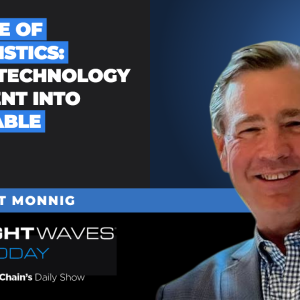
Logistics companies say the technology and AI they have already put to work is paying back. What they want from the next round is proof, delivered faster. Scott Monnig, chief client officer at Sparq, said he is hearing that demand from clients. Sparq describes itself as an AI-native digital engineering services firm that re-engineers the systems businesses run on, and Monnig said many of its clients look like the companies attending FreightWaves’ F3 conference. Sparq released its inaugural 2027 Transportation & Logistics Insights Report at F3. The company commissioned a survey of 313 U.S. decision-makers in freight brokerage and forwarding, trucking, parcel, and courier and last-mile delivery. Ninety percent said their implemented technology or AI investments met or exceeded return-on-investment expectations, while 62% require faster ROI timelines from vendors. Monnig traced the demand for proof to the past year. “In 2025 our customers told us and the industry was telling us that we were in a proof of concept phase, and not everybody was having a lot of success with those,” Monnig said in an interview on FreightWaves Today. “This year they’re moving into proofs of value.” Satisfied buyers still want faster payback The two findings overlap: among respondents whose ROI met or exceeded expectations, 61% also require faster ROI timelines from vendors, according to the report. Monnig summed up the mood as “pleased but not satisfied.” “What they’re now pivoting to in the industry is from the question of does this work to how can you prove this works and how can you generate more return faster,” he said. Budgets are still growing. Eighty-seven percent of respondents expect technology and AI budgets to increase next fiscal year, including 26% who expect increases of at least 20%. Those budgets come with conditions, Monnig said. “They can’t just do it on a promise,” he said. “They have to have measurable results.” The ROI figures are self-reported against expectations and were not independently audited, the report notes. Monnig described the survey as arm’s length by design. “This isn’t our opinion. This isn’t the opinion of vendors in the room here. These are self-reported results from the technology decision makers,” he said. Forty-nine percent of respondents were final decision-makers, 40% were key influencers, and 90% were director level or above. InnovateMR conducted the survey from August to September 2026. Labor and fuel costs raise the stakes Driver and labor costs and availability were the most-cited margin pressure in the survey at 52%, followed by fuel at 50% and insurance and liability at 43%. In trucking, the American Transportation Research Institute’s 2026 Analysis of the Operational Costs of Trucking put the industry-average cost to operate a truck at $2.336 per mile in 2025, up 3.4% from the previous year. Fuel and labor costs sit somewhat beyond the reach of technology, Monnig said. “But what the decision makers are telling us is that even though those things are beyond their control, what is in their control is tying those measurable improvements to business outcomes,” he said. Despite those pressures, 95% of respondents are very or somewhat optimistic about growing profitably over the next 12 to 24 months. Legacy systems lead a long list of barriers Respondents are broadly comfortable with their data infrastructure: 39% are very confident and 55% somewhat confident it can support AI-driven decisions. Asked for the single biggest barrier to moving faster on AI or advanced data investments, 24% named legacy systems and integration, followed by data quality or availability at 19%, unclear ROI at 17%, budget constraints at 16%, and lack of internal expertise at 12%. “It wasn’t like there’s one giant problem to solve,” Monnig said. Even among respondents confident in their data infrastructure, 23% name legacy systems and integration as their biggest obstacle. Monnig called connected data the foundational layer. “In a lot of organizations today, there are silos of data, there are pockets of data, and each one may be good on their own, but what decision makers need to do is recognize that in order to get the return from AI systems, they really need to weave that data into a fabric of context,” he said. Forecasting lags peak readiness Ninety-two percent of respondents said they are mostly or fully prepared for the 2026 holiday peak shipping season. Forecasting is another matter: 53% picked forecasting accuracy among the three supply chain challenges they are least prepared for, ahead of cybersecurity and labor shortages. Among respondents who have already implemented demand forecasting, 52% still put it on that list. “We can have high confidence in our ability to address peak season, but our confidence level about the forecasting system insight isn’t there yet,” Monnig said. He tied the gap to how far ahead companies are asked to look. “When we’re asking about peak holiday season, we’re talking two or three months,” he said. “But you ask for two or three quarters, and it’s far.” Budgets for 2027 rest on that longer horizon. Dispatch expected to change most Thirty-four percent of respondents expect dispatch and operations to see the greatest technology-driven transformation over the next two to three years, ahead of sales and pricing at 21%, customer service at 18%, and finance and back office at 12%. Operations and dispatch was also the largest primary department among respondents, at 27%. Monnig said what matters most in dispatch is the information behind each decision. “Decisions are happening and need to happen faster every day. In order to make better decisions faster, you need more information, not necessarily more data,” he said. “You need that information, and that’s where technology systems, that data context, natural language processing, the capabilities that AI systems bring, really can bring a step change to that portion of the organization.”Learn more about Sparq and their report. The post Sparq: Logistics AI is paying off, but buyers want speed appeared first on FreightWaves.