GM’s V2G pilot wants to pay California drivers for power from parked EVs
Transportationvia Electrek
Quick Read
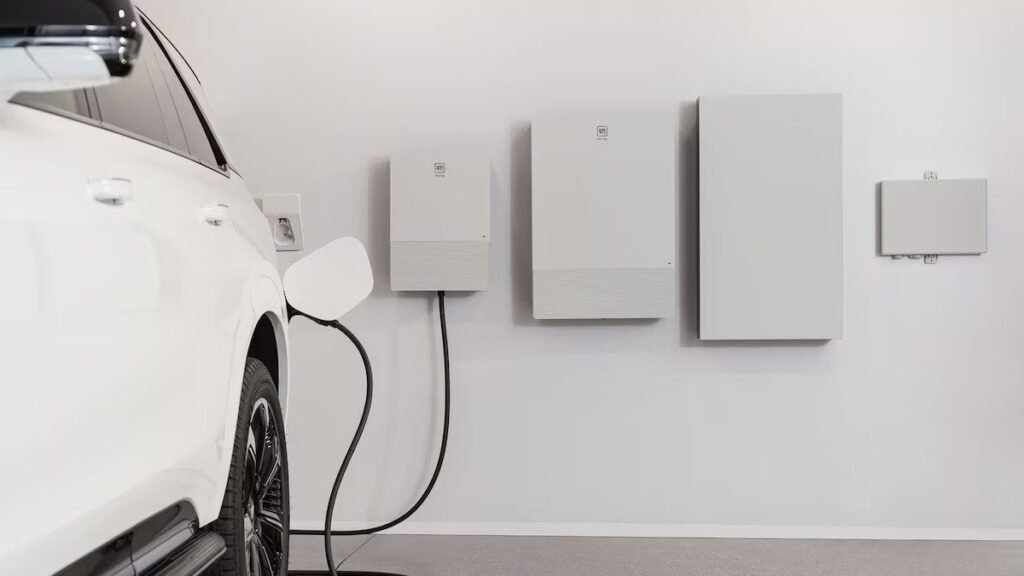
GM Energy and WeaveGrid are launching a vehicle-to-grid (V2G) pilot that will let select Southern California Edison (SCE) customers send electricity from their EV batteries back to the grid. Eligible drivers could get more than $16,000 in help with equipment and installation, and earn money when the grid needs their power. more…
GM Energy and WeaveGrid are launching a vehicle-to-grid (V2G) pilot that will let select Southern California Edison (SCE) customers send electricity from their EV batteries back to the grid. Eligible drivers could get more than $16,000 in help with equipment and installation, and earn money when the grid needs their power.
This week’s global railway supply chain news from Railway Gazette International. On November 9 Alstom inaugurated a 2 570 m² two-track facility for the Level 2 maintenance of regional and high speed trains and locomotives at its Vado Ligure site in Italy, along with a modernised control room strengthening centralised monitoring, diagnostics and technical support for customers operating Traxx locomotives. The expansion was supported by the Ministry of Enterprises and Made in Italy. Alstom said more than 2 500 Traxx locos are in service across Europe, and the control room already supports 360 with the aim of progressively increasing this to 600. Berlin-Brandenburg local railway operator Niederbarnimer Eisenbahn has acquired rolling stock maintenance company RWS Railway Service, which will operate as an independent business within the NEB Group. RWS has 30 staff and sites at Elstal and Neuenhagen near Berlin. ‘With RWS, we gain valuable expertise and additional capacity to maintain our vehicles more effectively and further improve their availability’, said NEB CEO Sebastian Achtermann on November 9. Spanish turnout manufacturer Mieres Rail and German industrial IoT company Konux have signed a memorandum of understanding to work together on AI-powered predictive maintenance. ‘We know how a switch is designed and built, and how it should behave on the track. Working with Konux gives us a clearer view of how our products perform once they are in service, and that knowledge can feed back into how we design and support them’, said Mieres Rail Managing Director Julio Fernández. The Stadler board has elected current Stadler Polska CEO Radosław Banach as EVP of the Central Europe division from January 1 2027, succeeding Philipp Brunner who will take over from Markus Bernsteiner as Group CEO at the start of 2027. Banach has more than 30 years of management experience in the rolling stock manufacturing, automotive and consumer electronics industries, and has been CEO of Stadler Polska since October 2024. He managed Alstom’s manufacturing operations in Poland for almost a decade, and was previously responsible for operational activities at Škoda Transportation. Nomad Digital has been appointed as authorised reseller in the rail market of Starlink’s satellite technology for high speed, low latency connectivity. Nomad Digital has ’already developed an extensive and unrivalled experience of deploying Starlink to enable a reliable connected experience on trains’, said its CCO Pierre-Yves Leseigneur. ‘We are delighted to formalise our agreement with SpaceX who are one of the pioneers in this area. This will support our long term commitment to offer the best possible passenger experience through reliable, seamless connectivity across all environments.’ New York City-based public transport station and infrastructure specialist Urbahn Architects has promoted Brad DeBose and Nicha Singhachong to associates.
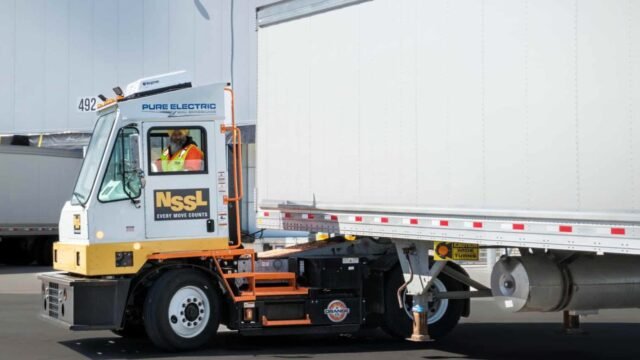
After taking delivery of its first Orange EV e-Triever electric yard tractor in 2024, NSSL saw the electric light. The company has been moving quickly to transition its yard tractor fleet to zero emissions, and its efforts haven’t gone unnoticed: NSSL is now being recognized by the 2026 Canadian Clean Fleet Awards. more…
The latest version of the Department of Labor’s (DOL) independent contractor rule was handed down Thursday with minuscule changes from what was proposed in February. The shift from the Biden administration’s IC rule to that of the second Trump administration is generally viewed as giving the Wage & Hour division of the DOL, in its rulings, guidelines that are more favorable to a finding a worker is an independent contractor rather than an employee. The IC rule for the Trump 47 administration is not seen as that much different from the rule it implemented in the Trump 45 administration. But that rule didn’t go into effect until Donald Trump was about to leave office. However, after significant back-and-forth in the court system, it was revived by a court order and was the DOL standard for more than two years before the Biden rule came into effect. That Biden rule is what will be replaced by the Trump 47 rule. ATA at the ceremony The final rule is considered positive enough for the trucking industry that the American Trucking Associations’ new president and CEO Mark Colson took part in what the ATA said was a “celebration” in Washington at the DOL coinciding with the rule’s release. “A final independent contractor rule issued by the agency will rescind a destructive, Biden-era classification standard,” the ATA said in a prepared statement regarding Thursday’s action. According to the ATA, both Colson and ATA vice chairman Gregg Troian spoke at the Department of Labor “celebration.” While there was virtually no criticism coming from the trucking industry about the changes from the Biden rule, which were effectively baked in with the February notice of proposed rulemaking in the Federal Register, a consistent voice in the process has been that of attorney Richard Reibstein, a partner with the firm of Littler Mendelson and an expert on independent contractor status. How much does it matter? Throughout the shifts between the Trump and Biden administrations, Reibstein has repeatedly delivered the same message: it’s not that big a deal. Whatever the DOL came up with “is unlikely to be given deference by the courts, which have historically chosen to apply their own judicial precedent rather than give deference to administrative rules on IC status that change back and forth when a new administration enters the White House,” Reibstein wrote on his blog soon after the IC rule was released Thursday. “Further, most IC misclassification lawsuits as well as agency investigations and proceedings are not brought only under the Fair Labor Standards Act but rather are commenced in whole or in part under state laws, most of which use different tests for IC status.” Reibstein calculated that the final rule released this week had changed only three sentences and a few additional examples from the proposal of earlier this year. The final rule will take place 60 days after it is published in the Federal Register. The trucking industry came in for a notable mention in the almost 400 pages of the rule and its summary, with the DOL citing a lease-purchase agreement as not being a sign of control by the carrier that signs on a driver to such a contract. There had been comments submitted expressing concern over that possibility. Lease purchase deals are OK After recapping some of the comments and queries made from trucking interests during the comment period, the DOL said it “generally believes that the fact that a driver owns a truck and exercises initiative in how to operate it seems to plainly indicate independent contractor status under the opportunity for profit or loss factor.” The DOL said it would specifically add examples in the final rule that deal with a driver operating on a lease purchase agreement that “actually provide an opportunity for the worker to own the vehicle in the future.” “These facts would indicate independent contractor status under the opportunity for profit or loss,” the DOL said, expecting that there will now be “sufficient clarification in response to a multitude of comments on this topic.” When the proposed rule was announced in February, a key provision in contrast to the Biden rule was the emphasis on two factors of the “multi-factor economic realities test.” That wasn’t new; it was part of the 2021 Trump 45 rule that was in effect until 2024. In reviewing the view of the multi-factor economic realities test, the DOL said the 2021 rule “stated that if these two core factors point towards the same status (i.e., employee or independent contractor), there is a substantial likelihood that the indicated outcome is the worker’s accurate status. The other three parts of the test that the DOL said are “less probative” and “non-core” are”the amount of skill required for the work, the degree of permanence of the working relationship between the worker and the potential employer, and whether the work is part of an integrated unit of production.” Those two factors, according to the Scopelitis Law Firm in an email about the rule and its impact on trucking, are “core guideposts which, if aligned in favor of independent contractor status or employee status, will frequently end the analysis.” Two are more important than the others But the Biden administration’s rule did not elevate any of the factors above all. That was viewed as making it more likely that the Wage & Hour division or other government agencies relying on the DOL rule would find a worker is an employee rather than an independent contractor. Scopelitis also noted–as it and others had in February with the proposed rule–that the latest version of the DOL IC rule provided “certainty” on the question of control by “noting that compliance with specific legal obligations and health and safety standards (even voluntary standards) is not control evidencing an employee relationship.” That had been a key concern under the Biden administration rule whether the employer of an independent owner operator mandating that the driver keep compliant with various regulations was a sign of control, which could undercut any argument that an employee was truly independent. In a prepared statement, the Owner Operator Independent Drivers Association (OOIDA) expressed mostly support for the final rule. OOIDA particularly singled out the DOL clarifying that there is no federal rule requiring speed limiters. “DOL’s continued acknowledgement that speed limiters are not a mandated safety device is welcome,” OOIDA said, referring to a footnote that references to a speed limiter in the 2021 rule could have created “potential confusion over whether federal motor carrier safety regulations require the installation of speed limiting devices.” OOIDA’s endorsement of the rule was not at the level of ebullience of the ATA. “While the rule does not address all of our concerns, it also does not create new barriers for an owner-operator to work as an independent contractor,” OOIDA said. More articles by John Kingston SCOTUS action revives shipper/receiver liability post-Montgomery ATA spells out short- and long-term solutions to halt ELD fraud Denial of funds to NY over non domiciled CDLs overturned: appellate court The post DOL sticks with independent contractor proposal, trucking applauds appeared first on FreightWaves.