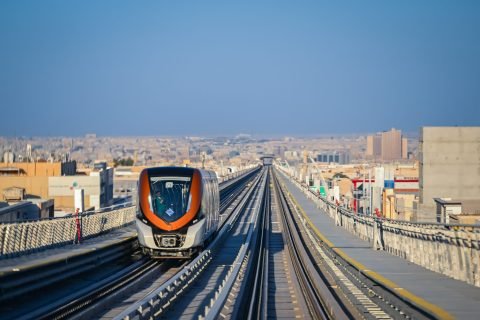
SAUDI ARABIA: The Royal Commission for Riyadh City has awarded Alstom a €460m contract to supply additional Metropolis driverless metro trainsets for used on lines 3 (Orange), 4 (Yellow) and 6 (Purple). Alstom said the expansion of the fleet would increase capacity, enhance operational flexibility and enable the provision of more frequent services as passenger demand continues to grow. The order for an undisclosed number of trainsets builds on the 116 already supplied by Alstom for the three lines. The additional sets will be maintained by the manufacturer as part of the existing operation and maintenance contract for this tranche of the network. ‘We are proud to continue supporting the Royal Commission for Riyadh City in expanding one of the world’s most advanced metro networks’, said Mohamed Khalil, Alstom’s MENA RHQ Managing Director, on September 28. ‘The additional vehicles will help the network respond to growing demand while continuing to provide a high-quality passenger experience.’
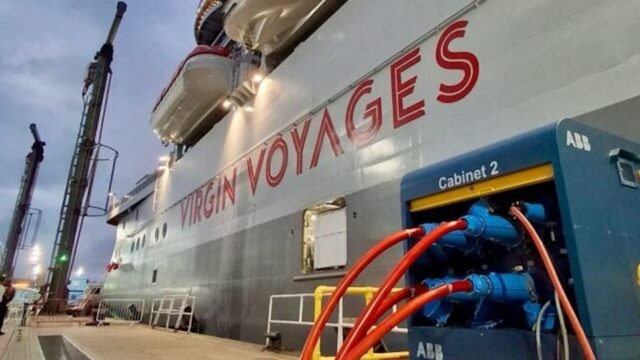
Portsmouth International Port has taken a huge step towards reducing the air pollution caused by idling marine engines with the launch of the UK’s first high-voltage, multi-berth shore power system that allows docked ships to connect to grid power and shut off their on-board generators. In theory, shore power reduces emissions and slashes fuel costs. The reality is somewhat different. more…
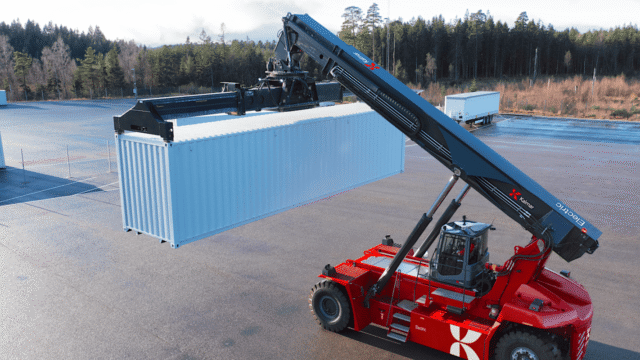
The world’s ports operators work in confined spaces, moving massively heavy loads with incredible precision in perilous conditions with razor-thin margins. It’s no wonder, then, that they’re moving to electric equipment – and the Port of Helsingborg is just the latest to do so, thanks to its latest order for two new Kalmar reach stackers. more…
While much of the automotive world sits dumbfounded as China gobbles up all its customers, BMW continues to roll out extremely well-crafted, technologically advanced electric vehicles that impress in both drive quality and price. The latest is the BMW iX4, a coupe-shaped SUV that puts a sportier spin on the automaker's iX3. The iX4 is the third vehicle to be released on BMW's next-generation Neue Klasse platform, following the iX3 and i3 models. The iX4 50 xDrive will come first in March 2027, followed by an even more high-performance M60 xDrive version later in the year. The automaker is positioning this new lineup as its bulwark against t … Read the full story at The Verge.
Editor’s note: This is a contributed commentary. It comes amid FMCSA’s ongoing revocation of registered ELDs over hours-of-service log manipulation and FreightWaves welcomes responses from other parties. An ELD connection has become an important part of how freight moves. Brokers use it tounderstand whether a carrier is operating, whether vehicles are associated with that carrier, andwhether the right truck is present for a load. Carriers use that connection to demonstrate theircapacity and gain access to freight. That makes the integrity of the provider behind the connection consequential. A technicalintegration cannot be treated as a universal endorsement of everything that provider does. Ithas to be governed by standards, reviewed as conditions change, and subject to action whenthose standards fail. Highway has worked with hundreds of ELD providers over nearly five years. We do not chargeproviders to integrate. FMCSA registration is a starting point, but it is not a blanket pass intoHighway. We maintain our own requirements for integrations and the data they contribute. Wecan decline an integration or end one that does not meet those requirements, and we haveended integrations with providers that remained on FMCSA’s registered list. We also examineproviders that reappear under a new name after a prior provider was revoked. A new label doesnot erase the underlying history. None of this means every carrier using a problematic ELD provider is doing something wrong. Asingle provider may serve hundreds or thousands of legitimate businesses. If concerns arise,brokers need a clear view of risk and a way to act on it, while good carriers need a fair path tokeep working. We can introduce appropriate controls around the carriers or transactions thatpresent concern as we establish the facts. When an integration must end, we work to givelegitimate carriers notice and a workable opportunity to change providers. Enforcement has toprotect the network without treating every customer of a provider as guilty. It is also important to be precise about what different data can establish. Highway does notreceive drivers’ hours of service records through these integrations or perform the safetyreviews assigned to FMCSA. Reports of manipulated logs warrant serious scrutiny. At the sametime, ELD telemetry is one input in a broader assessment of carrier identity and cargo risk. Itshould never be asked to carry a decision by itself. In nearly five years of operating Highway, we have not identified a successful cargo theft inwhich manipulated ELD data was relied on for a carrier hiring or tendering decision. Thatdescribes the losses we have investigated. It does not mean ELD manipulation is harmless orthat providers should face no consequences for it. It means the industry should distinguishhours of service enforcement from the particular question of whether a cargo decision wasdefeated by falsified ELD data. Both deserve accurate evidence and appropriate action. We are now building another layer of accountability through the Highway Certified PartnerNetwork program. Participating providers, in multiple categories, will make additionalcommitments to the integrity and reliable delivery of the data they contribute. Brokers andcarriers will be able to see which providers have made those commitments and make their owndecisions accordingly. Participation in certification is voluntary. Meeting Highway’s existingrequirements to maintain an integration is not. Certification creates a higher, visible standard; itdoes not replace enforcement of the baseline. This is not just about ELD providers. We startedthis with insurance agents and will extend that accountability requirement to anyone whocontributes data to a freight transaction and hiring decision. The real test of any standard is what happens when a transaction fails. Highway puts its ownbalance sheet behind qualifying loads with a Performance Guarantee of up to $100,000. Acrossroughly one million guaranteed loads, it has paid out once. We can make that commitmentbecause the guarantee is tied to a broader, enforceable assessment of the carrier and the load,rather than a single signal from a single provider. The freight market needs an ELD ecosystem in which a provider’s commitments are visible, itsdata can be trusted, and failures have consequences. Brokers should be able to set the bar forthe freight they move. Legitimate carriers should have a fair path when their provider fails it.Highway will keep enforcing the standard and standing behind qualifying loads that meet it. Questions will come. They should. But many of the loudest questions in this market come frompundits and competitors who attempt to demand an instant declaration without owning theconsequences of that declaration. They are free to ask. They are not the people to whomHighway is accountable. We answer to the brokers and carriers who trust us with decisions thataffect freight and livelihoods. We are their stewards, and we are proud of how we show up forthem. Theodore Roosevelt’s man in the arena comes to mind. The arena in freight is a load at risk, a legitimate carrier trying to keep working, and a customerwho needs someone to make a decision and own it. It is easy to call for a sweeping action fromthe stands. It is harder to establish the facts, apply a standard fairly, and remain accountable forwhat happens next. That is the work we have chosen. We have yet to see another carrier identity platform pair an enforceable standard with aperformance guarantee across this volume of freight, who “bear the brunt of the day”. We willwelcome anyone willing to meet that bar. Until then, we are back in the arena doing the work,correcting course when the evidence calls for it, and putting our own balance sheet behindqualifying loads. Our customers deserve nothing less. Michael Caney is Chief Commercial Officer of Highway, a carrier identity and fraud-prevention platform. Highway’s products, including its Certified Partner Network and Performance Guarantee, are discussed in this article. The views expressed are the author’s own and do not necessarily reflect those of FreightWaves. The post ELD Data Needs An Enforceable Standard appeared first on FreightWaves.
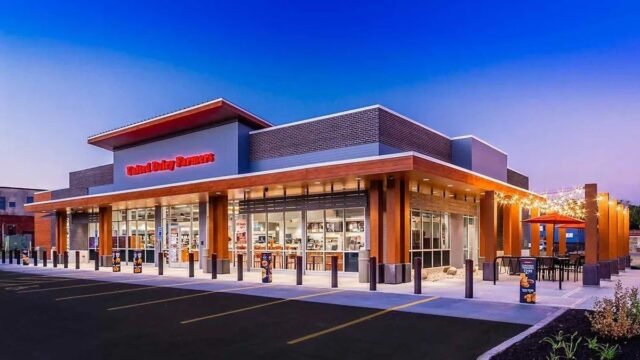
An ice cream stop could soon double as a fast-charging stop for EV drivers in Ohio. Family-owned United Dairy Farmers (UDF) is adding its first DC fast chargers at six of its 170 stores, with openings expected to begin in early 2027. more…