Breaking
Advertisement

Technology

Technology

They war-gamed dimming the Sun. It went even worse than you think.

When it comes to deciding the fate of the planet, Colleen Golja always thought science and reason would have a seat at the table. That was until one morning last September in London, when the climate researcher took part in the first in a series of war games. The goal: to prevent an uncontrolled global race to develop a technology aimed at cooling the planet but that comes with vast, unknown risks that could reshape life on Earth. “I thought that would be such an easy thing. Like, we can all agree to do ethical research and make sure it's for the better of all humans,” she told WIRED. “And boy, was I wrong.” The simulation, titled Exploring Geopolitical Tipping Points and Climate Cooling Strategies, saw a couple dozen foreign-relations experts, scientists, military personnel, and former government officials from across the world convene in a meeting room at Queen Mary University of London. After making introductions over coffee and little yogurts, they sat at tables arranged in a square with the name of the country or organization each person was playing: national governments, climate NGOs and nonprofits, indigenous groups, and tech companies. Golja was assigned to provide technical advice to help participants make scientifically literate decisions.Read full article Comments


Technology

High-speed video reveals how honey bee stingers pump venom

Honey bees are known to leave their stingers embedded in tender flesh once they sting you and fly away. Scientists have now determined that the stinger is able to continue pumping venom into its unfortunate victim even after the bee flies away, thanks to a unique double-piston pump-like mechanism, according to a new paper published in the Proceedings of the National Academy of Sciences. Different species have evolved different mechanisms for delivering venom, which involves piercing the skin and then pumping venom from a gland or reservoir. Spiders, for instance, have muscles surrounding their venom glands, which contract and eject venom through hollow fangs. Bees, wasps, and ants deliver venom via their stingers, either by contracting muscles around the venom reservoir or through stiff elements called lancets working together to pump venom. Honey bees (Apis mellifera) add a unique feature: Worker bees fly away after inserting their stingers in the target, leaving the stinger behind. The stinger continues to penetrate the tissue and pump venom on its own, a rare phenomenon known as autotomy. A honey bee's stinger has three main interlocking elements that form the venom canal: a stylet that widens to form the main pumping chamber and two sharp-tipped lancets that slide back and forth, piercing the tissue and pumping venom into the target. But the precise mechanism by which the pumping action is achieved has never been directly observed.Read full article Comments

Technology

39-year-old unvaccinated woman becomes 6th measles death in Pennsylvania

A 39-year-old unvaccinated woman in Franklin County, Pennsylvania, has become the sixth person to die of the highly infectious virus amid a state outbreak that has stricken over a thousand people since it began in April. The woman died on Saturday, October 10. She had several underlying health conditions and had recently tested positive for measles, according to an advisory posted on social media by Franklin County Coroner Jordan Conner. The advisory noted that the woman's death meets the definition of a measles death set by the state's health department. In an emailed statement to The Washington Post, the coroner's office said the primary cause of death was listed as "probable acute cardiac event due to possible complications of the measles."Read full article Comments

Advertisement
Technology

Epic Games reportedly pivoting to “AI first” game development model

Epic Games is shifting to an "AI first" development strategy for its collaboration with the Walt Disney Company, letting AI models write all the code and guide all the artwork for an upcoming shooter. That's according to a Bloomberg report, which cites unnamed people familiar with the project who commented on the significant pivot in internal development at the Unreal Engine maker. Human developers will be tasked with managing and guiding code and art assets generated by models such as Anthropic's Claude, according to internal Epic employee messages viewed by Bloomberg. That means "no more hand-written code" and art assets "generated with full AI workflows," according to the report. The $1.5 billion collaboration between Epic and Disney, announced in early 2024, was slated to release a Marvel- and Star Wars-themed shooter in March 2027. That project has now been delayed indefinitely amid the AI-related shakeup and understaffed, slower-than-expected development thus far, according to the report.Read full article Comments

Technology

After a 10-year redemption arc, No Man’s Sky is coming to the iPhone and iPad

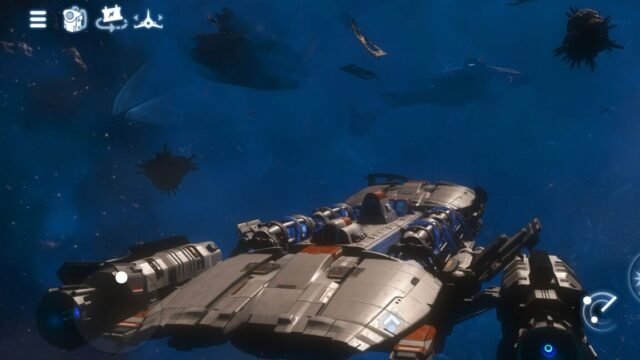
Just over 10 years after its initial release, space exploration and survival crafting game No Man's Sky is making its way to the iPhone and iPad, Apple and developer Hello Games announced today. It will run on devices as far back as the iPhone 11 and the third-generation iPad Air. No Man's Sky might not have the most cutting-edge AAA graphics (though they're still strong, and they've come a long way since launch via updates), but the game's uncommon method of generating galaxies of incomprehensible scale on device consistently for all players from a single-seed happening on a phone is remarkable for those of us who remember phones performing far behind consoles or desktop PCs.Read full article Comments

Technology

WHO report on Russian lab worker death highlights “key uncertainty”

Over the weekend, the World Health Organization released a disease outbreak report on the events surrounding the death of a Russian infectious disease researcher earlier this month, highlighting that Russia has yet to report a confirmed cause of death. With that "key uncertainty," the United Nations health agency said it remains impossible to assess the risk of the event or whether the public health measures Russia took were adequate to prevent spread of the unknown disease. The WHO reported that, so far, it has seen no evidence of ongoing transmission of the mystery disease. "However, confidence in the assessment remains limited by the absence of a confirmed etiological diagnosis, and the remaining uncertainty regarding the source and mode of exposure," the agency wrote in its report. The agency laid out the order of events as information trickled out from Russian authorities, noting that it only became aware of the death via media reports on October 2. The WHO subsequently made contact with Russian authorities and requested information on October 3, 6, 7, and 8.Read full article Comments

Advertisement
Technology

Anthropic’s Claude AI submitted false murder tip to Philadelphia police

An Anthropic AI model submitted a false tip about an unsolved murder to Philadelphia police, the company and police department confirmed on Friday. A Claude model sent the false tip on July 18 to the Philadelphia Police Department's website for submitting information about unsolved murders, but it was flagged by a spam filter. Anthropic apparently discovered the incident on September 28 and informed the police department about it on October 8. During internal testing, Claude Haiku 4.5 was instructed to complete various forms up to the final submission stage and to stop before submitting those forms. "Several times Claude mistakenly submitted the form instead, expecting there to be an additional confirmation page," Anthropic said in a report describing "unintended model actions we’ve observed during evaluations and internal use of Claude."Read full article Comments

Technology

Meta releases its first frontier model, Muse Wonder

Where Muse Spark aimed to be a lightweight model that could perform at low latency, the Wonder models are larger and said to be more capable, with higher benchmark scores and better results on complex tasks like coding.

Technology

Russia was not ready for the data center war it started with Ukraine

When Russia began attacking Ukrainian data centers and telecommunication infrastructure, it apparently failed to prepare for possible retaliation. Now Russia’s digital services are facing widespread outages after Ukrainian drone strikes knocked out three of the largest data centers owned by Russian tech giant Yandex within several days. Pro-Kremlin bloggers are warning that Russia’s centralized digital economy could collapse because the country is not prepared for the “data center war” it started, according to posts translated by the pseudonymous independent researcher ChrisO_wiki. The Russian commentators also suggested that Ukraine’s decentralized digital services could prove more resilient than Russia’s system if the countries continue trading such blows. Russia initially launched a drone strike campaign targeting Ukrainian data centers and mobile phone networks in late September. The attacks temporarily disrupted Internet and cell phone service for up to 100,000 households in the Ukrainian capital of Kyiv and came as part of a broader long-range strike campaign that has involved Russian missiles and jet-powered drones hitting Ukraine’s power grid infrastructure, transportation hubs, and even residential apartment building blocks.Read full article Comments

Advertisement
Technology

Long-lost horror gaming cult classic P.T. gets a much-needed PC port

For over a decade now, the only "official" way to play Hideo Kojima's cult classic, P.T.—the long-discontinued "playable trailer" for Kojima's canceled "Silent Hills" project—has been via one of the increasingly rare PlayStation 4s that previously downloaded a copy during its monthslong availability window. Now, though, one coder is helping to preserve the game with a porting tool that builds a playable x86 PC executable from the original PS4 files. Coder Lorean Xavier said he was inspired to work on the "P.T. for PC" project "because P.T. deserved to keep existing somewhere other than on consoles that still have it installed." The open source porting effort rebuilds the P.T. engine in C++ and Vulkan, using the original files from the PS4 game to re-create "every level, model, texture, sound, script and cutscene," according to its GitHub listing. That means players without their own legitimate decrypted copy of the original P.T. will have to track one down in order to generate a playable PC version. The reliance on real P.T. files makes this port more authentic than previous hobbyist efforts to re-create the look and feel of P.T. for a PC audience. And while PS4 emulators recently reached a point where they could run P.T. completely, this native port also sports extra features, like upscaling and frame-generation, a camera mode, experimental third-person and VR support, and a "museum" section where you can look at and listen to in-game assets (including "unused content").Read full article Comments