Breaking
Advertisement

Technology

Technology

NATO may redeploy anti-drone defenses as attacks sink more Black Sea shipping

Suspected Russian drone attacks sank a cargo ship and forced the evacuation of another vessel within two dozen miles of the coast of Bulgaria in the Black Sea on October 13. The latest attacks mean that five ships have been attacked in the exclusive economic zones of NATO member countries—spurring requests for NATO to redeploy counter-drone systems to provide more protection. Although there is no hard proof that the drone attacks originated from Russia, one of the ships that came under attack was the Ukrainian-operated coastal freighter Chelsea 3, registered under the flag of Malta. Bulgarian Prime Minister Rumen Radev told the Russian ambassador in Sofia that “it makes no sense for Ukraine to destroy its own ships in the Black Sea, and the results of these strikes favor Russia’s interests,” according to the Associated Press. All 15 members of the Ukrainian-owned Chelsea 3 were safely evacuated by Bulgarian rescue operations after the ship was reportedly struck by three aerial drones.Read full article Comments


Technology

Things are finally looking up for NASA’s first missions to Venus in a generation

Most planetary scientists will tell you the heyday of Venus exploration was more than a generation ago. That is about to change. Two NASA missions are on track to launch to Venus in the early 2030s. The first, known as the Deep Atmosphere Venus Investigation of Noble gases, Chemistry, and Imaging (DAVINCI), is now scheduled for launch in December 2030, a year earlier than previously planned. DAVINCI will send a parachute-assisted descent probe through the atmosphere of Venus, returning the first direct images of the planet's surface since 1982. A second mission, Venus Emissivity, Radio science, InSAR, Topography, And Spectroscopy (VERITAS), will follow with a launch in November 2032 to map the Venusian surface by radar from orbit. The European Space Agency is building another orbiter, Envision, for launch to Venus in 2032. The Venus armada might get started as soon as next year, when Rocket Lab aims to launch a privately funded probe to search for signs of organic material in the planet's clouds.Read full article Comments

Technology

Schools across US protest FCC plan that could disconnect kids from Internet

Schools and libraries from around the US pleaded with the Federal Communications Commission to drop the idea of ending E-Rate, a $2 billion-a-year program that connects students and library visitors to the Internet. FCC Chairman Brendan Carr has criticized school districts for having "experimented with a massive increase in screen time for students," and said E-Rate expanded too far beyond its original purpose of "supporting basic Internet access to schools and libraries for educational purposes." In June, Carr led a 2-1 vote to issue a Notice of Proposed Rulemaking (NPRM) seeking public comment on whether E-Rate should be "limited or sunset to reflect today’s extensive connectivity rates." Carr's proposal could result in E-Rate cutting the discounts that schools and libraries receive for telecom services and equipment, and imposing more restrictions on how E-Rate money can be used. The FCC seeking comment on whether to sunset the program also raises the possibility that Carr might choose to axe E-Rate entirely.Read full article Comments

Advertisement
Technology

Georgia man sues Flock, sheriff’s office over alleged ALPR-fueled retaliation

A small-business owner in Georgia has sued Flock and the Coweta County Sheriff’s Office over alleged retaliation using license plate cameras. “[The lawsuit] alleges illegal [license plate tracking] searches over many months without probable cause and unrelated to any specific investigation,” Hall & Lampros, attorneys for plaintiff Tyler Murkerson, wrote in a press release. “The lawsuit alleges that Flock also failed to put safeguards in place to prevent illegal surveillance by officers by accepting free-text-field entries instead of specific case numbers or investigations.” Murkerson’s saga began in February 2023, when he was arrested by sheriff’s deputies over an alleged seatbelt violation; those charges were dropped months later. In September 2024, Murkerson sued the department, accusing them of excessive force. The case was only recently settled.Read full article Comments

Technology

Software development and rules stability: Prototype racing in 2030

IMSA provided accommodation so Ars could attend the Petit Le Mans. Ars does not accept paid editorial content. The rising tide that has been the Drive to Survive effect has lifted more boats in motorsport than simply Formula 1’s. Sportscar racing is enjoying its own surge in popularity internationally at races like Le Mans in France, but also in North America in IMSA’s WeatherTech Sportscar Championship. For one thing, multi-hour, multi-class racing lends itself better to the age of streaming and second screens than it did linear broadcast TV, and fans are taking advantage of that: IMSA’s audience grew by more than a third domestically and almost a quarter internationally last year. Having some of the coolest-looking cars racing today certainly helps, whether that’s the (mostly) hybrid prototypes or the GTs, racing versions of road-going cars from Porsche, Ferrari, and others. And it definitely helps that fan access at the races is virtually unmatched, with open paddocks and grid walks that now see huge crowds get up close to the cars just before the start of each race. “I think we're just scratching the surface,” said IMSA President John Doonan. “I think besides the people that are here on the ground, the people watching, people engaging with us on social media, I'm seeing the passion come out more. Just on the grid walk, these fans coming up and being so excited to be here.” The series has certainly been making an effort, among other things getting local high school students exposed to the industry and starting a partnership to train more mechanics with ASE.Read full article Comments

Technology

Greta Gerwig channels Bowie in psychedelic The Magician’s Nephew trailer

Director Greta Gerwig could have made pretty much any movie she wanted after 2023's Barbie racked up nearly $1.5 billion at the box office. She chose to make Narnia: The Magician's Nephew for Netflix, an adaptation of C.S. Lewis' sixth novel in The Chronicles of Narnia series. Gerwig has said little publicly about the film, other than that she was inspired by 1960s-era David Bowie, although she said it would not be a musical. Netflix just released the trailer, set to "Stairway to Heaven," and it's quite the psychedelic ride. The first book in the series, The Lion, the Witch, and the Wardrobe, was published in 1950, and Lewis did not initially intend to write any more Narnia adventures. But then an acquaintance asked how the London lamppost ended up in the middle of Narnia's woodland, and Lewis was intrigued enough by the question to start a prequel, The Magician's Nephew, in order to find an answer. Lewis found it difficult to finish the book, however, writing four other Narnia books first before completing The Magician's Nephew in 1955. There have been several adaptations, in various media, of The Chronicles of Narnia, most recently the early 2000s film franchise adapting the first three novels in the series. Those films showed diminishing returns, however, and by 2011 the film rights had expired. There were initial plans to adapt the fourth novel, The Silver Chair.Read full article Comments

Advertisement
Technology

Researchers use AI to design proteins that cut up other proteins

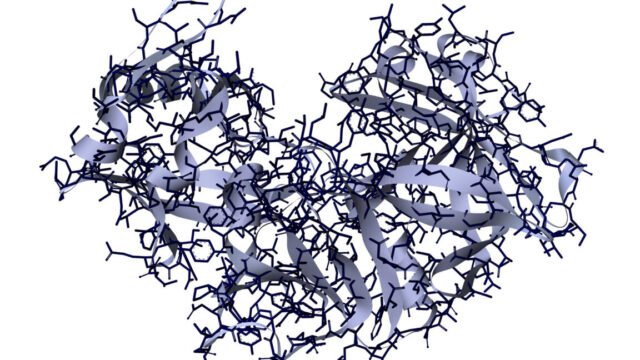
A protein is a chain of amino acids held together by what are called peptide bonds. On their own, those bonds are extremely stable; they're estimated to have a half-life of several hundred years. But in Earth's environment, most proteins don't last nearly that long. That's because organisms have evolved a handful of ways to catalyze the break-up of peptide bonds, which have diversified into countless specialized protein-digesting enzymes. Proteases are everywhere and generally make short work of any proteins that find their way into the environment. Now, researchers have basically short-circuited the diversification process, using AI-based protein design tools to take the catalytic core of two types of protease and replace the entire rest of the protein. The resulting enzymes could be tuned to cut specific proteins in half, and the researchers demonstrated their effectiveness by using them to cut proteins associated with neurological diseases. Cutting proteins The basic peptide bond isn't especially interesting-looking—it's what you get when you link an amino group to an acid, releasing a water molecule in the process. As their name implies, amino acids have both an amino and an acid group, allowing them to form peptide bonds on two sides of the amino acid. This is critical for building up the long chains found in proteins. (The amino acids also have side chains with distinctive chemistry, which gives a backbone specific properties.)Read full article Comments

Technology

Recording device hidden in toilet paper found in top-secret OpenAI meeting room

It took OpenAI two days to notice that a recording device was hidden in a restricted executive conference room where leadership met to discuss highly confidential information, including technical progress, government engagements, and commercial partnerships. Only those with special clearance are supposed to access that room. But the FBI believes the recording device was planted by Abdulrahman Alfozan, a 35-year-old engineer from Saudi Arabia, who became a permanent US legal resident in 2020. In a press release Tuesday announcing his arrest, the FBI alleged that chatbot logs and CCTV footage suggested that Alfozan—who worked as an OpenAI engineer for more than a year—sought to use the device to spy on OpenAI and risked leaking trade secrets in a way that threatened national security. To conceal the USB device, Alfozan allegedly wrapped it in toilet paper, then plugged it into the back of a conference room television. The device was likely planted on September 28, and OpenAI found it on September 30 and quickly determined that its contents were encrypted, the FBI said. Days later, on October 5, OpenAI installed a camera in that conference room, and the CCTV footage allegedly showed Alfozan attempting to retrieve the recording device that same day.Read full article Comments

Advertisement
Technology

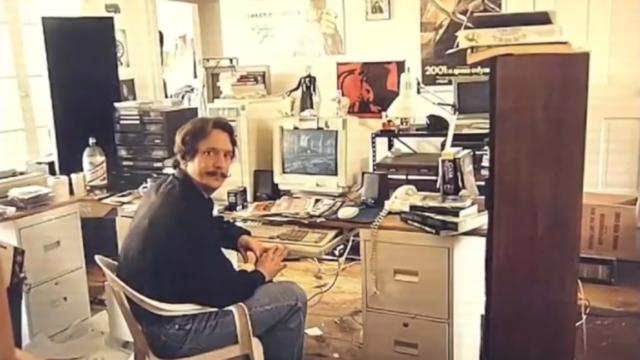
Legendary FPS level designer Richard “Levelord” Gray dies at 68

Prolific first-person shooter level designer Richard "Levelord" Gray died Monday at the age of 68, based on reports shared on social media by Apogee Entertainment yesterday. He had "dealt with cancer on and off for a while now," according to former colleague Joe Siegler. After studying computer engineering in the '80s and tinkering on some early games in COBOL, Gray broke into the industry at the age of 35 in 1994 with the launch of GrayDoom, a set of four maps for the then-new Doom that were widely shared on CompuServe and beyond. The work attracted the attention of Q Studios' Nick Newhard, who contracted Gray to work on level design for the late '90s cult classic Blood. Gray was subsequently hired by 3D Realms, where he said he was given free rein in designing "half the levels" for Duke Nukem 3D. There, he was also responsible for the famous, signed "You're Not Supposed to Be Here" easter egg, which players could find only by using cheats to explore outside of the usual confines of the map.Read full article Comments