Breaking
Advertisement

Technology

Technology

A Chinese rocket deorbited over Minnesota and left this in a farmer’s cornfield

About a month ago, a Chinese rocket took off from a remote spaceport in the Gobi Desert, released 10 satellites into orbit, then reignited its engine and put itself on a trajectory to rain down debris over the American Midwest. The rocket's flight on September 15 lasted between 75 and 80 minutes, and it came down without completing a full orbit of the Earth. Social media posts at the time showed streaks of fiery debris falling from the sky, heading north over Kansas toward Minnesota. The overnight spectacle was also visible on the western horizon from Wisconsin. The exact time, location, and direction of the debris allowed experts to connect it to the launch of a Zhuque-2E rocket, a medium-lift vehicle built by a Chinese company called LandSpace. The rocket had launched from Dongfeng, a commercial launch zone co-located with the military-run Jiuquan Satellite Launch Center in northwestern China, less than two hours before.Read full article Comments


Technology

Review: Lanterns is a truly unique twist on the superhero genre

The trailers for HBO's DC Universe series Lanterns teased a show that eschewed the usual superhero hijinks in favor of a gritty realism more in the vein of True Detectives or Slow Horses. Personally, I liked the change. My verdict: Ignore the review bombing; it's wonderful. The season wrapped with an emotionally charged, almost elegaic finale that fully delivered on that initial promise. I've found the rebooted DC Universe films released thus far to be enjoyable but rather forgettable, even when the positives outweigh the negatives. But Lanterns is a shining beacon of what is possible when someone is allowed to get really creative within the genre. (Spoilers below, but no major reveals.) There are two primary storylines. The first takes place in 2016 with a mass shooting at a local football game in Rushville, Nebraska. Current Green Lantern Hal Jordan (Kyle Chandler) and his new trainee, John Stewart (Aaron Pierre), get involved in the investigation, to the annoyance of Sheriff Kerry Kane (Kelly Macdonald), who initially doesn't think the case has any extraterrestrial connection. She is soon proved wrong when the suspect (an alien) self-detonates. Hal's power ring controls the damage, but the mystery remains.Read full article Comments

Advertisement
Technology

DIY VR: How to build your own headset, and why you probably won’t want to

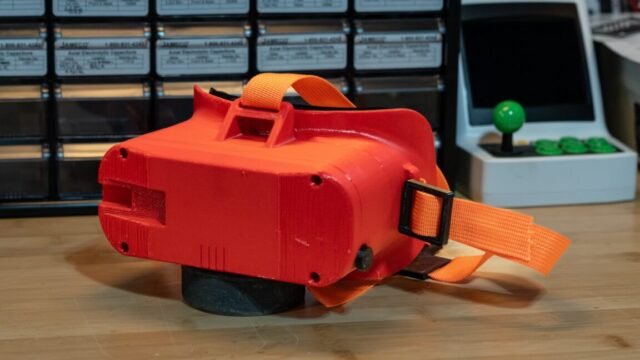
Virtual reality is in a bit of a weird place right now. After a lot of unfulfilled promise in the 1990s, it came back strong with the 2016 release of the Oculus Rift. For a while, it looked like VR, AR, XR, the metaverse, or whatever you wanted to call it, was going to be huge. Mark Zuckerberg was certainly convinced, and even Apple got in on the hype with its Vision Pro. But by then momentum for alternate realities of every acronym was already in steady decline, and it only dwindled from there. The rate of development of new headsets has slowed, with many companies (including Apple) scaling back or shelving their efforts. While new releases like the Steam Frame and Pimax Dream Air are still happening, many of the most interesting developments in the space these days are on the enthusiast front. That's right, DIY VR is a thing, and with a couple hundred dollars in components, plus many hours of your time, you too can enter the immersive world of virtual reality while also experiencing the highs and lows of soldering, firmware flashing, and 3D printing. I rode that rollercoaster myself and learned why this is still a decidedly niche movement.Read full article Comments

Advertisement
Technology

Stratospheric airship flew from US to Japan to test sky cell tower concept

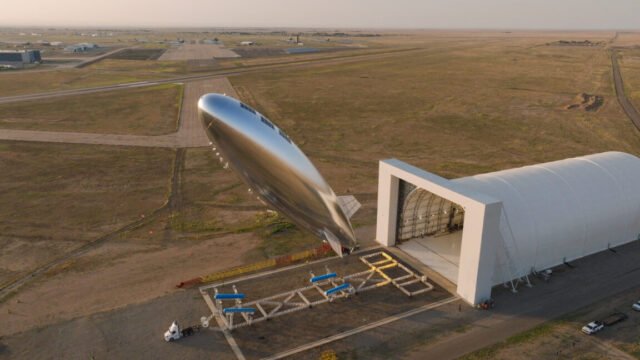
Nearly 100 years after the dirigible Graf Zeppelin made the first nonstop airship journey across the Pacific Ocean, another airship has successfully completed a round-trip flight from New Mexico to Japan and back. But the significance of this modern feat was less about the journey's length and more about its purpose: demonstrating how a lighter-than-air platform can act as a cell phone tower in the sky. The trans-Pacific flight that took place over a month between August and September 2026 was the most notable milestone yet for Sceye, a US aerospace company based near Albuquerque, New Mexico. Sceye has developed an uncrewed platform filled with helium for buoyancy and equipped with an electric-powered propeller for active propulsion, allowing it to resist most strong winds and keep hovering over the same location for long periods. The platform also uses top-mounted solar panels and onboard batteries to stay powered for stratospheric operations around the clock. “We can stay over an area of operation, and we do that in the stratosphere right around 60,000 feet, so we're twice as high as air traffic and we're above the jet stream, and yet 30 times closer than low-Earth orbit satellites,” Mikkel Frandsen, founder and CEO of Sceye, told Ars. “We can fly through day and night until the sun comes up the next morning and recharges the batteries, at which point we're still at the same altitude and still over the same area of operation.”Read full article Comments

Technology

Anthropic gives outside AI watchdog “employee-like” access

Anthropic has granted external evaluators “employee-like access” to assess the risks of its models, following through on a commitment to increase safeguards over concerns the technology could run catastrophically out of control. METR, a nonprofit that has worked with leading labs including OpenAI, Anthropic, Google and Meta, now has a team embedded in the Claude maker’s office with access to its hardware and internal systems. A greater role for third-party evaluators is among the main concrete steps the labs have proposed in response to rising concern about the dangers more capable AI systems could pose to the economy, cyber security and humanity at large.Read full article Comments

Advertisement
Technology

Science says your boss should talk less in meetings

Close to 1 billion meetings take place each day around the world. CEOs spend nearly three-quarters of their workdays in meetings. Planning for and spearheading meetings eats up the lion’s share of managers’ time. In much of the industrialized world, meetings are both the metronomes and menaces of people’s working lives. Given the enormous time spent in workplace meetings, do we know what they accomplish or how to make them as worthwhile as possible? For decades, the answer was… not really. Meetings weren’t a particularly accessible subject of study. But that has changed. Once a tiny niche area, “meeting science” is a growing specialization among organizational and social psychologists. The field is accelerating as archived virtual meetings provide vast swaths of data. And it is providing a fascinating window into human behavior. Meeting to talk helps fulfill basic human needs to connect, communicate, and cooperate. People have long come together—in caves, fields, market squares, and town halls—to get something done, share ideas, get on the same page, or just to remark on the weather. But meeting scientists define their subject as gatherings of people “with some goal or structure to the event,” says organizational psychologist Liana Kreamer of the Florida Institute of Technology, who coauthored a review of over three decades of meeting science in the 2026 Annual Review of Organizational Psychology and Organizational Behavior.Read full article Comments