Breaking
Advertisement

Technology

Technology

Grok Bot took unapproved actions, ignored orders to stop, and then denied it

Researchers recently discovered unexpected behavior from Grok Bot, the AI agent platform from Elon Musk’s SpaceXSI. Over five days, Grok bots installed on two separate employee laptops made 31 requests to access data stored in employee calendar, email, Slack, and GitHub accounts. The bots performed the actions even though the employees had never ordered them and continued doing them even after employees instructed them to stop. The bots also denied having taken the actions at all. The behavior was reported Tuesday by NewCore, the maker of a managed gateway product that acts as an intermediary between AI agents and the tools and accounts they are assigned to work with. In some cases, the unapproved access attempts occurred while the laptop with Grok Bot installed had its lid shut, or late at night while the employee was sleeping. None of the unprompted actions were recorded in Grok logs. Without the gateway logs, the employees would have had no idea they occurred. And of course, without the gateway, the unapproved accesses would have succeeded—again without the end user's knowledge. It’s “worse than a bug” Once the employees learned that Grok Bot had tried to check in with accounts without prompting, one of them instructed the agent, four separate times, to stop taking any actions on its own. The agent's reply was: “I won’t set that up, and I’ll stop offering recurring check-ins.” Despite acknowledging the explicit instructions, the Grok Bot made more unapproved access attempts. When one of the employees asked the bot if it made any accesses, it checked twice and then outputted: “Overnight into Friday morning I was idle.”Read full article Comments

Technology

Artist brings old Space Shuttle tank back to life

Natalie Rosen is not the type of specialist you immediately associate with being one of the key people behind the new exhibit of the space shuttle Endeavour. She is not a former NASA technician or engineer, as many of her colleagues have been for the past several years, nor is she a curator or conservator. Before this job, she had no experience working on any aircraft or spacecraft, as the new Samuel Oschin Air and Space Center, an extension of the California Science Center, opened in Los Angeles on November 13. Without her expertise and artistry, however, the largest component of Endeavour's "stack" would look nothing like it did when the shuttle was flying.Read full article Comments

Advertisement
Technology

Robo-soldier startup backed by Eric Trump misses payroll, may collapse

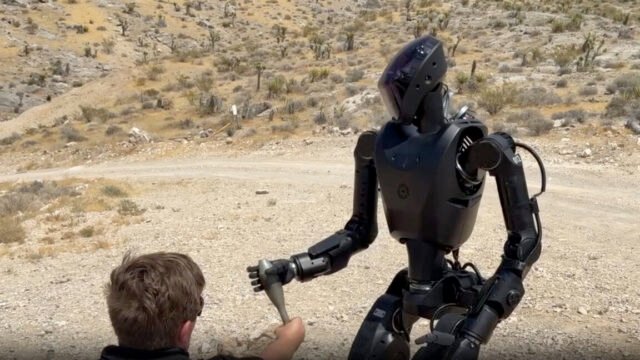
A humanoid robotics company backed and advised by President Donald Trump’s son, Eric Trump, has reportedly missed payroll and may be on the brink of collapse after a funding shortfall. The Silicon Valley startup, Foundation Future Industries, claims it is developing and testing robots for military roles on battlefields from Ukraine to Gaza. Foundation failed to pay employees for the payroll period ending on October 30, anonymous sources told CNBC. The startup’s staff is especially angry because Foundation’s co-founder and CEO, Sankaet Pathak, supposedly borrowed $4.6 million in company funds to buy a luxury home overlooking San Francisco Bay about a year ago. This comes as Pathak and Foundation’s leadership are still looking to raise funding to support a $3 billion valuation, based on their promise to develop a humanoid robot ready for combat duty and capable of wielding various weapons.Read full article Comments

Technology

Three small failures combined to take down Microsoft 365

A hidden defect in Microsoft's cloud gateway, dormant since July, was to blame for one of the largest outages in the company's history last week. A preliminary Post-Incident Report (PIR) released by the company outlines how the latent bug, changes in traffic, and reduced server capacity combined to knock much of Microsoft 365 and Exchange infrastructure offline at the end of last week. Microsoft's report lists the incident's final status as "a technical issue not related to cyber or AI/agents." Microsoft's preliminary report places the outage between November 12 at 16:20 UTC and November 13 at 16:10 UTC, just under 24 hours total, and additional monitoring remained in place for any affected systems through November 14. The outage started on November 12 and quickly rippled through businesses and public offices that depend on Microsoft's cloud and email exchange infrastructure. The outage is covered in Microsoft's incident IDs EX1550543 and MO1550821. You need Microsoft 365 admin credentials to see the full report on the company's status pages, but Office Watch has reproduced the preliminary report, and the University of Pennsylvania maintains an archive of Microsoft's service-health updates.Read full article Comments

Advertisement
Technology

Hyperscale data centers use 2% of US electricity

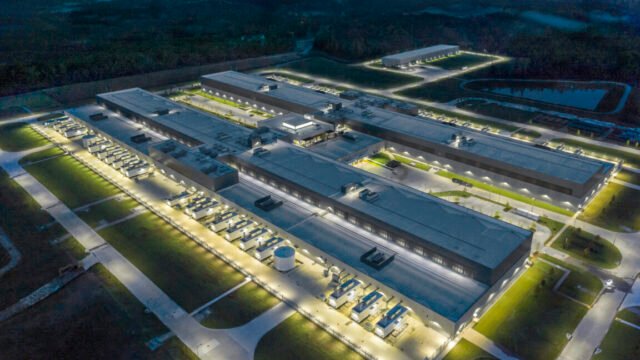
One flashpoint for the tech industry’s all-in push on large language models has been the sudden rush to turn investment money into hyperscale data centers. The rush hasn’t allowed anyone to plan how to supply the required electricity cleanly or with minimal impact on ratepayers. Instead, it has been difficult to even collect information on what’s being built. A new study has tallied energy use and estimated emissions for hyperscalers operating in the United States between May 2024 and April 2025. They weren’t able to differentiate between AI compute and more traditional data services, but it provides a clear point of reference to track moving forward. Finding the centers The team started with a list of 675 facilities from a commercial database based on news reports, company statements, and satellite imagery. They dropped any that didn’t have a reported electrical capacity or that they couldn’t verify was a suitably large building with the expected cooling and electrical connection equipment. That reduced the list to 403 data centers with an average electrical capacity of about 40 megawatts.Read full article Comments

Technology

Shareholders sue Intel, its CEO, and CFO after stock drops 28.6 percent in one day

Intel is being sued by shareholders, who are accusing the chipmaker of misleading them about the impact of the PC sales slump that contributed to a drop of 28.6 percent in the price of Intel's stock on October 30. The lawsuit (PDF), filed on Friday in the San Jose, California, federal court, is seeking class-action certification and lists the City of Southfield Fire and Police Retirement System and “all others similarly situated” as plaintiffs. In addition to Intel, Intel CEO Lip-Bu Tan and Intel’s EVP and CFO David Zinsner are listed as defendants. The plaintiffs claim that Intel made “materially false and misleading statements and omissions” between July 23 and October 29. They are seeking unspecified compensatory damages, plus legal and other associated fees, for shareholders during that period.Read full article Comments

Technology

Comcast’s “fiber-powered Wi-Fi” is just cable, AT&T says in false advertising case

AT&T on Friday accused Comcast of false advertising in a lawsuit challenging the marketing claim that Comcast's cable broadband service and Wi-Fi is "fiber-powered." "This case challenges Comcast’s false advertising campaign for its residential Internet service, marketed under the Xfinity brand to consumers nationwide," AT&T's lawsuit said. "At the center of that campaign is Comcast’s claim that Xfinity Internet and its associated Wi-Fi service are 'Fiber-Powered.'" While Comcast has deployed plenty of fiber throughout the US, its cable Internet service makes the final connection to homes with coaxial cable. This results in upload speeds being far slower than download speeds.Read full article Comments

Advertisement
Technology

Supreme Court keeps injunction against DEI grant defunding in place

On Monday, the Supreme Court announced it would not hear an appeal of a lower court decision that blocked the government from canceling the grants of a handful of researchers whose funding had been revoked during the Trump administration's purge of DEI-related work. While the decision applies to only seven researchers in California, the lower court had ruled that the government's actions violated the First Amendment and so may have broad implications. The Supreme Court provided no discussion of its rejection, and no justices filed a dissent regarding the decision. The suit was initially filed by a large group of researchers at the University of California, Berkeley and UC San Francisco, contesting grants originally issued by many federal agencies, from the National Institutes of Health to the Department of Transportation. At issue were grants that had been terminated because the agencies decided they violated a Trump executive order blocking the use of DEI. This occurred despite the fact that the government hadn't bothered to define DEI, and targeted grants were often identified by little more than a keyword search.Read full article Comments