Kling AI has released version 4.0 of its video generator with support for clips up to 30 seconds, ten keyframe images as input, and prompt comprehension expanded to 8,000 tokens. In comparisons with Wan 3.0 and Seedance 2.5, Kling 4.0 holds its own but doesn't pull ahead, which could be an early sign that the breakneck pace of progress in AI video models is starting to level off. The article Kling AI drops version 4.0 with stereo audio, multilingual lip sync, and a lighter Flash variant appeared first on The Decoder.
AI agents are increasingly using Stripe's payment service Link to shop for their users, Upstarts Media reports. The article Stripe says AI agent purchases are adding up, but it won't share the numbers appeared first on The Decoder.
MiniMax has just released MiniMax M3.1 Flash on its API, priced at $0.15 per 1M input tokens. MiniMax also confirmed that Space Bunny was an earlier M3.1 Flash build. That stealth model processed over 200T tokens. For developers, the message is near-frontier agentic scores at Flash-tier cost. Model weights are due in late October, 2026. TL;DR Size: 428B total parameters, about 23B active (MoE); 1,000,000-token context Runs on: MiniMax API, M Plan and MiniMax Code today. Self-hosting hardware not disclosed; weights arrive Oct 23 Performance: Near-frontier on agentic office work, mid-pack on hard coding, all MiniMax-reported Best: Automation-Bench v1.0.6 at 62.2, the top score in MiniMax’s table Worst: Terminal Bench 4.0 at 38.1, versus 51.8 for Opus 5 What is MiniMax M3.1 Flash? MiniMax M3.1 Flash is a multimodal mixture-of-experts model from MiniMax. It targets coding, agentic office work and visual reasoning. MiniMax’s product page lists 428B total parameters and about 23B active. It also mentions sparse attention and a native visual encoder. The model accepts text, image and video input and returns text. The context window is 1,000,000 tokens. Those parameter totals match MiniMax M3, which ships at ~428B total and ~23B active. MiniMax has not published a technical report on what changed in the Flash variant. How does reasoning work in M3.1 Flash? Reasoning is always on and cannot be disabled. Developers choose from 5 effort levels: Low, Medium, High, Xhigh and Max. MiniMax recommends Max as the default. Migration matters here. Requests sending thinking.type=disabled or effort=none return an error. Reasoning arrives in a separate reasoning_content field, which may be absent. Integrations that parse inline tags from M3 need updating. How does M3.1 Flash perform on benchmarks? All scores below are MiniMax-reported. No independent replication exists yet. On the CoWork set, M3.1 Flash leads Automation-Bench v1.0.6 at 62.2. Opus 5 scores 50.3 and GPT-5.6 Sol 45.8. It ties Opus 5 on BankerToolBench at 76.2. It also tops LOCA-Bench 256K at 60.3. Agents’ Last Exam lands at 29.6. Coding results are mixed. DeepSWE v1.1 scores 73.7, just above GPT-5.6 Sol at 73.0. DeepSeek-V4.1-Flash-1017 scores higher at 77.0. Terminal Bench 4.0 is the weakest result at 38.1. SWE Refactor Bench sits at 23.0, versus 31.0 for Opus 5. On vision, BabyVision with tools reaches 91.0 and CharXiv RQ reaches 82.5. HLE without tools scores 43.4. Spot checks hold up. The Kimi K3 model card reports DeepSWE 67.5 and BabyVision 85.7, matching MiniMax’s table. One inconsistency: MiniMax’s cost chart plots Automation-Bench max effort at 62.8, while its table says 62.2. What does M3.1 Flash cost per task? MiniMax frames value as cost per task, not per token. On its Automation-Bench chart, all 5 effort levels sit below $0.05 per task. Scores range from 52.8 at low effort to 62.8 at max. A full 152-task Agents’ Last Exam run cost about $111 at 29.6. On DeepSWE, DeepSeek V4.1 Flash-1017 plots both higher and cheaper at max effort. window.addEventListener('message',function(e){if(e.data&&e.data.mmxHeight){var f=document.getElementById('mmx31f-frame');if(f)f.style.height=e.data.mmxHeight+'px';}}); How do you deploy MiniMax M3.1 Flash? The model is live on platform.minimax.io as MiniMax-M3.1-Flash. MiniMax supports Anthropic-compatible and OpenAI-compatible access, including Chat Completions and Responses. It is also available through M Plan and the MiniMax Code desktop app. Pricing is a flat $0.15 input and $0.60 output per 1M tokens. Cache reads cost $0.015 per 1M. There is no long-context surcharge. MiniMax M3 costs $0.30/$1.20 up to 512K input and doubles above that. Per token, Flash is half of M3’s standard rate. MiniMax claims 1/3 the cost of M3 but has not detailed the calculation. On speed, MiniMax’s product page lists about 150 tokens per second. The announcement claims 3x the speed of M3. Weights arrive October 23; the license is not yet disclosed. For scale, M3’s MXFP8 build is about 440 GB. How does M3.1 Flash compare with DeepSeek, Kimi and GLM? *Scores from MiniMax’s comparison table. Kimi K3 DeepSWE and BabyVision match its own card. What are the limitations? Every benchmark is vendor-reported, and harness choice shifts results. Automation-Bench numbers do not transfer across sources. Kimi K3’s card reports 30.8 on a 600-task public subset, while MiniMax lists 46.7. Opus 5 leads by 13.7 points on Terminal Bench 4.0 and 14.1 on NL2Repo-Bench. Always-on reasoning also sets a token and latency floor for simple calls. Self-hosting details remain unknown until October 23. Key Takeaways 428B MoE with ~23B active and a 1M context. $0.15/$0.60 per 1M tokens, half of M3’s per-token rate. Leads Automation-Bench v1.0.6 at 62.2, MiniMax-reported. Trails Opus 5 by 13.7 points on Terminal Bench 4.0. Weights land Oct 23; reasoning cannot be disabled. Check out the announcement, product page and API docs. All credit goes to the researcher of this project. Also, feel free to follow us on Twitter and don’t forget to join our 150k+ML SubReddit and Subscribe to our Newsletter. Wait! are you on telegram? now you can join us on telegram as well. The post MiniMax Just Launched M3.1 Flash: 428B MoE Agentic Model at $0.15/M Input appeared first on MarkTechPost.
After stock crashes and Firmus's scrapped IPO, industry executives expect only seven to ten of the hundreds of AI cloud providers to survive. CoreWeave lost a quarter of its market value, and Microsoft pulled out of a deal with Nscale for 23,000 Nvidia chips. Nvidia has a lot riding on the outcome, since customers outside the hyperscalers make up 45 percent of its data center revenue. The article The neocloud shakeout is coming, and Nvidia has the most to lose appeared first on The Decoder.
Anthropic wants to put five percent of its shares into a new public benefit fund that will also look into direct payments to workers at risk of losing their jobs. The fund is a company-owned LLC, so Anthropic keeps control of it as a possible IPO approaches. By offering the option of direct payments, Anthropic goes further than its competitors. Elon Musk says on X the company should just give the shares directly to the public. The article Anthropic plans fund for workers threatened by AI, Musk counters with SpaceX shares for children appeared first on The Decoder.
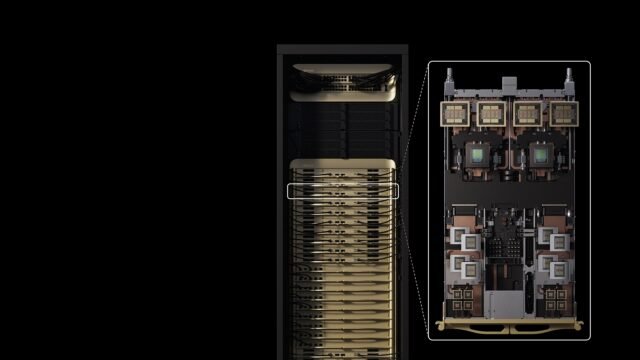
NVIDIA has released the full NVIDIA Run:ai platform as open source software. The source code ships under the Apache 2.0 license on GitHub. NVIDIA Run:ai open source puts production GPU scheduling, quotas and workload management in developers’ hands. The release, makes Run:ai part of the NVIDIA DSX AI Factory platform. Platform teams can now inspect, fork and self-host the stack without a paid subscription. TL;DR Size: Monorepo with control plane, cluster services, installer, CLI and MCP server. Local dev builds about 50 Go services. Runs on: Kubernetes or OpenShift clusters with NVIDIA GPUs. Local dev runs on macOS or Linux with 8 simulated Tesla-A10 GPUs, no GPU needed. Performance: NVIDIA published no platform-level benchmark for this release. Best: The related Model Streamer loaded models 3x to 6x faster on 8 NVIDIA H100 VMs on Azure. Worst: The community edition has no NVIDIA enterprise support. Local builds need 16 GB RAM and 100 GB disk on Linux. What is NVIDIA Run:ai? NVIDIA Run:ai is an AI workload and GPU orchestration platform for Kubernetes from NVIDIA. It schedules development, training and inference workloads across shared GPU clusters. It runs on top of Kubernetes and does not replace it. The control plane handles workload submission, resource management and monitoring. Cluster services run on each Kubernetes cluster and add GPU-aware scheduling. Users reach it through a web UI, CLI, REST API and an MCP server for AI assistants. What are the 4 modular components? NVIDIA split the release into 4 components that teams can adopt independently: KAI Scheduler is the Kubernetes-native scheduling engine. It is Apache 2.0 and a CNCF Sandbox project. It covers gang scheduling, time-based fair-share, topology awareness, bin-packing and DRA support. GPU Fractioning Operator brings CUDA 13.4-native GPU fractions to Kubernetes. The CUDA driver enforces a hard memory limit per workload. NVIDIA retired its older proprietary fractioning in favor of this approach. The operator is scheduler-agnostic and exports per-pod metrics. KAI Resource Management adds projects, departments, quotas and node pools. NVIDIA’s example guarantees 50% of a cluster to a research team. Workload Map is a Go library that describes workload types such as PyTorchJob, RayCluster and KServe services. It works offline and does not schedule, queue or autoscale. How do developers run NVIDIA Run:ai locally? The local development guide stands on 1 script, local-dev.sh. It builds about 50 Go services from source inside containers. It then creates a 5-node Kind cluster pinned to Kubernetes v1.32.5. A fake GPU operator simulates 8 Tesla-A10 GPUs, so no GPU hardware is required. Supported hosts: macOS or Linux, on amd64 or arm64. Windows is not supported. Linux hosts need 4 CPUs, 16 GB RAM and 100 GB free disk. macOS Podman VMs need at least 12 GB RAM. 1 full build leaves about 44 GB of caches. The --gpu-operator flag switches to real NVIDIA GPUs. That mode needs Linux, Docker and the NVIDIA Container Toolkit. AMD and Intel accelerators are not supported. How can teams deploy it in production? Dev teams can deploy from source or from the NGC Community Product Helm chart. That edition needs no paid subscription but excludes NVIDIA enterprise support. Teams can also adopt it through 8 DSX ecosystem partners. These are Crusoe, Mirantis, Nebius, OpenNebula Systems, Rafay, Saturn Cloud, Spectro Cloud and vCluster. Supported commercial editions continue through NVIDIA AI Enterprise, NVIDIA Mission Control and select cloud marketplaces. What related open source projects ship alongside? Two adjacent projects round out the stack. Model Streamer streams model weights directly into GPU memory. vLLM and SGLang enable it with --load-format runai_streamer. Microsoft’s published benchmark used 8 NVIDIA H100 VMs. It showed 3x to 6x faster loading than the default loader. Throughput held at 80 Gbps versus about 40 Gbps on the default path. Grove orchestrates multicomponent inference workloads. It starts components such as prefill and decode as all-or-nothing units. (function(){var f=document.getElementById('mtp-runai-embed');window.addEventListener('message',function(e){if(e.data&&e.data.mtpRunaiHeight&&f&&e.source===f.contentWindow){f.style.height=e.data.mtpRunaiHeight+'px';}});})(); How does NVIDIA Run:ai compare with other open source Kubernetes schedulers? The key difference is scope. Volcano, Kueue and YuniKorn focus on scheduling or queueing. Run:ai ships a full management platform on top of its scheduler. Key Takeaways NVIDIA Run:ai is now fully open source under Apache 2.0. 4 components ship standalone: KAI Scheduler, GPU Fractioning, Resource Management, Workload Map. GPU fractioning now uses CUDA 13.4-native memory isolation. Local dev runs on a 5-node Kind cluster with 8 simulated GPUs. The free edition excludes NVIDIA enterprise support. Check out the GitHub repo, the local dev guide and NVIDIA’s technical blog. All credit goes to the researcher of this project. Also, feel free to follow us on Twitter and don’t forget to join our 150k+ML SubReddit and Subscribe to our Newsletter. Wait! are you on telegram? now you can join us on telegram as well. The post NVIDIA Open Sources Run:ai Under Apache 2.0 for Kubernetes GPU Orchestration appeared first on MarkTechPost.
Mistral AI has released Timestral, its first family of time series foundation models. Timestral is a set of 4 zero-shot forecasting models from Mistral AI, sized from 5M to 209M parameters. The largest checkpoint ranks first among pretrained, zero-shot models on GIFT-Eval, TIME and fev-bench. It does this without a GPU at inference. For developers, this Timestral time series foundation model means probabilistic forecasts on standard server CPUs, with open weights and inference code. TL;DR Size: 4 models: 5M, 28M, 123M, 209M parameters (dense). Context up to 32,768 time steps. Runs on: Standard server CPU, no GPU needed. 209M weights are 837 MB in fp32. GPU optional. Performance: #1 among zero-shot pretrained models on GIFT-Eval, TIME and fev-bench (Mistral-reported). Best: fev-bench SQL skill score of 50.39, ahead of TimesFM-3 at 48.99. Worst: GIFT-Eval MASE of 0.658 leads t0-gamma (0.661) by only 0.003. What is Timestral? Timestral is a time series foundation model (TSFM). It is pretrained on a large, diverse corpus, then forecasts zero-shot on data it has never seen. Classical tools like ARIMA fit one series at a time. Deep models like PatchTST usually train from scratch on each dataset. Timestral transfers patterns across domains instead. Each model outputs 21 quantiles per time step. It forecasts multivariate targets jointly. It accepts past-only, known-future and categorical covariates. How does Timestral work? Timestral is a causal, patch-based transformer with time attention and variate attention. The 209M model uses 24 layers and an embedding dimension of 768. Each patch covers 32 time steps. A single forward pass forecasts up to 1,024 steps. Longer horizons run block by block, feeding each block’s median back as context. Mistral lists 4 technical contributions: Decoupled Horizon Forecasting (DHF): Learned forecast tokens read the full history. Observed values stay in context instead of being masked, unlike contiguous patch masking in Toto 2.0 and TimesFM-3. Covariate-aware attention: Each series is a target, past-only covariate or known-future covariate. Information flows only from covariates to targets, preventing future leakage. Synthetic-first data: Most training data is synthetic, with trends, seasonality, noise and nonlinear cross-series dependencies. Two-stage training: Pretraining on synthetic data at context 8,192, then post-training on mixed data with 4x longer context. The loss is pinball loss over 21 quantiles. (function(){var f=document.getElementById("mtp-timestral-frame");window.addEventListener("message",function(e){if(e.source===f.contentWindow&&e.data&&e.data.tsxHeight){f.style.height=e.data.tsxHeight+"px";}});})(); #mtp-timestral-embed{background:transparent!important;border:0!important;}#mtp-timestral-embed p:empty,#mtp-timestral-embed hr{display:none!important;} How does Timestral perform on benchmarks? All scores below are zero-shot, from a single checkpoint without ensembling. They come from the Timestral-209M model card. GIFT-Eval: MASE 0.658, CRPS 0.446 (lower is better). TIME: MASE 0.626, CRPS 0.522 (lower is better). fev-bench: SQL skill score 50.39, MASE skill score 39.49 (higher is better). The size scaling is flat at the top. Timestral-123M scores 0.659 MASE on GIFT-Eval, against 0.658 for 209M. Mistral team states that the 28M model beats Chronos-2 on GIFT-Eval and TIME. Chronos-2 is about 4 times larger. How fast is Timestral on CPU? Mistral team tested a standard server CPU with 8 threads. The task: forecast 1 day ahead from 3 weeks of 15-minute history. The 5M model took 10 ms and the 209M model took 140 ms. The 28M model is 5 times faster than 209M. The 123M model lands within 0.2% of the 209M score at three quarters of its latency. How does Timestral compare with TimesFM-3, Chronos-2 and Toto 2.0? * As listed on the Timestral-209M model card. Google and Amazon do not publish matching figures on their own model pages. ** From Datadog’s model card. Mistral’s card lists 0.642 / 0.539. How can developers deploy Timestral? Install the package with pip install git+. It needs Python 3.10+ and torch 2.4+. Dependencies are PyTorch, NumPy, safetensors and huggingface_hub. Weights download from Hugging Face: 21 MB for 5M, 111 MB for 28M, 490 MB for 123M. Mistral’s docs list Timestral 1.0 209M as Public Preview. Fine-tuning on proprietary data runs through Mistral Forge. The pipeline can deploy on-prem, in a VPC or air-gapped. Key Takeaways 4 sizes, 5M to 209M, all on the accuracy-vs-size Pareto front. 209M leads GIFT-Eval, TIME and fev-bench among zero-shot models. CPU-only inference: 10 ms (5M) to 140 ms (209M). 32,768-step context, 21 quantiles, native covariate support. Modified MIT weights, unlike TimesFM-3’s non-commercial licence. Check out the blog post, GitHub repo and model weights on Hugging Face. All credit goes to the researcher of this project. Also, feel free to follow us on Twitter and don’t forget to join our 150k+ML SubReddit and Subscribe to our Newsletter. Wait! are you on telegram? now you can join us on telegram as well. The post Mistral AI Releases Timestral: A 209M Forecasting Model Family That Outperforms Google’s TimesFM-3 appeared first on MarkTechPost.
An AI agent that reads the web pays 2 kinds of cost. The first is the retrieval charge: what a search or fetch API bills per request. The second is model processing: content passed from retrieved pages into an AI model consumes tokens, while reasoning and generated responses add further costs. TinyFish, a web infrastructure company for AI agents, argues that teams budget for the model and underestimate how much retrieved content drives it. This article walks through the token math, the context-window impact, and what the Artificial Analysis Search API leaderboard does and does not show. TL;DR What it runs on: TinyFish uses a web-native AI model designed for search, retrieval, and interaction with live websites. The model runs on TinyFish-managed infrastructure, while its cloud browser fleet renders pages and handles website interactions. No local GPU is needed. Access is via REST, Python and TypeScript SDKs, CLI or MCP. Performance: On the Sep 28, 2026 Artificial Analysis snapshot, TinyFish Search (web) scores 71 at $9.30 per 1,000 benchmark tasks, with 59.0 seconds per task (model plus search time). Best: $0 retrieval charge within rate limits (Search: 30 requests/min, 500/hour; Fetch: 150 URLs/min, 1,000/day), and the lowest total cost among the 12 configurations displayed on the leaderboard. Trade-offs: The second longest time per task among displayed configurations, and an Agent product whose built-in model cannot be swapped. Scores: Highest displayed is Perplexity Search (medium) at 80. Lowest displayed is TinyFish Search (web) at 71. The no-search baseline is 33. Retrieval charges vs model processing costs Search and fetch APIs usually bill per request or per page. Whatever they return then enters the model’s context and is billed as input tokens. Reasoning and output tokens come on top. Enterprises now route each task to the cheapest capable model, a trend underlined when Stripe agreed to acquire OpenRouter, a gateway spanning 400+ models from 80+ providers. Routing lowers the price per token. It does not change how many tokens a retrieved page contains. Free Search and Fetch remove TinyFish’s retrieval charge within its limits. The downstream model still incurs inference costs. That is why the size of each returned page matters. How big is one page in tokens? TinyFish ran a fetch quality evaluation on June 2, 2026, across 45 URLs and 5 providers on default settings. For one Daily Mail article with a body of roughly 4,300 characters, the providers returned: *Marktechpost calculation: ~4 characters per token and an illustrative input price of $1 per 1M tokens. Input processing only; excludes retrieval charges, reasoning and output. Real counts vary by tokenizer. Character counts from TinyFish’s evaluation. In this example, Firecrawl returned approximately 36 times as many characters as TinyFish. Parallel also returned only an excerpt rather than the complete article, so its smaller output is not directly comparable to the full-page extractions. While this illustrates how extraction output size can affect token consumption, the difference comes from a single webpage and should not be generalized across all websites. Those percentages are not used for this individual page comparison because outputs above 30,000 characters were truncated before judging. Context limits and repeated calls Assume every extracted character goes into the same context, with no filtering, truncation or summarization. A page containing approximately 42,774 tokens would consume about one-third of a 128K-token context window. Three such pages would require approximately 128,322 tokens, leaving little or no room for system instructions, conversation history, or the agent’s response. Agent loops also resend context. Artificial Analysis notes that each turn resends the full conversation, with earlier input billed at the model’s cached-input price. Caching lowers the cost of rereading a noisy page. It does not remove it, and the page still occupies the window. In that TinyFish internal evaluation, a result counted as covered only with at least 1,000 characters and a judged signal ratio above 30%. Coverage was TinyFish 93%, Tavily 80%, Exa 73%, Firecrawl 62% and Parallel 58%. Among usable results only, median signal was 90.5% for TinyFish and 89.7% for Exa. TinyFish ran the test on itself, the sample is 45 URLs, and news pages drove most of the gap. Why TinyFish makes retrieval free TinyFish frames search as one operation inside execution, like DNS or storage for ordinary software. An agent booking, comparing or filling out a form should care whether the job got done, not which search system found the page. TinyFish attributes its free retrieval pricing to three aspects of its infrastructure: Shared infrastructure: TinyFish built its browser fleet, stealth systems, session hydration and elastic scaling before Search was a product. TinyFish says this changes the marginal economics of search. It does not make the infrastructure free to run. Specialized models: TinyFish says its web-native AI model is designed for search, fetch, and live-site interaction. Its development draws on agent operational trajectories and large volumes of search activity, helping reduce reliance on general-purpose models for intermediate web tasks. No giant index: TinyFish says it would rather learn how work gets done than become an indexing company. TinyFish charges separately for Agent and Browser usage, while Search and Fetch remain free within their published limits. Per the pricing page, Search is free at 30 requests per minute and 500 per hour. Fetch is free at 150 URLs per minute and 1,000 per day. Both keep working at a $0 Wallet balance. Agent costs $0.016 per step with 2 concurrent runs, and Browser costs $0.002 per minute with 5 sessions. New accounts get $8 in Wallet funds. What the benchmark shows, and what it does not Artificial Analysis holds the answer model fixed (GPT-5.6 Luna, medium) and changes only the search provider. Model cost covers input, cached, reasoning and output tokens. Differences between providers reflect returned payloads, how many searches the model runs and how much it reasons. On the Sep 28, 2026 snapshot, model cost ranges from $8.04 to $21.65 per 1,000 tasks across the 12 displayed configurations. These come from 26 products across 13 providers. TinyFish posts $0 for search plus $9.30 for the model, the lowest displayed total. The trade-offs: TinyFish recorded a Search Index score of 71, the lowest among the displayed configurations, and a DeepSearchQA F1 of 67. Its benchmark time was approximately 59 seconds per task, combining estimated model processing time and measured search time rather than representing API latency alone. Because Artificial Analysis uses its own shared extraction layer, the results do not directly measure TinyFish Fetch. Similarly, benchmark costs per 1,000 tasks should not be confused with API prices per 1,000 requests, since a single task may involve multiple searches. How TinyFish compares with closest competitors The table covers 3 selected competitors that appear in both the Artificial Analysis leaderboard and TinyFish’s fetch test. **Browser operation and research tasks are different capabilities, so these prices are not directly comparable. Pricing checked Oct 7, 2026: TinyFish, Exa, Firecrawl, Parallel. Benchmark data: Artificial Analysis (Sep 28, 2026) and its methodology. Coverage: TinyFish internal evaluation (June 2026), a single-vendor test separate from the third-party benchmark. window.addEventListener("message",function(e){var d=e.data;if(!d){return;}var h=d.mtpTfxHeight;if(!h){return;}var f=document.getElementById("mtp-tfx-frame");if(!f){return;}h=Math.max(200,Math.min(4000,parseInt(h,10)||600));f.style.height=h+"px";}); Key Takeaways Agents pay retrieval charges plus model processing on everything retrieved. The same article ranged from ~1,184 to ~42,774 estimated tokens by provider. 3 large unfiltered pages can exceed a 128K-token window. Free Search and Fetch remove TinyFish’s retrieval charge, not model costs. TinyFish had the lowest displayed total cost on Artificial Analysis, but the lowest displayed score. Thanks to the Tinyfish team for the thought leadership / resources for this article. This article is sponsored by TinyFish. The post TinyFish Makes Search Free: What It Really Costs an AI Agent to Read the Web appeared first on MarkTechPost.
Anthropic is hiring fewer and fewer junior staff in technical roles. The share of junior positions among new hires dropped from 27 to 9 percent since early 2025. By August 2026, AI agents across the company were already logging six times as many hours as humans. Researchers warn of a "tragedy of the cognitive commons": if junior positions disappear, experienced specialists will be in short supply down the road. That is, assuming such specialists are even needed anymore. The article Anthropic has nearly stopped hiring junior staff because AI agents now work six times as many hours appeared first on The Decoder.
Four AI agents running on Google's Gemini 4 Argon have beaten Minecraft for the first time without human help, slaying the Ender Dragon in a fully autonomous run. With no predefined roles or strategies, they coordinated on their own, wrote 2,783 programs, exchanged 229 chat messages, and died 605 times. The session cost $1,620. The article Four Gemini 4 Argon agents beat Minecraft without any human help appeared first on The Decoder.