Jensen Huang likely left Nvidia more because of risky business practices than anything else, a Wall Street Journal report suggests. At the very least, those practices made him enemies internally. The company offered cloud providers billions in financial guarantees for chip purchases, including a planned $250 billion deal with OpenAI. Interim CEO and then-CFO Colette Kress tried to contain the risk, and Huang reportedly didn't like that. The article Jensen Huang's ouster likely traces back to Nvidia's risky business practices more than his personal life appeared first on The Decoder.
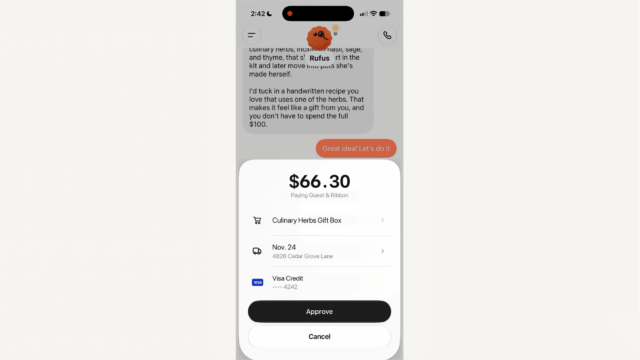
OpenAI is taking a second shot at AI-powered shopping with ChatGPT Wallet after scrapping its first approach, Instant Checkout. Users register a card once and confirm each purchase through Face ID or a fingerprint, while actual card details stay hidden behind payment tokens. Rivals such as Anthropic, Meta, and xAI already have their agents making purchases. The article OpenAI rebuilt AI shopping from scratch with ChatGPT Wallet appeared first on The Decoder.
Chinese investors are shut out of Anthropic's IPO, Bloomberg reports. Banks are rejecting buy orders from mainland China and Hong Kong, citing U.S. export control rules known as ITAR. Similar restrictions applied during SpaceX's IPO, and Anthropic's products aren't available in either region anyway. The article Banks bar Chinese and Hong Kong investors from Anthropic IPO over US export controls appeared first on The Decoder.
The AI video leaderboard looks very different from 12 months ago. Native audio is now table stakes. Clips run 15–30 seconds. And an open-weights model sits in the top 3. This ranking (as of Nov 13, 2026) uses one quality signal: blind human-preference Elo from the Artificial Analysis Video Arena. We pair it with API price per second and the license status of the weights. You can check the deployment options and specs here through our GPULeaderboard.com chrome extension. Methodology Quality: Artificial Analysis ranks models by Elo from blind pairwise votes by validated evaluators. Each vote compares 2 clips from the same prompt. We rank by the AA-Video-T2V v2.1 (with audio) board. We also report the AA-Video-I2V v2.1 score. Anchor: Kling 3.0 1080p (Pro) is fixed at 1000 Elo on both boards. A score below 1000 means voters preferred Kling 3.0 more often. Price: Artificial Analysis lists cost per minute on each creator’s API. It normalizes to 1080p where offered. We divide by 60 to get price per second. Vendor rates at 720p are often lower, and we flag those gaps. Confidence: Most top-10 scores carry a ±13 to ±15 Elo interval. Models within ~25 points are statistically close. Treat ranks 3–8 as a cluster, not a strict order. Master Comparison Table Source: Artificial Analysis T2V and I2V leaderboards, retrieved November 13, 2026. $/sec = AA per-minute price ÷ 60. “H3 post-train” means the model was fine-tuned from MiniMax H3’s weights. The Rankings 1. Alibaba Wan 3.0: Best overall text-to-video T2V Elo: 1175 (#1) · I2V Elo: 1108 (#11) Price: $0.20/sec at 1080p Weights: Closed Wan 3.0 holds the top text-to-video spot with 7,651 votes behind it. Alibaba launched it on August 24, 2026. It generates 30-second 1080p clips from text, PDFs and slide decks, priced at $0.20 per second. The document-to-video input is the differentiator. You can hand it a deck and get a structured video back. The trade-off is openness. There are no downloadable weights for Wan 3.0. Wan 2.2 (July 2025) remains Alibaba’s last open video flagship. Note the I2V gap too: Wan 3.0 drops to 11th on image-to-video. Best for: long single takes, explainer videos from existing documents. 2. Utopai Studios Utopai X: Highest-ranked post-train, no API T2V Elo: 1170 (#2) · I2V Elo: 1151 (#2) Price: No public API Weights: Closed Utopai X is the only model in the top 2 on both boards. Utopai Studios, a Mountain View film studio, built it by post-training MiniMax H3. It beats the base H3 it came from. Access runs only through Utopai’s PAI platform. PAI charges 93 credits per second, with plans starting at $15 for 1,000 credits. Developers cannot call it from a pipeline. Best for: filmmakers working inside a studio tool. Not for programmatic use. 3. MiniMax H3: Best open-weights model T2V Elo: 1161 (#3) · I2V Elo: 1133 (#4) Price: $0.08/sec Weights: Open, under the MiniMax H3 Community License H3 is the first open-weights model in the video top tier. MiniMax launched the API on July 31, 2026 and published weights on August 3. It is a 33B dense single-stream Transformer, using Qwen3-VL-32B as its encoder. It outputs video with native 32 kHz stereo audio. Read the license before you download. The Hugging Face weights carry real limits: Territory: the license blocks local deployment in the US, EU, UK and South Korea. Resolution: only H3-Base is open, with a 768p ceiling. 2K upscaling stays API-only. Size: the repo holds 2 task-specific checkpoints totaling 288 GB. Even so, H3 has become the base layer of 2026 video. Utopai X, HeyGen Video 1, fal’s H3 Max and Pika H3 Flex are all post-trains of it. AA also lists Pruna’s P-Video-2-Pro as a MiniMax collaboration. Best for: teams outside excluded regions that want to fine-tune a frontier video model. 4. ByteDance Dreamina Seedance 2.5: Best image-to-video T2V Elo: 1155 (#4) · I2V Elo: 1161 (#1) Price: $0.569/sec on AA’s normalized basis Weights: Closed Seedance 2.5 leads image-to-video. ByteDance began rolling it out on July 31, 2026 through Jimeng AI and Doubao Pro. It supports up to 30-second generations with up to 30 image, 10 video and 10 audio references. Pricing needs care. AA lists $34.12 per minute, the highest on the board. BytePlus lists $1.156 for a 5-second 720p clip without video input, or about $0.23/sec. Confirm API access in your region before planning around it. Best for: reference-heavy, image-led ad and character work. 5. Google Gemini Omni Flash 1.2: Best frontier price-to-quality T2V Elo: 1154 (#5) · I2V Elo: 1086 (#14) Price: $0.104/sec on AA’s basis; $0.07/sec at 720p per Google Weights: Closed Gemini Omni Flash 1.2 is the newest entry, generally available since November 5, 2026. It added 3–15 second clips and a 30% price cut over version 1.1. Video output costs $12 per 1M tokens, about $0.070 per second at 720p. It jumped 27 Elo over Omni Flash 1.1 on text-to-video. Requests to 1.1 route to 1.2 from December 3, 2026. Best for: teams already on the Gemini API who want a top-5 model under $0.11/sec. 6. fal FLUX 3 Max: Fastest near-frontier generation T2V Elo: 1153 (#6) · I2V Elo: 1068 (#16) Price: $0.145/sec Weights: Closed fal Research post-trained FLUX 3 Max with Black Forest Labs, launching it October 19, 2026. fal says a 10-second 720p clip renders in about 12 seconds. Seedance 2.5 took 277.80 seconds in fal’s own comparison. It shares an API with fal’s H3 Max. Switching between them takes a single model-ID change. Best for: latency-sensitive pipelines and rapid iteration. 7. HeyGen Video 1: Best value in the top 10 T2V Elo: 1152 (#7) · I2V Elo: 1124 (#6) Price: $0.04/sec Weights: Closed HeyGen Video 1 is a general scene generator, not an avatar engine. It is a post-train of MiniMax H3. It leads the silent (audio-off) text-to-video board at 1146 Elo. At $0.04 per second, it costs half of base H3 for a similar score. The API model ID is heygen-video-1. Best for: high-volume social clips and ad variants where discard rate drives cost. 8. fal MiniMax H3 Max: Fast H3 variant T2V Elo: 1149 (#8) · I2V Elo: 1115 (#9) Price: $0.16/sec Weights: Closed (API only) fal Research post-trained H3 Max on the open MiniMax H3 base. It focused on prompt adherence and visual quality. fal claims it renders a 5-second clip in about 3 seconds. It briefly led image-to-video after its August 2026 launch. Newer post-trains have since passed it. Best for: fal users who want H3 quality without self-hosting. 9. Skywork AI SkyReels V4 T2V Elo: 1137 (#9) · I2V Elo: 1125 (#5) Price: $0.35/sec Weights: Closed SkyReels V4 dates from March 2026 yet still ranks top-5 on image-to-video. At $0.35 per second, it is hard to justify on text-to-video. Gemini Omni Flash 1.2 scores higher for less than a third of the price. 10. Black Forest Labs FLUX 3 T2V Elo: 1137 (#10) · I2V Elo: 1071 (#15) Price: $0.29/sec Weights: Closed today; open Dev version promised FLUX 3 is BFL’s first video model, with 20-second clips and native audio. One backbone also handles robot action prediction. BFL says it will release open-weight versions later this year. Until FLUX 3 Dev ships, treat it as API-only. Open-Weights Leaderboard MiniMax H3 family: Pika H3 Flex shipped October 29, 2026. It cuts H3 to 6 sampling steps. Local inference still needs an H100 80GB and about 215 GB of downloads. Video Rebirth’s HyperFlow H3 Flash compresses H3 to 13.7B. It runs from a 9.1 GB GGUF on a 24 GB GPU. Its sibling, Hyperflow H3, ranks #7 on image-to-video at 1120 Elo. LTX-2.5: Lightricks released the 22B model on August 11, 2026. It adds native multishot generation and joint audio. Under the license, entities with $10M+ annual revenue need a paid license. It trails the H3 family by roughly 200 Elo. But it gates by revenue, not territory. For US and EU teams, that makes it a practical default. See our LTX-2.5 launch coverage. Apache 2.0 options: Wan 2.2 and HunyuanVideo 1.5 remain the go-to picks for permissive licensing or a single consumer GPU. Neither appears on the current AA boards. Price per Second: Where the Value Is Quality and price no longer track each other. The 3 cheapest top-tier models are all H3 derivatives or H3 itself. Value = (Elo − 1000) ÷ price per second. Higher is better. Illustrative only; it ignores resolution and clip-length differences. At the top, Wan 3.0 buys you about 23 Elo over HeyGen Video 1. It costs 5x more per second. Whether that matters depends on how many takes you discard. What About Veo, Kling 4.0, Sora and Runway? Google Veo 3.1 scores 964 on text-to-video. That is below the Kling 3.0 anchor. Veo 3.1 Lite matches base H3 on price at $0.08/sec but trails it by 213 Elo. Kling 4.0 became generally available on klingai.com with 30-second native clips. Kuaishou had not announced API availability or pricing at last check. It does not yet appear on the AA boards. OpenAI Sora 2 and Runway Gen-4.5 are not on the current AA with-audio boards. We excluded them rather than mix in non-comparable scores. How to Choose Highest text-to-video quality, API access: Wan 3.0. Image-to-video and heavy references: Seedance 2.5, budget permitting. Best quality per dollar: HeyGen Video 1 or Gemini Omni Flash 1.2. Speed for iteration: FLUX 3 Max or H3 Max on fal. Self-hosting outside the US/EU/UK/South Korea: MiniMax H3 or Pika H3 Flex. Self-hosting in the US or EU: LTX-2.5, or Wan 2.2 for Apache 2.0. Key Takeaways Alibaba’s Wan 3.0 leads Artificial Analysis text-to-video with audio at 1175 Elo, at $0.20/sec. ByteDance’s Seedance 2.5 leads image-to-video at 1161 Elo, but costs the most on the board. MiniMax H3 is the top open-weights model at #3, and at least 4 top-14 models are post-trains of it. HeyGen Video 1 and Pika H3 Flex deliver near-frontier Elo for $0.035–$0.04 per second. Google’s Veo 3.1 has slipped below the Kling 3.0 anchor on both blind-vote boards. You can check the deployment options and specs here through our GPULeaderboard.com chrome extension. Sources Artificial Analysis — Text-to-Video Leaderboard (AA-Video-T2V v2.1) Artificial Analysis — Image-to-Video Leaderboard (AA-Video-I2V v2.1) DataNorth — Alibaba launches Wan3.0 The Next Web — Alibaba launches Wan3.0 AlphaSignal — Utopai X beats the MiniMax H3 model it was built on Hugging Face — MiniMaxAI/MiniMax-H3 mer.vin — MiniMax H3 open weights blocked in US/EU/UK AI Weekly — MiniMax posts H3 to Hugging Face RuntimeWire — MiniMax H3 open weights and license Leadde — Seedance 2.5 pricing CometAPI — Seedance 2.5 API pricing TokenCost — Gemini Omni 1.2 Flash pricing Tech Insider — Gemini Omni 1.2 Flash price cut fal — Introducing FLUX 3 Max and FLUX 3 Max page OrcaRouter — HeyGen Video 1 launch Kompozy — HeyGen Video tops silent T2V board fal — H3 Max and launch post VentureBeat — Black Forest Labs launches FLUX 3 DataNorth — Black Forest Labs releases FLUX 3 Hugging Face — Pika-Labs/Pika-H3-Flex AlphaSignal — Pika drops H3 Flex ComfyUI Wiki — HyperFlow H3 Flash LTX — Introducing LTX-2.5 RITS — LTX-2.5 license and specs Let’s Data Science — Kling 4.0 opens to all users No Code MBA — Kling 4.0 release tracker Pinggy — Best video generation models 2026 The post Best AI Video Generation Models in 2026: Elo, Price per Second, Open Weights appeared first on MarkTechPost.
Anthropic's new Claude for Manufacturing plugin connects the AI directly to Autodesk Fusion, Oracle NetSuite, and Infor. Its 17 specialized skills let the AI draft quotes, compare suppliers, and place backup orders when deliveries are delayed, all after human approval. The plugin doesn't control physical machines yet, but Anthropic is separately developing the Model Hardware Standard for that. The article Anthropic's Claude for Manufacturing plugs AI directly into factory software to automate industrial workflows appeared first on The Decoder.
Perplexity has released pplx-decider-v1.3 and pplx-decider-flash-v1.3, the latest versions of its open-weight decision models. Perplexity Decider v1.3 is a decision model that returns probabilities, not generated text. It answers yes/no, multiple-choice and score questions about a text or image input. The main addition is Locate, which extracts exact text spans by type or instruction. Weights ship under Apache 2.0 on Hugging Face. Both models also run in the Perplexity Decisions API and on OpenRouter. You can check the deployment options and specs here through our GPULeaderboard.com chrome extension. TL;DR Size: 27B on Qwen3.8-27B; Flash is 4B on Qwen3.5-4B. Hugging Face lists 26B and 5B params. API input: under 256K tokens. Local default: 32,768. Runs on: a CUDA GPU fitting ~49 GiB of BF16 weights (v1.3) or ~8.5 GiB (Flash). No quantized variants. Performance: leads TypeSafe’s Jev 1.14 on most of Perplexity’s self-reported evaluations. Best: 91.6% mean accuracy on 63 query-classification tasks. Worst: Locate averages 69.0, its lowest absolute score. Flash trails Jev 1.14 in finance, programming and law. Bottom line: Best: a 0.27% answer-flip rate and $26.47 per 1M production requests. Worst: every figure is self-reported. What is Perplexity Decider v1.3? Decider is Perplexity’s family of decision models, inspired by TypeSafe’s Jev. Each request has a shared ‘state’ plus one or more questions with labeled options. The model returns a probability per option instead of writing an answer. v1.3 succeeds v1.2 and Flash v1.2. Flash v1.3 is distilled from the large model. How does Decider v1.3 work? Perplexity adapts a generative LLM backbone into a classifier. The output layer starts from the base model’s LM head, pruned to option tokens (A, B, C). A linear decision head reads the hidden state at a token and outputs option probabilities. Full-attention layers are made bidirectional, which Perplexity’s ablations showed helps. v1.3 also changes attention between questions. In v1.2, every question saw every other question, so answers could shift. In v1.3, the state sees all questions, but each question sees only the state and itself. All questions about one input still run in a single forward pass. Training runs in 3 stages: a full fine-tune on hundreds of public datasets a LoRA specialization adapter a LoRA vision adapter Weights are averaged across 3 seeds. Flash is trained by minimizing KL divergence to the large model’s outputs. What does the new Locate feature do? Locate returns exact text spans with start and end character offsets. Fields can be short labels (‘location’) or instructions (‘Extract the city name where the job is located.’). It targets NER, PII detection and extractive QA. A new token is added per requested field. A span head plus a LoRA adapter is trained, while the backbone and decision head stay frozen. The adapter stays unmerged because merging hurt decision accuracy. How does Decider v1.3 perform on benchmarks? All results below are self-reported by Perplexity: Query classification (63 tasks): 91.6% mean accuracy, 6.54 points above production classifiers. Domain classification: leads Jev 1.14 in all 7 domains, by up to 12.9 points in finance. Retrieval and reranking (72 tasks): 83.99 mean nDCG@10. That is 1.81 above Qwen3-Reranker-8B and 2.24 above Jev 1.14. Multilingual (19 tasks, 8 languages): 88.16% for v1.3, 86.50% for Flash, 85.41% for Jev 1.14. Locate (17 out-of-domain tasks): 69.0 average for v1.3 and 63.6 for Flash. Liquid d1 scores 43.3 and GLiNER large v2.5 scores 33.6. Image classification (5 tasks): 76.99% for v1.3, 1.47 points above Jev 1.14. Flash scores 72.77%. Real-world requests (1M requests, 2,318,887 questions): 93.98% agreement with frontier LLM judges. Jev 1.14 scores 93.35%. Robustness: answer flips on 0.27% of reorder or relabel transformations. Jev 1.14 flips on 2.69% to 4.84%. (function(){var f=document.getElementById('mtp-pplx-decider-frame');window.addEventListener('message',function(e){if(e.data&&e.data.mtpEmbed==='pplx-decider'&&e.source===f.contentWindow){f.style.height=e.data.h+'px'}});})(); How does Decider v1.3 compare with Jev 1.14 and Qwen3-Reranker-8B? Benchmark rows are Perplexity’s self-reported numbers from its launch post. How can developers deploy Decider v1.3? The API endpoint is POST . Model IDs are pplx-decider-v1.3 and pplx-decider-flash-v1.3, with -latest aliases. Pricing is $0.02 and $0.01 per 1M input tokens. Output is free. Perplexity’s latency test put an ~243K-token request at 16s on v1.3 and 5s on Flash. Locate requests allow up to 128 questions. Locally, load the model with Decider.from_pretrained() from the pplx_decider package. Full-attention layers must run noncausally. Perplexity recommends v1.3 for nuanced rubrics and Flash for high-volume routing. Key Takeaways Decider v1.3 returns probabilities, not text, for classification and scoring. New Locate extracts exact spans for NER, PII and extractive QA. v1.3 scores 91.6% on 63 query-classification tasks (self-reported). API pricing is $0.02 (v1.3) and $0.01 (Flash) per 1M input tokens. Weights are Apache 2.0; v1.3 needs ~49 GiB, Flash ~8.5 GiB. Check out the technical details, Decider v1.3 model card, Flash v1.3 model card and API docs. You can check the deployment options and specs here through our GPULeaderboard.com chrome extension. Also, feel free to follow us on Twitter and don’t forget to join our 150k+ML SubReddit and Subscribe to our Newsletter. Wait! are you on telegram? now you can join us on telegram as well. Need to partner with us for promoting your GitHub Repo OR Hugging Face Page OR Product Release OR Webinar etc.? Connect with us The post Perplexity Releases Decider v1.3: Open-Weight Decision Models Add Locate appeared first on MarkTechPost.
US public-sector unions are increasingly pushing through protections against AI surveillance and automated firings. In Oakland, a strike vote forced retraining programs instead of layoffs, and a transport union in Ohio won veto power over autonomous vehicles. California banned so-called bossware. All of this is happening while nearly 70 percent of US government agencies already use generative AI. The article Nearly 70 percent of US agencies use generative AI, and unions are finally catching up with guardrails appeared first on The Decoder.
Former OpenAI researcher Will DePue says he has produced the first technical evidence that DeepSeek, Moonshot AI, MiniMax, and Ant Group are using Nvidia's latest Blackwell GPUs despite US export controls. His forensic method reads characteristic chip signatures directly from published model weights. He estimates the hardware behind the five training runs cost more than half a billion dollars. The article Former OpenAI researcher says he found Nvidia Blackwell fingerprints hidden inside six Chinese AI models appeared first on The Decoder.
Anthropic is on track for the largest IPO ever, with orders exceeding available shares by a factor of six. The article Anthropic's IPO is six times oversubscribed and on track to become the largest public offering in history appeared first on The Decoder.
Meta's AI agent Muse can now call businesses on behalf of paying US subscribers, handling everything from cable providers to restaurants. The agent already has over 10 million users, according to Meta's AI chief Alexandr Wang. Google Gemini, Instinct, and xAI's Grok Bot offer the same feature, but many businesses hang up as soon as they detect an AI on the line. The article Meta's Muse now calls businesses for you, but many companies might just hang up on the AI appeared first on The Decoder.