Can you earn a Citi / AAdvantage Executive Mastercard welcome bonus more than once?
Transportation
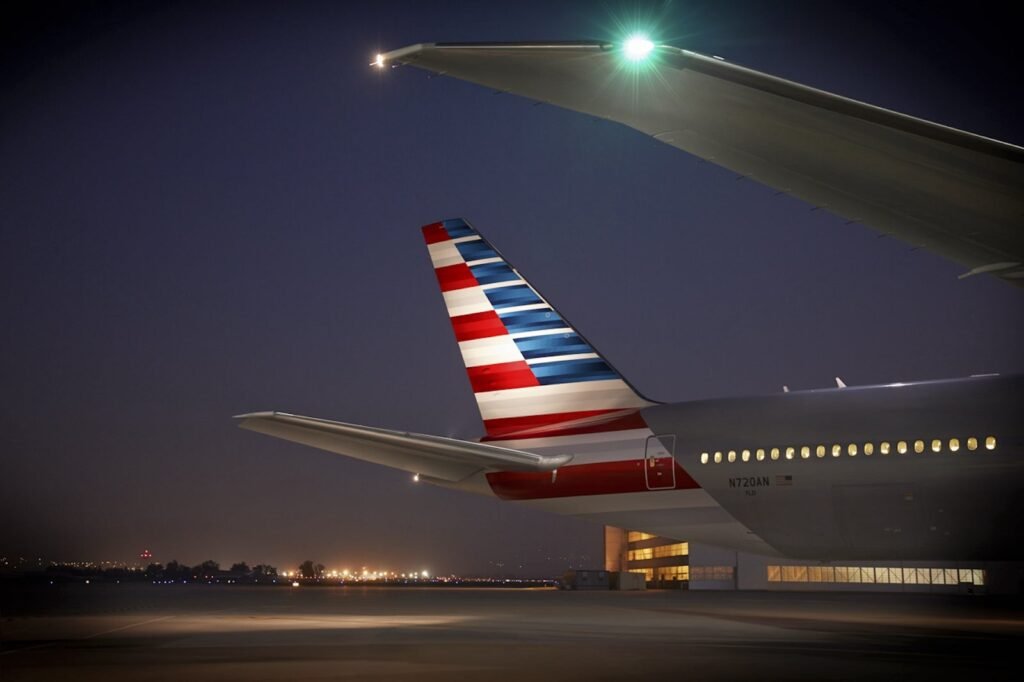
Credit card welcome bonuses are one of the quickest ways to earn valuable travel rewards. You can often pick up 100,000 points or more in a single bonus, which can be worth thousands of dollars in travel.Right now, American Airlines’ top-tier card, the Citi® / AAdvantage® Executive World Legend Mastercard® (see rates and fees), is offering new cardholders a best-ever, limited-time bonus to earn 125,000 bonus miles after spending $15,000 on purchases in the first five months from account opening. Based on September 2026 valuations, this offer is worth $1,813.But what if you already have the card or have held it before? Can you earn the welcome bonus on it again?To answer this question, it’s important to understand Citi’s application rules and identify the exact date when you last earned the welcome bonus on this card. Let me walk you through it.Related: Is the Citi / AA Executive Mastercard worth it?Understanding Citi’s application rulesOn most of its cobranded cards, Citi restricts earning the welcome bonus to once every 48 months. This rule applies to the Citi / AAdvantage Executive.The best way to find out this date is to call Citi at 888-766-2484. Alternatively, you could also call AAdvantage at 800-882-8880. (You can only see your account activity through your AAdvantage online account for the past two years.)Timing is importantThe 48-month period starts on the date the previous bonus was received, not on the date the account was opened or closed.That’s important because a few months will probably have passed between when you were approved for the card and when you met the minimum spending requirement and, thus, received the welcome bonus.Product changesYou can earn the welcome bonus on each of Citi’s AAdvantage cards once every 48 months — each product is treated separately.AMERICAN AIRLINESIn the past three years, I have applied for the following three Citi / AAdvantage cards and earned the welcome bonus on each:Citi / AAdvantage Executive MastercardCiti® / AAdvantage® Platinum Select® World Elite Mastercard® (see rates and fees)Citi® / AAdvantage Business™ World Elite Mastercard® (see rates and fees)However, suppose I had earned the bonus on my Platinum Select and then the product changed (or upgraded) it to the Executive. In that case, I would need to wait 48 months from the date I received the Platinum Select welcome bonus to earn the Executive welcome bonus.The information for the Citi / AAdvantage Platinum Select has been collected independently by The Points Guy. The card details on this page have not been reviewed or provided by the card issuer.Strategies to maximize bonus opportunitiesHere are some of my top tips for quickly earning a lot of AAdvantage miles by applying for cobranded American Airlines credit cards.Work out your application strategyIf you are confident that you received the welcome bonus on your Executive card more than four years ago and don’t currently hold the card, you’re good to apply for it again.If you currently have the card, first, you’ll want to downgrade or cancel it.My recommendation would be to downgrade it to the no-annual-fee American Airlines AAdvantage® MileUp® card by calling Citi at the number on the back of your card. However, note that downgrading will make you ineligible for the MileUp card’s (small) welcome bonus. The upside is that you will protect your credit score as there will be no change to your credit report.The information for the AAdvantage MileUp card has been collected independently by The Points Guy. The card details on this page have not been reviewed or provided by the card issuer.Alternatively, you can cancel your Executive card. While this may temporarily hurt your credit score due to an increase in your credit utilization ratio, you may be eligible to earn the welcome bonus on the MileUp should you choose to apply for it in the future.Bottom lineCiti’s 48-month rule makes timing critical when applying for its AAdvantage credit cards. By tracking when you last earned a welcome bonus and understanding how product changes affect your eligibility, you can ensure you maximize your chances of approval.If you’re an AA loyalist sitting on an old bonus, now’s the time to reapply — but track that 48-month window carefully or you’ll miss out.To learn more about the card, read our full review of the Citi / AAdvantage Executive.Apply here: Citi / AAdvantage Executive World Legend MastercardEditorial disclaimer: Opinions expressed here are the author’s alone, not those of any bank, credit card issuer, airline or hotel chain, and have not been reviewed, approved or otherwise endorsed by any of these entities.
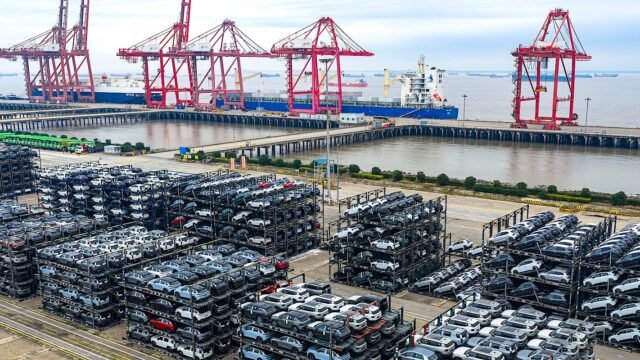
The dumb oil war in Iran is driving up the cost of just about everything, including new cars. That’s giving Chinese EVs a huge advantage over Western “legacy” car brands already lagging in tech and struggling with affordability – and those legacy brands about to have a whole new to them problem on their hands: USED Chinese EVs. more…
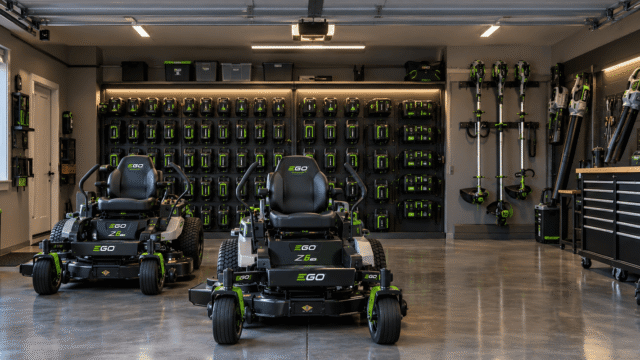
EGO Power’s commercial group showed up at this week’s EQUIP Expo with a trio of new zero-turn riding mowers, a commercial-grade 780 CFM leaf blower, and a heavy-duty 16.5″ trimmer built for the 56V PGX battery system. And, with incentive programs designed to help landscapers make the switch to electric popping up all over, the timing couldn’t be better. more…
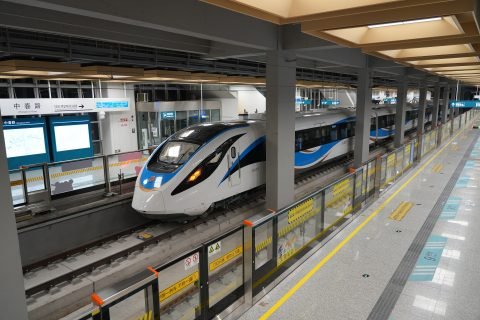
A new generation of suburban railways is emerging across China, blending features of the high speed, conventional main line and metro environments that have traditionally been highly segregated. Benjámin Zelki, Toma Bačić and Andy Hellawell investigate. As China’s rapid urbanisation accelerates, the clear demarcation that used to characterise its urban and main line rail networks is starting to evaporate. Such is the scale of many of the largest conurbations that dedicated metro networks are not enough to provide coverage: instead, airport links, suburban corridors and short-distance inter-city rail services are emerging across China, and many of these are highly integrated with the rest of the national rail network. At the same time, there are also lines emerging which run on fully segregated alignments, connecting suburban areas to metro hubs, often running on largely elevated alignments and with longer distances between stations, of around 4 km in many cases. These can also be classified as suburban rail, distinguishing them from conventional and express metro networks, which are also growing unabated. Examples of standalone suburban railways can be found in Nanjing, Ningbo or Binhai. Meanwhile, as is common in Europe, other projects are taking shape using spare or underutilised capacity on conventional main lines to facilitate the launch of dense suburban rail operations sharing tracks with other services, as can be seen southwest of Beijing. Nanjing keeps growing Nanjing has a large and still growing network of suburban railways that radiates out from metro hubs on the edge of the city to serve neighbouring areas. Lines S1, S2, S3, S4, S6, S7, S8 and S9 all opened between July 2014 and April 2026. Line S5 is under construction, while S2 is currently being extended towards the city centre. All of these lines use trains capable of at least 100 km/h operation. Nanjing city map Click to explore When completed, Line S5 will run 57.9 km northeast from the Xianlinhu terminus of metro Line 4 to Yangzhou Xi station in the east. Of this, 23.3 km will be underground, 31.5 km elevated and 3.1 km at ground level. It will have a design speed of 160 km/h. Construction commenced in December 2021, and completion is envisaged for 2030. S5 will be served by both express and stopping services, and will be operated by four-car Type A trainsets built by CRRC, with provision to run six-car sets in the longer term. Meanwhile, the 54.2 km suburban Line S2 with 16 stations opened as the region’s first inter-provincial commuter line on April 22. This links the Xishanqiao terminus of metro Line 7 southwest to Taibai in the neighbouring city of Ma’anshan. In June 2023, the 46.2 km Line S4 opened in Nanjing, connecting Chahe with Chuzhou main line station in the northwestern suburbs of the city. An 8.2 km long extension is currently under construction from Chahe to Nanjing Bei main line station to provide a connection to the rest of the metro network, once the ongoing two-station extension of Line 3 to Huaquiying has been completed. Line S4 is operated by Type D EMUs branded as ‘Orange Phoenix’. These feature styling inspired by paintings of the mythical bird. An orange stripe rises from the front of the train, and the headlights are inspired by a phoenix’s eyes. The interiors further highlight the cultural heritage of Chuzhou in the southeast of Anhui province. The four-car EMUs have a maximum speed of 140 km/h. Two lines in Ningbo Two standalone suburban rail lines, designated 10 and 12, are taking shape in Ningbo. Line 12, or the Ningxiang line, was opened on September 10, with Line 10 expected to follow by the end of the year. Both are being built with specifications similar to the increasingly long metro lines now common in Chinese cities. Ningbo city map Click to explore Line 12 is 61.4 km long. It connects Xiaoyangjiang station on lines 4 and 7 with the southeastern suburbs, serving two underground and eight elevated stations. Line 10 — the Ningci line — will be 63.6 km long, linking Kongpu station on metro Line 2 with the northern suburbs, serving seven underground and six elevated stations. CRRC is supplying a fleet of four-car suburban EMUs for use on lines 10 and 12, which it said would be ‘China’s first demonstration project for the standard regional Type A trains’. They are designed for 160 km/h operation, a significantly higher running speed than the typical 80 to 100 km/h of most metro lines in China. The first unit was unveiled in March. Binhai network takes shape A two-line suburban rail network is currently taking shape around Binhai, a satellite city near Tianjin. The initial section of suburban rail Line Z4 opened on January 18. The 23.7 km mostly elevated line between Zhaishang in the north and Beitang also has a wider station spacing than is typically found on metro lines. The line is now set to grow further, with the 12 km section from Beitang to Binhai due to be completed by the end of 2027, and another 12 km as far as Xinchengwu to follow later. This tunnelled extension into central Binhai will have characteristics closer to metro standards, including shorter gaps between stations. The infrastructure of Line Z4 was built by a consortium of Tianjin TEDA Investment Holdings and the China Railway Electrification Bureau and partially funded through a ¥20.9bn PPP, with remaining ¥13.3bn provided by the government. The 25-year PPP concession covers design, financing and four years of construction, followed by 21 years of operations and maintenance plus renewals and additional investment. This means China Railway Investment is responsible for the operation of Z4 rather than Tianjin Metro. The investment is expected to be recouped from farebox revenues and non-fare income, supplemented by government subsidies. Tianjin & Binhai city map Click to explore Meanwhile, the 39.3 km first phase of suburban Line Z2 is under construction. This also has stations at 3 to 4 km intervals. The route will ultimately link Binhai International Airport with Beitang, serving 14 stations. The first section of Line Z2 is scheduled to open from Beitang to Zhongxin Avenue next year, with the extension to the airport to follow at a later date. Lines Z2 and Z4 will use Type A trainsets built by CRRC Dalian. The aluminium-bodied trains are capable of 120 km/h operation using 1.5 kV DC overhead electrification. A fleet of 25 trains will be deployed on Line Z2, while 12 trainsets are running on the operational section of Z4, with additional trains on order. Inter-airport corridor A strategically important artery opened on August 1, linking two airports in southern China and adding further connectivity to the sprawling rail and metro networks of the Pearl River Delta region around Guangzhou. The 48.2 km Zhuliao – Xintang South section of the Guangzhou – Shenzhen Intercity Railway completed a missing link between the two cities and created a 160 km/h main line arc across the eastern side of the conurbation. The opening enables through services to link Guangzhou’s Baiyun Airport and Bao’an Airport in Shenzhen, as well as adding seven more stations in the gap between the Guangzhou – Shenzhen Intercity Railway and the Guangzhou East Ring. Guangzhou city map Click to explore Two more suburban rail links opened recently in Guangzhou. A 57.8 km section of the 160 km/h Guangzhou East Ring Intercity Railway opened in September 2025, linking Baiyun Airport North to Panyu. It is operated by Guangdong Intercity Railway, which is part of Guangzhou Metro Group, and is the first inter-city railway in mainland China operated by a local authority. A 22 km link opened on January 28 provides an important connection between the Guangzhou – Qingyuan main line and the major hub station at Guangzhou Baiyun. This section is served by all-stations and express trains. Daxing Airport Express grows The 41.4 km Daxing Airport Express Line serving Beijing’s second air hub opened in September 2019, connecting Caoqiao on metro lines 10 and 19 to the then-newly completed airport. Operated by China Railway, this line with 23.7 km of tunnelled and 17.7 km of elevated sections also blends main line and metro characteristics. The line is currently being extended at both ends, and the 86 km southern section from the airport to Xiong’an will have features more akin to a suburban railway. On course for completion later this year, it will augment the 350 km/h Beijing – Xiong’an high speed line which opened in 2020. Trains will run through onto the Daxing Airport Express line to reach Caoquiao in Beijing. The extension is intended to support a government-led scheme to relocate businesses and government offices to Xiong’an to relieve the pressure on space in the capital. Meanwhile, a 3.5 km extension is also under construction at the city end to take the line to Lize on metro lines 14 and 16, serving an important business district. This tunnelled extension is expected to open in June 2027. Beijing city map Click to explore There are also plans to extend the route by a further 40 km southwest from Xiong’an to Baoding, providing a service to towns not on the high speed line. The existing Type D trains used on the airport service are capable of 160 km/h, and are powered from 25 kV 50 Hz overhead electrification. CRRC Sifang unveiled a 200 km/h, fully automated suburban trainset for the Beijing – Daxing Airport – Xiong’an service at the MetroTrans 2025 urban rail fair, held at Qingdao in September 2025. New service on existing tracks Staying in the capital region, dedicated suburban services started on July 1 on a 31.5 km section of existing railway between Beijing Xi and Liangxiang. The service was launched following the upgrade of sections of the existing Beijing – Guangzhou and West Beijing railway corridors, including renewal of the signalling. Two new stations were built at Yamenkou Dong and Fangshan Dong, while Beijing Xi, Houlucun and Liangxiang were refurbished. The Beijing city authorities and China Railway say this is their first jointly developed upgrading of an existing railway to provide suburban services. Approved in October 2022, the project is expected to provide a template for using spare capacity on conventional main lines for suburban or regional passenger services, as is common in other parts of the world, particularly Europe. The route runs at a lower frequency than the standalone suburban services, providing 13 trains a day per direction. Trains are operated using CR’s CRH6F inter-city EMUs, and an end-to-end journey takes 30 min. Main line rail tickets, Beijing’s public transport smartcards and QR code payments are all accepted. Shanghai airports linked Shanghai’s Airport Link Line opened in December 2024. The 58.5 km line with seven stations connects Hongqiao International Airport T2 with Pudong Airport T1&2, but it does so without passing through the city centre. A 10.2 km extension at the eastern end to serve Shanghai Dong — a future transport hub being built as part of the cross-Yangtze Nantong – Shanghai Railway project — is under construction with opening scheduled for July 2027. The Airport Link Line blends metro and main line characteristics, effectively providing an express metro service connecting the two airports. Services are run by Shanghai metro operator Shentong Metro Group. Shanghai city map Click to explore At the same time, the infrastructure has been designed to accommodate future through-running to and from the national high speed network. This would enable China Railway high speed services to access the Shanghai Dong hub when this opens. The airport link uses aerodynamically styled trains capable of 160 km/h operation. The 14 four-car and three eight-car Type C trainsets were supplied by CRRC Changchun. Automated EMU to operate Shenzhen link CRRC Changchun unveiled a suburban rail electric multiple-unit in May for service on the 39.4 km, fully underground Pingshan – Dapeng line east of Shenzhen. Shenzhen city map Click to explore The double-track line is to serve six stations and branch off the Shenzhen –Huizhou high speed line south of Pingshan and run to the popular Dapeng coastal neighbourhood of Shenzen. It is to be operated by Shenzhen Metro and expected to open for revenue services in the last quarter of this year. According to the manufacturer, the EMU combines the performance of a high speed train with a high-frequency urban rail vehicle. This article first appeared in the October 2026 issue of Railway Gazette International Read the issue See also China: Express metros serve growing conurbations China: No easy building left as high speed network adds 1 500 km