Autonomous Orange: YMX adds self-driving tech to its electric yard trucks
Transportationvia Electrek
Quick Read
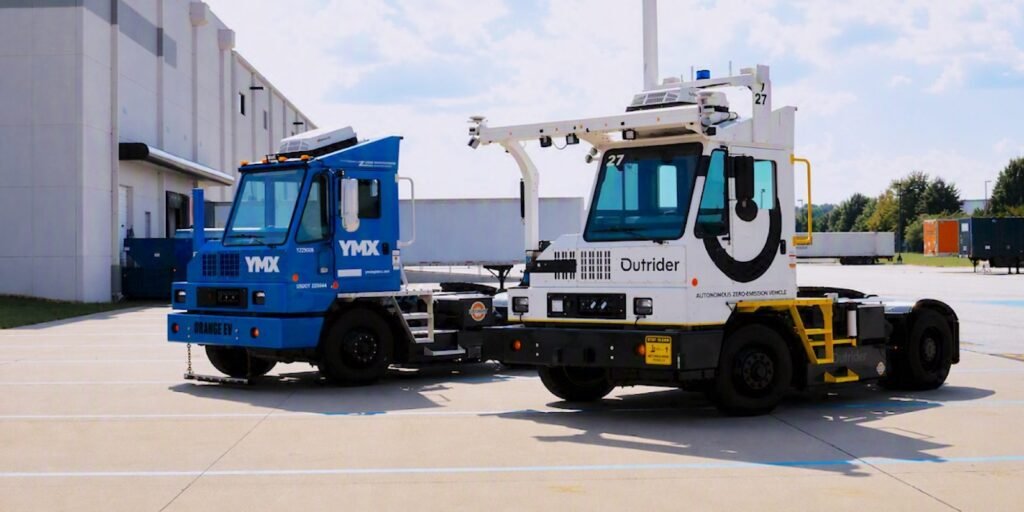
The logistics experts at 3PL provider YMX know a thing or three about running an efficient fleet, but even they are feeling the nationwide shortage of qualified yard operators. To help keep the goods moving and the wheels turning, the company is turning to self-driving, zero-emission yard trucks at customer sites as part of a new pilot with AI startup Outrider. more…
The logistics experts at 3PL provider YMX know a thing or three about running an efficient fleet, but even they are feeling the nationwide shortage of qualified yard operators. To help keep the goods moving and the wheels turning, the company is turning to self-driving, zero-emission yard trucks at customer sites as part of a new pilot with AI startup Outrider.
Drewry’s World Container Index rose 2% to $4,585 per 40-foot container, supported by higher rates on trans-Pacific and Asia-Europe routes as strong U.S. import demand and carrier capacity cuts bolstered pricing. Shanghai-to-Los Angeles rates increased 2% to $8,007 per 40-foot container, while Shanghai-to-New York rates edged up 1% to $10,166. Drewry expects trans-Pacific rates to remain stable next week, with U.S. import demand continuing to support the market despite an increase in available capacity. Carriers have announced only two blank sailings on the trans-Pacific for next week, down from six this week, according to figures from Drewry’s Container Capacity Insight. The service tracks scheduled and canceled sailings, effective capacity and port congestion across major trade lanes. Rates from Shanghai to Rotterdam rose 3% to $3,632 per 40-foot container, while Shanghai-to-Genoa rates increased 5% to $4,152. Unlike the trans-Pacific, the Asia-Europe trade faces more sailing cancellations next week. Carriers have announced eight blank sailings, up from two this week, tightening available capacity as they seek to put upward pressure on freight rates. Drewry expects Asia-Europe rates to increase slightly next week as capacity reductions support pricing. The cuts come as congestion at key Asian ports eases. Vessel waiting times at Shanghai fell from 97 hours in Week 38 to 38 hours in Week 42, signaling a substantial improvement in port operations. Security risks and attacks on ships continue to affect vessel movements through the Persian Gulf. Only two containerships sailed into the Gulf in Week 42, down from five the previous week. Meanwhile, sailings through the Suez Canal increased slightly, from 54 in Week 41 to 55 in Week 42. Why it matters: The increase signals continued cost pressure on importers, even as congestion at major Asian ports eases. Strong U.S. demand is supporting trans-Pacific rates, while Asia–Europe carriers are canceling more sailings to tighten available space and bolster pricing, leaving shippers’ costs dependent on both cargo demand and carrier capacity decisions. Read more articles by Stuart Chirls here. Read more:Russian diesel tanker heads for U.S. following Trump-Putin deal Time-definite ocean delivery? Container ship completes new Arctic route trial How new capacity is raising rates in chaotic ocean market No. 2 container line studying US-UK route for nuclear ships Trans-Pacific facing new booking risks as reliability sinks The post New Drewry data shows import demand boosting trans-Pacific rates appeared first on FreightWaves.
Less-than-truckload carrier Roadrunner announced a new outbound Canada-to-U.S. service on Friday. It also announced a 5.9% general rate increase, which will be effective on Nov. 2. Roadrunner’s (OTC: RRTS) new service connects shippers across Canada to approximately 40 major metro markets in the U.S. The direct linehaul service is executed entirely by truck, with no shipments touching the railroads. “We built a proprietary Smart Network for direct, long-haul, metro-to-metro service, delivering fewer handling points, faster transit, real-time visibility, and greater accountability with no unnecessary transfer points to delay shipments or compromise visibility,” said Dave Black, vice president of strategic sales at Roadrunner. “We have focused primarily on strengthening our U.S. network, and we are pleased to announce our next phase of expansion.” Roadrunner was already serving U.S.-outbound lanes into Canada. Its metro-to-metro, long-haul network utilizes independent drivers and over 40 terminals to provide LTL service to shippers. window.googletag = window.googletag || {cmd: []}; googletag.cmd.push(function() { var gptSlot = googletag.defineSlot('/21776187881/FW-Responsive-Main_Content-Slot1', [[300, 100], [320, 50], [728, 90], [468, 60]], 'div-gpt-ad-1709668545404-0').defineSizeMapping(gptSizeMaps.banner1).addService(googletag.pubads()); googletag.pubads().enableSingleRequest(); googletag.pubads().collapseEmptyDivs(); googletag.enableServices(); setInterval(function() { if (!document.hidden) { googletag.pubads().refresh([gptSlot]); } }, 60000); }); googletag.cmd.push(function() { googletag.display('div-gpt-ad-1709668545404-0'); }); The GRI is expected to average 5.9% across general tariff codes and lanes. The announcement follows other recent rate implementations from carriers. “To support expansion and further investment in better offerings, we’re introducing the GRI to sustain investment in our leading network,” said Nathalie de Champlain, chief transformational officer. “The adjustment addresses increased costs driven by market conditions and supports continued investment in network efficiency and service quality.” Why it matters? Roadrunner’s new direct, truck-only Canada-to-U.S. service provides LTL shippers with faster transit, fewer handling points and improved visibility across roughly 40 major U.S. metro markets. Additionally, its 5.9% GRI highlights how carriers are adjusting prices to combat rising operating costs and invest in their networks. More FreightWaves articles by Todd Maiden: Knight-Swift again eyes big rate increases as new bid season nears Heartland Express sees earnings turnaround in Q3 Werner Enterprises issues Q3 profit warning The post Roadrunner announces Canada-outbound service appeared first on FreightWaves.
Wabtec reported higher third-quarter revenue and earnings and raised its outlook as the company’s freight and transit equipment backlogs grew. Operating income increased 27%, to $625 million, as revenue grew 8%, to $3.12 billion, the company said Wednesday. Earnings per share increased 34%, to $2.42. Wabtec (NYSE: WAB) raised its full-year adjusted EPS guidance to a range of $10.85 to $11.05, an increase of 21% to 23.2%, up from the prior outlook of an increase of 18.2% to 21.5%. “The strength of our performance reflects our momentum across the portfolio, disciplined execution by our teams, and the continued success of our strategic actions. These actions enhance our growth profile, expand margins, and increase the earnings power of the company,” Chairman and Chief Executive Rafael Santana said in a release. “Our teams continue to translate healthy customer demand into profitable growth while investing in technologies that will advance the future of transportation. These investments are strengthening our competitive position and reinforcing Wabtec as a leading industrial technology company.” Freight segment revenue increased 6.9% in the quarter, with digital intelligence revenue up 24.2% thanks to Wabtec’s acquisition of Frauscher Sensor Technologies and what it said was strong demand. Wabtec received new locomotive and modernization orders worth $633 million from two Class I railroads. It did not name the railroads. Growth in North American freight traffic this year has prompted Class I railroads to reactivate stored locomotives, which has led to increased parts orders, Santana told investors and analysts on the company’s earnings call. But Wabtec has yet to see the volume growth translate into orders for new locomotives, he said. The Freight segment’s 12-month backlog rose 7.5% from a year earlier, to $6.54 billion. Transit segment revenue increased 11.3%, to $883 million, driven by the acquisition of Dellner Couplers of Sweden and higher original equipment and aftermarket sales. The Transit segment’s 12-month backlog increased 12.2%, to $2.45 billion. Why it matters: Wabtec’s third-quarter report shows a recovery in railroad equipment use without yet signaling a broad rebound in new-equipment spending. Subscribe to FreightWaves’ Rail e-newsletter and get the latest insights on rail freight right in your inbox. Read more: Union Pacific posts record third-quarter revenue and profits Norfolk Southern profits rise on higher volume and revenue Commodity markets whip up railfreight gains First look: Union Pacific earnings The post Wabtec earnings rise on higher freight and transit sales appeared first on FreightWaves.