B cells are an important part of the immune system and help the body recognize and fight infections. A group of B cells known as atypical B cells has attracted considerable interest among researchers in recent years. They occur in several infections, but also in connection with vaccinations and certain inflammatory diseases. Despite extensive research, it has long remained unclear how these cells arise and what function they serve.
TURKEY: Ministers formally inaugurated the 153 km Çerkezköy – Kapıkule section of the Halkalı – Kapıkule railway on October 9, representing the latest step in the creation of a double-track electrified main line from Istanbul to the Bulgarian border. The inauguration was attended by President Recep Tayyip Erdoğan, Transport & Infrastructure Minister Abdulkadir Uraloğlu and Marta Kos, European Commissioner for Enlargement. The remaining section between Çerkezköy and Istanbul is still under construction. Once completed, the project will deliver a 200 km/h mixed traffic railway between Istanbul and the border at Kapıkule, mostly running on a new alignment, to strengthen passenger and freight connections between Turkey and the European Union. Construction The construction contract for the newly-opened section connecting the industrial centre of Çerkezköy with the border station at Kapıkule was signed on June 11 2019 by a joint venture of Salini Impregilo (now Webuild) and Kolin. The European Union provided €275m to support the project. Programme supervision was undertaken by TPF, Eptisa Servicios de Ingeniería and Eptisa Mühendislik ve Müşavirlik. The infrastructure includes 31 bridges, eight cut-and-cover tunnels, two viaducts, 114 overpasses and underpasses and 175 culverts. Edirne station has been modernised and three 400 m platforms added. Kapıkule and Çerkezköy stations have been upgraded, and new stations have been built at Lüleburgaz, Babaeski and Büyükkarıştıran. Inauguration Uraloğlu visited the newly completed Edirne station and its railway museum before the inauguration ceremony, which was held at Babaeski station at 13.30. Revenue-earning services began on October 10, including three pairs of non-stop trains between Çerkezköy and Edirne. The night trains between Halkalı and Sofia have been retimed to run over the new line. The opening brings Tekirdağ, Kırklareli and Edirne provinces into Turkey’s high speed network, increasing the number of provinces served by national operator TCDD Taşımacılık’s YHT-branded inter-city services from 11 to 14, according to Uraloğlu. During the opening ceremony, Erdoğan said ‘transport will speed up, logistics will be strengthened and the travel process will become faster. Trade and tourism will become even more vibrant. This will make a very significant contribution not only to the cities but also to the economy of Thrace and Turkey as a whole. I thank the wonderful people of Kırklareli for welcoming us so warmly. We are here to inaugurate a very important project. I also thank Marta Kos, the European Union Commissioner for Enlargement, for sharing our excitement.’ Freight capacity is a central objective The project is expected to improve access to European markets for manufacturers in northwestern Turkey. According to Uraloğlu, 86% of Turkey’s rail freight exports in 2024 passed along the Halkalı – Kapıkule corridor, underlining the importance of the route as the country’s principal rail gateway to the EU. Once all sections are operational, the ministry expects passenger journey times between Halkalı and Kapıkule to fall from around 4 h to just 90 min. Freight transit time is projected to decrease from approximately 8 h 30 min to around 3 h 30 min. Annual freight capacity is expected to increase from 1.5 million tonnes to 9.5 million tonnes, while passenger throughput is predicted to grow from 600 000 to approximately 3 million journeys a year. These are projections for the completed corridor, rather than the immediate effect of opening the Çerkezköy–Kapıkule section. Two unfinished sections The new and rebuilt Halkalı – Kapıkule corridor is 228.4 km long in total, with the construction work having been split into three sections. The Çerkezköy – Kapıkule section is 153 km long, while the remaining sections where work is ongoing cover the 67 km between Ispartakule and Çerkezköy, and the 8.4 km long Halkalı – Ispartakule link. The Halkalı – Ispartakule section includes 6.4 km of twin-bore tunnels constructed using tunnel-boring machines, 634 m of cut-and-cover tunnels and 1.38 km of open railway. The two main tunnel drives have been completed, with the remaining works intended to enable testing and commissioning. Completion has been targeted for the end of 2026, with the opening expected to follow in 2027. The Ispartakule – Çerkezköy section is being delivered separately by the Gülermak-YSE joint venture. The project has an estimated total cost of approximately €640m and is being supported by financing from the European Bank for Reconstruction & Development and the Asian Infrastructure Investment Bank. However, construction has been affected by land acquisition and other implementation issues,. The opening does not mean that all existing railway infrastructure in European Turkey will become redundant. The 31 km Muratlı – Tekirdağ railway, linking the port area with the existing main line, is expected to remain in use, providing a link to Çerkezköy and Çorlu via the legacy route. Turkey: Freight won’t wait Turkey – Bulgaria reconstruction contract halted
In the deep sea, it never stops snowing. The type of snow that falls in the ocean, known as marine snow, is very different from the flaky geometric wonders that fall on land. Marine snow describes tiny clumps of organic and inorganic detritus—think mucus, poop, silt, dead plankton, etc.—that rain from the shallows into the deep.
Tomorrow at 8 a.m. PT, it all begins. 10,000+ founders, investors, and tech operators will gather at San Francisco’s Moscone West for TechCrunch Disrupt 2026 for three days of ideas, connections, and startups shaping what comes next. This is your last 24 hours to secure ticket savings of up to $100, and get 50% off a second.
In baseball, a borderline pitch is more likely to be called a strike when the batter has three balls and no strikes than when the count is no balls and two strikes. The official strike zone hasn't changed. The umpire's judgment has.
A new defect petition accuses Tesla’s Robotaxis of speeding through active school zones, and NHTSA has opened a file to decide whether to investigate. The agency puts the affected fleet at about 1,000 vehicles, Model Y and Cybercab. It’s the third federal action aimed at Tesla’s driverless fleet in about five weeks, after an audit query and a Special Order over how the Cybercab was certified. more…
Scientists at Nanyang Technological University, Singapore (NTU Singapore) have developed an AI-powered database and a platform that could enable researchers to more accurately predict which proteins undergo phase separation—a process through which proteins in cells separate like oil droplets in water.
Electric work trucks are earning their keep at one of Canada’s busiest container terminals, where Peterbilt’s battery-powered box vans are keeping cargo moving without the air pollution of diesel and propane. And now, they’re getting recognized for it. more…
The White House has reversed course and restored the UK's AI Security Institute's early access to AI models from Anthropic, Google DeepMind, and OpenAI. In September, the Trump administration had told the companies to stop sharing their models with the British agency. Diplomatic pressure from AI Minister Kanishka Narayan led to the reversal. The article White House reverses course and restores UK AI Safety Institute's access to frontier models appeared first on The Decoder.
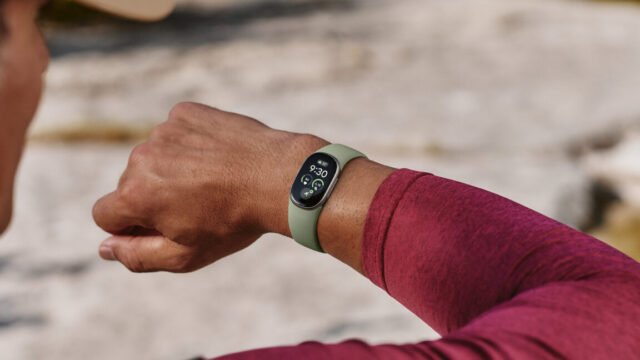
Google is releasing its second Fitbit tracker of 2026, offering fans of the aging Charge 6 a more refined option. The new Fitbit Edge slots right in between the Pixel Watch 5 and the Fitbit Air, featuring a compact screen and more health sensors than the Air. You won't get all the apps and features of the Pixel Watch 5, but the Edge is only about half as expensive. The Fitbit Edge is essentially a new Charge 6, but it has more of a Pixel Watch aesthetic. Squish Google's smartwatch from the sides, and you've got the Edge. It has a pill-shaped 1.34-inch OLED touch display inside a slender aluminum frame that is rated IP68 (5 ATM) for water and dust protection. Google says the screen has 46 percent more viewable area compared to the Charge 6. It's very close in overall size to the Fitbit Air and uses the same magnetic charging puck. Left to right: Fitbit Air (with new metal mesh bend), Fitbit Edge, and Pixel Watch 5. Credit: Google The Edge works with Android or iPhones via the Google Health app, and it can run for about seven days on a charge. If the tracker is away from your phone, it can still follow your activity all week with support for seven days of full health data storage (or 30 days of basic data). However, the generous week-long battery life does not include always-on display mode. If you choose to turn that on, the battery life drops to about two days, barely longer than the Pixel Watch 5.Read full article Comments