MEXICO: CRRC Zhuzhou Locomotive has delivered the first of 15 electric multiple-units it is supplying for the Ciudad de México – Felipe Ángeles International Airport suburban rail line that is currently being extended to Pachuca. The EMU arrived at Pantaco depot on November 7, following the delivery of the first car to the port of Manzanillo on September 15. In September 2025, CRRC was awarded a 5.85bn pesos contract to supply 15 electric multiple-units for the 57.5 km extension of the Tren Suburbano service from Felipe Ángeles International Airport to Pachuca, where construction began in March. The deal includes testing, commissioning, the supply of depot equipment, spare parts, staff training and the provision of maintenance services for five years, including staff. The first two trainsets are being manufactured in China, while the remaining 13 are due to be assembled at CRRC’s Querétaro plant in Mexico. The EMU has a maximum speed of 130 km/h, and a capacity of more than 700 passengers, including 315 seated. The fully accessible vehicle has designated spaces for bicycles, luggage and passengers with reduced mobility. The trains will be operated by ATTRAPI, the Agency for Trains & Integrated Public Transport. The first section of the Tren Suburbano route between the Buenavista terminus in Ciudad de México and the airport opened in April. The extension to Pachuca is expected to follow next year. On November 4 ATTRAPI called tenders for 52 ETCS-equipped DMUs to work Ciudad de México – Querétaro – Nuevo Laredo (US border) / Guadalajara services. These would be fitted out as 27 long-distance and 25 short-distance sets. The package also covers commissioning and maintenance, including the necessary workshops. See also Mexico City airport link opens to mark latest milestone in national passenger rail revival Alstom wins Mexican rolling stock contracts as two passenger rail projects make headway Mexico, Guatemala, El Salvador, Honduras, Costa Rica & Panama – country map Incoming Mexican President commits to passenger rail revival
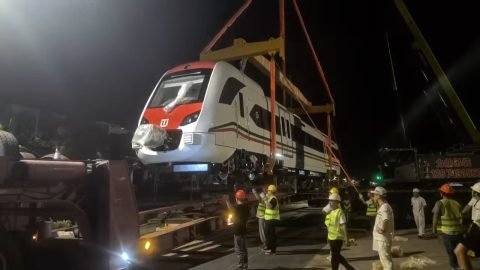
MEXICO: CRRC Zhuzhou Locomotive has delivered the first of 15 electric multiple-units it is supplying for the Ciudad de México – Felipe Ángeles International Airport suburban rail line that is currently being extended to Pachuca.
The EMU arrived at Pantaco depot on November 7, following the delivery of the first car to the port of Manzanillo on September 15.
In September 2025, CRRC was awarded a 5.85bn pesos contract to supply 15 electric multiple-units for the 57.5 km extension of the Tren Suburbano service from Felipe Ángeles International Airport to Pachuca, where construction began in March.
The deal includes testing, commissioning, the supply of depot equipment, spare parts, staff training and the provision of maintenance services for five years, including staff.
The first two trainsets are being manufactured in China, while the remaining 13 are due to be assembled at CRRC’s Querétaro plant in Mexico.
The EMU has a maximum speed of 130 km/h, and a capacity of more than 700 passengers, including 315 seated. The fully accessible vehicle has designated spaces for bicycles, luggage and passengers with reduced mobility.
The trains will be operated by ATTRAPI, the Agency for Trains & Integrated Public Transport.
The first section of the Tren Suburbano route between the Buenavista terminus in Ciudad de México and the airport opened in April. The extension to Pachuca is expected to follow next year.
- On November 4 ATTRAPI called tenders for 52 ETCS-equipped DMUs to work Ciudad de México – Querétaro – Nuevo Laredo (US border) / Guadalajara services. These would be fitted out as 27 long-distance and 25 short-distance sets. The package also covers commissioning and maintenance, including the necessary workshops.
See also
Mexico City airport link opens to mark latest milestone in national passenger rail revival
Alstom wins Mexican rolling stock contracts as two passenger rail projects make headway
Mexico, Guatemala, El Salvador, Honduras, Costa Rica & Panama – country map
Incoming Mexican President commits to passenger rail revival
Source: Railway Gazette