If you can’t beat ’em: VW to export 300,000 Chinese-built cars per year by 2030
Transportationvia Electrek
Quick Read
With declining sales, annual capacity cuts approaching a million units, and a wave of affordable Chinese competitors entering Western markets, Volkswagen is facing down its own mortality. Rather than fighting it, the company is leaning in and announcing plans to export roughly 300,000 Made-in-China VWs per year by 2030. more…
With declining sales, annual capacity cuts approaching a million units, and a wave of affordable Chinese competitors entering Western markets, Volkswagen is facing down its own mortality. Rather than fighting it, the company is leaning in and announcing plans to export roughly 300,000 Made-in-China VWs per year by 2030.
Uber Freight’s CEO has publicly come out with the company’s decision to no longer cooperate with Gartner when the technology and management advisory company does future work on the Magic Quadrant designation for Uber Freight. Gartner’s latest interactions with Uber Freight (NYSE: UBER) over its annual ratings led CEO Rebecca Tinucci to take to LinkedIn and a company blog post to announce the company’s plans to end any cooperative efforts with Gartner on that widely-cited benchmark. This was Tinucci’s first Gartner review since she became CEO at Uber Freight in August 2025. window.googletag = window.googletag || {cmd: []}; googletag.cmd.push(function() { var gptSlot = googletag.defineSlot('/21776187881/FW-Responsive-Main_Content-Slot1', [[300, 100], [320, 50], [728, 90], [468, 60]], 'div-gpt-ad-1709668545404-0').defineSizeMapping(gptSizeMaps.banner1).addService(googletag.pubads()); googletag.pubads().enableSingleRequest(); googletag.pubads().collapseEmptyDivs(); googletag.enableServices(); setInterval(function() { if (!document.hidden) { googletag.pubads().refresh([gptSlot]); } }, 60000); }); googletag.cmd.push(function() { googletag.display('div-gpt-ad-1709668545404-0'); }); In her LInkedIn post, Tinucci said she was “incredibly disappointed by this process and the only thing that’s clear is that this is not somewhere we’ll invest our time going forward. Back to focusing on our customers.” A little less than a year ago, Gartner had a mixed rating on Uber Freight, putting it below the “cut line” on the “Ability to Execute” Y axis but past the X Axis cut line for the “Completeness of Vision” rating. To be in the Magic Quadrant, a company needs to be above the cut line for both categories, and be in the upper right hand corner of the four-square box: the magic quadrant.. The Magic Quadrant is that part of an X-Y axis box that has “ability to execute” and “completeness of vision” as its two measurements. A company that lands in the Magic Quadrant scores highly on both areas, and companies often tout to their customers, actual and potential, that they ended up in that sought-after space. The Gartner webpage on its Magic Quadrant says it publishes 176 Magic Quadrant ratings each year. Emails sent to Gartner had not been responded to by publication time. An Uber Freight spokeswoman declined further comment beyond Tinucci’s comments. Taking on a giant Getting into the Magic Quadrant and the ability to wear that as a badge of honor is what makes Tinucci’s public criticism so notable. Potential users of supply chain technology often look to Gartner’s commentary as a guide on what applications it should use. Publicly calling out the Gartner’s processes is a step that not many companies wish to take. window.googletag = window.googletag || {cmd: []}; googletag.cmd.push(function() { var gptSlot = googletag.defineSlot('/21776187881/fw-responsive-main_content-slot3', [[728, 90], [468, 60], [320, 50], [300, 100]], 'div-gpt-ad-1665767553440-0').defineSizeMapping(gptSizeMaps.banner1).addService(googletag.pubads()); googletag.pubads().enableSingleRequest(); googletag.pubads().collapseEmptyDivs(); googletag.enableServices(); setInterval(function() { if (!document.hidden) { googletag.pubads().refresh([gptSlot]); } }, 60000); }); googletag.cmd.push(function() { googletag.display('div-gpt-ad-1665767553440-0'); }); Tinucci wrote that Uber Freight had received its 2026 Fourth Party Logistics Magic Quadrant assessment, and asked for “the evidence behind our backward shift in positioning and consequential cautions.” “We made it clear our concern was no longer our individual score,” Tinucci wrote. “The review started to feel like a negotiation over the assessment rather than an explanation of the evidence behind it.” During the review of the score, Tinucci said Uber Freight felt the process was feeling more like a “negotiation” with Gartner (NYSE: IT) “rather than an explanation of the evidence behind it.” Coming away with little confidence “Our experience left us without confidence in the standards underpinning the report’s broader comparisons,” Tinucci said. window.googletag = window.googletag || {cmd: []}; googletag.cmd.push(function() { var gptSlot = googletag.defineSlot('/21776187881/fw-responsive-main_content-slot4', [[300, 100], [320, 50], [728, 90], [468, 60]], 'div-gpt-ad-1709668086344-0').defineSizeMapping(gptSizeMaps.banner1).addService(googletag.pubads()); googletag.pubads().enableSingleRequest(); googletag.pubads().collapseEmptyDivs(); googletag.enableServices(); setInterval(function() { if (!document.hidden) { googletag.pubads().refresh([gptSlot]); } }, 60000); }); googletag.cmd.push(function() { googletag.display('div-gpt-ad-1709668086344-0'); }); The company’s participation is presumably not necessary for Gartner to issue a rating. Tinucci said Uber Freight asked Gartner to no longer include its rating in the Magic Quadrant process, but Gartner declined. “We are sharing our experience so customers and the industry can evaluate the research with that context,” Tinucci wrote. Gartner does have a rating called Peer Insights. Tinucci said Uber Freight will continue to participate in that process, and she said the company currently has a rating of 4.6 out of 5. Tinucci offered specifics on what she said were Uber Freight’s criticisms with the Gartner process. An unidentified analyst from Gartner, according to Tinucci, “contacted our team outside the formal review channel and asked what it would take to get Uber Freight ‘across the finish line.’” “That analyst raised the possibility of changing scores and removing a caution before Gartner’s authors could explain how they reached the original conclusions,” she wrote. window.googletag = window.googletag || {cmd: []}; googletag.cmd.push(function() { var gptSlot = googletag.defineSlot('/21776187881/fw-responsive-main_content-slot5', [[728, 90], [468, 60], [320, 50], [300, 100]], 'div-gpt-ad-1665767778941-0').defineSizeMapping(gptSizeMaps.banner1).addService(googletag.pubads()); googletag.pubads().enableSingleRequest(); googletag.pubads().collapseEmptyDivs(); googletag.enableServices(); setInterval(function() { if (!document.hidden) { googletag.pubads().refresh([gptSlot]); } }, 60000); }); googletag.cmd.push(function() { googletag.display('div-gpt-ad-1665767778941-0'); }); Trade article an issue Tinucci said other points made by the Gartner analyst included concern over what the research firm referred to as a “single speculative trade article” as the basis for one negative finding. “When challenged, Gartner proposed materially rewriting it without adequately explaining the basis for the original conclusion or the change,” Tinucci said. She wrapped up the recap of the process that Uber Freight is objecting to by noting that the “most significant backward movement” in the Gartner rating of Uber Freight was its “Completeness of Vision.” But Tinucci added that “Gartner acknowledged that a reader could find that result difficult to reconcile, that they “probably needed to go back and investigate.” FourKites had its issues in the past window.googletag = window.googletag || {cmd: []}; googletag.cmd.push(function() { var gptSlot = googletag.defineSlot('/21776187881/fw-responsive-main_content-slot6', [[728, 90], [468, 60], [320, 50], [300, 100]], 'div-gpt-ad-1665767872042-0').defineSizeMapping(gptSizeMaps.banner1).addService(googletag.pubads()); googletag.pubads().enableSingleRequest(); googletag.pubads().collapseEmptyDivs(); googletag.enableServices(); setInterval(function() { if (!document.hidden) { googletag.pubads().refresh([gptSlot]); } }, 60000); }); googletag.cmd.push(function() { googletag.display('div-gpt-ad-1665767872042-0'); }); The sort of public break with Gartner, while rare, is not unprecedented. In February 2025, supply chain technology leader FourKites said it would withdraw from the Magic Quadrant process. But its withdrawal did not come with the sort of criticism heard from Tinucci. Instead, FourKites said it was withdrawing because of “the need to prioritize breakthrough AI innovations using Real-time Transportation Visibility Platform that are fundamentally reshaping supply chain operations.” In a prepared statement released at the time, FourKites described Gartner’s RTTVP models as “not yet (accounting) for our innovation and roadmap.” Earlier this year, a blog post written by former Gartner analyst Keith Andes, now head of product marketing at EasyVista said of the Magic Quadrant, said this of the benchmark: “I’ve got some wild news for you: the Gartner Magic Quadrant was never intended to tell you which product to buy. It’s not even a product evaluation.” To stress that point, Andes said Gartner “regularly reminds customers that they are not suggesting everyone buy the leader at the top right of the Magic Quadrant.” He added that Gartner’s preference is that corporate enterprise software buyers not “default” to that decision. Instead, Andes wrote, “the Gartner Magic Quadrant is designed to answer one question: How are these vendors performing against each other in the market?” More articles by John Kingston SCOTUS action revives shipper/receiver liability post-Montgomery Denial of funds to NY over non domiciled CDLs overturned: appellate court C.H. Robinson: no evidence of racketeering, wants RICO case moved The post Uber Freight makes a very public break with Gartner’s Quadrant appeared first on FreightWaves.
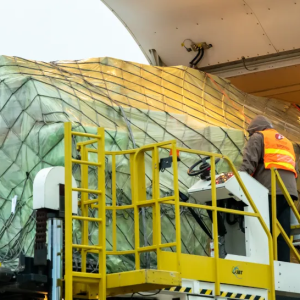
Air cargo is heading into peak season with a familiar mix of good news and bad. Global demand was up 6% year over year in October, according to Xeneta, and spot rates averaged $3.11 per kilogram. FreightWaves puts rates up about 30% year over year. On paper, that looks like a strong market. On the ramp, in the warehouse and at the booking desk, it looks like something else: a system straining to move more freight through capacity that rarely sits where shippers need it. The question for airlines, forwarders and shippers isn’t whether these pressures will ease. Some will, some won’t. The real question is which of them are structural, and which are the cost of running a modern, data-heavy business on technology built for a slower era. The good news is that a new generation of cloud-native, AI-driven cargo platforms is turning each of these pressures into something carriers can manage, and in many cases monetize. Capacity is there. It’s just in the wrong place. Freighter additions remain limited, and passenger belly capacity follows passenger demand, not cargo demand. IATA data show August volumes from Asia to North America up 15% year over year, while Asia–Europe fell 8%. The pressure is concentrated on routes from Vietnam, Thailand and Taiwan to the U.S., while other corridors fly with room to spare. Airlines can’t reposition aircraft to chase every surge. But they can get far better at seeing and selling the space they already fly. Many carriers still plan cargo capacity against static assumptions: a standard allotment per aircraft type, adjusted by hand when passenger loads or fuel change. AI changes that math. Machine learning models trained on historical flown cargo, passenger and baggage loads, aircraft configuration, fuel and seasonal patterns can predict available belly space flight by flight, days before departure, and refresh that prediction as bookings and passenger counts move. Carriers can release space earlier and with more confidence, and, in general, AI-tuned overbooking lets them sell closer to true capacity without risking offloads. Space that used to fly empty because nobody trusted the forecast becomes sellable inventory. That’s new revenue with no new aircraft. In a market this tight, it may be the cheapest capacity an airline can add. Rates are high. Pricing discipline is low. Elevated spot rates are partly a symptom of disruption elsewhere. Ocean disruptions are among the forces lifting air rates, and container reliability problems keep pushing shippers into emergency airfreight, usually at the last minute and at premium cost. For carriers, that sounds like a windfall. In practice, many still price spot requests through email, spreadsheets and gut feel, approving or rejecting quotes without a clear view of how the flight is actually booking. AI-powered dynamic pricing gives revenue teams a better answer. Models that read demand curves, booking pace and market rates can recommend a hurdle rate for each flight from two weeks out to departure, and flag which spot requests to accept, counter or decline. Decisions that once took hours of back-and-forth take minutes, and they stay consistent across stations. Carriers capture yield on the flights that will fill and stay competitive on the ones that won’t. Shippers get quicker quotes and fewer surprises. Everyone spends less time negotiating by inbox. Compliance is now a per-parcel cost The regulatory picture keeps getting more complicated. Tighter security protocols, shifting tariffs and new advance data requirements are landing at the same time as the end of de minimis exemptions. The U.S. suspended its $800 threshold for all countries on Aug. 29, 2025, and the EU’s €150 duty exemption ended on July 1, 2026. Every low-value parcel that once moved duty-free now needs accurate, piece-level data. This is where legacy cargo systems struggle most. They were built around master air waybills and consolidated freight, not millions of individual orders each carrying its own customs record. Platforms designed around piece-level tracking capture that data once, at booking, and carry it through acceptance, screening, customs and delivery. AI adds another layer of protection, flagging vague descriptions, likely misclassified goods and unusual shipper patterns before a parcel reaches the screening line. Compliance stops being a manual reconciliation exercise and becomes a byproduct of the shipment record. Fuel and margin pressure punish inefficiency High and volatile fuel costs keep squeezing carrier margins, and the casualties are mounting. According to IATA fuel prices have had a CAGR of 127.46% for U.S. commercial airline fuel from February to September 2026. AI-driven load optimization is a quiet lever here. Algorithms that build Unit Load Devices (ULDs) in three dimensions around actual shipment dimensions and weight, rather than a planner’s last-minute best guess, fit more revenue cargo on each departure and cut the offloads that turn into rebooking costs and unhappy customers. Integrated dashboards that put AI forecasts of capacity, revenue and cost side by side let teams spot unprofitable flights before they depart, not after the month closes. Hubs are congested. Data shouldn’t be. Runway congestion, overbooked warehouse space, understaffed ground handling teams and paperwork backlogs all slow cargo at major airports. Technology won’t add runways. It can remove much of the friction around them. Cloud-based cargo platforms with open APIs let forwarders book and track through a single integration instead of juggling carrier portals. Electronic air waybills and real-time status updates cut the phone calls and re-keying that eat handler time, and AI document capture can read the paperwork that still arrives on paper. AI-driven exception alerts for a missed connection, a screening hold or a capacity change surface problems while there’s still time to fix them. And because modern platforms deploy in weeks rather than the 18 to 24 months typical of legacy replacements, carriers don’t have to wait years to feel the benefit. Small parcels, big opening The biggest opportunity may be the one legacy cargo systems were never built to see: small-parcel e-commerce. Shoppers now expect next-day or two-day delivery, and ground networks struggle to deliver it coast to coast. Passenger airlines already fly thousands of domestic departures a day with belly space to spare. Connect that capacity to e-commerce shippers, and every passenger flight becomes a parcel route, with no new aircraft required. The demand is there. E-commerce is driving Asia–Latin America air volumes, which rose 23% year over year in August, according to IATA. Capturing it takes parcel-native technology: online booking, piece-level tracking from booking to doorstep, API connections to retailers and last-mile partners, and AI that predicts which flights will have room for parcels tomorrow. Carriers that get there can launch a parcel product in weeks, earn revenue on space that would otherwise fly empty, and compete for a share of a delivery market that ground carriers have long owned. The opportunity hiding in the squeeze Every pressure on this list raises the cost of doing air cargo the old way. Customers and prospects reward carriers that can see their capacity clearly, price it intelligently, comply automatically and move freight without friction. In cargo, AI is moving out of the pilot phase and becoming the operating layer that makes all of that possible. The airlines that come out of this cycle stronger won’t necessarily be the ones with the most freighters. They’ll be the ones that treat every passenger flight as a cargo opportunity, and run it on cloud-native, AI-driven technology built for the market they’re actually in. About SmartKargo SmartKargo is the AI-powered, cloud-based platform that turns airlines into world-class cargo carriers, with cargo management, e-commerce, and AI in one system. Our cargo ERP runs the entire shipment lifecycle, from booking and acceptance to handling, tracking, and last-mile delivery. Our e-commerce solutions let airlines launch parcel products in weeks and connect directly to online retailers. Our AI applications forecast capacity and demand, guide pricing, and optimize load plans, so airlines capture revenue that legacy systems leave on the table. Trusted by airlines across North America, Latin America, India, and beyond, SmartKargo is making every flight a cargo opportunity. SmartKargo is headquartered in Cambridge, Massachusetts, with key offices in India, the Philippines, Brazil, the United Arab Emirates, the United Kingdom, and Canada. See SmartKargo’s AI Portfolio to see how AI can turn your cargo data into better decisions. The post Air cargo’s squeeze makes the case for AI-driven cargo technology appeared first on FreightWaves.
EGYPT: Alstom Metropolis trains tailored to local requirements have begun entering service on the 44 km Cairo metro Line 1, which is used by 2.5 million passengers a day. A €876m contract awarded by the National Authority for Tunnels in November 2021 covers the supply of 55 nine-car trainsets and eight years of maintenance. Alstom said this combination of new rolling stock with long-term maintenance support would improve availability, reliability and the passenger experience over the trains’ lifecycle. The order was backed with French government financing, including the first application of a climate bonus within a French treasury financing scheme. Guests at the launch of the first two trainsets on November 15 included the French ambassador. The trains were designed and manufactured at Alstom’s Petite-Forêt plant at Valenciennes in France, with Le Creusot supplying the bogies and traction motors, Villeurbanne the passenger information systems and Toulouse responsible for electrical engineering. Alstom said the design is tailored to the needs of the line, with features including wide gangways to maximise capacity, accessibility and passenger flow, air-conditioning, dedicated areas for women, accessibility for passengers with reduced mobility, real-time passenger information systems and CCTV. Transport Minister Kamel Al-Wazir said the state’s objective is not merely to add new trains to Line 1, but rather to implement a comprehensive development process to achieve a qualitative leap in service levels, operational efficiency and safety. The programme includes upgrading track, signalling, electrical, communication and control systems in collaboration with Egyptian and French companies.