The US wants to block China from renting AI power abroad but China already built a parallel supply chain from US AI output
AIvia The Decoder
Quick Read
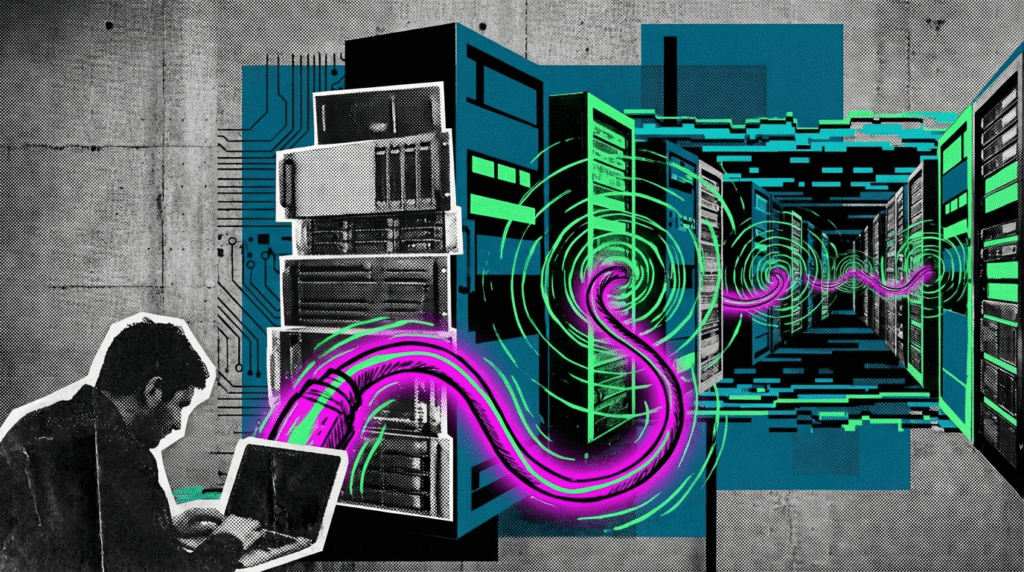
The US is tightening its chip export controls. Data centers in third countries like Singapore and Malaysia will soon need a US license to buy Nvidia chips, closing the loophole that let Chinese firms rent cloud compute abroad. A Reuters investigation also reveals how China offsets its hardware shortage through industrial-scale distillation of US AI models. The article The US wants to block China from renting AI power abroad but China already built a parallel supply chain from US AI output appeared first on The Decoder.
The US is tightening its chip export controls. Data centers in third countries like Singapore and Malaysia will soon need a US license to buy Nvidia chips, closing the loophole that let Chinese firms rent cloud compute abroad. A Reuters investigation also reveals how China offsets its hardware shortage through industrial-scale distillation of US AI models.
The article The US wants to block China from renting AI power abroad but China already built a parallel supply chain from US AI output appeared first on The Decoder.
Token prices for AI models fell 21 percent in six weeks while usage volume hit a record high, according to the Ramp AI Index. Anthropic dominates with nearly 59 percent of token spending. Data from Ramp, Stripe and OpenRouter independently show the same pattern: the AI industry is still growing, but revenue momentum is cooling. The article AI industry growth remains strong, but the pace is slowing appeared first on The Decoder.
Agents no longer just call a model. They call tools over MCP, delegate to other agents over A2A, and act inside business systems. The best agent gateways sit on that path and decide who can do what. This list compares 13 of them on traffic coverage, identity, deployment and price. What is an agent gateway? An agent gateway is a control point that authenticates agents, filters the tools they see, and logs every call. A plain LLM gateway only routes model requests. An agent gateway adds MCP tool governance, agent identity and, increasingly, A2A traffic control. Our ranking below is editorial and weighs 5 criteria: traffic coverage, identity and authorization, deployment options, maturity, and price transparency. How the 13 best agent gateways rank 1. Kong AI Gateway Kong governs LLM, MCP and A2A traffic from 1 control plane. Version 2.0 moved AI features into first-class Providers, Models, MCP Servers and Agents entities. Best for: teams already running Kong for API management. Watch out: the 2.x architecture needs a Konnect control plane. Arcade notes the MCP OAuth2 plugin is still Tech Preview. 2. Bifrost (Maxim AI) Bifrost is an Apache 2.0 Go gateway covering models, MCP tools and A2A agents in 1 deployment. Maxim reports 10,000+ models across 25+ providers. Its benchmark claims 11 µs mean overhead at 5,000 RPS. Best for: self-hosted, in-VPC or air-gapped teams that want all 3 traffic types. Watch out: SSO, SCIM and token exchange are Enterprise-only. An independent review notes the 11 µs figure excludes HTTP handling and JSON marshalling. 3. Gravitee AI Gateway Gravitee runs an LLM Proxy, MCP Proxy and A2A Proxy on 1 runtime. All 3 share 1 authentication, policy and OpenTelemetry chain. The A2A Proxy supports RFC 8693 token exchange and skill-level authorization. Best for: enterprises that want agent identity modeled alongside existing APIs. Watch out: Maxim lists Agent Management from $2,500 per month. The A2A Proxy needs Enterprise Edition. 4. Amazon Bedrock AgentCore Gateway AgentCore Gateway gives agents 1 managed endpoint for tools, models and other agents. It adds semantic tool search, Cedar policies and on-behalf-of token exchange. Pricing starts at $0.005 per 1,000 invocations. Best for: AWS-native teams using IAM, CloudWatch and Bedrock Guardrails. Watch out: AWS-only. A2A is HTTP passthrough, per Maxim. Search calls cost $0.025 per 1,000, 5x the invoke rate. 5. Arcade.dev Arcade is an actions runtime, not a model router. Per Arcade, it checks the overlap of user and agent permissions on every action. Credentials never reach the LLM. It lists 8,000+ agent-optimized tools. Best for: agents that write to Salesforce, Gmail or Slack on a user’s behalf. Watch out: no model routing, so pair it with an LLM gateway. Pricing is $25 per month plus $0.10 per auth event and $0.01 per tool call. 6. Prisma AIRS AI Gateway (formerly Portkey) Palo Alto Networks completed its Portkey acquisition in May 2026. The gateway reached GA inside Prisma AIRS in July 2026. Palo Alto describes it as a unified LLM, MCP and A2A gateway with 1 enforcement point. It runs in SaaS and hybrid models. Best for: security teams that want runtime inspection on every prompt. Watch out: pricing is not public. Arcade advises verifying delegated auth and audit depth for agent actions. 7. Azure API Management Microsoft’s AI gateway extends API Management to model APIs, MCP servers and A2A agent APIs. It can expose REST APIs as MCP servers and front existing MCP servers. Best for: Microsoft-centric API teams. Watch out: A2A support is preview, JSON-RPC only, and limited to v2 tiers. 8. Google Cloud Agent Gateway Agent Gateway is the network entry and exit point for Gemini Enterprise Agent Platform. It assigns each agent a SPIFFE ID and can apply Model Armor to prompts and responses. Maxim lists up to 5,000 governed resources per gateway. Best for: teams building on Gemini Enterprise Agent Platform. Watch out: Maxim reports cross-cloud support as “coming soon.” Model routing and fallback are not documented. 9. IBM ContextForge ContextForge is an Apache 2.0 registry and proxy that federates MCP, REST, gRPC and A2A. It exposes agents as MCP tools and, per Maxim, deploys via Helm. Best for: free, MCP-first, self-hosted Kubernetes setups. Watch out: no published commercial support. IBM recommends upgrading to v1.1.1 after security bulletins covering v1.0.0 to v1.1.0. 10. Agent Router (formerly Envoy AI Gateway) Envoy AI Gateway became Agent Router and joined the Agentic AI Foundation in September 2026. It offers an OpenAI-compatible API plus an MCP gateway on Envoy. Best for: Kubernetes teams already on Envoy Gateway. Watch out: A2A is preview and JSON-RPC only. Maxim notes no built-in guardrails. 11. Composio Composio is an MCP gateway and SaaS integration layer with managed OAuth and per-user connected accounts. Arcade lists a free tier of 100,000 tool calls per month and Pro from $29. Best for: fast access to a large prebuilt SaaS catalog. Watch out: Arcade notes sessions are discoverable by default unless allowlisted. 12. TrueFoundry TrueFoundry combines an LLM Gateway and centralized MCP access with training and deployment tooling. Pro costs $25 per user per month, with 20,000 requests and tool calls per user. Best for: ML teams that want gateway and MLOps in 1 platform. Watch out: the client-credentials MCP flow uses a shared identity, not the user’s, Arcade notes. 13. Obot Obot is an open-source platform bundling an MCP Gateway, LLM Gateway and device monitoring. It supports per-user auth, OAuth token exchange and audit logs. Best for: IT teams rolling out MCP servers to employees. Watch out: self-hosting alone does not settle downstream authorization, Arcade notes. Agent gateway comparison table window.addEventListener("message",function(e){if(e.data&&e.data.mtpAgwHeight){var f=document.getElementById("mtp-agw-frame");if(f)f.style.height=e.data.mtpAgwHeight+"px";}}); <!-- Fallback: upload best-agent-gateways-embed-standalone.html to /wp-content/uploads/ and use with the same script. --> How to choose an agent gateway Start with traffic. If agents only call models, an LLM gateway is enough. If they call tools, you need MCP governance. If they delegate to other agents, check A2A support carefully. Then check identity. Ask whether user and agent permissions are enforced separately at execution time. Finally, check where it must run: single cloud, your VPC, or air-gapped. Key Takeaways Only Kong, Bifrost, Gravitee and Prisma AIRS govern LLM, MCP and A2A natively. A2A support is the weakest link: preview, passthrough or JSON-RPC only elsewhere. Cloud gateways (AWS, Azure, Google) win on integration but lock you in. Arcade solves a different problem: governed actions, not model routing. Most identity features (SSO, token exchange) sit behind enterprise licenses. The post 13 Best Agent Gateways in 2026 for MCP, A2A and LLM Traffic: Kong, Bifrost, AgentCore, Arcade appeared first on MarkTechPost.
Perplexity has launched the Perplexity Orchestrator API, a single endpoint for frontier and open-weight models. It picks a serving provider by availability, capacity and latency, and bills everything through 1 account. Developers get fewer integrations and 1 invoice. What is the Perplexity Orchestrator API? The Perplexity Orchestrator API is a hosted inference gateway that serves many models behind 1 base URL. It covers frontier models from OpenAI, Anthropic, Google and xAI. It also serves open-weight models such as GLM, Kimi and DeepSeek, hosted by Perplexity or inference partners. It accepts OpenAI Chat Completions, OpenAI Responses and Anthropic Messages requests. Most teams only change the API key and base URL. The OpenAI base URL is . Anthropic SDK users point at , without /v1. Perplexity runs the same layer internally, across 85+ models and more than a dozen providers. How does provider failover work? Failover keeps the model fixed and swaps the deployment. A Claude request that fails on Anthropic can be served by AWS Bedrock instead. The reliability docs set these rules: Triggers are provider errors, rate limits and timeouts. Each attempt has a time-to-first-token limit and a total-duration limit. The values are not published. Invalid or over-context requests return HTTP 400 and are not retried. If every deployment fails, the API returns HTTP 429 with Retry-After. Requests that fail before producing output are not billed. You cannot pick a deployment yourself. What do the reliability and speed numbers show? Perplexity measured production traffic from October 4 to November 2, 2026. Claude and GPT requests through Perplexity succeeded more often than requests to any single provider measured. Daily success rates also varied less during provider incidents. The post gives no percentage success rates. Speed varied by provider too. For Claude Opus 5.5, Anthropic was fastest on 15 of 30 days, AWS Bedrock on 15. Azure’s median output speed for GPT-5.6 Sol was 27% higher than OpenAI’s. Speed-aware routing is still in progress. How does automatic routing with perplexity/auto work? Routing is in preview. You set model to perplexity/auto and pass a routing object. It holds a default_model and 1 to 5 routes, each with a name, description and model. A decision model reads the conversation and route descriptions. It never sees route names or model IDs. If nothing matches, or the decision model fails or times out, the default model answers. So do media inputs. Response headers report the result: x-perplexity-autoroute-outcome, -route and -confidence. The default policy sends traffic to GPT-6.1 Sol, with simple requests going to GPT-6 Luna. Perplexity also lists built-in Lower cost, Balanced and Higher quality profiles, plus an Auto effort preview. (function(){var f=document.getElementById("mtp-pxo-frame");window.addEventListener("message",function(e){if(e.data&&e.data.mtpPxoH&&e.source===f.contentWindow){f.style.height=e.data.mtpPxoH+"px";}});})(); Can routing work around refusals? Perplexity tested this on a 63-task subset of Terminal-Bench 4.1, run in Claude Code. Anthropic documents that Claude Fable 5.2 safeguards can block benign security and life sciences work. Claude Fable 5.2 alone: 38/63 tasks. Fable plus routes to GPT-6.1 Sol: 41/63. Fable plus routes to GPT-6 Astra: 41/63. The routes covered security, biology and after_refusal requests. That is +3 tasks, at a higher estimated cost per task. Perplexity calls it an adjusted comparison; results vary by workload. How is Orchestrator priced? Each request is billed at the answering model’s published per-token rate. Failover to another provider does not change the rate. Perplexity says there is no additional platform fee on top of credits. For example, perplexity/glm-5.3 lists $1.4 input, $4.4 output and $0.26 cache read per 1M tokens. Usage draws from prepaid Perplexity API credits, also purchasable through AWS Marketplace. Access is tiered by cumulative credit purchases: Tier 0: Google, xAI and open-weight models. Tier 1 ($50): OpenAI and most Anthropic models. Tier 2 ($250): Claude Opus 5, Opus 5.5 and the Fable models. How does it compare with OpenRouter and Vercel AI Gateway? Key Takeaways 1 endpoint for OpenAI, Anthropic, Google, xAI and open-weight models. Same-model failover across providers, billed at the same rate. perplexity/auto routes by plain-language descriptions, in preview. Refusal routing: 38/63 to 41/63 on Terminal-Bench 4.1, self-reported. Check out the launch post, technical blog, quickstart, model catalog and routing docs. You can check the deployment options and specs here through our GPULeaderboard.com chrome extension. Also, feel free to follow us on Twitter and don’t forget to join our 150k+ML SubReddit and Subscribe to our Newsletter. Wait! are you on telegram? now you can join us on telegram as well. Need to partner with us for promoting your GitHub Repo OR Hugging Face Page OR Product Release OR Webinar etc.? Connect with us The post Perplexity Launches Orchestrator API for Failover and Model Routing appeared first on MarkTechPost.