Amazon’s Zoox robotaxis are now available via Uber
Transportationvia The Verge Transportation
Quick Read
Uber may be breaking up with Waymo, but it's also gaining a new robotaxi BFF: Amazon. Starting today, Uber riders in Las Vegas can be matched with Amazon-owned Zoox's purpose-built, bidirectional robotaxis. It's a first for both companies: the first time Uber is adding a purpose-built, steering-wheel-free autonomous vehicle to its network, and the first time that Zoox is opening up its fleet to a third-party app. Uber says that anyone ordering an UberX, Uber Comfort, Uber Electric, Uber Comfort Electric, or Wait & Save in Sin City can get matched with a Zoox at no extra charge. Just like with Uber's other AV partnerships (like Waymo in Phoe … Read the full story at The Verge.
Uber may be breaking up with Waymo, but it’s also gaining a new robotaxi BFF: Amazon. Starting today, Uber riders in Las Vegas can be matched with Amazon-owned Zoox’s purpose-built, bidirectional robotaxis.
It’s a first for both companies: the first time Uber is adding a purpose-built, steering-wheel-free autonomous vehicle to its network, and the first time that Zoox is opening up its fleet to a third-party app. Uber says that anyone ordering an UberX, Uber Comfort, Uber Electric, Uber Comfort Electric, or Wait & Save in Sin City can get matched with a Zoox at no extra charge. Just like with Uber’s other AV partnerships (like Waymo in Phoe …
NORWAY: Oslo public transport operator Sporveien has increased its order for CAF M4000 metro trainsets. The €125m firm order for an additional 24 trainsets which was announced by the manufacturer on November 16 has been placed as an option on a €150m May 2024 contract. This covered an initial 20 trainsets and spare parts, with options to order up to a further 90 units to accommodate growing ridership and support expansion of the 85 km T-banen metro network. M4000 trainsets The three-car trains from CAF’s Inneo family will be designed to operate in Oslo’s harsh weather conditions including snow and low temperatures. All bogies will be powered, to maximise adhesion and traction, and there will be onboard batteries for use in depots and to enable trains to reach the next station in the event of a power cut. The cars will have three 1 400 mm wide double doors on each side to minimise station dwell times, and multi-functional areas in each car providing space for wheelchair users, prams and bicycles. The trainsets will have passive provision for GoA4 driverless operation if it is decided to automate the network in the future. Delivery Delivery of the initial batch of trains is due to start in late 2027, ahead of the opening of the 8 km Fornebu Line in 2029-30, with all 20 sets to be in service in 2030. In 2018 CAF received a €200m order to supply 87 Urbos 100 trams to Oslo, all of which are now in service. It has also supplied 183 articulated electric buses.
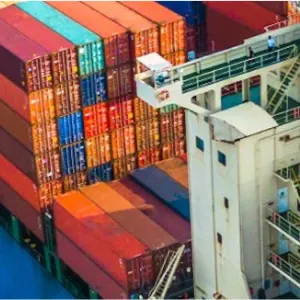
Containerized imports through U.S ports reached a record 2.67 million twenty foot equivalent units (TEUs) in October, pushing volumes above the previous peak set during the pandemic-era surge. Rising shipments from China and a rebound at East and Gulf Coast ports fueled the record, according to Descartes data. Imports totaled 2,674,808 TEUs, up 5% from September and 16% from October 2025. The total exceeded the previous monthly record of 2,622,465 TEUs, set in May 2022, by 2%. The increase lifted imports for the first 10 months of 2026 to 2.3% above the same period a year earlier. October marked the second consecutive month in which cumulative imports ran ahead of 2025, following eight months below the prior year’s pace. window.googletag = window.googletag || {cmd: []}; googletag.cmd.push(function() { var gptSlot = googletag.defineSlot('/21776187881/FW-Responsive-Main_Content-Slot1', [[300, 100], [320, 50], [728, 90], [468, 60]], 'div-gpt-ad-1709668545404-0').defineSizeMapping(gptSizeMaps.banner1).addService(googletag.pubads()); googletag.pubads().enableSingleRequest(); googletag.pubads().collapseEmptyDivs(); googletag.enableServices(); setInterval(function() { if (!document.hidden) { googletag.pubads().refresh([gptSlot]); } }, 60000); }); googletag.cmd.push(function() { googletag.display('div-gpt-ad-1709668545404-0'); }); Imports from China rose for a fourth consecutive month, reaching 987,805 TEUs, and the highest monthly total since January 2025. Volumes increased 6.9% from September and 22.9% from a year earlier, accounting for approximately half of the overall U.S. monthly gain. China’s share of U.S. container imports increased to 36.9%, from 36.3% in September. Plastics, furniture and bedding, and toys, games and sporting goods were the largest categories by volume. Growth extended beyond China as imports from the top 10 countries of origin increased 5.8% from September, with seven posting gains. South Korea and Germany each recorded monthly increases of 22.8%, while Vietnam, Taiwan and India declined. All 10 origins recorded higher volumes than in October 2025. East and Gulf Coast ports gain ground Houston recorded the largest monthly volume increase among the top 10 U.S. ports, adding 42,665 TEUs, a gain of 26.7%. Savannah imports rose 12.6%, Norfolk increased 17.7%, and Charleston’s climbed 18.6%. By contrast, volumes fell 1.4% at Los Angeles, 2% at Long Beach and 10.9% at Oakland. The gains shifted a larger share of imports toward East and Gulf Coast gateways. The five leading ports in those regions handled 39.9% of U.S. container imports, up from 36.7% in September. The five leading West Coast gateways’ share fell to 44.9%, from 47%. Across the Gulf Coast, imports increased 24% to 266,905 TEUs, the highest monthly total since Descartes began tracking the regional measure in August 2023. Houston accounted for approximately 83% of the region’s net monthly increase. window.googletag = window.googletag || {cmd: []}; googletag.cmd.push(function() { var gptSlot = googletag.defineSlot('/21776187881/fw-responsive-main_content-slot3', [[728, 90], [468, 60], [320, 50], [300, 100]], 'div-gpt-ad-1665767553440-0').defineSizeMapping(gptSizeMaps.banner1).addService(googletag.pubads()); googletag.pubads().enableSingleRequest(); googletag.pubads().collapseEmptyDivs(); googletag.enableServices(); setInterval(function() { if (!document.hidden) { googletag.pubads().refresh([gptSlot]); } }, 60000); }); googletag.cmd.push(function() { googletag.display('div-gpt-ad-1665767553440-0'); }); Descartes cautioned that the sharp gains partly reflected a recovery from September’s weaker volumes. Combined imports at Houston, Savannah, Norfolk and Charleston rose 18.1% month over month but were only 3.6% above August levels. Extended peak-season demand and uneven vessel arrival timing may also have contributed, the report said. Transit delays build alongside higher volumes The record month followed a sustained period of elevated imports, with monthly volumes exceeding 2.5 million TEUs since July. Meanwhile, the unweighted average transit delay across 10 tracked gateways increased to 6.3 days in October, from six days in September and 4.2 days in June. Seven of the 10 gateways recorded higher delays in October. Descartes said the gradual increase could indicate that sustained import volumes were putting pressure on the inland logistics network, although November’s data would help establish whether that pressure was intensifying. The report’s transit-delay measure compares the estimated arrival date initially declared on a bill of lading with the date Descartes receives the corresponding U.S. Customs and Border Protection-processed data. The underlying import figures use an initial compilation of customs bill-of-lading records and may be revised. window.googletag = window.googletag || {cmd: []}; googletag.cmd.push(function() { var gptSlot = googletag.defineSlot('/21776187881/fw-responsive-main_content-slot4', [[300, 100], [320, 50], [728, 90], [468, 60]], 'div-gpt-ad-1709668086344-0').defineSizeMapping(gptSizeMaps.banner1).addService(googletag.pubads()); googletag.pubads().enableSingleRequest(); googletag.pubads().collapseEmptyDivs(); googletag.enableServices(); setInterval(function() { if (!document.hidden) { googletag.pubads().refresh([gptSlot]); } }, 60000); }); googletag.cmd.push(function() { googletag.display('div-gpt-ad-1709668086344-0'); }); Policy and routing risks remain Beyond port performance, Descartes flagged changing maritime fees, canal availability and security conditions as planning risks. The Trump administration suspended port fees on Chinese ships through January 9, 2027, while increased Panama Canal transit availability and selected returns to Suez Canal routings were changing options on some services. Services through the Suez remained dependent on regional security conditions, the report noted. Closer to home, the report indicated concerns over ongoing contract talks with watchmen at Los Angeles and Long Beach represented by the International Longshore and Warehouse Union, with the contract extended through November 20. Employers warned that a potential strike could affect terminals handling more than half of the two ports’ combined cargo. Why it matters: October’s record shows import volumes reaching new highs despite year-to-date growth that remains modest, with resulting pressure distributed unevenly across ports. Read more articles by Stuart Chirls here. window.googletag = window.googletag || {cmd: []}; googletag.cmd.push(function() { var gptSlot = googletag.defineSlot('/21776187881/fw-responsive-main_content-slot5', [[728, 90], [468, 60], [320, 50], [300, 100]], 'div-gpt-ad-1665767778941-0').defineSizeMapping(gptSizeMaps.banner1).addService(googletag.pubads()); googletag.pubads().enableSingleRequest(); googletag.pubads().collapseEmptyDivs(); googletag.enableServices(); setInterval(function() { if (!document.hidden) { googletag.pubads().refresh([gptSlot]); } }, 60000); }); googletag.cmd.push(function() { googletag.display('div-gpt-ad-1665767778941-0'); }); Read more: Tanker strikes cruise riverboat in New Orleans CMA CGM triples profit as Q3 freight rates and cargo volumes rise window.googletag = window.googletag || {cmd: []}; googletag.cmd.push(function() { var gptSlot = googletag.defineSlot('/21776187881/fw-responsive-main_content-slot6', [[728, 90], [468, 60], [320, 50], [300, 100]], 'div-gpt-ad-1665767872042-0').defineSizeMapping(gptSizeMaps.banner1).addService(googletag.pubads()); googletag.pubads().enableSingleRequest(); googletag.pubads().collapseEmptyDivs(); googletag.enableServices(); setInterval(function() { if (!document.hidden) { googletag.pubads().refresh([gptSlot]); } }, 60000); }); googletag.cmd.push(function() { googletag.display('div-gpt-ad-1665767872042-0'); }); Evergreen Marine nine-month profit up 18% to $2.16 billion White House to extend Jones Act waiver as deadline nears, sources say Record October as Los Angeles tops 1 Million TEUs for second straight month The post U.S. container imports hit record 2.67 million TEUs in October as port delays rise appeared first on FreightWaves.
FINLAND: Helsinki area transport operator Pääkaupunkiseudun Kaupunkiliikenne finally signed a contract for Stadler to supply 63 Tango Nordic trams on November 11, following the failure of legal challenges brought by losing bidder Škoda Transtech. The order has been placed to modernise the capital’s tram fleet and support the expansion of public transport services. The order includes 30 unidirectional trams to replace Valmet vehicles dating from the 1970s and 1980s, and 33 bidirectional vehicles to support the West Helsinki and the Vantaa light rail projects. It also includes 30 to 40 years of technical support, including and spare parts supply with the establishment of a local warehouse. There are options to order up to 120 additional trams. Entry into the Finnish tram market ‘This order marks Stadler’s entry into the Finnish tram market and represents an important milestone for our company’, said the company’s EVP for Sales & Marketing & Deputy Group CEO Ansgar Brockmeyer. ‘Our vehicles have proven their reliability in a wide range of operating conditions around the world. We are now bringing this expertise to Helsinki, developing vehicles that meet the demanding requirements of Finnish tram operations.’ The trams will be manufactured at Stadler’s plant at Siedlce in Poland. Pre-series vehicles are expected to be manufactured and delivered in stages in 2029-30, with series production in 2031-34. Stadler said it would provide the contracted support services through its local service facilities; it operates four service locations in Finland and employs around 700 people at 15 locations across the Nordic countries. Tango Nordic trams The trams will be based on Stadler’s proven Tango platform, adapted to meet Helsinki’s demanding requirements for operating in extremely cold and icy conditions. Stadler said the styling has been developed in collaboration with Nordic design studio Aivan to reflect the architectural character and visual identity of the Helsinki region, allowing the new trams to ‘blend harmoniously into the urban landscape’. The three-section 1 000 mm gauge trams will be between 31 and 34 m in length and 2 400 mm wide, with flexible interior layouts that can be adapted to different operational requirements and passenger needs. Depending on the configuration they will provide between 70 and 90 seats, with two wheelchair spaces and a spacious multifunctional area. The fully low-floor design will provide step-free access throughout the entire length. The trams will be able to recover braking energy, store it temporarily and reuses it during acceleration to reduce overall energy consumption. Stadler said particular attention is being paid to the bogies and suspension system. A ‘distinctive technical feature’ will be the four powered and freely pivoting bogies with rigid axles, designed to adapt to the track geometry to ensure smooth operation and reduce wear on the tracks; 40 Adtranz and Bombardier Transportation Variotrams supplied in 1998-2003 were withdrawn in 2018 after encountering problems with Helsinki’s tight curves and challenging operating conditions. Disputed contract The procurement process began in 2021 through market dialogue with potential suppliers, and progressed as a negotiated procedure. CAF, Stadler and Škoda Transtech were invited to tender in April 2025, and final bids were submitted by Stadler and Škoda Transtech in July 2025. Stadler was named the winner that October, with Pääkaupunkiseudun Kaupunkiliikenne saying its bid was the only one that met the 1 600 requirements, which included technical matters, economic factors, environmental impact and the travel experience. Škoda Transtech, the local subsidiary of the Czech engineering group which has a factory in Finland, then appealed to the commercial court. In March 2026 the court ruled that the company’s bid had not been compliant and so the contracting body was obliged to exclude it. Škoda Transtech then sought leave to appeal to the country’s supreme administrative court, which was denied. See also Helsinki tram order to go ahead after court blocks appeal Škoda Transtech threatens job losses and takes Helsinki tram tender appeal to the Supreme Administrative Court Škoda challenges its exclusion from Helsinki tram procurement Helsinki selects Stadler to supply up to 183 trams styled for the city