I finally got a USB-C charging e-bike, and it costs 75% less than Rivian’s bike
Transportationvia Electrek
Quick Read
I’ve been waiting years for electric bikes to finally embrace USB-C charging. We’ve already standardized much of our lives around the convenient little connector, from phones and laptops to tablets and countless other gadgets. But for some reason, electric bikes have largely missed the memo. Now, though, I’m finally riding an e-bike that charges with USB-C, and the best part is that it doesn’t cost an arm and a leg. more…
I’ve been waiting years for electric bikes to finally embrace USB-C charging. We’ve already standardized much of our lives around the convenient little connector, from phones and laptops to tablets and countless other gadgets. But for some reason, electric bikes have largely missed the memo. Now, though, I’m finally riding an e-bike that charges with USB-C, and the best part is that it doesn’t cost an arm and a leg.
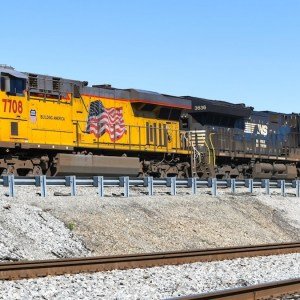
Ahead of a Wednesday filing deadline for public comments, Union Pacific and Norfolk Southern used their third-quarter 2026 earnings calls to argue that their controversial proposed merger would lower supply-chain costs and help railroads win freight from trucks. Their competitors offered different responses. CPKC (NYSE: CP) demanded rejection by the Surface Transportation Board; CSX (NASDAQ: CSX) emphasized partnerships, and CN (NYSE: CNI) highlighted an agreement intended to protect its business while opening new markets. BNSF, which as a unit of Berkshire Hathaway (NYSE: BRK-B) doesn’t hold an earnings call, earlier offered a public statement from its chief executive opposing the merger. The STB is expected to render a decision in 2027. Union Pacific: Lower costs, faster service and confidence in approval On Union Pacific’s October 22 earnings call (NYSE: UNP), Chief Executive Jim Vena argued that combining the two networks would reduce the friction involved in moving freight between railroads. “Our merger … will deliver substantial measurable benefits by strengthening the supply chain,” Vena said. “It will lower transportation costs and provide faster, more seamless rail service options that enable our customers to compete and help keep goods affordable for American … consumers.” Vena characterized the transaction as an end-to-end combination with limited overlap, rather than a consolidation of substantially parallel networks. He also pushed back against competitors seeking concessions, saying requests needed to be grounded in the merger’s actual competitive effects. Chief Financial Officer Jennifer Hamann said UP (NYSE: UNP) was building cash reserves in anticipation of closing on the deal in the second half of 2027. Norfolk Southern: Make truck-to-rail gains permanent Norfolk Southern (NYSE: NSC) CEO Mark George framed the merger as a structural answer to an industry problem. Freight can shift to rail when trucking becomes expensive, then return to highways when market conditions change. “When shippers are given a rail product that offers better value than the highway, they move freight to rail quickly, and the Union Pacific-Norfolk Southern combination is designed to create those conditions permanently,” George said on the company’s October 22 earnings call. George acknowledged that competing railroads were already responding with new services and closer cooperation. “We have definitely seen a more enhanced competitive environment,” he said, adding that railroads working together was good for the industry even when it made competition tougher for Norfolk Southern. His argument was that a unified network could help preserve market-share gains that otherwise might disappear as fuel prices and trucking capacity normalize. CPKC: Reject the merger, rather than bargain over concessions CPKC CEO Keith Creel delivered the most forceful earnings-call opposition, arguing that the proposed railroad’s scale and market power would create risks that were unnecessary. “We don’t want a condition. We don’t want a concession. We don’t think it’s needed,” Creel said during CPKC’s October 28 earnings call, reported by Trains. “To create something that represents that much risk, that much market power forever is completely unneeded.” Creel rejected comparisons with CPKC’s own merger, stressing that Canadian Pacific and Kansas City Southern had been the two smallest Class I systems and remained the smallest combined network. CPKC’s preferred outcome was rejection; if regulators nevertheless approved the transaction, it would seek protections including competitive access and meaningful safeguards at interchange gateways. CSX: Partnerships can improve service without common ownership On CSX’s October 21 earnings call, in response to a question regarding how the railroad’s partnerships with other carriers served as a counterweight to the proposed Union Pacific–Norfolk Southern combination, Chief Commercial Officer Maryclare Kenney emphasized that cooperation across railroad boundaries was established practice, not a new response invented for the merger fight. “It’s been common practice for CSX to work closely with our interline partners to try to find new and in some cases better solutions for our customers,” Kenney said. “We’re always looking for ways across our lines of business—but I would say in particular when you think about intermodal—trying to find solutions that improve transit and improve reliability for our customers.” Her answer focused on the commercial alternative to consolidation by connecting separate networks through service agreements. “We’ve been happy with the results we’ve seen with the partnerships we formed over the last several years, and we’ll continue to work on those going forward,” she said. Canadian National: Protect the network and pursue Mexico growth Canadian National CEO Tracy Robinson described its prospective agreement with Union Pacific as both a defensive measure and a growth opportunity. “It mitigates the risk of the merger to our network and our business, but it also creates opportunities,” Robinson said on CN’s October 30 earnings call. In her prepared remarks, Robinson said the “soon-to-be-finalized agreement” would extend CN’s reach into Mexico and position it to compete for a larger share of approximately $45 billion in annual Canada–Mexico trade. The agreement barters access in exchange for CN dropping its opposition to the merger. BNSF: A warning about rates and reduced competition BNSF President and CEO Katie Farmer opposed the transaction in a July 28 public statement responding to supplemental merger information submitted to regulators. “The additional data submitted by UP does not change the fact that this would be an anti-competitive transaction between two financially healthy companies, that will raise rates on rail customers and result in higher prices for consumers,” Farmer said. Why it matters: The outcome of the proposed merger is likely to reshape freight routings, interchange access and competitive leverage well beyond the two merging railroads. Subscribe to FreightWaves’ Rail e-newsletter and get the latest insights on rail freight right in your inbox. Read more articles by Stuart Chirls here. Read more: Union Pacific police in shootout after alleged train robbery on southern California freight line BLET ends Wheeling & Lake Erie strike Genesee & Wyoming prepares to split into three rail holding companies US rail traffic hits intermodal record as October freight gains signal economic resilience, says AAR Rising Q3 transportation costs squeeze manufacturers, reward railroads and reshape trade The post Transcontinental merger of Union Pacific and Norfolk Southern divides rail leaders appeared first on FreightWaves.
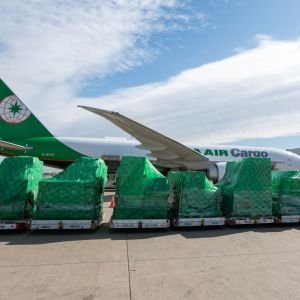
The argument for artificial intelligence in air cargo is no longer the hard part. The data foundation is finally in place, the forecasting problem is well documented, and consultancies have put numbers on the prize. The harder question is how an airline actually gets from a slide deck to a better decision on tomorrow’s 9 a.m. departure. SmartKargo’s answer arrived on October 26. The Cambridge, Massachusetts, cargo technology company released the first four applications in what it calls its AI Apps portfolio, each aimed at a single part of the cargo P&L. A layer, not a replacement The biggest design choice is how the apps connect. SmartKargo runs through APIs on top of whatever cargo management system an airline already uses, whether it’s a commercial product or one built in-house. There’s no migration involved, and SmartKargo says the apps can go live in weeks rather than years. That matters in an industry where replacing a core cargo system is a multi-year, high-risk program. Airlines can also start with a single app and add the others later; each is independent and priced on usage, transactions or assets rather than seats. Air cargo generated $151 billion in revenue in 2025, according to IATA, yet many decisions still run on static rules, manual overrides and delayed reports. SmartKargo frames every app around one test: does it drive revenue, reduce cost or reduce risk? Chief Revenue Officer Olivier Houri put it bluntly, “At SmartKargo, we start with something far more useful than hype: a business question.” Revenue: pricing that keeps pace with the booking curve Cargo pricing has long been a weak spot. McKinsey & Company notes that more than half of a flight’s capacity is often booked in the final week, when yield volatility is at its widest. Static tariffs adjusted by hand are poorly suited to that window. AIRCAM, tthe AI revenue and capacity management app that sits as a layer on top of an airline’sexisting cargo system, within the SmartKargo platform, targets exactly that gap. It reads demand, capacity and market signals for each shipment and returns a rate recommendation inside the booking and quoting flow. It forecasts booked and unbooked demand, allocates belly and freighter space to the highest-value mix, and flags underpriced capacity. Every recommendation shows its reasoning, a nod to revenue managers who will not accept a black box. And win-loss outcomes feed back into the model, so pricing improves continuously rather than at the next quarterly review. VietJet Cargo is the named early adopter. Operations: from firefighting to forecasting If pricing is where cargo makes money, operations are where it quietly loses it. A missed connection becomes a missed SLA, then an unhappy shipper. Most operations centers still learn about these problems after the fact. AINOC, billed as an AI-powered cargo control tower, is designed to move that moment earlier. It draws on cargo milestones, flight and airport operations, weather and airspace data, and partner signals. Its models predict where a delay will occur and for how long, flag SLA risk, trace root causes, and rank every exception by business impact rather than by who is shouting loudest. A generative AI layer turns that analysis into plain-language briefings for operations staff and executives. Notably, SmartKargo pitches the rollout cautiously: a typical pilot covers one hub and a couple of trade lanes before expanding across the network. Assets and data: the unglamorous foundations The two remaining apps tackle problems that rarely make headlines but quietly drain margin. AIULD addresses unit load devices and ground equipment, where damage, loss and idle time are a chronic cost. It gives airlines one view across owned, leased and pooled assets, combining location and condition signals with utilization and loss-prevention models. Tracking runs on SmartKargo Eye, a flight-certified tracker that needs no fixed readers at each station. AICTX may prove the most strategically important of the four. Air cargo still runs teletype-era Cargo-IMP, Cargo-XML, IATA ONE Record and customs filings side by side. AICTX translates between them in both directions, uses AI to catch missing or ambiguous data before it causes problems downstream, and lets partners connect without changing their own systems. Clean data is the input every other model depends on. What to watch Taken together, the four apps map neatly onto the industry’s three pressure points: revenue, operations and risk. The modular, no-migration approach lowers the barrier for carriers that have watched large system replacements run over budget and behind schedule. The bigger shift is AI as an intelligence layer across the whole cargo operation: models that learn from every booking outcome, see disruption before it cascades, and clean the data the next model depends on. Because each app sharpens as it learns from an airline’s own network, carriers that start early stand to build an advantage that compounds. For an industry that has spent years debating whether AI matters, that is the right shift in the conversation: from whether to how, and from promise to proof. About SmartKargo SmartKargo is the AI-powered, cloud-based platform that turns airlines into world-class cargo carriers, with cargo management, e-commerce, and AI in one system. Our cargo ERP runs the entire shipment lifecycle, from booking and acceptance to handling, tracking, and last-mile delivery. Our e-commerce solutions let airlines launch parcel products in weeks and connect directly to online retailers. Our AI applications forecast capacity and demand, guide pricing, and optimize load plans, so airlines capture revenue that legacy systems leave on the table. Trusted by airlines across North America, Latin America, India, and beyond, SmartKargo is making every flight a cargoopportunity. SmartKargo is headquartered in Cambridge, Massachusetts, with key offices in India, the Philippines, Brazil, the United Arab Emirates, the United Kingdom, and Canada. See our AI Portfolio to see how AI can turn your cargo data into better decisions. The post SmartKargo’s AI Apps Put the Industry’s AI Case to the Test appeared first on FreightWaves.
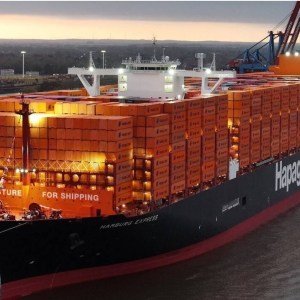
Maersk and Hapag-Lloyd announced today that their Gemini Cooperation’s AE1, AE2 and AE3 services will return to the trans-Suez route and Red Sea, replacing diverted voyages around Africa. The changes, in a phased transition extending from December into January, affect Asia-Europe services, but their potential to free vessel capacity gives U.S. importers a reason to watch the rollout. “They will now sail via the trans-Suez route instead of transiting via the Cape of Good Hope,” Maersk (OTC: AMKBY) said in a customer advisory. The shift marks another step toward restoring shorter shipping routes between Asia and Europe. It could also change how much vessel capacity carriers need to maintain those services, with possible consequences for capacity deployment elsewhere in their global networks. Those effects remain uncertain, however, as congestion and network adjustments continue to absorb shipping capacity. Maersk, Hapag-Lloyd (HLAG.DE) and other global liners since late 2023 diverted scheduled services away from the Suez-Red Sea route after Yemen’s Houthi rebels attacked merchant shipping in support of Gaza. But ocean carriers are returning as Houthi attacks waned, and longer diversions increased costs and operating complexity. Transition begins December 4 AE2 will be the first of the three services to make the scheduled transition, with the Mary Maersk, voyage 650W, starting its rotation at Ningbo on December 4. AE3 will follow with Alette Maersk, voyage 652W, starting at Shanghai on December 20. AE1’s first listed sailing will be Damietta Express, voyage 702W, starting at Shanghai on January 14, 2027. These are dates at the first loading ports, rather than dates for passage through the canal. The revised rotations include Suez Canal transits in both directions. Maersk said the changes would improve transit times, while cautioning that implementation depends on continued stability in the Red Sea and ongoing monitoring of regional security conditions. The announcement also completes a broader routing shift within Gemini. According to shipping analyst Linerlytica, the return of these three services will make Maersk and Hapag-Lloyd the first alliance to restore Suez routing across all of its Asia-Europe services, following earlier changes to other Gemini loops. U.S. impact centers on capacity, not direct routing For the U.S. market, the impact is indirect. Shorter voyages can release vessels from longer rotations, creating opportunities for carriers to rebalance capacity across their networks, Maersk said. That does not mean U.S. importers should expect an immediate drop in ocean freight rates. DHL Global Forwarding said the return to Suez would release capacity previously absorbed by diversions around Africa, but warned that congestion and extensive network adjustments could keep supply chains under pressure into 2027. And, recent violent incidents involving shipping in a global swath from the Black Sea to the Strait of Hormuz to the Somali coast create a tenor of uncertainty further supporting higher ocean rates. Congestion and security remain constraints DHL estimated that broader network adjustments could take another six to 12 months as carriers reposition vessels and rebalance services, assuming security conditions do not force further changes. It also said more than 10% of the global container fleet remained tied up in port congestion. For cargo owners, that means increased vessel availability and dependable delivery schedules may not arrive together. Maersk’s own security caveat also leaves open the possibility that the announced rotations could change if conditions in the Red Sea deteriorate. Why it matters: For U.S. importers, retailers and manufacturers, Gemini’s Suez return could loosen global vessel supply and influence future carrier deployment decisions, but congestion, regional demand and security risks will determine how much of that benefit reaches U.S. trade lanes. Read more articles by Stuart Chirls here. Read more: Red Sea overcapacity looms as ocean container spot rates still 50% above year-ago Truck access and wharf upgrades part of $10.3B infrastructure plan at Port of New York and New Jersey U.S. container imports hit record 2.67 million TEUs in October as port delays rise Tanker strikes cruise riverboat in New Orleans CMA CGM triples profit as Q3 freight rates and cargo volumes rise The post Maersk and Hapag-Lloyd restore Asia-Europe Suez routes as U.S. shippers watch capacity and costs appeared first on FreightWaves.