FRISCO, Texas — Small carriers and brokers waiting for Washington to ease up on trucking enforcement should not expect relief from the next administration, FreightWaves founder and CEO Craig Fuller said Nov. 2, because the industry’s largest fleets now want the crackdown. Fuller gave the industry keynote at Optym’s Convergence 2026 conference. He tied together the federal push against non-domiciled commercial driver’s licenses, a Supreme Court ruling that opened brokers to negligent-hiring suits, and a $604 million jury verdict against C.H. Robinson. Together, he said, they mark the most transformative period in trucking since deregulation in 1980. For brokers and small carriers, he argued, that means fewer cheap trucks to hire and more liability for the ones they do. Fuller said he is frequently asked whether a change in administration would ease restrictions, let more new operators into the industry, or end enforcement. “And I will say no,” he said. “Follow the money.” The largest motor carriers, along with the American Trucking Associations and the Truckload Carriers Association, have concluded that tighter standards for hiring drivers are “desperately needed” and “the only way that they will survive,” Fuller said. That support, he argued, holds whichever party wins. window.googletag = window.googletag || {cmd: []}; googletag.cmd.push(function() { var gptSlot = googletag.defineSlot('/21776187881/FW-Responsive-Main_Content-Slot1', [[300, 100], [320, 50], [728, 90], [468, 60]], 'div-gpt-ad-1709668545404-0').defineSizeMapping(gptSizeMaps.banner1).addService(googletag.pubads()); googletag.pubads().enableSingleRequest(); googletag.pubads().collapseEmptyDivs(); googletag.enableServices(); setInterval(function() { if (!document.hidden) { googletag.pubads().refresh([gptSlot]); } }, 60000); }); googletag.cmd.push(function() { googletag.display('div-gpt-ad-1709668545404-0'); }); Fuller has tracked the non-domiciled CDL issue for more than a year. In a November 2025 debate with Ken Adamo, he said the federal interim rule on non-domiciled CDLs could remove 5% to 7% of drivers from the market. Lower standards sent drivers to small fleets For years, Fuller said, ATA argued that trucking faced a driver shortage, and much of the trucking legislation in Congress over the last decade cited it, including funding for driver schools. By lowering the barriers to entry, Fuller said, ATA and its members were “creating an environment that would result in their own demise.” Executives of his father’s generation expected new drivers to go to work for large fleets, he said, because they never pictured freight brokers becoming a primary channel for freight. Many of those drivers went to small operators that found their loads through brokers. Fuller traced the shift to the long-haul market. Owning a long-haul truckload carrier was one of the most profitable businesses in the country through the 1980s and 1990s, he said, until railroads won much of that freight with intermodal service. Brokers went from handling 6% of freight in the early 2000s to “probably in excess of 30%” today, Fuller said, as shippers’ procurement departments took over transportation buying and mandated bids. “The brokers are effectively the day traders in our industry,” he said. That access to loads changed how downturns end. Small carriers washed out in large numbers during the 2008 financial crisis, Fuller said, but they largely survived the Great Freight Recession that began in 2022. “The most deadly thing to happen to a trucking company is to run out of freight, run out of miles,” Fuller said. A carrier that covers its variable costs per mile, he said, can keep operating “for five to ten years without filing bankruptcy.” window.googletag = window.googletag || {cmd: []}; googletag.cmd.push(function() { var gptSlot = googletag.defineSlot('/21776187881/fw-responsive-main_content-slot3', [[728, 90], [468, 60], [320, 50], [300, 100]], 'div-gpt-ad-1665767553440-0').defineSizeMapping(gptSizeMaps.banner1).addService(googletag.pubads()); googletag.pubads().enableSingleRequest(); googletag.pubads().collapseEmptyDivs(); googletag.enableServices(); setInterval(function() { if (!document.hidden) { googletag.pubads().refresh([gptSlot]); } }, 60000); }); googletag.cmd.push(function() { googletag.display('div-gpt-ad-1665767553440-0'); }); Non-domiciled CDLs and the long downturn FreightWaves spent much of the downturn trying to explain how so many carriers stayed open, Fuller said. “We kept looking at the data and saying, where, how are they staying in business? It made no sense.” His answer is drivers holding non-domiciled CDLs and operators working outside the rules, often at lower pay. “We now know that’s probably the primary reason that this market suffered,” Fuller said. Steve Troyer, president of California Midwest Xpress, told FreightWaves in December that brokered freight moving more than 500 miles had routinely paid 25 to 75 cents a mile below his company’s operating costs for much of the prior three and a half years. Freight analysts have pinned the downturn on carriers that entered during the pandemic freight boom. In September 2024, FTR’s Avery Vise told DC Velocity the market still had “something on the order of 95,000 more for-hire carriers” than before the pandemic. When the U.S. Court of Appeals for the D.C. Circuit stayed FMCSA’s interim rule in November 2025, the majority wrote that, by the agency’s own data, non-domiciled CDL holders were “approximately 5 percent of all CDL holders but only about 0.2 percent of fatal crashes.” One judge dissented, arguing the five crashes behind that figure were not an exhaustive count. FMCSA’s final rule, published in February, took effect March 16. Crash rates and broker liability Fuller described trucking as suffering from “a security crisis, a safety crisis, and an economic crisis.” At least one major freight theft makes FreightWaves’ daily show every day, he said. On safety, his point was that crash rates climbed even as the largest carriers spent more on training than ever and ran the safest equipment the industry has had. Adding to the data challenges, the FMCSA does not track crash data by CDL category. window.googletag = window.googletag || {cmd: []}; googletag.cmd.push(function() { var gptSlot = googletag.defineSlot('/21776187881/fw-responsive-main_content-slot4', [[300, 100], [320, 50], [728, 90], [468, 60]], 'div-gpt-ad-1709668086344-0').defineSizeMapping(gptSizeMaps.banner1).addService(googletag.pubads()); googletag.pubads().enableSingleRequest(); googletag.pubads().collapseEmptyDivs(); googletag.enableServices(); setInterval(function() { if (!document.hidden) { googletag.pubads().refresh([gptSlot]); } }, 60000); }); googletag.cmd.push(function() { googletag.display('div-gpt-ad-1709668086344-0'); }); FMCSA’s Large Truck and Bus Crash Facts 2022, the latest edition of that report, shows large trucks involved in fatal crashes rising from 1.22 per 100 million vehicle miles in 2010 to 1.76 in 2022. NHTSA’s newer Traffic Safety Facts 2024 shows that rate has since eased to 1.58, with 5,340 people killed in crashes involving large trucks in 2024. Brokers, which Fuller said FMCSA oversees only lightly, now face their own compliance problem. On May 14, the U.S. Supreme Court ruled 9-0 in Montgomery v. Caribe Transport II that a state negligent-hiring claim against a broker falls under the safety exception of the Federal Aviation Administration Authorization Act. Brokers had argued the law’s preemption of state rules on their services blocked those suits. Before the decision, Fuller said on FreightWaves TV that a loss would be “an extinction event for a lot of freight brokers.” He said the call drew “a lot of heat.” Large brokers he spoke with after the ruling expected it to push smaller rivals out of business, Fuller said. Then, in July, a Dallas County jury returned the $604 million verdict in Lipe v. Lupus Superior, finding C.H. Robinson 23% responsible for a 2021 crash in Mississippi that killed three people. “It was an oh my god moment for them,” he said. C.H. Robinson has said the carrier held a Satisfactory FMCSA rating when it was selected and after a federal review of the crash. Fuller singled out the jury’s finding that the driver was effectively a C.H. Robinson employee, a theory the plaintiffs built on his use of the company’s app. The court confirmed the verdict in October, and Overdrive reported interest brings it to about $711 million, with the borrowed-employee finding leaving the broker exposed to nearly all of it. FMCSA’s own Safety Measurement System site warns that readers “should not draw conclusions about a carrier’s overall safety condition simply based on the data displayed in this system.” It treats any carrier without an Unsatisfactory rating or an FMCSA order to stop operating as authorized to run. window.googletag = window.googletag || {cmd: []}; googletag.cmd.push(function() { var gptSlot = googletag.defineSlot('/21776187881/fw-responsive-main_content-slot5', [[728, 90], [468, 60], [320, 50], [300, 100]], 'div-gpt-ad-1665767778941-0').defineSizeMapping(gptSizeMaps.banner1).addService(googletag.pubads()); googletag.pubads().enableSingleRequest(); googletag.pubads().collapseEmptyDivs(); googletag.enableServices(); setInterval(function() { if (!document.hidden) { googletag.pubads().refresh([gptSlot]); } }, 60000); }); googletag.cmd.push(function() { googletag.display('div-gpt-ad-1665767778941-0'); }); “So now, when you’re a freight broker, you’re hiring capacity, you’re on your own,” Fuller said. “The federal government is not going to help determine that aspect. You’ve got to do it yourself.” Brokers are already adjusting. By late May, C.H. Robinson had begun moving carriers to non-certified status based on their safety scores, though the company has not publicly tied the change to the decision. Shippers and warehouses named in suits The liability is spreading past brokers, Fuller said. He pointed to the suit over the crash that injured Dalilah Coleman, the girl President Donald Trump recognized in his State of the Union address. The amended complaint names Unilever and warehouse operator United States Cold Storage alongside C.H. Robinson, alleging they failed to verify the carrier that picked up the load. Fuller said he would bet at least 20% to 30% of loads leave a warehouse without anyone checking that the truck at the dock belongs to the assigned carrier. “It’s been a security problem, and now we have a litigation problem,” he said. window.googletag = window.googletag || {cmd: []}; googletag.cmd.push(function() { var gptSlot = googletag.defineSlot('/21776187881/fw-responsive-main_content-slot6', [[728, 90], [468, 60], [320, 50], [300, 100]], 'div-gpt-ad-1665767872042-0').defineSizeMapping(gptSizeMaps.banner1).addService(googletag.pubads()); googletag.pubads().enableSingleRequest(); googletag.pubads().collapseEmptyDivs(); googletag.enableServices(); setInterval(function() { if (!document.hidden) { googletag.pubads().refresh([gptSlot]); } }, 60000); }); googletag.cmd.push(function() { googletag.display('div-gpt-ad-1665767872042-0'); }); But the extent of broker liability is still being tested. In a concurrence joined by Justice Samuel Alito, Justice Brett Kavanaugh wrote that brokers “should be able to successfully defend against state tort suits if the brokers have acted reasonably.” C.H. Robinson has said it will appeal the Dallas verdict, and its May 14 statement on the ruling reports one serious accident claim for every 500 million miles driven on its customers’ loads. Looking ahead, those same shippers may revert to having more large asset based carriers in future bids due to these liability issues. A shipper that tenders a load to a carrier that hired its own driver and met the standards is in the strongest position, Fuller said. “And so my final prediction is that the asset carriers are going to win this round.” Why it matters: Brokers and shippers heading into 2027 truckload bids have to price two costs at once: liability for the carriers they pick, and fewer cheap carriers to pick from. For asset based carriers, this crackdown presents an opportunity to regain lost market share or push for higher rates. The post Big carriers keep FMCSA’s crackdown alive, Fuller says appeared first on FreightWaves.
FRISCO, Texas — Small carriers and brokers waiting for Washington to ease up on trucking enforcement should not expect relief from the next administration, FreightWaves founder and CEO Craig Fuller said Nov. 2, because the industry’s largest fleets now want the crackdown.
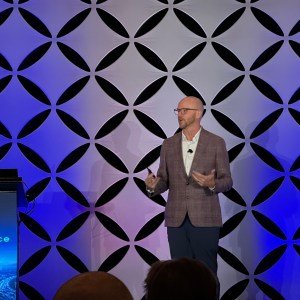
Fuller gave the industry keynote at Optym’s Convergence 2026 conference. He tied together the federal push against non-domiciled commercial driver’s licenses, a Supreme Court ruling that opened brokers to negligent-hiring suits, and a $604 million jury verdict against C.H. Robinson. Together, he said, they mark the most transformative period in trucking since deregulation in 1980. For brokers and small carriers, he argued, that means fewer cheap trucks to hire and more liability for the ones they do.
Fuller said he is frequently asked whether a change in administration would ease restrictions, let more new operators into the industry, or end enforcement. “And I will say no,” he said. “Follow the money.”
The largest motor carriers, along with the American Trucking Associations and the Truckload Carriers Association, have concluded that tighter standards for hiring drivers are “desperately needed” and “the only way that they will survive,” Fuller said. That support, he argued, holds whichever party wins.
window.googletag = window.googletag || {cmd: []};
googletag.cmd.push(function() {
var gptSlot = googletag.defineSlot(‘/21776187881/FW-Responsive-Main_Content-Slot1’, [[300, 100], [320, 50], [728, 90], [468, 60]], ‘div-gpt-ad-1709668545404-0’).defineSizeMapping(gptSizeMaps.banner1).addService(googletag.pubads());
googletag.pubads().enableSingleRequest();
googletag.pubads().collapseEmptyDivs();
googletag.enableServices();
setInterval(function() {
if (!document.hidden) { googletag.pubads().refresh([gptSlot]); }
}, 60000);
});
googletag.cmd.push(function() { googletag.display(‘div-gpt-ad-1709668545404-0’); });
Fuller has tracked the non-domiciled CDL issue for more than a year. In a November 2025 debate with Ken Adamo, he said the federal interim rule on non-domiciled CDLs could remove 5% to 7% of drivers from the market.
Lower standards sent drivers to small fleets
For years, Fuller said, ATA argued that trucking faced a driver shortage, and much of the trucking legislation in Congress over the last decade cited it, including funding for driver schools.
By lowering the barriers to entry, Fuller said, ATA and its members were “creating an environment that would result in their own demise.” Executives of his father’s generation expected new drivers to go to work for large fleets, he said, because they never pictured freight brokers becoming a primary channel for freight. Many of those drivers went to small operators that found their loads through brokers.
Fuller traced the shift to the long-haul market. Owning a long-haul truckload carrier was one of the most profitable businesses in the country through the 1980s and 1990s, he said, until railroads won much of that freight with intermodal service.
Brokers went from handling 6% of freight in the early 2000s to “probably in excess of 30%” today, Fuller said, as shippers’ procurement departments took over transportation buying and mandated bids. “The brokers are effectively the day traders in our industry,” he said.
That access to loads changed how downturns end. Small carriers washed out in large numbers during the 2008 financial crisis, Fuller said, but they largely survived the Great Freight Recession that began in 2022.
“The most deadly thing to happen to a trucking company is to run out of freight, run out of miles,” Fuller said. A carrier that covers its variable costs per mile, he said, can keep operating “for five to ten years without filing bankruptcy.”
window.googletag = window.googletag || {cmd: []};
googletag.cmd.push(function() {
var gptSlot = googletag.defineSlot(‘/21776187881/fw-responsive-main_content-slot3’, [[728, 90], [468, 60], [320, 50], [300, 100]], ‘div-gpt-ad-1665767553440-0’).defineSizeMapping(gptSizeMaps.banner1).addService(googletag.pubads());
googletag.pubads().enableSingleRequest();
googletag.pubads().collapseEmptyDivs();
googletag.enableServices();
setInterval(function() {
if (!document.hidden) { googletag.pubads().refresh([gptSlot]); }
}, 60000);
});
googletag.cmd.push(function() { googletag.display(‘div-gpt-ad-1665767553440-0’); });
Non-domiciled CDLs and the long downturn
FreightWaves spent much of the downturn trying to explain how so many carriers stayed open, Fuller said. “We kept looking at the data and saying, where, how are they staying in business? It made no sense.”
His answer is drivers holding non-domiciled CDLs and operators working outside the rules, often at lower pay. “We now know that’s probably the primary reason that this market suffered,” Fuller said.
Steve Troyer, president of California Midwest Xpress, told FreightWaves in December that brokered freight moving more than 500 miles had routinely paid 25 to 75 cents a mile below his company’s operating costs for much of the prior three and a half years.
Freight analysts have pinned the downturn on carriers that entered during the pandemic freight boom. In September 2024, FTR’s Avery Vise told DC Velocity the market still had “something on the order of 95,000 more for-hire carriers” than before the pandemic. When the U.S. Court of Appeals for the D.C. Circuit stayed FMCSA’s interim rule in November 2025, the majority wrote that, by the agency’s own data, non-domiciled CDL holders were “approximately 5 percent of all CDL holders but only about 0.2 percent of fatal crashes.” One judge dissented, arguing the five crashes behind that figure were not an exhaustive count. FMCSA’s final rule, published in February, took effect March 16.
Crash rates and broker liability
Fuller described trucking as suffering from “a security crisis, a safety crisis, and an economic crisis.” At least one major freight theft makes FreightWaves’ daily show every day, he said. On safety, his point was that crash rates climbed even as the largest carriers spent more on training than ever and ran the safest equipment the industry has had. Adding to the data challenges, the FMCSA does not track crash data by CDL category.
window.googletag = window.googletag || {cmd: []};
googletag.cmd.push(function() {
var gptSlot = googletag.defineSlot(‘/21776187881/fw-responsive-main_content-slot4’, [[300, 100], [320, 50], [728, 90], [468, 60]], ‘div-gpt-ad-1709668086344-0’).defineSizeMapping(gptSizeMaps.banner1).addService(googletag.pubads());
googletag.pubads().enableSingleRequest();
googletag.pubads().collapseEmptyDivs();
googletag.enableServices();
setInterval(function() {
if (!document.hidden) { googletag.pubads().refresh([gptSlot]); }
}, 60000);
});
googletag.cmd.push(function() { googletag.display(‘div-gpt-ad-1709668086344-0’); });
FMCSA’s Large Truck and Bus Crash Facts 2022, the latest edition of that report, shows large trucks involved in fatal crashes rising from 1.22 per 100 million vehicle miles in 2010 to 1.76 in 2022. NHTSA’s newer Traffic Safety Facts 2024 shows that rate has since eased to 1.58, with 5,340 people killed in crashes involving large trucks in 2024.
Brokers, which Fuller said FMCSA oversees only lightly, now face their own compliance problem. On May 14, the U.S. Supreme Court ruled 9-0 in Montgomery v. Caribe Transport II that a state negligent-hiring claim against a broker falls under the safety exception of the Federal Aviation Administration Authorization Act. Brokers had argued the law’s preemption of state rules on their services blocked those suits.
Before the decision, Fuller said on FreightWaves TV that a loss would be “an extinction event for a lot of freight brokers.” He said the call drew “a lot of heat.”
Large brokers he spoke with after the ruling expected it to push smaller rivals out of business, Fuller said. Then, in July, a Dallas County jury returned the $604 million verdict in Lipe v. Lupus Superior, finding C.H. Robinson 23% responsible for a 2021 crash in Mississippi that killed three people. “It was an oh my god moment for them,” he said.
C.H. Robinson has said the carrier held a Satisfactory FMCSA rating when it was selected and after a federal review of the crash. Fuller singled out the jury’s finding that the driver was effectively a C.H. Robinson employee, a theory the plaintiffs built on his use of the company’s app. The court confirmed the verdict in October, and Overdrive reported interest brings it to about $711 million, with the borrowed-employee finding leaving the broker exposed to nearly all of it.
FMCSA’s own Safety Measurement System site warns that readers “should not draw conclusions about a carrier’s overall safety condition simply based on the data displayed in this system.” It treats any carrier without an Unsatisfactory rating or an FMCSA order to stop operating as authorized to run.
window.googletag = window.googletag || {cmd: []};
googletag.cmd.push(function() {
var gptSlot = googletag.defineSlot(‘/21776187881/fw-responsive-main_content-slot5’, [[728, 90], [468, 60], [320, 50], [300, 100]], ‘div-gpt-ad-1665767778941-0’).defineSizeMapping(gptSizeMaps.banner1).addService(googletag.pubads());
googletag.pubads().enableSingleRequest();
googletag.pubads().collapseEmptyDivs();
googletag.enableServices();
setInterval(function() {
if (!document.hidden) { googletag.pubads().refresh([gptSlot]); }
}, 60000);
});
googletag.cmd.push(function() { googletag.display(‘div-gpt-ad-1665767778941-0’); });
“So now, when you’re a freight broker, you’re hiring capacity, you’re on your own,” Fuller said. “The federal government is not going to help determine that aspect. You’ve got to do it yourself.”
Brokers are already adjusting. By late May, C.H. Robinson had begun moving carriers to non-certified status based on their safety scores, though the company has not publicly tied the change to the decision.
Shippers and warehouses named in suits
The liability is spreading past brokers, Fuller said. He pointed to the suit over the crash that injured Dalilah Coleman, the girl President Donald Trump recognized in his State of the Union address. The amended complaint names Unilever and warehouse operator United States Cold Storage alongside C.H. Robinson, alleging they failed to verify the carrier that picked up the load.
Fuller said he would bet at least 20% to 30% of loads leave a warehouse without anyone checking that the truck at the dock belongs to the assigned carrier. “It’s been a security problem, and now we have a litigation problem,” he said.
window.googletag = window.googletag || {cmd: []};
googletag.cmd.push(function() {
var gptSlot = googletag.defineSlot(‘/21776187881/fw-responsive-main_content-slot6’, [[728, 90], [468, 60], [320, 50], [300, 100]], ‘div-gpt-ad-1665767872042-0’).defineSizeMapping(gptSizeMaps.banner1).addService(googletag.pubads());
googletag.pubads().enableSingleRequest();
googletag.pubads().collapseEmptyDivs();
googletag.enableServices();
setInterval(function() {
if (!document.hidden) { googletag.pubads().refresh([gptSlot]); }
}, 60000);
});
googletag.cmd.push(function() { googletag.display(‘div-gpt-ad-1665767872042-0’); });
But the extent of broker liability is still being tested. In a concurrence joined by Justice Samuel Alito, Justice Brett Kavanaugh wrote that brokers “should be able to successfully defend against state tort suits if the brokers have acted reasonably.” C.H. Robinson has said it will appeal the Dallas verdict, and its May 14 statement on the ruling reports one serious accident claim for every 500 million miles driven on its customers’ loads.
Looking ahead, those same shippers may revert to having more large asset based carriers in future bids due to these liability issues. A shipper that tenders a load to a carrier that hired its own driver and met the standards is in the strongest position, Fuller said. “And so my final prediction is that the asset carriers are going to win this round.”
Why it matters: Brokers and shippers heading into 2027 truckload bids have to price two costs at once: liability for the carriers they pick, and fewer cheap carriers to pick from. For asset based carriers, this crackdown presents an opportunity to regain lost market share or push for higher rates.
The post Big carriers keep FMCSA’s crackdown alive, Fuller says appeared first on FreightWaves.
Source: FreightWaves