bp pulse makes 850+ EV fast chargers easier to use in the US
Transportationvia Electrek
Quick Read
EV drivers have another way to charge at bp pulse without adding its app to their phones. The network has joined ChargeHub’s Passport Hub, connecting more than 850 charging points at over 95 US locations to ChargeHub and participating charging services and automakers. more…
EV drivers have another way to charge at bp pulse without adding its app to their phones. The network has joined ChargeHub’s Passport Hub, connecting more than 850 charging points at over 95 US locations to ChargeHub and participating charging services and automakers.
Federal and state law enforcement agencies arrested more than 230 undocumented immigrants, including more than 40 commercial driver’s license holders, during a 72-hour enforcement operation spanning 15 states. The operation, dubbed Operation Guardian, was conducted Oct. 26-28 by U.S. Immigration and Customs Enforcement (ICE) and state and local law enforcement partners, according to the U.S. Department of Homeland Security. It targeted immigrants DHS described as holding unauthorized CDLs, along with other individuals the agency identified as public safety threats connected to the trucking industry. Operation Guardian follows recent truck blitzes in Arkansas, Arizona, California, Kentucky and North Dakota. window.googletag = window.googletag || {cmd: []}; googletag.cmd.push(function() { var gptSlot = googletag.defineSlot('/21776187881/FW-Responsive-Main_Content-Slot1', [[300, 100], [320, 50], [728, 90], [468, 60]], 'div-gpt-ad-1709668545404-0').defineSizeMapping(gptSizeMaps.banner1).addService(googletag.pubads()); googletag.pubads().enableSingleRequest(); googletag.pubads().collapseEmptyDivs(); googletag.enableServices(); setInterval(function() { if (!document.hidden) { googletag.pubads().refresh([gptSlot]); } }, 60000); }); googletag.cmd.push(function() { googletag.display('div-gpt-ad-1709668545404-0'); }); DHS Secretary Markwayne Mullin announced the results Monday during a news conference at Melton Truck Lines’ headquarters in Tulsa, Oklahoma. The operation involved authorities in Alabama, Arkansas, Florida, Georgia, Indiana, Iowa, Louisiana, Mississippi, Missouri, Nebraska, North Dakota, Oklahoma, South Dakota, Tennessee and Texas. DHS did not provide a state-by-state breakdown of Operation Guardian arrests or identify which states accounted for the more than 40 CDL holders detained. The announcement also did not specify which states issued the licenses, the number of commercial vehicles inspected or how many CDL holders were actively operating trucks when apprehended. Operation Guardian follows another federal immigration enforcement initiative targeting commercial vehicles. On Sept. 25, ICE launched Operation Guardrail, a nationwide effort targeting commercial vehicles operating in violation of U.S. laws. As of Oct. 29, ICE had arrested 303 people through Operation Guardrail, according to DHS. window.googletag = window.googletag || {cmd: []}; googletag.cmd.push(function() { var gptSlot = googletag.defineSlot('/21776187881/fw-responsive-main_content-slot3', [[728, 90], [468, 60], [320, 50], [300, 100]], 'div-gpt-ad-1665767553440-0').defineSizeMapping(gptSizeMaps.banner1).addService(googletag.pubads()); googletag.pubads().enableSingleRequest(); googletag.pubads().collapseEmptyDivs(); googletag.enableServices(); setInterval(function() { if (!document.hidden) { googletag.pubads().refresh([gptSlot]); } }, 60000); }); googletag.cmd.push(function() { googletag.display('div-gpt-ad-1665767553440-0'); }); The agency also reported that between Jan. 20, 2025, and Oct. 28, 2026, ICE made 4,795 CDL-related arrests nationwide, including 1,233 arrests involving CDL holders. However, DHS did not explain whether the latest Operation Guardian arrests were included in its cumulative figures or whether any individuals arrested were charged with licensing fraud or other CDL-related offenses. The agency also did not release information establishing how many of the detained CDL holders had obtained their licenses through fraudulent applications or were otherwise ineligible to hold them. Why it matters: The coordinated crackdown signals escalating federal and state scrutiny of commercial drivers’ immigration status and CDL eligibility. window.googletag = window.googletag || {cmd: []}; googletag.cmd.push(function() { var gptSlot = googletag.defineSlot('/21776187881/fw-responsive-main_content-slot4', [[300, 100], [320, 50], [728, 90], [468, 60]], 'div-gpt-ad-1709668086344-0').defineSizeMapping(gptSizeMaps.banner1).addService(googletag.pubads()); googletag.pubads().enableSingleRequest(); googletag.pubads().collapseEmptyDivs(); googletag.enableServices(); setInterval(function() { if (!document.hidden) { googletag.pubads().refresh([gptSlot]); } }, 60000); }); googletag.cmd.push(function() { googletag.display('div-gpt-ad-1709668086344-0'); }); The post 230-plus immigrants arrested in crackdown targeting unauthorized CDL holders appeared first on FreightWaves.
Truckload carrier Pamt Corp. lost money again during the third quarter. Like other carriers, it pointed to elevated driver procurement costs and the spike in diesel fuel prices as the culprits. Pamt (NASDAQ: PAMT) reported a net loss of $8.1 million, or 38 cents per share, on Monday after the market closed. Earnings-per-share headwinds in the period included a $3.7-million year-over-year decline in gains on equipment sales (14 cents per share), and a $3.2-million y/y decline in non-operating income (12 cents per share). (The non-operating income line captures the change in value of its stock portfolio.) Pamt booked a net loss of 27 cents per share in the year-ago quarter. Pamt President Lance Stewart said that while the company is “aligning customer rates with the inflationary cost increases experienced over the past four years,” the “cumulative cost increases continue to outpace the pricing improvements achieved to date.” Consolidated revenue increased 8% y/y to $163 million. Revenue was up just 2% excluding fuel surcharges. Truckload revenue (ex-fuel) was flat y/y as a 3% decline in average trucks was mostly offset by a 1.4% increase in revenue per truck per week. Loaded miles per truck increased 4% y/y in the quarter. Revenue per loaded mile (ex-fuel) was down 1% y/y, but up 11% from the second quarter. The third quarter marked 12 straight operating losses for the TL unit. It recorded a 109.1% operating ratio (ex-fuel), 240 basis points worse y/y. The logistics unit reported $45 million in revenue, a 7% y/y increase, and a 92.6% OR, 650 bps better y/y. (Pamt doesn’t provide gross profit margins for the unit, nor operating metrics like load counts and revenue per load.) Pamt used $18 million in operating cash flow in the first nine months of the year. Liquidity (cash, equity holdings and availability on its line of credit) of $102 million was $15 million lower than in the second quarter. Outstanding debt was down $10 million to $323 million. “While I am disappointed that the progress achieved in customer pricing was offset by these cost pressures, I am encouraged by the continued sequential improvement in our operating performance,” said Stewart. “I remain confident that our ongoing initiatives, combined with improving market conditions, will contribute to stronger financial results as we move forward.” Why it matters? Pamt’s results show fleets are having difficulties addressing multiple years of cost inflation, which occurred alongside weak pricing. More FreightWaves articles by Todd Maiden: October’s 55.5 manufacturing PMI beats expectations Schneider partners with Norfolk Southern; raises outlook despite Q3 miss FedEx Freight sees volumes stabilize, eyes Q4 margin improvement The post Pamt Corp. reports Q3 net loss, books 109.1% truckload OR appeared first on FreightWaves.
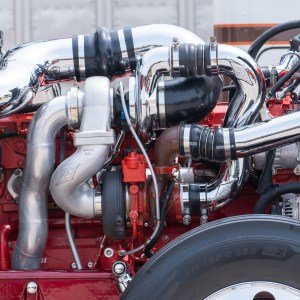
With the trucking sector anticipating the release of the final rule by the Environmental Protection Agency on nitrogen oxide (NoX) standards–known colloquially as EPA ‘27–and what engines need to do to get there, one of the country’s biggest truck retailers took the issue head on its recent earnings call with analysts. The message by William Rush, the CEO of Rush Enterprises (NASDAQ: RUSHA) and known through the industry as Rusty, was that the final rule may not be coming down anytime soon. Rush said on the company’s earnings call with analysts Wednesday that “I’m hearing we’re not going to get it in November,” “it” being a final EPA decision following its July Notice of Proposed Rulemaking covering potential amendments to the earlier rule on NoX emissions from heavy-duty vehicles. The initial proposed regulation and its amendments have numerous parts. But at the core, it will require about an 80% reduction in NoX emissions to get down to 0.035 g/bhp-hr, which represents grams of pollutant per brake horsepower-hour. There is no change in that basic part of the proposal. “There have been some things that have gone in the EPA that are going to delay it,” Rush said, without offering specifics. “Possibly we’re going to be told to just work off a draft.” EPA ‘27’s name is a reference to the model year engines where the tighter NoX rules will need to be met. And a truck retailer like Rush is going to be on the front end of whatever decisions are made by OEMs in how to meet the broader rule that is in place, either with some regulations that OEMs and others have not challenged, like the actual NoX limits, but others that are the subject of industry criticism, such as changes in warranty length. Rush’s prediction in the earnings call: “We’ll get the final decree out in January or February, but it’s got to go on the first of January,” he said. “So it’s kind of up in the air exactly what is really going to stay the same.” Wide backing for NCPs The provision in the July amendments that garnered the most industry support were the noncompliance penalties (NCPs) that engine manufacturers can pay should they fail to meet the new standards. However, the NCPs are not a permanent change and will phase out. Rush, from his perspective, is looking at OEMs that supply his retail outlets delivering NoX compliant or non-compliant vehicles on differing schedules, should the NCPs be adopted as an amendment to the original rule. “I’ve never seen an EPA law or decree where it wasn’t the same for everybody on one particular date,” Rush told the analysts. “Some will come in on January 1. Some may not do it until the following year.” However, Rush added that “I don’t believe we’ve had time to truly test these engines.” “So I think from a customer perspective, I would be leaning towards wanting to pay some NCPs, that’s my personal opinion, and roll in and test the new technology before I go all into the pool,” Rush said. “Let’s dive into the shallow end, not the deep end.” ‘Expiditiously’ at EPA In a prepared statement sent to FreightWaves, a spokesman for EPA said the agency “recognizes the importance of timely action to provide regulatory certainty for manufacturers and the trucking industry. The agency is carefully reviewing the comments received and is working to finalize the rule as expeditiously as possible.” Rush cited several OEMs by name, saying they were in favor of the NCPs. And their comments made to the EPA during the comment period on the amendments back that up. For example, PACCAR (NASDAQ: PCAR), which Rush mentioned, said in its comments to EPA that it “strongly supports EPA’s proposal to establish nonconformance penalties for medium and heavy-heavy duty engines for the NOx standard.” “The 2027 NOx standards meet the Clean Air Act’s criteria for nonconformance penalties, and they are critical to ensuring industry launches with robust and fully validated products rather than accelerating products to market before validation is complete,” PACCAR said in its comments. Rush also mentioned engine manufacturer Cummins (NYSE: CMI). Cummins, in its submission from late August, requested the EPA move quickly on the amendments, something Rush’s comments suggest is not going to occur. “There is an urgent need for EPA to finalize some of the proposed amendments as soon as possible, for example, those related to emissions warranty, emissions useful life, and nonconformance penalties, so EPA can certify manufacturers’ model year 2027 engines to the revised provisions and manufacturers can introduce them into commerce by January 1, 2027,” Cummins said. The reference by Cummins to other provisions under study by EPA include the questions of warranty and useful life, which are somewhat similar. Warranty and useful life provisions As Rush Truck Centers described it in their own Q&A on the EPA ‘27 rules, useful life “is a regulatory requirement that determines how long an engine must continue meeting federal emissions standards for certification purposes.” As Rush Truck Centers added, the proposed amendment would not implement tighter useful-life standards until 2030, giving a three-year breather. The warranty changes in the amendment would keep current requirements in place rather than the original changes, which would have forced OEMs to recognize longer warranties. It has been noted by several of the commenters on the amendments that this change alone is expected to have the greatest financial impact on restraining increases on the price of the cleaner trucks created by the EPA ‘27 rule. Warranty table is from Rush Enterprises’ web page Rush on the earnings call referred to the EPA sarcastically as “our great government that can’t seem to write a final decree.” But he softened that by saying that “I know there are a lot of legal ramifications. They have to be very careful with the changes. They have tried to make it easier for the customers.” The NCPs, Rush said, will allow greater testing of the tighter NoX engines without actually adopting them in fleets. “Most folks want to run this stuff for over a year before they roll it into their fleets, because we’ve seen through history that new technology does not always run right out of the gate,” Rush said. The rollout of diesel exhaust fluid (DEF) in 2010, Rush said as an example, resulted in “clogged particulate filters all over the country.” DEF gets some changes in the proposed amendments. Despite some online misinterpretation that the rule for diesel engines to use DEF is disappearing, what would change in the amendments would be the elimination of the “deratement,” where low DEF levels result in engines slowing the vehicle they are powering. Instead, audio alerts would replace them. ATA reiterates NCP backing In a coincidence, the American Trucking Associations had already made its views on the proposed amendments known during the comment period, but about the same time Rush was making its comments, the ATA used the group’s blog last week to reiterate its view on the changes in EPA ‘27. The blog post was put up by ATA, according to a spokesman, “because the rule is up for interagency review in the coming weeks and it reiterates our stance on the rule. Congress left town, but this is content that speaks to important activity happening at the agencies.” Like the OEMs made clear in their own comments, the ATA favors the NCPs as a key transition tool. ATA said of the changes in general that they “lay out a responsible path forward, maintaining ambitious NOx emissions reduction targets while recognizing that manufacturers need sufficient time to test new technologies under real-world operating conditions.” “NCPs preserve the incentive for manufacturers to meet the new standard as quickly as possible while preventing reliable engine models from becoming unavailable in the market,” the ATA said. “As EPA prepares to finalize its rulemaking, the NCP provisions must remain intact. Without them, the rule would lose a critical safeguard for truck availability, fleet reliability, and an orderly transition to the next generation of emissions technology.” More articles by John Kingston FMCSA’s Elison addresses Motus again, still no date on full repair C.H Robinson and Landstar stock prices slammed; insurance a factor TFI chief Bedard rips into its US LTL operations, promises change The post Waiting on EPA ‘27 rule, Rush says it might not be soon appeared first on FreightWaves.