The way courts decide who is responsible when a contracted truck ends up in a wreck is changing faster than most of the freight industry realizes, and the shift is not about one ruling or one eye-popping dollar figure, it is a whole direction of travel that keeps pulling responsibility up the chain toward brokers and the companies that arrange freight, a change that one transportation attorney recently laid out in detail for a room full of freight professionals who sit squarely in its blast radius. The attorney, Matthew Leffler, an adjunct law professor at Michigan State University College of Law who goes by The Armchair Attorney and has practiced for 16 years, was blunt about the stakes. Fielding live questions at a town-hall session of the FreightWaves Freight Brokerage Compliance Symposium, he ranged across broker liability after Montgomery, nuclear verdicts, FMCSA enforcement, carrier vetting, drop-trailer strategy, and the newer category of AI-driven risk, but the thread tying all of it together was one warning. He argued that what is happening right now on the liability front is as profound a shift for freight as deregulation was in the late 1970s, maybe as profound as containerization, and that ten years from now the business will look almost unrecognizable because of the legal pressure building on it. None of what follows is legal advice, and Leffler said as much repeatedly, but the picture he painted and the practical guidance he offered are worth every broker and every small carrier understanding in detail. The Case That Changes The Math The facts, as Leffler described them, are ordinary right up until they are catastrophic. A broker worked with a shipper, sourced a carrier called Lupus Superior, and the carrier moved the load. That carrier held a satisfactory safety rating, which is rarer than most people think, because by Leffler’s count roughly 94 percent of trucking companies carry no safety rating at all, not satisfactory, not conditional, not unsatisfactory. On paper this was about as good a carrier as a broker could ask for. Then the human element broke the chain. By Leffler’s account of the trial evidence, the driver told his dispatcher he was not feeling well, the dispatcher relayed that to the broker, C.H. Robinson, and the question of whether to swap in another driver came up. For reasons that may never be fully clear, the sick driver took the load anyway. The truck hit stopped traffic on Interstate 20 in Mississippi, and the fire that followed killed three people, seriously injured two more, and killed the driver himself. The lawsuit named the driver, the carrier, and the broker. window.googletag = window.googletag || {cmd: []}; googletag.cmd.push(function() { var gptSlot = googletag.defineSlot('/21776187881/FW-Responsive-Main_Content-Slot1', [[300, 100], [320, 50], [728, 90], [468, 60]], 'div-gpt-ad-1709668545404-0').defineSizeMapping(gptSizeMaps.banner1).addService(googletag.pubads()); googletag.pubads().enableSingleRequest(); googletag.pubads().collapseEmptyDivs(); googletag.enableServices(); setInterval(function() { if (!document.hidden) { googletag.pubads().refresh([gptSlot]); } }, 60000); }); googletag.cmd.push(function() { googletag.display('div-gpt-ad-1709668545404-0'); }); Here is where Leffler said brokers need to pay close attention, because two separate strands drove the outcome. The first was ordinary negligence tied to carrier selection, the kind of claim Montgomery made familiar, though the picture here is murkier than a clean selection verdict, since the jury actually answered no to one broker-negligence question and its general negligence finding only left room for a selection theory rather than squarely resting on one. What is not in dispute is the number, because the jury found the broker 23 percent negligent on a 604 million dollar award, which is already staggering. The second strand is the one that should keep brokers up at night, vicarious liability, the old principle of respondeat superior, let the master answer. The plaintiffs argued, and the jury agreed, that the broker had exercised enough control to make the driver effectively its own borrowed employee. Once that happened, the driver’s own negligence, which the jury put at 45 percent, got stacked onto the broker’s share. That brings the broker to 68 percent. And in Texas, where liability over 50 percent triggers joint-and-several liability, being 68 percent responsible means being on the hook for the entire amount. It is worth being precise about where this stands, because no final judgment has been entered. C.H. Robinson has characterized the July 23 result as an advisory verdict that is still subject to post-trial proceedings, and the company has said it will appeal. Leffler’s point was that this is not a narrow, one-off result. If the borrowed-employee theory holds up through appeal, the entire premise of brokerage, that you arrange transportation using carriers who are not your employees, is in question, and by extension so is the model behind companies like FedEx Ground, Amazon’s delivery network, Uber, and DoorDash, all of which exert far more control over their drivers than C.H. Robinson ever did here. He expects the case to be litigated for five or six years, all the way to the Texas Supreme Court, with no clean way around it in the meantime. Why A Tracking App Became A Liability The detail that turned control from an abstraction into evidence was technology. Leffler explained that C.H. Robinson used a proprietary application to track the load, and the plaintiffs convinced the jury that an app living on the driver’s phone for that shipment looked a lot like control, a lot like the driver was furthering the broker’s business, which supported treating him as a borrowed employee. Leffler was candid that he personally thinks the distinction should be legally irrelevant, that a tracking app tells you when freight will arrive and does not actually direct how a driver drives. But he was equally clear that what should matter and what a jury believes are two different things, especially when that jury has just watched dashcam video of a person burning to death. His hard-earned takeaways were specific. He said he would never use a proprietary tracking app again, because all a plaintiff attorney has to do is convince a jury that the app the broker built controls the driver, and most jurors do not understand how the technology actually works. He urged using third-party telematics platforms rather than homegrown tools, framing the data as tracking the load rather than the driver. And he stressed that language matters, that a broker should talk about being contracted with a carrier, never about having hired a driver, because word choice becomes exhibit text in a courtroom. The Wave Is Bigger Than One Case To show what juries are willing to do, Leffler pointed to the Werner Enterprises case, where a truck traveling under the speed limit in icy conditions was struck by another vehicle that crossed a wide median, and the jury still found Werner 70 percent responsible for a 90 million dollar award even though the Werner driver had done little wrong. The appellate story matters as much as the verdict, though, because the Texas Supreme Court reversed and dismissed that result in June 2025, finding that Werner’s truck was not a legal cause of the crash. The same court went the industry’s way again on May 15, 2026, in the matter involving Home Depot, holding that a shipper that simply hands freight to a federally registered carrier owes no duty to the motoring public and ordering the negligent-selection claims dismissed, a point Leffler has made in his own writing. Read together the pair shows a system pulling in two directions at once, juries willing to assign enormous liability and at least one state’s highest court willing to claw it back, which is exactly the kind of uncertainty that makes planning so hard. The economics explain why this keeps happening. Leffler described a plaintiff’s bar that treats freight as a gold mine, working on contingency fees around 33 percent, now backed by litigation-funding investors who buy a stake in the eventual recovery, which gives plaintiff attorneys the budget to run a dozen mock trials where a defense firm might manage one. He reminded the room that civil cases turn on preponderance of the evidence, just 51 percent, not the criminal standard of beyond a reasonable doubt, so a jury only has to believe you are slightly more likely wrong than right. Meanwhile the structural backdrop is ugly, with the federal minimum carrier liability insurance still sitting at 750,000 dollars, a number set back in the 1980s, a national out-of-service rate around 22 percent for commercial vehicles, and brokers now moving close to 30 percent of the nation’s freight. Underinsured carriers, deferred maintenance, and a public that has no idea how any of this works add up to an environment where even winning can cost millions and years. The Survival Playbook Leffler is not a fatalist, and he closed with concrete guidance that brokers should validate with their own outside counsel and insurers. The centerpiece is a written policy that gets updated regularly and, above all, gets enforced rigidly. His warning was that a great policy you do not follow is worse than no policy at all, because the moment you deviate from it on the load that ends in a fatality, a plaintiff attorney will hold up your own written standard and tell the jury you lied. He was unsentimental about enforcement, saying that if people deviate from the written process you write them up, and if they keep doing it you let them go, because a single person freelancing at 2 a.m. on a Saturday can sink the company. window.googletag = window.googletag || {cmd: []}; googletag.cmd.push(function() { var gptSlot = googletag.defineSlot('/21776187881/fw-responsive-main_content-slot3', [[728, 90], [468, 60], [320, 50], [300, 100]], 'div-gpt-ad-1665767553440-0').defineSizeMapping(gptSizeMaps.banner1).addService(googletag.pubads()); googletag.pubads().enableSingleRequest(); googletag.pubads().collapseEmptyDivs(); googletag.enableServices(); setInterval(function() { if (!document.hidden) { googletag.pubads().refresh([gptSlot]); } }, 60000); }); googletag.cmd.push(function() { googletag.display('div-gpt-ad-1665767553440-0'); }); The rest of his advice followed the same logic of limiting control and controlling information. Route all communication through dispatch and avoid speaking directly to drivers whenever a carrier has a dispatcher, because direct driver contact opens the door to knowledge you do not want, like learning a driver is unwell and then being blamed for letting them roll. Understand that indemnification clauses in shipper contracts only protect you if you are still solvent when the litigation ends, so an indemnity from a bankrupt broker is worthless. Carry real liability coverage beyond the mandatory 75,000 dollar surety bond, including contingent auto and cargo protection, because fighting one of these cases without insurance can run 20,000 to 30,000 dollars a month. And assume that every record in your transportation management system will be discovered and read back to a jury, so the metadata trail needs to match the policy you claim to follow. Leffler was honest about the bind this creates, that following every rule to the letter can leave a broker at a competitive disadvantage against those who cut corners, and that the pressure to keep a long-trusted carrier or customer moving is real. His answer was that brokers and small carriers are not adversaries in this, they exist because of each other, and the real winners of this liability wave are the large asset-based carriers who have carried this kind of exposure for decades and simply raise their insurance towers and move on. The operators most exposed are the small brokers and small carriers who can least afford a single catastrophic claim. Why It Matters A jury’s 604 million dollar finding against a broker over ordinary brokering, with a clean carrier and a routine tracking app and before any final judgment has even been entered, tells every broker and the small carriers they depend on that the old assumption of being insulated from a crash several steps down the chain is gone, and that control, communication, and documentation are now the difference between surviving a claim and being bankrupted by one. The practical response is not to panic but to build and rigidly enforce a written compliance process, rethink proprietary tracking and direct driver contact, and carry enough real insurance to still be standing when the litigation ends, because in this environment the goal is not only to do everything right but to be able to prove it years later in front of a jury that does not care how freight moves. This article is based on a town-hall session with attorney Matthew Leffler, an adjunct professor at Michigan State University College of Law known as The Armchair Attorney, at the FreightWaves Freight Brokerage Compliance Symposium. Case details, figures, and guidance are as presented by the speaker and reflect his analysis, not legal advice. The C.H. Robinson result is an advisory verdict subject to post-trial proceedings and appeal, with no final judgment entered. The Werner and Home Depot verdicts referenced were later reversed by the Texas Supreme Court. window.googletag = window.googletag || {cmd: []}; googletag.cmd.push(function() { var gptSlot = googletag.defineSlot('/21776187881/fw-responsive-main_content-slot4', [[300, 100], [320, 50], [728, 90], [468, 60]], 'div-gpt-ad-1709668086344-0').defineSizeMapping(gptSizeMaps.banner1).addService(googletag.pubads()); googletag.pubads().enableSingleRequest(); googletag.pubads().collapseEmptyDivs(); googletag.enableServices(); setInterval(function() { if (!document.hidden) { googletag.pubads().refresh([gptSlot]); } }, 60000); }); googletag.cmd.push(function() { googletag.display('div-gpt-ad-1709668086344-0'); }); The post The Biggest Shift In Freight Liability Since Deregulation Is Here, And Few Are Ready For It appeared first on FreightWaves.
The way courts decide who is responsible when a contracted truck ends up in a wreck is changing faster than most of the freight industry realizes, and the shift is not about one ruling or one eye-popping dollar figure, it is a whole direction of travel that keeps pulling responsibility up the chain toward brokers and the companies that arrange freight, a change that one transportation attorney recently laid out in detail for a room full of freight professionals who sit squarely in its blast radius.
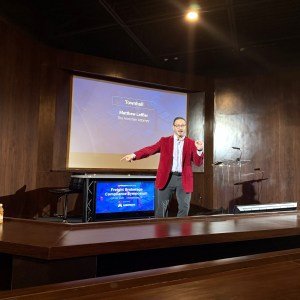
The attorney, Matthew Leffler, an adjunct law professor at Michigan State University College of Law who goes by The Armchair Attorney and has practiced for 16 years, was blunt about the stakes. Fielding live questions at a town-hall session of the FreightWaves Freight Brokerage Compliance Symposium, he ranged across broker liability after Montgomery, nuclear verdicts, FMCSA enforcement, carrier vetting, drop-trailer strategy, and the newer category of AI-driven risk, but the thread tying all of it together was one warning. He argued that what is happening right now on the liability front is as profound a shift for freight as deregulation was in the late 1970s, maybe as profound as containerization, and that ten years from now the business will look almost unrecognizable because of the legal pressure building on it. None of what follows is legal advice, and Leffler said as much repeatedly, but the picture he painted and the practical guidance he offered are worth every broker and every small carrier understanding in detail.
The Case That Changes The Math
The facts, as Leffler described them, are ordinary right up until they are catastrophic. A broker worked with a shipper, sourced a carrier called Lupus Superior, and the carrier moved the load. That carrier held a satisfactory safety rating, which is rarer than most people think, because by Leffler’s count roughly 94 percent of trucking companies carry no safety rating at all, not satisfactory, not conditional, not unsatisfactory. On paper this was about as good a carrier as a broker could ask for.
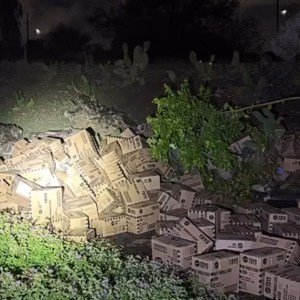
Then the human element broke the chain. By Leffler’s account of the trial evidence, the driver told his dispatcher he was not feeling well, the dispatcher relayed that to the broker, C.H. Robinson, and the question of whether to swap in another driver came up. For reasons that may never be fully clear, the sick driver took the load anyway. The truck hit stopped traffic on Interstate 20 in Mississippi, and the fire that followed killed three people, seriously injured two more, and killed the driver himself. The lawsuit named the driver, the carrier, and the broker.
window.googletag = window.googletag || {cmd: []};
googletag.cmd.push(function() {
var gptSlot = googletag.defineSlot(‘/21776187881/FW-Responsive-Main_Content-Slot1’, [[300, 100], [320, 50], [728, 90], [468, 60]], ‘div-gpt-ad-1709668545404-0’).defineSizeMapping(gptSizeMaps.banner1).addService(googletag.pubads());
googletag.pubads().enableSingleRequest();
googletag.pubads().collapseEmptyDivs();
googletag.enableServices();
setInterval(function() {
if (!document.hidden) { googletag.pubads().refresh([gptSlot]); }
}, 60000);
});
googletag.cmd.push(function() { googletag.display(‘div-gpt-ad-1709668545404-0’); });
Here is where Leffler said brokers need to pay close attention, because two separate strands drove the outcome. The first was ordinary negligence tied to carrier selection, the kind of claim Montgomery made familiar, though the picture here is murkier than a clean selection verdict, since the jury actually answered no to one broker-negligence question and its general negligence finding only left room for a selection theory rather than squarely resting on one. What is not in dispute is the number, because the jury found the broker 23 percent negligent on a 604 million dollar award, which is already staggering. The second strand is the one that should keep brokers up at night, vicarious liability, the old principle of respondeat superior, let the master answer. The plaintiffs argued, and the jury agreed, that the broker had exercised enough control to make the driver effectively its own borrowed employee. Once that happened, the driver’s own negligence, which the jury put at 45 percent, got stacked onto the broker’s share. That brings the broker to 68 percent. And in Texas, where liability over 50 percent triggers joint-and-several liability, being 68 percent responsible means being on the hook for the entire amount. It is worth being precise about where this stands, because no final judgment has been entered. C.H. Robinson has characterized the July 23 result as an advisory verdict that is still subject to post-trial proceedings, and the company has said it will appeal.
Leffler’s point was that this is not a narrow, one-off result. If the borrowed-employee theory holds up through appeal, the entire premise of brokerage, that you arrange transportation using carriers who are not your employees, is in question, and by extension so is the model behind companies like FedEx Ground, Amazon’s delivery network, Uber, and DoorDash, all of which exert far more control over their drivers than C.H. Robinson ever did here. He expects the case to be litigated for five or six years, all the way to the Texas Supreme Court, with no clean way around it in the meantime.
Why A Tracking App Became A Liability
The detail that turned control from an abstraction into evidence was technology. Leffler explained that C.H. Robinson used a proprietary application to track the load, and the plaintiffs convinced the jury that an app living on the driver’s phone for that shipment looked a lot like control, a lot like the driver was furthering the broker’s business, which supported treating him as a borrowed employee.
Leffler was candid that he personally thinks the distinction should be legally irrelevant, that a tracking app tells you when freight will arrive and does not actually direct how a driver drives. But he was equally clear that what should matter and what a jury believes are two different things, especially when that jury has just watched dashcam video of a person burning to death. His hard-earned takeaways were specific. He said he would never use a proprietary tracking app again, because all a plaintiff attorney has to do is convince a jury that the app the broker built controls the driver, and most jurors do not understand how the technology actually works. He urged using third-party telematics platforms rather than homegrown tools, framing the data as tracking the load rather than the driver. And he stressed that language matters, that a broker should talk about being contracted with a carrier, never about having hired a driver, because word choice becomes exhibit text in a courtroom.
The Wave Is Bigger Than One Case
To show what juries are willing to do, Leffler pointed to the Werner Enterprises case, where a truck traveling under the speed limit in icy conditions was struck by another vehicle that crossed a wide median, and the jury still found Werner 70 percent responsible for a 90 million dollar award even though the Werner driver had done little wrong. The appellate story matters as much as the verdict, though, because the Texas Supreme Court reversed and dismissed that result in June 2025, finding that Werner’s truck was not a legal cause of the crash. The same court went the industry’s way again on May 15, 2026, in the matter involving Home Depot, holding that a shipper that simply hands freight to a federally registered carrier owes no duty to the motoring public and ordering the negligent-selection claims dismissed, a point Leffler has made in his own writing. Read together the pair shows a system pulling in two directions at once, juries willing to assign enormous liability and at least one state’s highest court willing to claw it back, which is exactly the kind of uncertainty that makes planning so hard.
The economics explain why this keeps happening. Leffler described a plaintiff’s bar that treats freight as a gold mine, working on contingency fees around 33 percent, now backed by litigation-funding investors who buy a stake in the eventual recovery, which gives plaintiff attorneys the budget to run a dozen mock trials where a defense firm might manage one. He reminded the room that civil cases turn on preponderance of the evidence, just 51 percent, not the criminal standard of beyond a reasonable doubt, so a jury only has to believe you are slightly more likely wrong than right. Meanwhile the structural backdrop is ugly, with the federal minimum carrier liability insurance still sitting at 750,000 dollars, a number set back in the 1980s, a national out-of-service rate around 22 percent for commercial vehicles, and brokers now moving close to 30 percent of the nation’s freight. Underinsured carriers, deferred maintenance, and a public that has no idea how any of this works add up to an environment where even winning can cost millions and years.
The Survival Playbook
Leffler is not a fatalist, and he closed with concrete guidance that brokers should validate with their own outside counsel and insurers. The centerpiece is a written policy that gets updated regularly and, above all, gets enforced rigidly. His warning was that a great policy you do not follow is worse than no policy at all, because the moment you deviate from it on the load that ends in a fatality, a plaintiff attorney will hold up your own written standard and tell the jury you lied. He was unsentimental about enforcement, saying that if people deviate from the written process you write them up, and if they keep doing it you let them go, because a single person freelancing at 2 a.m. on a Saturday can sink the company.
window.googletag = window.googletag || {cmd: []};
googletag.cmd.push(function() {
var gptSlot = googletag.defineSlot(‘/21776187881/fw-responsive-main_content-slot3’, [[728, 90], [468, 60], [320, 50], [300, 100]], ‘div-gpt-ad-1665767553440-0’).defineSizeMapping(gptSizeMaps.banner1).addService(googletag.pubads());
googletag.pubads().enableSingleRequest();
googletag.pubads().collapseEmptyDivs();
googletag.enableServices();
setInterval(function() {
if (!document.hidden) { googletag.pubads().refresh([gptSlot]); }
}, 60000);
});
googletag.cmd.push(function() { googletag.display(‘div-gpt-ad-1665767553440-0’); });
The rest of his advice followed the same logic of limiting control and controlling information. Route all communication through dispatch and avoid speaking directly to drivers whenever a carrier has a dispatcher, because direct driver contact opens the door to knowledge you do not want, like learning a driver is unwell and then being blamed for letting them roll. Understand that indemnification clauses in shipper contracts only protect you if you are still solvent when the litigation ends, so an indemnity from a bankrupt broker is worthless. Carry real liability coverage beyond the mandatory 75,000 dollar surety bond, including contingent auto and cargo protection, because fighting one of these cases without insurance can run 20,000 to 30,000 dollars a month. And assume that every record in your transportation management system will be discovered and read back to a jury, so the metadata trail needs to match the policy you claim to follow.
Leffler was honest about the bind this creates, that following every rule to the letter can leave a broker at a competitive disadvantage against those who cut corners, and that the pressure to keep a long-trusted carrier or customer moving is real. His answer was that brokers and small carriers are not adversaries in this, they exist because of each other, and the real winners of this liability wave are the large asset-based carriers who have carried this kind of exposure for decades and simply raise their insurance towers and move on. The operators most exposed are the small brokers and small carriers who can least afford a single catastrophic claim.
Why It Matters
A jury’s 604 million dollar finding against a broker over ordinary brokering, with a clean carrier and a routine tracking app and before any final judgment has even been entered, tells every broker and the small carriers they depend on that the old assumption of being insulated from a crash several steps down the chain is gone, and that control, communication, and documentation are now the difference between surviving a claim and being bankrupted by one. The practical response is not to panic but to build and rigidly enforce a written compliance process, rethink proprietary tracking and direct driver contact, and carry enough real insurance to still be standing when the litigation ends, because in this environment the goal is not only to do everything right but to be able to prove it years later in front of a jury that does not care how freight moves.
This article is based on a town-hall session with attorney Matthew Leffler, an adjunct professor at Michigan State University College of Law known as The Armchair Attorney, at the FreightWaves Freight Brokerage Compliance Symposium. Case details, figures, and guidance are as presented by the speaker and reflect his analysis, not legal advice. The C.H. Robinson result is an advisory verdict subject to post-trial proceedings and appeal, with no final judgment entered. The Werner and Home Depot verdicts referenced were later reversed by the Texas Supreme Court.
window.googletag = window.googletag || {cmd: []};
googletag.cmd.push(function() {
var gptSlot = googletag.defineSlot(‘/21776187881/fw-responsive-main_content-slot4’, [[300, 100], [320, 50], [728, 90], [468, 60]], ‘div-gpt-ad-1709668086344-0’).defineSizeMapping(gptSizeMaps.banner1).addService(googletag.pubads());
googletag.pubads().enableSingleRequest();
googletag.pubads().collapseEmptyDivs();
googletag.enableServices();
setInterval(function() {
if (!document.hidden) { googletag.pubads().refresh([gptSlot]); }
}, 60000);
});
googletag.cmd.push(function() { googletag.display(‘div-gpt-ad-1709668086344-0’); });
The post The Biggest Shift In Freight Liability Since Deregulation Is Here, And Few Are Ready For It appeared first on FreightWaves.
Source: FreightWaves