Keolis targets growth in the Middle East rail market
Transportationvia Railway Gazette
Quick Read
UAE: Keolis has opened a regional headquarters in Dubai as a hub for its operations in the Middle East and to help identify and develop business opportunities across the region. The French company said it aims to become the leading transport operator in the region, and is focusing on upcoming metro, light rail, inter-city and high speed rail projects, as well as bus rapid transit, alternative energy buses and innovative technology for last mile transport. Through a joint venture Keolis has operated the Doha Metro since 2019 and the Lusail Tram since 2022, and Keolis MHI has operated the Dubai Metro and Dubai Tram since 2021. This year Keolis launched the first passenger railway service in the UAE through a joint venture with Etihad Rail. ‘The Middle East is a key growth market for Keolis’, said Chairman & CEO Frédéric Van Heems on October 21. ‘We have proven we can operate world-class trains, metro and tram systems reliably, from Dubai, Abu Dhabi and Doha. This regional headquarters shows our long-term commitment with our clients, and our readiness to lead the major transport projects that will shape the region’s future.’
UAE: Keolis has opened a regional headquarters in Dubai as a hub for its operations in the Middle East and to help identify and develop business opportunities across the region.
The French company said it aims to become the leading transport operator in the region, and is focusing on upcoming metro, light rail, inter-city and high speed rail projects, as well as bus rapid transit, alternative energy buses and innovative technology for last mile transport.
Through a joint venture Keolis has operated the Doha Metro since 2019 and the Lusail Tram since 2022, and Keolis MHI has operated the Dubai Metro and Dubai Tram since 2021. This year Keolis launched the first passenger railway service in the UAE through a joint venture with Etihad Rail.
‘The Middle East is a key growth market for Keolis’, said Chairman & CEO Frédéric Van Heems on October 21. ‘We have proven we can operate world-class trains, metro and tram systems reliably, from Dubai, Abu Dhabi and Doha. This regional headquarters shows our long-term commitment with our clients, and our readiness
to lead the major transport projects that will shape the region’s future.’
SINGAPORE: The Land Transport Authority and metro operators SBS Transit and SMRT Trains are to jointly administer the Singapore Rail Academy from November 1, when the academy will take on an expanded mandate to strengthen training and professional development for the country’s entire rail workforce. LTA said the aim is to build a highly skilled and future-ready rail workforce, and to improve the attractiveness of the rail sector to a new generation of engineers, technicians and operational staff. SGRA was established by LTA in 2017 and now conducts more than 20 training sessions annually for about 500 rail engineers who are new to the rail industry. In line with the recommendations of the Rail Reliability Taskforce released in February, the academy will now adopt a more co-ordinated and sector-wide approach. This will include harmonised training policies and standards, industry-recognised certification and qualifications, as well as clearer and more structured education and career pathways. SGRA will work with industry and academic partners to broaden the scope of its curricula and assessment frameworks, incorporating developments in areas such as artificial intelligence, condition monitoring and simulation-based training. An advisory panel of international and local rail experts will provide strategic guidance and share international best practice on training and capability development. From early 2027, SGRA will progressively establish a rail-sector Workforce Skills Qualifications certification framework, starting from Basic Certificates in Railway Operations and Railway Maintenance. The target is for 20% of the operations and maintenance workforce to be recognised under the scheme, so they can serve as trainers and share their skills with colleagues. SGRA will also partner with institutes of higher learning to develop more structured and complementary programmes for the rail sector, with pathways for new and existing rail professionals to build up industry-relevant skills and qualifications, including at the Higher Nitec and Diploma levels. SGRA’s programmes complement those offered to the wider operations and maintenance workforces by the SMRT Institute and SBS Transit’s Rail Training Institute, which will now be audited by SGRA to ensure adherence to harmonised standards.
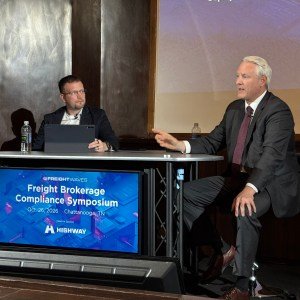
Chattanooga–It hasn’t been that long–less than a month–since Jesse Elison spoke to an industry event and addressed the issue of the beleaguered new Motus registration system. The deputy administrator of the Federal Motor Carrier Safety Administration (FMCSA) spoke Monday at FreightWaves’ Broker Compliance Symposium, one of two one-day sessions that serve as a prelude to the larger Future of Freight Festival here that begins Tuesday The biggest news in his presentation was really no news: after saying at the National Motor Freight Traffic Association in early October that FMCSA was “weeks away” from fixing the issues with the rollout of the agency’s new registration system, Elison offered no new indication that a resolution was at hand. Interviewed by FreightWaves podcast host Charles Gracey, Elison did say it would be “really weeks and not months, not like six months before we tackle this, before we stabilize it.” He conceded that the “user experience” has been on “working on keeping people out,” which is actually a goal, to ensure that unqualified carriers can not register with the system. “But it is still absolutely more people than just the bad actors we intended it for,” Elison said. Keeping out some bad guys “But that measuring stick, it has worked,” Elison said about the blocked path for unqualified registrants. “But we need to be a little better than that. There are companies out there that want to operate. They want to build this trust.” Elison added that conditions are still better than the first four to six weeks of Motus’ operations, “which were really, really brutal.” “You’re trying to fix something and then you break it, and then you need to get your handle around that where you’re not breaking things and you’re going in the right direction,” Elison said. Elison spoke of the long-term benefits of Motus without any indication that conditions for its users will be better soon. “Motus is going to deliver,” Elison said. “It’s going to be the system that really serves the industry.” Users who are experiencing “challenges” should “reach out to us,” Elison said. “Please contact us because we move on those in real time.” FMCSA has waived certain registration requirements as a result of the Motus woes. Elison’s message at the symposium: “If you don’t need to go in, don’t go in yet.” For those who do have immediate registration needs, Elison recommended that if they can’t fully register, “reach out to your insurance contacts. Reach out to whoever you have to. Reach out directly to FMCSA and we will definitely reach out to them.” Changes due to elections? There is little doubt that FMCSA and the Department of Transportation under Secretary of Transportation Sean Duffy and FMCSA administrator Derek Barrs have shaken up trucking regulation like no other pair of top guns have done in years. Whether it’s the move to restrict non-domiciled holders of CDLs or shutting down CDL schools, the impact has been significant. Motus was an inherited project, but neither Elison nor Barrs has blamed earlier administrators for its problems. With a Republican defeat of some magnitude projected for Election Day next week, Elison said he did not see a change in current FMCSA policies. “Regardless of how things go over in the next week or so, we are going to continue to deliver, and we’ve got the support from the Secretary, which is an absolute game changer,” Elison said. He added that there “will be a little bit of wind maybe attempted to take that out of our sail.” Broker transparency rule…it’s coming One looming issue: the broker transparency rule. Whatever is in the final rule is not known, but it will govern to some degree what brokers must disclose to shippers and carriers about their own activities. Its release has been seen as somewhat close to imminent for awhile. Elison would only say that “you’re going to hear a lot more (FMCSA actions) like the broker transparency rule.” It will be part of what Elison said would be other rules that FMCSA “is going to deliver on in the very near future.” One issue Elison said FMCSA will seek to deliver on “in the near future” is in the agency’s Unified Agenda, released over the summer, a sort of formal “to-do” list, is for changes or strengthening of rules governing new entrants. Elison described it as a priority. In the Unified Agenda, FMCSA said it would seek a formal rulemaking “for ensuring a new applicant carrier is knowledgeable about the applicable safety requirements before being granted New Entrant authority.” FMCSA, according to the Unified Agenda, “is considering whether to implement a proficiency examination as part of its revised New Entrant Safety Assurance Process as well as other alternatives.” Part of the agency’s efforts in that regard would be to push back against allowing CDL schools to self-certify their compliance with federal rules. Elison said a goal would be to “bring uniformity across the board.” More articles by John Kingston English language rule’s comments bring criticism from Sikh organization Texas judge upholds nuclear verdict against C.H. Robinson CEO’s letter boasts of lots of arrows pointing up at Triumph Financial The post FMCSA’s Elison addresses Motus again, still no date on full repair appeared first on FreightWaves.
Mexican trucking companies launched an indefinite nationwide strike Monday protesting highway insecurity, cargo theft, extortion and rising operating costs, with demonstrations planned in major freight hubs along the U.S.-Mexico border. The strike, organized by the National Chamber of Freight Transportation (CANACAR) and other trucking organizations, calls for demonstrations across Mexico, including Nuevo Laredo, Reynosa, Monterrey, Tijuana and Mexico City. The protests could disrupt freight transportation through some of North America’s busiest commercial corridors, particularly in Nuevo Laredo, across the border from Laredo, Texas, the nation’s leading inland port of entry. CANACAR President Augusto Ramos Melo said trucking companies have grown increasingly frustrated with cargo theft, violence against drivers, deteriorating highways, excessive towing fees and regulatory burdens. The organizations are also protesting proposed changes to Mexico’s 2027 fiscal package that would reduce eligibility for a tax credit covering certain highway toll expenses. The demonstrations were expected to involve truck convoys and vehicles stationed along highways, near logistics facilities and other strategic freight locations. Organizers have called for peaceful protests, although traffic delays and interruptions to freight movements remain possible. Mexico’s Interior Ministry urged CANACAR to return to negotiations, saying several other transportation organizations had agreed to talks aimed at preventing disruptions to highways and commercial traffic. CANACAR maintained its call for demonstrations despite the government’s appeal. The strike comes amid mounting pressure on Mexico’s trucking industry, which plays a critical role in moving automotive parts, manufactured goods, agricultural products and other freight between Mexico and the United States. The duration of the protests and their impact on commercial border crossings remained unclear Monday. Why it matters: An extended trucking strike in Mexico could disrupt cross-border supply chains, delay shipments through major Texas and California trade gateways and increase transportation costs for U.S. importers and manufacturers. The post Mexican truckers launch national strike over highway security, rising costs appeared first on FreightWaves.